Kirjailija
Thomas Talbott
Kirjat ja teokset yhdessä paikassa: 8 kirjaa, julkaisuja vuosilta 2014-2022, suosituimpien joukossa Christ Triumphant. Vertaile teosten hintoja ja tarkista saatavuus suomalaisista kirjakaupoista.
8 kirjaa
Kirjojen julkaisuhaarukka 2014-2022.

What is free will and do humans possess it? While these questions appear simple they have tied some of our greatest minds in knots over the millennia. This little book seeks to clarify for an audience of educated non-specialists some of the issues that often arise in philosophical disputes over the existence and the nature of human free will. Beyond that, it proposes a particular solution to the puzzles. Many philosophers have argued that free will is incompatible with determinism, and many have also argued that it is incompatible with indeterminism. So, is free will simply an incoherent concept? Talbott argues that the best way out of this quagmire requires that we come to appreciate why certain conditions essential to our emergence as free moral agents--conditions such as indeterminism, ignorance, and a context of ambiguity and misperception--are themselves obstacles to a fully realized freedom. For a fully realized freedom requires that, as minimally rational individuals, we have learned some important lessons for ourselves; and once these lessons have been learned, some of our freest choices may be such that we could not have chosen otherwise because so choosing would then seem to us utterly unthinkable and irrational.

What is free will and do humans possess it? While these questions appear simple they have tied some of our greatest minds in knots over the millennia. This little book seeks to clarify for an audience of educated non-specialists some of the issues that often arise in philosophical disputes over the existence and the nature of human free will. Beyond that, it proposes a particular solution to the puzzles. Many philosophers have argued that free will is incompatible with determinism, and many have also argued that it is incompatible with indeterminism. So, is free will simply an incoherent concept? Talbott argues that the best way out of this quagmire requires that we come to appreciate why certain conditions essential to our emergence as free moral agents--conditions such as indeterminism, ignorance, and a context of ambiguity and misperception--are themselves obstacles to a fully realized freedom. For a fully realized freedom requires that, as minimally rational individuals, we have learned some important lessons for ourselves; and once these lessons have been learned, some of our freest choices may be such that we could not have chosen otherwise because so choosing would then seem to us utterly unthinkable and irrational.
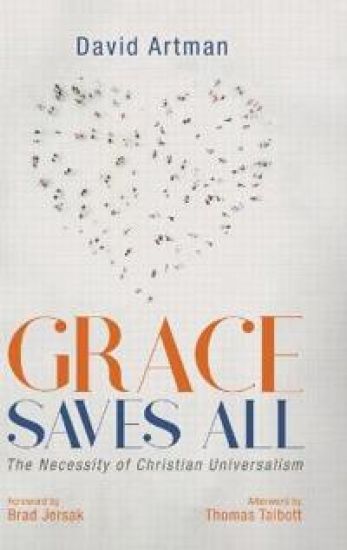
Grace is amazing. About this all Christians agree. Yet nearly all forms of Christianity put significant limits on grace. Those forms of Christianity which proclaim grace alone actually saves typically don't believe God gives grace to everyone; while those forms of Christianity which proclaim God gives grace to everyone typically don't believe grace alone actually saves. Must grace either be that which saves alone but doesn't go to all, or that which goes to all but doesn't save alone? In Grace Saves All, David Artman argues that grace saves alone and goes to all. This inclusive approach to Christianity is variously called universal reconciliation, universal salvation, or perhaps most accurately, Christian universalism. He contends that the inclusive/Christian universalist approach is necessary because it offers the only Christian theology which successfully defends the goodness of God. For it logically follows that if God is all-good, all-knowing, and all-powerful, then God must also be all-saving. Often dismissed as a modern feel-good theology, Christian universalism is an ancient, orthodox, and biblical theology which was expounded by early Christians and early church fathers. Artman brings much deserved attention to this wonderful spirituality.
Grace is amazing. About this all Christians agree. Yet nearly all forms of Christianity put significant limits on grace. Those forms of Christianity which proclaim grace alone actually saves typically don't believe God gives grace to everyone; while those forms of Christianity which proclaim God gives grace to everyone typically don't believe grace alone actually saves. Must grace either be that which saves alone but doesn't go to all, or that which goes to all but doesn't save alone? In Grace Saves All, David Artman argues that grace saves alone and goes to all. This inclusive approach to Christianity is variously called universal reconciliation, universal salvation, or perhaps most accurately, Christian universalism. He contends that the inclusive/Christian universalist approach is necessary because it offers the only Christian theology which successfully defends the goodness of God. For it logically follows that if God is all-good, all-knowing, and all-powerful, then God must also be all-saving. Often dismissed as a modern feel-good theology, Christian universalism is an ancient, orthodox, and biblical theology which was expounded by early Christians and early church fathers. Artman brings much deserved attention to this wonderful spirituality.