Kirjojen hintavertailu. Mukana 12 595 353 kirjaa ja 12 kauppaa.
Kirjailija
Thomas W. Benson
Kirjat ja teokset yhdessä paikassa: 10 kirjaa, julkaisuja vuosilta 1989-2016, suosituimpien joukossa Writing JFK. Vertaile teosten hintoja ja tarkista saatavuus suomalaisista kirjakaupoista.
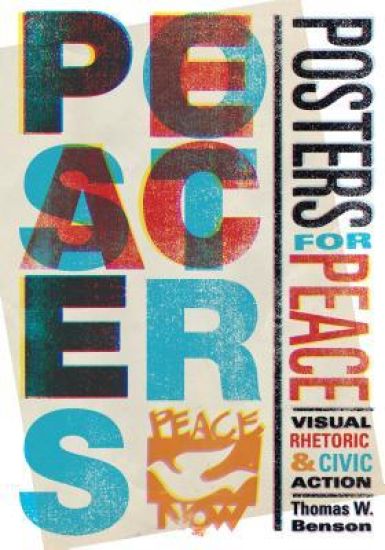
By the spring of 1970, Americans were frustrated by continuing war in Vietnam and turmoil in the inner cities. Students on American college campuses opposed the war in growing numbers and joined with other citizens in ever-larger public demonstrations against the war. Some politicians—including Ronald Reagan, Spiro Agnew, and Richard Nixon—exploited the situation to cultivate anger against students. At the University of California at Berkeley, student leaders devoted themselves, along with many sympathetic faculty, to studying the war and working for peace. A group of art students designed, produced, and freely distributed thousands of antiwar posters. Posters for Peace tells the story of those posters, bringing to life their rhetorical iconography and restoring them to their place in the history of poster art and political street art. The posters are vivid, simple, direct, ironic, and often graphically beautiful. Thomas Benson shows that the student posters from Berkeley appealed to core patriotic values and to the legitimacy of democratic deliberation in a democracy—even in a time of war.
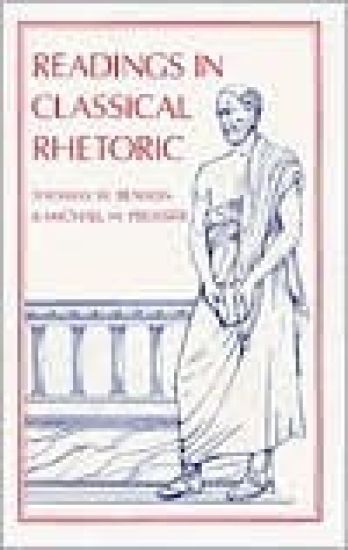
Rhetoric -- the theory of oral discourse -- affected and indeed pervaded all aspects of classical thought. Bearing the stamp of its impact were the Homeric hymns, the Iliad and the Odyssey, Aeschylus' Eumenides, the great dramatic tragedies, the elegiac and lyric poetry, and the literature of the Romans, often formed in the Greek image. The rhetorical notion of probability had direct implications for the classical philosopher and mathematician as it does today. Departments of speech, English, philosophy and classics provide the key centers of interest in the new and the classical rhetorics. Despite the considerable enthusiasm for the study of rhetoric, no single work provides large selections of primary materials written by the classical rhetoricians themselves. Until now, only secondary sources containing tiny excerpts, or entire and expensive translations of the ancient rhetorical writings were available. This large anthology of primary readings of the classical rhetoricians in translation fills this large gap. The continuity and coherence of ancient rhetorical traditions is emphasized by organizing large excerpts into the topical divisions that later classical writers agreed upon. The first unit of this anthology sets forth major issues in the definition and scope of rhetoric, and its appropriate place among other modes of thought and discourse. Parts 2 through 5 are organized according to the traditional canons of oratory -- invention, disposition, style, memory, and delivery. In organizing the readings this way, the editors represent both the philosophical and theoretical issues in rhetoric and its pragmatic functions as a craft for making effective discourse. Selecting excerpts that illustrate the major conflicts within the unfolding tradition enables a sampling of not only the major points of view, but also the arguments supporting them. This volume includes selections not only from writings of the standard classical rhetoricians but also from less typical works which have special value. The editors have utilized the best accessible translations while remaining absolutely faithful to their texts.
By the spring of 1970, Americans were frustrated by continuing war in Vietnam and turmoil in the inner cities. Students on American college campuses opposed the war in growing numbers and joined with other citizens in ever-larger public demonstrations against the war. Some politicians-including Ronald Reagan, Spiro Agnew, and Richard Nixon-exploited the situation to cultivate anger against students. At the University of California at Berkeley, student leaders devoted themselves, along with many sympathetic faculty, to studying the war and working for peace. A group of art students designed, produced, and freely distributed thousands of antiwar posters. Posters for Peace tells the story of those posters, bringing to life their rhetorical iconography and restoring them to their place in the history of poster art and political street art. The posters are vivid, simple, direct, ironic, and often graphically beautiful. Thomas Benson shows that the student posters from Berkeley appealed to core patriotic values and to the legitimacy of democratic deliberation in a democracy-even in a time of war.
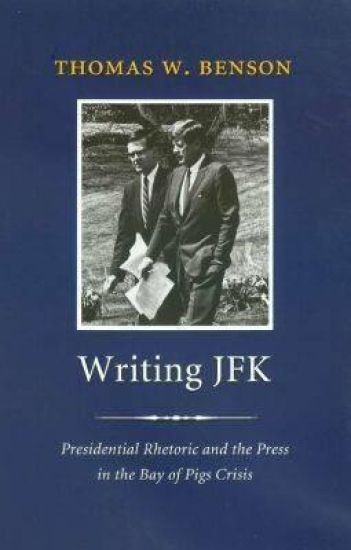
Following the dramatic Bay of Pigs fiasco in 1961, President John F. Kennedy moved to repair the damage the invasion had done to his image and to his relations with the press. Thomas W. Benson examines two speeches and a press conference held by JFK in the days after the crisis, shedding light on how the structures of speech writing influence the texts of the speeches and policy formation, as well as the ways the press mediates and even helps to formulate presidential rhetoric. Writing JFK provides the full text of both speeches and the press conference, as well as Benson's analysis of what would come to be known as ""spin control."" He demonstrates how the speeches display the implicit collaboration of Kennedy with his speech writers and the press to create a depiction of Kennedy as a political and moral agent. A central feature of the book is Benson's exploration of ""the enormous power of the presidency to compel press restraint and to command the powers of publicity."" The resulting insight into the relationship among the press, politics, and public policy will appeal to all those interested in political communication, the power of the American president, and the legacy of JFK.
Following the dramatic Bay of Pigs fiasco in 1961, President John F. Kennedy moved to repair the damage the invasion had done to his image and to his relations with the press. Thomas W. Benson examines two speeches and a press conference held by JFK in the days after the crisis, shedding light on how the structures of speech writing influence the texts of the speeches and policy formation, as well as the ways the press mediates and even helps to formulate presidential rhetoric. Writing JFK provides the full text of both speeches and the press conference, as well as Benson's analysis of what would come to be known as ""spin control."" He demonstrates how the speeches display the implicit collaboration of Kennedy with his speech writers and the press to create a depiction of Kennedy as a political and moral agent. A central feature of the book is Benson's exploration of ""the enormous power of the presidency to compel press restraint and to command the powers of publicity."" The resulting insight into the relationship among the press, politics, and public policy will appeal to all those interested in political communication, the power of the American president, and the legacy of JFK.
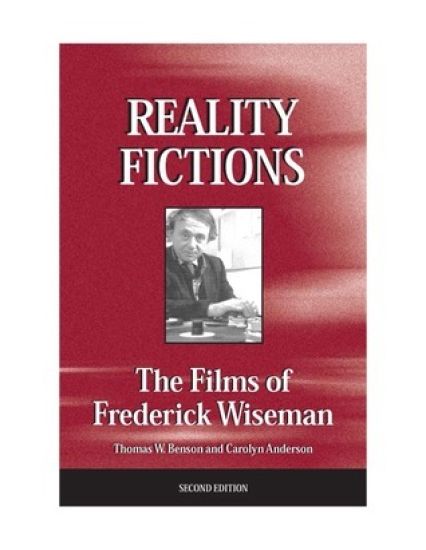
Providing in-depth accounts and close critical examinations of nine of Wiseman's films - ""Titicut Follies"", ""High School"", ""Basic Training"", ""Essene"", ""Juvenile Court"", ""Primate"", ""Welfare"", ""Canal Zone"" and ""The Store"" - this second edition features a new introduction, a revised and updated filmography and an updated bibliography.
Rhetoric -- the theory of oral discourse -- affected and indeed pervaded all aspects of classical thought. Bearing the stamp of its impact were the Homeric hymns, the Iliad and the Odyssey, Aeschylus' Eumenides, the great dramatic tragedies, the elegiac and lyric poetry, and the literature of the Romans, often formed in the Greek image. The rhetorical notion of probability had direct implications for the classical philosopher and mathematician as it does today. Departments of speech, English, philosophy and classics provide the key centers of interest in the new and the classical rhetorics. Despite the considerable enthusiasm for the study of rhetoric, no single work provides large selections of primary materials written by the classical rhetoricians themselves. Until now, only secondary sources containing tiny excerpts, or entire and expensive translations of the ancient rhetorical writings were available. This large anthology of primary readings of the classical rhetoricians in translation fills this large gap. The continuity and coherence of ancient rhetorical traditions is emphasized by organizing large excerpts into the topical divisions that later classical writers agreed upon. The first unit of this anthology sets forth major issues in the definition and scope of rhetoric, and its appropriate place among other modes of thought and discourse. Parts 2 through 5 are organized according to the traditional canons of oratory -- invention, disposition, style, memory, and delivery. In organizing the readings this way, the editors represent both the philosophical and theoretical issues in rhetoric and its pragmatic functions as a craft for making effective discourse. Selecting excerpts that illustrate the major conflicts within the unfolding tradition enables a sampling of not only the major points of view, but also the arguments supporting them. This volume includes selections not only from writings of the standard classical rhetoricians but also from less typical works which have special value. The editors have utilized the best accessible translations while remaining absolutely faithful to their texts.
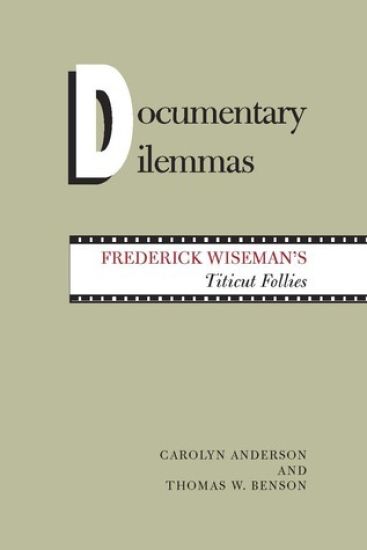
A case history of the only American film under court-imposed restrictions for reasons other than obscenity or national security. Titicut Follies is an excoriating depiction of conditions in the Massachusetts Correctional Institution at Bridgewater, a prison-hospital for the criminally insane. The Commonwealth of Massachusetts took Wiseman to court, seeking to prevent the exhibition of Titicut Follies soon after its release in 1967. This account of the Titicut Follies case is based on ten years of research and relies on interviews, journalistic accounts, and especially on the legal record, including the Commonwealth v. Wiseman transcript, to describe the entire process of independent documentary filmmaking. The trials of Titicut Follies raise crucial questions about the relation of social documentary to its subjects and audiences.