Kirjojen hintavertailu. Mukana 12 136 820 kirjaa ja 12 kauppaa.

Kirjailija

Thomas W. MacFarland

Kirjat ja teokset yhdessä paikassa: 8 kirjaa, julkaisuja vuosilta 2011-2025, suosituimpien joukossa Using R for Biostatistics. Vertaile teosten hintoja ja tarkista saatavuus suomalaisista kirjakaupoista.

8 kirjaa

Kirjojen julkaisuhaarukka 2011-2025.

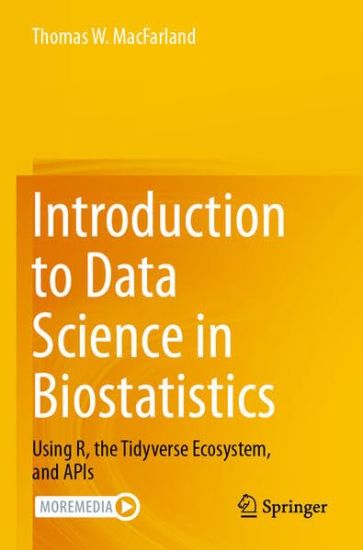
Introduction to Data Science in Biostatistics

Introduction to Data Science in Biostatistics

Thomas W. MacFarland

Springer International Publishing AG
2025
nidottu
Introduction to Data Science in Biostatistics: Using R, the Tidyverse Ecosystem, and APIs defines and explores the term "data science" and discusses the many professional skills and competencies affiliated with the industry. With data science being a leading indicator of interest in STEM fields, the text also investigates this ongoing growth of demand in these spaces, with the goal of providing readers who are entering the professional world with foundational knowledge of required skills, job trends, and salary expectations. The text provides a historical overview of computing and the field's progression to R as it exists today, including the multitude of packages and functions associated with both Base R and the tidyverse ecosystem. Readers will learn how to use R to work with real data, as well as how to communicate results to external stakeholders. A distinguishing feature of this text is its emphasis on the emerging use of APIs to obtain data.
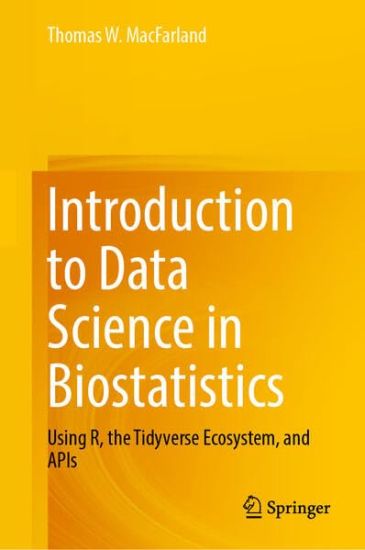
Introduction to Data Science in Biostatistics

Introduction to Data Science in Biostatistics

Thomas W. MacFarland

Springer International Publishing AG
2024
sidottu
Introduction to Data Science in Biostatistics: Using R, the Tidyverse Ecosystem, and APIs defines and explores the term "data science" and discusses the many professional skills and competencies affiliated with the industry. With data science being a leading indicator of interest in STEM fields, the text also investigates this ongoing growth of demand in these spaces, with the goal of providing readers who are entering the professional world with foundational knowledge of required skills, job trends, and salary expectations. The text provides a historical overview of computing and the field's progression to R as it exists today, including the multitude of packages and functions associated with both Base R and the tidyverse ecosystem. Readers will learn how to use R to work with real data, as well as how to communicate results to external stakeholders. A distinguishing feature of this text is its emphasis on the emerging use of APIs to obtain data.
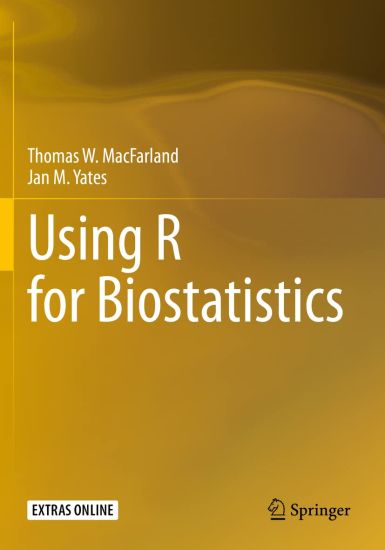
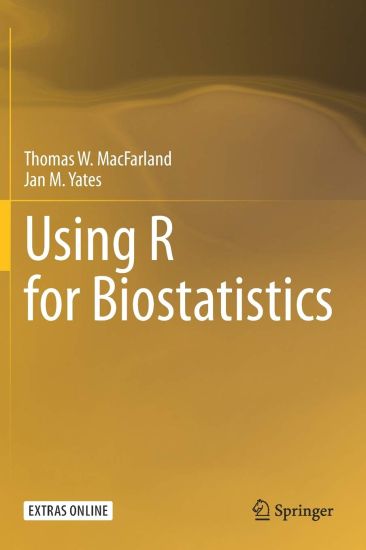
Using R for Biostatistics

Using R for Biostatistics

Thomas W. MacFarland; Jan M. Yates

Springer Nature Switzerland AG
2022
nidottu
This book introduces the open source R software language that can be implemented in biostatistics for data organization, statistical analysis, and graphical presentation. In the years since the authors’ 2014 work Introduction to Data Analysis and Graphical Presentation in Biostatistics with R, the R user community has grown exponentially and the R language has increased in maturity and functionality. This updated volume expands upon skill-sets useful for students and practitioners in the biological sciences by describing how to work with data in an efficient manner, how to engage in meaningful statistical analyses from multiple perspectives, and how to generate high-quality graphics for professional publication of their research. A common theme for research in the diverse biological sciences is that decision-making depends on the empirical use of data. Beginning with a focus on data from a parametric perspective, the authors address topics such as Student t-Tests for independent samples and matched pairs; oneway and twoway analyses of variance; and correlation and linear regression. The authors also demonstrate the importance of a nonparametric perspective for quality assurance through chapters on the Mann-Whitney U Test, Wilcoxon Matched-Pairs Signed-Ranks test, Kruskal-Wallis H-Test for Oneway Analysis of Variance, and the Friedman Twoway Analysis of Variance. To address the element of data presentation, the book also provides an extensive review of the many graphical functions available with R. There are now perhaps more than 15,000 external packages available to the R community. The authors place special emphasis on graphics using the lattice package and the ggplot2 package, as well as less common, but equally useful, figures such as bean plots, strip charts, and violin plots. A robust package of supplementary material, as well as an introduction of the development of both R and the discipline of biostatistics, makes this ideal for novice learners as well as more experienced practitioners.
Using R for Biostatistics

Using R for Biostatistics

Thomas W. MacFarland; Jan M. Yates

Springer Nature Switzerland AG
2021
sidottu
This book introduces the open source R software language that can be implemented in biostatistics for data organization, statistical analysis, and graphical presentation. In the years since the authors’ 2014 work Introduction to Data Analysis and Graphical Presentation in Biostatistics with R, the R user community has grown exponentially and the R language has increased in maturity and functionality. This updated volume expands upon skill-sets useful for students and practitioners in the biological sciences by describing how to work with data in an efficient manner, how to engage in meaningful statistical analyses from multiple perspectives, and how to generate high-quality graphics for professional publication of their research. A common theme for research in the diverse biological sciences is that decision-making depends on the empirical use of data. Beginning with a focus on data from a parametric perspective, the authors address topics such as Student t-Tests for independent samples and matched pairs; oneway and twoway analyses of variance; and correlation and linear regression. The authors also demonstrate the importance of a nonparametric perspective for quality assurance through chapters on the Mann-Whitney U Test, Wilcoxon Matched-Pairs Signed-Ranks test, Kruskal-Wallis H-Test for Oneway Analysis of Variance, and the Friedman Twoway Analysis of Variance. To address the element of data presentation, the book also provides an extensive review of the many graphical functions available with R. There are now perhaps more than 15,000 external packages available to the R community. The authors place special emphasis on graphics using the lattice package and the ggplot2 package, as well as less common, but equally useful, figures such as bean plots, strip charts, and violin plots. A robust package of supplementary material, as well as an introduction of the development of both R and the discipline of biostatistics, makes this ideal for novice learners as well as more experienced practitioners.
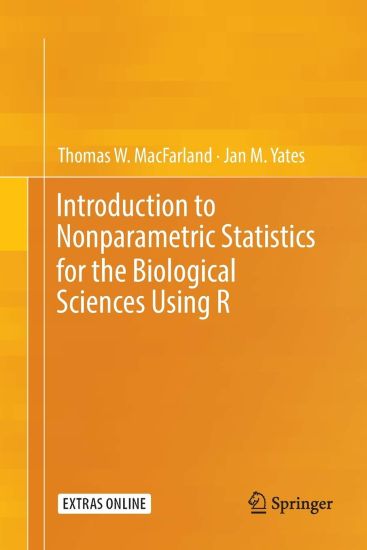
Introduction to Nonparametric Statistics for the Biological Sciences Using R

Introduction to Nonparametric Statistics for the Biological Sciences Using R

Thomas W. MacFarland; Jan M. Yates

Springer International Publishing AG
2018
nidottu
This book contains a rich set of tools for nonparametric analyses, and the purpose of this text is to provide guidance to students and professional researchers on how R is used for nonparametric data analysis in the biological sciences: To introduce when nonparametric approaches to data analysis are appropriateTo introduce the leading nonparametric tests commonly used in biostatistics and how R is used to generate appropriate statistics for each testTo introduce common figures typically associated with nonparametric data analysis and how R is used to generate appropriate figures in support of each data set The book focuses on how R is used to distinguish between data that could be classified as nonparametric as opposed to data that could be classified as parametric, with both approaches to data classification covered extensively. Following an introductory lesson on nonparametric statistics for the biological sciences, the book is organized into eight self-contained lessons on various analyses and tests using R to broadly compare differences between data sets and statistical approach.
Introduction to Nonparametric Statistics for the Biological Sciences Using R

Introduction to Nonparametric Statistics for the Biological Sciences Using R

Thomas W. MacFarland; Jan M. Yates

Springer International Publishing AG
2016
sidottu
This book contains a rich set of tools for nonparametric analyses, and the purpose of this text is to provide guidance to students and professional researchers on how R is used for nonparametric data analysis in the biological sciences: To introduce when nonparametric approaches to data analysis are appropriateTo introduce the leading nonparametric tests commonly used in biostatistics and how R is used to generate appropriate statistics for each testTo introduce common figures typically associated with nonparametric data analysis and how R is used to generate appropriate figures in support of each data set The book focuses on how R is used to distinguish between data that could be classified as nonparametric as opposed to data that could be classified as parametric, with both approaches to data classification covered extensively. Following an introductory lesson on nonparametric statistics for the biological sciences, the book is organized into eight self-contained lessons on various analyses and tests using R to broadly compare differences between data sets and statistical approach.
Introduction to Data Analysis and Graphical Presentation in Biostatistics with R

Introduction to Data Analysis and Graphical Presentation in Biostatistics with R

Thomas W. MacFarland

Springer International Publishing AG
2013
nidottu
Through real-world datasets, this book shows the reader how to work with material in biostatistics using the open source software R. These include tools that are critical to dealing with missing data, which is a pressing scientific issue for those engaged in biostatistics. Readers will be equipped to run analyses and make graphical presentations based on the sample dataset and their own data. The hands-on approach will benefit students and ensure the accessibility of this book for readers with a basic understanding of R. Topics include: an introduction to Biostatistics and R, data exploration, descriptive statistics and measures of central tendency, t-Test for independent samples, t-Test for matched pairs, ANOVA, correlation and linear regression, and advice for future work.
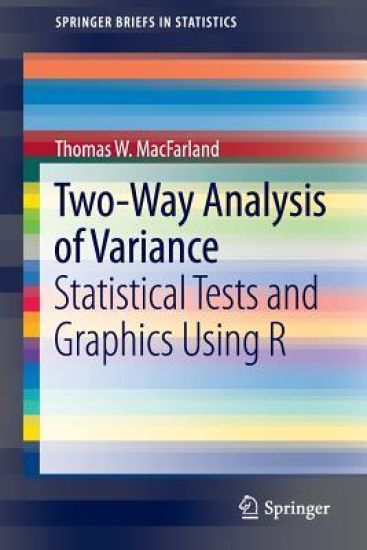
Two-Way Analysis of Variance

Two-Way Analysis of Variance

Thomas W. MacFarland

Springer-Verlag New York Inc.
2011
nidottu
?In statistics, analysis of variance (ANOVA) is a collection of statistical models used to distinguish between an observed variance in a particular variable and its component parts. In its simplest form, ANOVA provides a statistical test of whether or not the means of several groups are all equal, and therefore generalizes a test between these groups. One test often used by statisticians and researchers in their work is the Two-Way ANOVA, which determines the differences--and possible interactions--when variables are presented from the perspective of two or more categories. When a Two-Way ANOVA is implemented, it enables one to compare and contrast variables resulting from independent or joint actions. This brief provides guidance on how R can be used to facilitate Two-Way ANOVA for data analysis and graphical presentation. Along with instruction on the use of R and R syntax associated with Two-Way ANOVA, this brief will also reinforce the use of descriptive statistics and graphicalfigures to complement outcomes from parametric Two-Way ANOVA.