Kirjailija
Thomas W. Walker
Kirjat ja teokset yhdessä paikassa: 12 kirjaa, julkaisuja vuosilta 1970-2024, suosituimpien joukossa Luke. Vertaile teosten hintoja ja tarkista saatavuus suomalaisista kirjakaupoista.
Mukana myös kirjoitusasut: Thomas W Walker
12 kirjaa
Kirjojen julkaisuhaarukka 1970-2024.
While others might tell stories claiming the world is without promise, Luke presents the narrative of Jesus Christ as good news, challenge, and hope. For Luke, this is the only story that makes sense of the past, offers guidance for the present, and secures hope for the future.Interpretation Bible Studies (IBS) offers solid biblical content in a creative study format. Forged in the tradition of the celebrated Interpretation commentary series, IBS makes the same depth of biblical insight available in a dynamic, flexible, and user-friendly resource. Designed for adults and older youth, IBS can be used in small groups, in church school classes, in large group presentations, or in personal study.
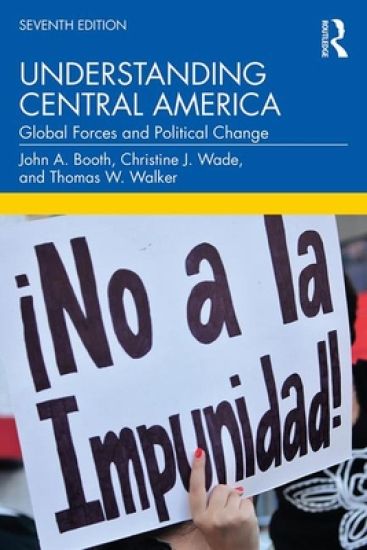
Understanding Central America
John A. Booth; Christine J. Wade; Thomas W. Walker
Routledge
2020
nidottu
In this seventh edition, John A. Booth, Christine J. Wade, and Thomas W. Walker update a classic in the field which invites students to explore the histories, economies, and politics of Costa Rica, Nicaragua, El Salvador, Guatemala, and Honduras. Covering the region's political and economic development from the early 1800s onward, the authors bring the Central American story up to date.New to the 7th Edition:Analysis of trends in human rights performance, political violence, and evolution of regime types; Updated findings from surveys to examine levels of political participation and support for democratic norms among Central Americans; Historical and current-era material on indigenous peoples and other racial minorities; Discussion of popular attitudes toward political rights for homosexuals, and LGBTQ access to public services; Discussion of women’s rights and access to reproductive health services, and women’s integration into elective offices; Tracing evolving party systems, national elections, and US policy toward the region under the Obama and Trump administrations; Central America’s international concerns including Venezuela’s shrinking role as an alternative source of foreign aid and antagonist to US policy in the region, and migration among and through Central American nations.Understanding Central America is an ideal text for all students of Latin American politics and is highly recommended for courses on Central American politics, social systems, and history.
Understanding Central America
John A. Booth; Christine J. Wade; Thomas W. Walker
Routledge
2020
sidottu
In this seventh edition, John A. Booth, Christine J. Wade, and Thomas W. Walker update a classic in the field which invites students to explore the histories, economies, and politics of Costa Rica, Nicaragua, El Salvador, Guatemala, and Honduras. Covering the region's political and economic development from the early 1800s onward, the authors bring the Central American story up to date.New to the 7th Edition:Analysis of trends in human rights performance, political violence, and evolution of regime types; Updated findings from surveys to examine levels of political participation and support for democratic norms among Central Americans; Historical and current-era material on indigenous peoples and other racial minorities; Discussion of popular attitudes toward political rights for homosexuals, and LGBTQ access to public services; Discussion of women’s rights and access to reproductive health services, and women’s integration into elective offices; Tracing evolving party systems, national elections, and US policy toward the region under the Obama and Trump administrations; Central America’s international concerns including Venezuela’s shrinking role as an alternative source of foreign aid and antagonist to US policy in the region, and migration among and through Central American nations.Understanding Central America is an ideal text for all students of Latin American politics and is highly recommended for courses on Central American politics, social systems, and history.
Reagan Versus The Sandinistas
Thomas W Walker; Harvey Williams; Peter Kornbluh; Eva Gold
TAYLOR FRANCIS LTD
2024
nidottu
The product of research and investigation by a team of sixteen authors, Reagan versus the Sandinistas is the most comprehensive and current study to date of the Reagan administration's mounting campaign to reverse the Sandinista revolution. The authors thoroughly examine all major aspects of Reagan's "low-intensity war," from the U.S. government's attempts at economic destabilization to direct CIA sabotage and the sponsorship of the contras or freedom fighters. They also explore less-public tactics such as electronic penetration, behind-the-scenes manipulation of religious and ethnic tensions, and harassment of U.S. Nicaraguan specialists and "fellow travelers." The book concludes with a consideration of the impact of these activities and their implications for international law, U.S. interests, U.S. polity, and Nicaragua itself. Reagan versus the Sandinistas is designed not only for courses on Latin America, U.S. foreign policy, and international relations, but also for students, scholars, and others interested in understanding one of the most massive, complex efforts—short of direct intervention—organized by the United States to overthrow the government of another country.
A comprehensive overview of the Sandinista revolution in Nicaragua, this book offers an interdisciplinary study of the domestic and foreign challenges that faced the Sandinista government during its ten years in power. Based on extensive research in Nicaragua during the revolution, the essays examine important aspects of both the revolution and the U.S.-orchestrated counterrevolution that brought it to an end. After an introduction to the historical background of the revolutionary period, contributors offer an overview of specific groups and institutions within the revolution, such as women, grass-roots organizations, and the armed forces, and provide a balanced assessment of Sandinista public policy and performance in such areas as agrarian reform, health care, education, and housing. The impact and implications of the contra war, financed by the United States, are also analyzed, as well as efforts made over the years to promote a negotiated peace.
Reagan Versus The Sandinistas
Thomas W Walker; Harvey Williams; Peter Kornbluh; Eva Gold
Routledge
2020
sidottu
The product of research and investigation by a team of sixteen authors, Reagan versus the Sandinistas is the most comprehensive and current study to date of the Reagan administration's mounting campaign to reverse the Sandinista revolution. The authors thoroughly examine all major aspects of Reagan's "low-intensity war," from the U.S. government's attempts at economic destabilization to direct CIA sabotage and the sponsorship of the contras or freedom fighters. They also explore less-public tactics such as electronic penetration, behind-the-scenes manipulation of religious and ethnic tensions, and harassment of U.S. Nicaraguan specialists and "fellow travelers." The book concludes with a consideration of the impact of these activities and their implications for international law, U.S. interests, U.S. polity, and Nicaragua itself. Reagan versus the Sandinistas is designed not only for courses on Latin America, U.S. foreign policy, and international relations, but also for students, scholars, and others interested in understanding one of the most massive, complex efforts—short of direct intervention—organized by the United States to overthrow the government of another country.
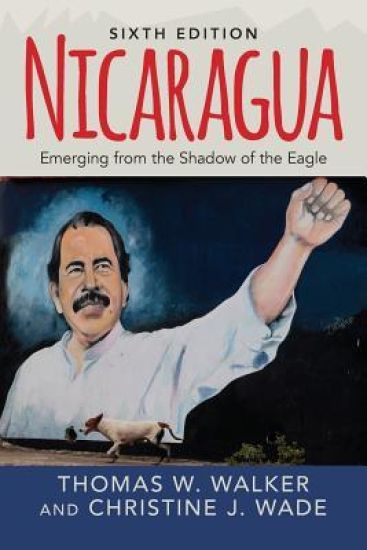
Nicaragua: Emerging from the Shadow of the Eagle details the country's unique history, culture, economics, politics, and foreign relations. Its historical coverage considers Nicaragua from pre-Columbian and colonial times as well as during the nationalist liberal era, the U.S. Marine occupation, the Somoza dictatorship, the Sandinista revolution and government, the conservative restoration after 1990, and consolidation of the FSLN's power since the return of Daniel Ortega to the presidency in 2006.The thoroughly revised and updated sixth edition features new material covering political, economic, and social developments since 2011. This includes expanded discussions on economic diversification, women and gender, and social programs. Students of Latin American politics and history will learn the how the interventions by the United States 'the eagle' to 'the north' have shaped Nicaraguan political, economic, and cultural life, but also the extent to which Nicaragua is increasingly emerging from the eagle's shadow.
A comprehensive overview of the Sandinista revolution in Nicaragua, this book offers an interdisciplinary study of the domestic and foreign challenges that faced the Sandinista government during its ten years in power. Based on extensive research in Nicaragua during the revolution, the essays examine important aspects of both the revolution and the U.S.-orchestrated counterrevolution that brought it to an end. After an introduction to the historical background of the revolutionary period, contributors offer an overview of specific groups and institutions within the revolution, such as women, grass-roots organizations, and the armed forces, and provide a balanced assessment of Sandinista public policy and performance in such areas as agrarian reform, health care, education, and housing. The impact and implications of the contra war, financed by the United States, are also analyzed, as well as efforts made over the years to promote a negotiated peace.
Nicaragua: Emerging from the Shadow of the Eagle details the country's unique history, culture, economics, politics, and foreign relations. Its historical coverage considers Nicaragua from pre-Columbian and colonial times as well as during the nationalist liberal era, the U.S. Marine occupation, the Somoza dictatorship, the Sandinista revolution and government, the conservative restoration after 1990, and consolidation of the FSLN's power since the return of Daniel Ortega to the presidency in 2006.The thoroughly revised and updated sixth edition features new material covering political, economic, and social developments since 2011. This includes expanded discussions on economic diversification, women and gender, and social programs. Students of Latin American politics and history will learn the how the interventions by the United States 'the eagle' to 'the north' have shaped Nicaraguan political, economic, and cultural life, but also the extent to which Nicaragua is increasingly emerging from the eagle's shadow.
Focusing on Nicaragua after the 1990 Sandinista electoral defeat, this book is a comprehensive, multidisciplinary study of one of the most unusual cases of regime transition in the late 20th century. It shows the similarities and differences between Nicaragua's regime and those of other countries.
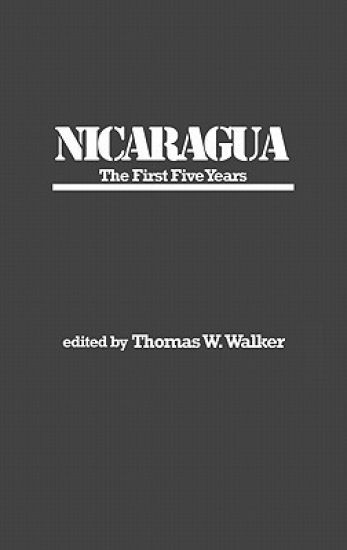
This timely book, with its useful and comprehensive index, is an insightful study of Nicaragua that should be read by any student of foreign affairs. Journal of Internal Law & PoliticsThis book is an examination of the evolving social and political atmosphere during the first half decade after the Sandinist revolution. Written by eminent scholars and participants Nicaragua documents the rapid social change that has occurred during the last five years. The essays focus on agrarian reform, education, health care, food policy, and Nicaragua's relations with the U.S., Latin America, Europe, and the non-alligned and socialist bloc nations.
Christian Democratic Movement in Nicaragua
Thomas W. Walker
University of Arizona Press
1970
pokkari