Kirjojen hintavertailu. Mukana 12 246 459 kirjaa ja 12 kauppaa.

Kirjailija

Thomas Wolfe

Kirjat ja teokset yhdessä paikassa: 53 kirjaa, julkaisuja vuosilta 1986-2025, suosituimpien joukossa Von Zeit und Strom. Vertaile teosten hintoja ja tarkista saatavuus suomalaisista kirjakaupoista.

53 kirjaa

Kirjojen julkaisuhaarukka 1986-2025.

Mannerhouse: A Play in a Prologue and Three Acts

Mannerhouse: A Play in a Prologue and Three Acts

Thomas Wolfe

Literary Licensing, LLC
2012
sidottu
""Mannerhouse"" is a play written by acclaimed American author Thomas Wolfe. The play is divided into a prologue and three acts, and is set in the early 20th century in the fictional town of Mannerhouse, North Carolina. The story revolves around the wealthy Mannerhouse family and their struggles with love, betrayal, and societal expectations. The patriarch of the family, John Mannerhouse, is a successful businessman who is obsessed with maintaining his family's reputation and status. His wife, Elizabeth, is unhappy in her marriage and has a secret lover. Their daughter, Margaret, is engaged to a man she does not love and is torn between her duty to her family and her own desires. The play explores themes of class, gender, and the destructive nature of societal expectations. It is a powerful and emotional story that delves into the complex relationships between family members and the consequences of their actions.This scarce antiquarian book is a facsimile reprint of the old original and may contain some imperfections such as library marks and notations. Because we believe this work is culturally important, we have made it available as part of our commitment for protecting, preserving, and promoting the world's literature in affordable, high quality, modern editions, that are true to their original work.
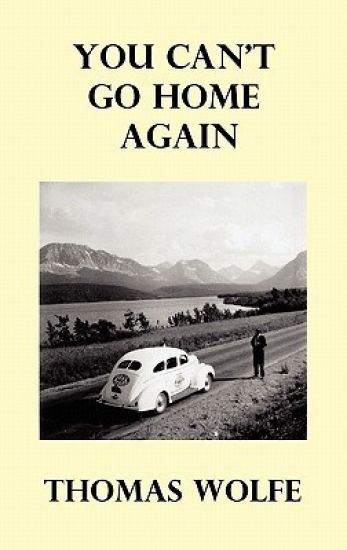
You Can't Go Home Again

You Can't Go Home Again

Thomas Wolfe

Scribner Book Company
2011
nidottu
Now available from Thomas Wolfe's original publisher, the final novel by the literary legend, that "will stand apart from everything else that he wrote" (The New York Times Book Review)--first published in 1940 and long considered a classic of twentieth century literature. A twentieth-century classic, Thomas Wolfe's magnificent novel is both the story of a young writer longing to make his mark upon the world and a sweeping portrait of America and Europe from the Great Depression through the years leading up to World War II. Driven by dreams of literary success, George Webber has left his provincial hometown to make his name as a writer in New York City. When his first novel is published, it brings him the fame he has sought, but it also brings the censure of his neighbors back home, who are outraged by his depiction of them. Unsettled by their reaction and unsure of himself and his future, Webber begins a search for a greater understanding of his artistic identity that takes him deep into New York's hectic social whirl; to London with an uninhibited group of expatriates; and to Berlin, lying cold and sinister under Hitler's shadow. He discovers a world plagued by political uncertainty and on the brink of transformation, yet he finds within himself the capacity to meet it with optimism and a renewed love for his birthplace. He is a changed man yet a hopeful one, awake to the knowledge that one can never fully "go back home to your family, back home to your childhood...away from all the strife and conflict of the world...back home to the old forms and systems of things which once seemed everlasting but which are changing all the time."
You Can't Go Home Again

You Can't Go Home Again

Thomas Wolfe

Benediction Classics
2010
pokkari
This classic of American literature tells the story of George Webber, a rising novelist, who returns to his hometown only to face a wave of hatred and rejection from the inhabitants, who feel his latest work ridicules their way of life. George goes into exile, first in New York, then London and continental Europe, living life to the full but burdened by the belief that he can never return to his roots. This work, although published posthumously and heavily edited from Wolfe's surviving manuscri
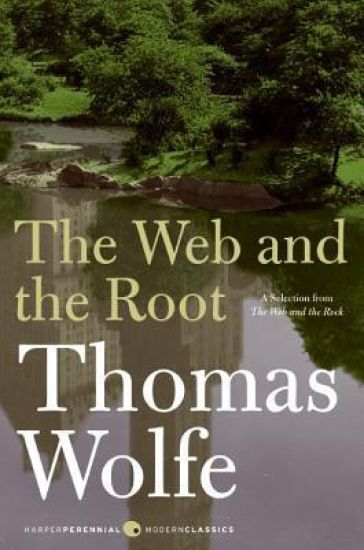
The Web and the Root

The Web and the Root

Thomas Wolfe

HARPER PERENNIAL
2009
nidottu
Published for the first time as a discrete whole, The Web and the Root presents the critically acclaimed opening sections of Thomas Wolfe's classic novel The Web and the RockShortly before his death at a tragically young age, author Thomas Wolfe presented his editor with an epic masterwork that was subsequently published as three separate novels: You Can't Go Home Again, The Hills Beyond, and The Web and the Rock.The Web and the Root features the three initial sections of the The Web and the Rock, widely considered to be the book's strongest material. A prequel to You Can't Go Home Again, it is the story of George Webber's momentous journey from Libya Falls, North Carolina, to the Golden City of the North--offering vivid, sometimes cutting depictions of rural pleasures and small-town clannishness while exploring boundless urban possibility and the complex, violent undercurrents of the metropolis.
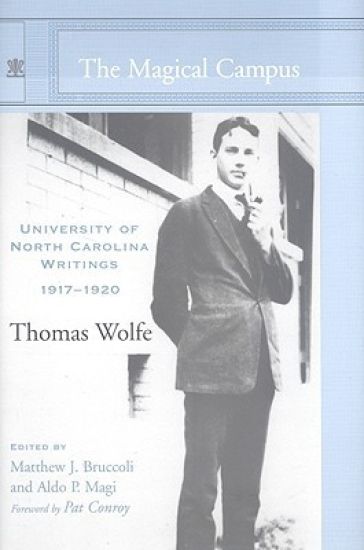
The Magical Campus

The Magical Campus

Thomas Wolfe; Pat Conroy

University of South Carolina Press
2008
sidottu
This is a collection of Wolfe's earliest publications from his college years.The ""Magical Campus"" collects for the first time Thomas Wolfe's earliest published works - including poems, plays, short fiction, news articles, speeches, and essays - both signed and unsigned, assembled in chronological order. The collegiate career of Wolfe began at UNC Chapel Hill in 1916, at the age of fifteen, with a freshman year marked by obscurity and loneliness. By his junior year, he had emerged as a recognized and popular figure in campus life, a central participant in numerous organizations and fraternities, and the editor of several student publications. Wolfe began in these apprenticeship years his ascendancy to iconic literary status.Included in ""The Magical Campus"" is Wolfe's first published work, the poem ""A Field in Flanders"" from the November 1917 issue of the University of North Carolina Magazine. Here too is the poem ""The Challenge,"" Wolfe's first piece to be subsequently reprinted off campus in his hometown newspaper. ""A Cullenden of Virginia"" marked his inaugural foray into the realm of published fiction and his folk plays, such as ""The Return of Buck Gavin"" and ""Deferred Payment,"" are illustrative of his unrealized ambitions to be a playwright. Though they lack the sophistication and scale of the grand fictions that now define Wolfe's place in literature, his student publications speak to the potential he had tapped into.
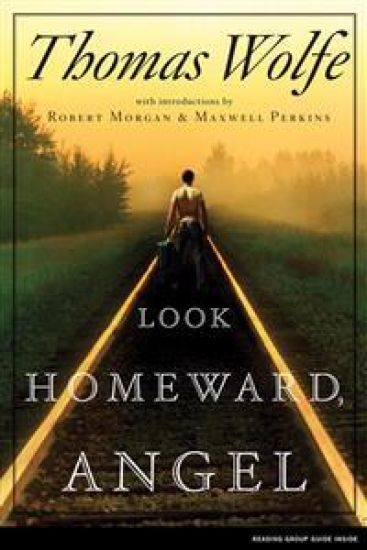
Look Homeward, Angel

Look Homeward, Angel

Thomas Wolfe

Simon Schuster
2006
pokkari
A Southern family with a great appetite for living is dominated by the father until an older son, Eugene, is able to free himself from his rural North Carolina hometown to seek the challenges of an Ivy League education and big city life. Reissue. 75,000 first printing.
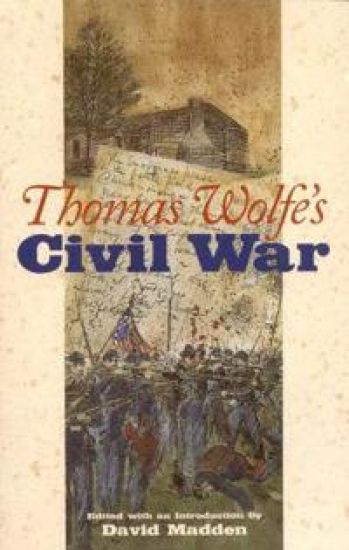
Thomas Wolfe's Civil War

Thomas Wolfe's Civil War

Thomas Wolfe

The University of Alabama Press
2004
nidottu
This collection of Thomas Wolfe's writings demonstrates the centrality of the Civil War to Wolfe's literary concerns and identity. From Look Homeward, Angel to The Hills Beyond and The Web and the Rock, Wolfe perpetually returned to the themes of loss, dissolution, sorrow, and romance engendered in the minds of many southerners by the Civil War and its lingering aftermath. His characters reflect time and again on Civil War heroes and dwell on ghostlike memories handed down by their mothers, fathers, and grandfathers. Wolfe and his protagonists compare their contemporary southern landscape to visions they have conjured of its appearance before and during the war, thereby merging the past with the present in an intense way. Ultimately, Wolfe's prose style - incantatory and rhapsodic - is designed to evoke the national tragedy on an emotional level. Selections of Wolfe's writings in this collection include short stories (""Chickamauga,"" ""Four Lost Men,"" ""The Plumed Knight""), excerpts from his novels (O Lost, the restored version of Look Homeward, Angel, The Hills Beyond, and Of Time and the River) and a play, Mannerhouse, edited and introduced by David Madden. Madden, who makes the provocative claim that everything a southern writer writes derives from the Civil War experience, also highlights many issues essential to understanding Wolfe's absorption with the Civil War.
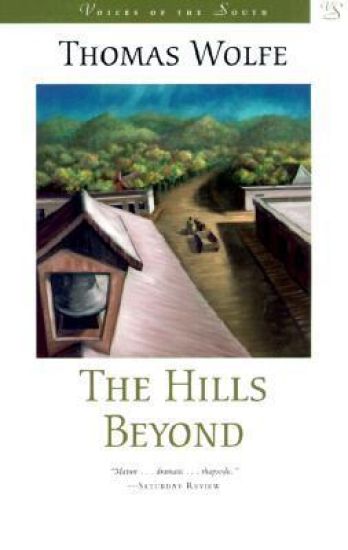
The Hills Beyond

The Hills Beyond

Thomas Wolfe

Louisiana State University Press
2000
nidottu
The third and last book culled from the mountain of manuscript Thomas Wolfe left behind, The Hills Beyond ""contains some of his best, and certainly his most mature, work"" - New York Times Book Review. The unfinished novel from which this collection of sketches, stories, and novellas takes its title was Wolfe's final effort. It tells the story of the Joyner family, George Webber's maternal ancestors, in pre-Civil War North Carolina and illustrates Wolfe's fine sense of family traits rooted in a traceable past. ""Chickamauga"" is the superb Civil War tale that Wolfe received from his great-uncle; ""The Lost Boy"" renders a second, more tender, treatment of the death of young Grover Gant; and ""The Return of the Prodigal"" describes Eugene Gant's imagined and then actual revisit to Altamont when he is a famous author. Together the eleven pieces of The Hills Beyond confirm the passion, energy, and sensitivity that made Wolfe the most promising American writer of his generation.
Welcome to Our City

Welcome to Our City

Thomas Wolfe

Louisiana State University Press
1999
nidottu
In 1920 Thomas Wolfe left the South with the strong desire to become a dramatist. To pursue his chosen craft, he enrolled in the Harvard 47 Workshop, at that time the most renowned in the nation. At first he wrote plays about Appalachian society and the Civil War. But it was not until Wolfe turned to the modern South, inspired by a disturbing return to his hometown of Asheville, North Carolina, that his genius awoke. There he found the material he would work into the best of his three full-length plays written at Harvard, the material that in the next decade would be recast into the novels that would make him famous. This is the first book publication of Welcome to Our City, Thomas Wolfe's play in ten scenes of a modern South ruled by liars and real estate agents, overrun with boosterism, and dedicated to greed. This sprawling, fiery work has lain dormant among Wolfe's papers for over fifty years, abandoned by its author after an unsuccessful attempt to revise and shorten it for a New York Theatre Guild production. For this edition, Richard S. Kennedy has reassembled a full performance text of the workshop version presented at Harvard in 1923, a production that involved forty-five cast members, including over thirty speaking parts, required seven stage changes, and lasted over three and a half hours in performance.The action of Welcome to Our City centers on a scheme of the town fathers and real estate promoters of Altamont, a small southern city, to snatch up all the property in a centrally located black district, evict the tenants, tear down their houses and shops, and build a new white residential section in its place. When the blacks, under the angry leadership of a strong-willed doctor, resist eviction, a race riot breaks out, shattering both the precarious social balance of the city and the ""progressive"" dreams of Altamont's boosters. Building on this plot, Wolfe guides his audience through the back rooms, stately homes, ans shanty towns of Altamont, contrasting tradition-bound southern characters with a new breed of life drawn from the vast menagerie of 1920s Main Street America: fact-spouting yes-men, hypocritical religious leaders, anti-intellectual professors, provincial country club matrons, and politicians inauthentic from their heads to their feet.Welcome to Our City is not merely an exhibit in the artistic development of a future novelist. Wolfe used the dramatic form inventively and with considerable inspiration to expose the culture of greed that he saw spreading around him and to caricature the men who, he feared, would usher in an age of mediocrity across America. Emotionally gripping and mockingly satiric, Welcome to Our City captures the festering social climate of the 1920s in a vision of life that is uncomfortably relevant to our own times.