

Kirjailija
Thupten Jinpa
Kirjat ja teokset yhdessä paikassa: 16 kirjaa, julkaisuja vuosilta 2002-2026, suosituimpien joukossa The Tibetan Book of Everyday Wisdom. Vertaile teosten hintoja ja tarkista saatavuus suomalaisista kirjakaupoista.
16 kirjaa
Kirjojen julkaisuhaarukka 2002-2026.
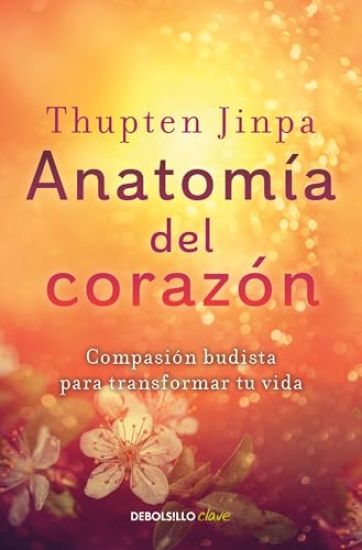
Anatomía del Corazón: Compasión Budista Para Transformar Tu Vida / A Fearless Heart: How the Courage to Be Compassionate Can Transform Our Lives
Thupten Jinpa
Debolsillo
2026
nidottu
Thupten Jinpa, traductor del Dalai Lama, nos habla del poder transformador de la compasi n en nuestra vida y de c mo esta innata bondad amorosa es la llave de nuestra propia felicidad. He aqu una pr ctica m s poderosa para el cambio personal que el mindfulness la compasi n. Basado en el revolucionario curso que imparte en la Universidad de Stanford, Thupten Jinpa nos ense a que la compasi n puede ser un camino no siempre sencillo de cruzar, pero que tambi n es un m sculo que, si lo desarrollamos con los ejercicios cotidianos propuestos en este libro, dar m s significado a nuestra vida, permitir una mayor conexi n con el otro, propiciar la completud con nosotros mismos y, finalmente, ser la llave de nuestra propia felicidad. Mediante experiencias personales y ejercicios de meditaci n, Anatom a del coraz n nos gu a hacia un entrenamiento f sico y mental seg n las perspectivas de la tradici n budista tibetana y de la psicolog a occidental con los que liberamos estr s, combatimos la depresi n, mejoramos nuestra salud, alcanzamos nuestras metas y cambiamos nuestro mundo. Personalidades han opinado sobre la obra de Thupten Jinpa: "Anatom a del coraz n es un libro nico que muestra c mo conjugar la contemplaci n y las pr cticas budistas con la ciencia, as como el modo en que esto beneficia a todos los interesados en la transformaci n espiritual a trav s de pr cticas que tienen un impacto positivo en la vida diaria. Aplaudo a mi traductor Thupten Jinpa por escribir este oportuno libro sobre la compasi n y su cultivo." -Su Santidad el Dalai Lama- "Thupten Jinpa habla desde su experiencia como monje que se convierte en padre de familia y alumno destacado para vertir su conocimiento y su pasado en este libro lleno de herramientas para llegar a ser mejores seres humanos. Anatom a del coraz n nos ayuda a nutrirnos en la compasi n que habita en todo coraz n." -Daniel Goleman, autor de Inteligencia emocional- "Me fascina c mo Jinpa aterriza la compasi n como una forma de vida para todos dentro de nuestra ca tica realidad. Anatom a del coraz n es un libro imprescindible para estos tiempos dif ciles" -Richard Gere- ENGLISH DESCRIPTION The highly acclaimed thought leader and English translator of the Dalai Lama shows us how compassion works as a powerful inner resource that can yield surprising and compelling benefits--not just for others, but for ourselves. The Buddhist practice of mindfulness first caught on in the West when we began to understand its many practical benefits. Now Thupten Jinpa, Ph.D., introduces a practice with even greater life-changing power: compassion. Based on the revolutionary course in Compassion Cultivation Training at Stanford that Jinpa helped to create, A Fearless Heart shows us that compassion can be a path through suffering, a key to robust health, and even an effective way to reach our goals. Yet we fear compassion. We worry that if we are too compassionate with others, they will take advantage of us, and too much self-compassion will make us slackers. Pulling from the latest Western research as well as traditional Buddhist psychology, Jinpa offers simple daily practices that will help readers train their compassion muscle for a greater meaning, connection, and fulfillment.

Creating Compassionate Change in School Communities
Ashley Seidel Potvin; William R. Penuel; Sona Dimidjian; Thupten Jinpa
JOHN WILEY SONS INC
2025
nidottu
Addressing everyday suffering in schools through compassion Compassion and dignity provide an essential framework for building caring and inclusive schools. Many books focus on what teachers can do as individuals; Creating Compassionate Change in School Communities is different. This book focuses both on how educators can cultivate compassion within themselves and lead together to cultivate humanizing school environments. Teachers, librarians, counselors, resource specialists, mental health professionals, and social workers who are working to create conditions for compassion and dignity in schools are all leaders who can impact change. Offering concrete evidence and case studies that showcase the power of compassion to create flourishing school communities and rejuvenate education, the book will help all educators better serve K-12 students with school cultures that promote healing. Compassion can be cultivated, dignity can be affirmed, and leaders need skillful means to do so—tools and practices that can help them develop compassion for themselves and others and see their own dignity and that of others. Experiment and engage in meditation practices to strengthen personal capacity for mindfulness and compassion and the application to the classroom and school communitiesEngage in hands-on writing exercises and self-reflection questions educators can ask themselves and then apply their personal growth to influence school policies and climateGain perspective on compassion in schools through a multidisciplinary lens drawing from contemplative practices, psychology, and organizational change theoryLearn from stories and examples of K-12 educators who have exemplified compassion in action While we cannot fully address all the suffering that is happening in schools today, educators do have the power to work within themselves and together locally to create more compassionate responses to suffering and to affirm the dignity of all members of their school communities. Creating Compassionate Change in School Communities offers a valuable approach to integrating wellness into schools, as much for principals and superintendents as for teacher leaders, librarians, counselors, resource specialists, and others who work to create the conditions for compassion and dignity in their school.
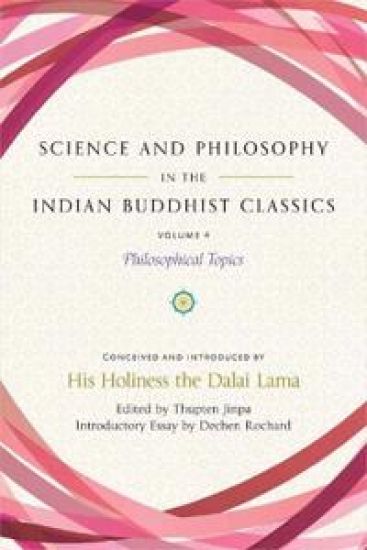
Science and Philosophy in the Indian Buddhist Classics, Vol. 4
Dechen Rochard; Thupten Jinpa
WISDOM PUBLICATIONS,U.S.
2023
sidottu
This fourth and final Science and Philosophy in the Indian Buddhist Classics volume provides, through extensive passages, a window into the works of the great thinkers from the flowering of philosophy in classical India. This is the second philosophy volume in the Science and Philosophy series. Whereas the first philosophy volume presented the views of the non-Buddhist and Buddhist schools in sequence, the present work selects specific topics for consideration, including the nature of the two truths, the analysis of self, the Yogacara explanation of reality, emptiness in the Madhyamaka tradition, a survey of logic and epistemology, and the Buddhist explanation of language and meaning. Like earlier volumes, it provides, through extensive extracts, a window into the works of the masters of the Nalanda tradition. The final section on language is particularly unique and largely crafted by Thupten Jinpa.
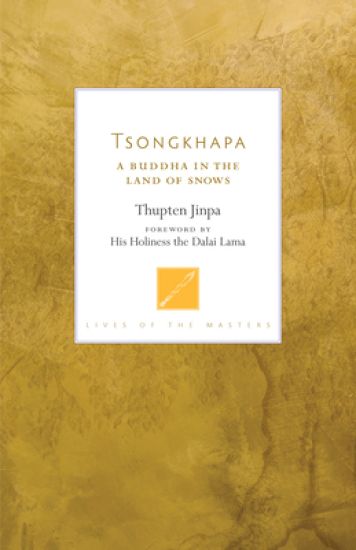
The new standard work and definitive biography of Tsongkhapa, one of the principle founders of the Gelug school of Tibetan Buddhism--the school of the Dalai Lamas. In this groundbreaking new addition to the Lives of the Masters series, scholar-practitioner Thupten Jinpa writes the most comprehensive portrait available of Je Tsongkhapa (1357-1419), one of the greatest Buddhist teachers in history. A devout monastic, Tsongkhapa took on the enormous task of locating and studying all of the Indian Buddhist classics available in Tibet in his day. He went on to synthesize this knowledge into a holistic approach to the path of awakening, integrating the pivotal Mahayana teachings on emptiness while retaining the important role of critical reason and avoiding the extreme of negating the reality of the everyday world. Included in this volume is a discussion of Tsongkhapa's early life and training; his emergence as a precociously intelligent Buddhist mind; the composition of his Great Treatise on the Stages of the Path to Enlightenment, Great Exposition of Secret Mantra, and other important works; and his transformative effect on the understanding and practice of Buddhism in Tibet in his time--and ever after.
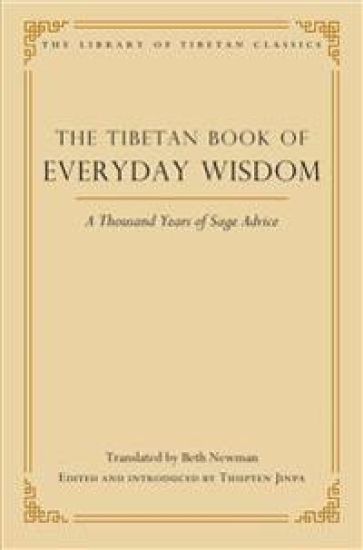
Enjoy popular Tibetan collections of advice, fables, and aphorisms for following the way of the wise and avoiding the path of fools. The Tibetan Book of Everyday Wisdom: A Thousand Years of Sage Advice presents a genre of Tibetan works known as "wise sayings" (leksh). While most Tibetan literature focuses on the Buddhist path, wise sayings literature has traditionally been a centerpiece of secular education in Tibet and in the cultivation of social mores and an honorable way of life. Drawing inspiration from classical Indian literature on human virtue and governance (nitisastra), including the folktales in the Pa catantra, the authors of these Tibetan works strove to educate young minds in the ways of the civilized world, especially by distinguishing the conduct of the wise from that of the foolish. This anthology includes some of the best-loved classics of Tibetan literature, such as Sakya Pandita's Jewel Treasury of Wise Sayings, Panchen S nam Drakpa's Ganden Wise Sayings, and Gungthang's Treatise on Trees and Treatise on Water. The final work is the intriguing Kach Phalu's Advice. Ostensibly written by a wise Tibetan Muslim, this versified text enjoys great popularity within Tibetan-speaking communities, such that many Tibetans are able to recite at least a few verses from memory.
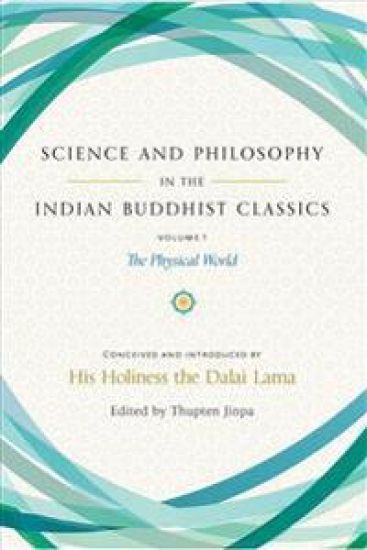
Science and Philosophy in the Indian Buddhist Classics
His Holiness the Dalai Lama; Thupten Jinpa
Wisdom Publications,U.S.
2017
sidottu
Explore the nature of our material world in a unique sourcebook, conceived by the Dalai Lama, collecting the scientific observations found in classical Buddhist treatises. Under the visionary supervision of His Holiness the Dalai Lama, Science and Philosophy in the Indian Buddhist Classics brings together classical Buddhist explorations of the nature of our material world and the human mind and puts them into context for the modern reader. It is the Dalai Lama's view that the explorations by the great masters of northern India in the first millennium CE still have much that is of interest today, whether we are Buddhist or not. Volume 1, The Physical World, explores the nature of our material world--from the macroscopic to the microscopic. It begins with an overview of the many frameworks, such as the so-called five aggregates, that Buddhist thinkers have used to examine the nature and scope of reality. Topics include sources of knowledge, the scope of reason, the nature and constituents of the material world, theories of the atom, the nature of time, the formation of the universe, and the evolution of life, including a detailed explanation of the early Buddhist theories on fetal development. The volume even contains a brief presentation on early theories about the structure and function of the brain and the role of microorganisms inside the human body. The book weaves together passages from the works of great Buddhist thinkers such as Asanga, Vasubandhu, Nagarjuna, Dignaga, and Dharmakirti. Each of the major topics is introduced by Thupten Jinpa, the Dalai Lama's principal English-language translator and founder of the Institute of Tibetan Classics.

How compassion can reduce stress and lead to a greater sense of wellbeing and happiness.
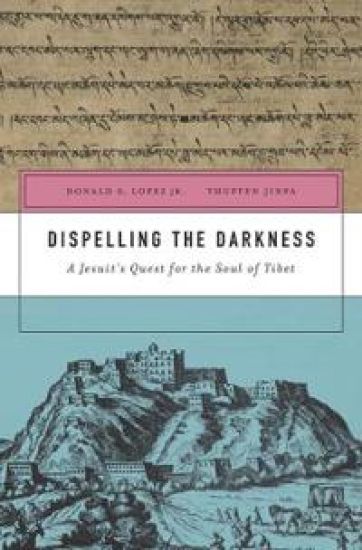
In a remote Himalayan village in 1721, the Jesuit priest Ippolito Desideri awaited permission from Rome to continue his mission to convert the Tibetan people to Christianity. In the meantime, he forged ahead with an ambitious project: a treatise, written in classical Tibetan, that would refute key Buddhist doctrines. If he could convince the Buddhist monks that these doctrines were false, thought Desideri, he would dispel the darkness of idolatry from Tibet.Offering a fascinating glimpse into the historical encounter between Christianity and Buddhism, Dispelling the Darkness brings Desideri’s Tibetan writings to readers of English for the first time. This authoritative study provides extended excerpts from Inquiry concerning the Doctrines of Previous Lives and Emptiness, Desideri’s unfinished masterpiece, as well as a full translation of Essence of the Christian Religion, a companion work that broadens his refutation of Buddhism. Desideri possessed an unusually sophisticated understanding of Buddhism and a masterful command of the classical Tibetan language. He believed that only careful argumentation could demolish the philosophical foundations of Buddhism, especially the doctrines of rebirth and emptiness that prevented belief in the existence of God. Donald Lopez and Thupten Jinpa’s detailed commentary reveals how Desideri deftly used Tibetan literary conventions and passages from Buddhist scriptures to make his case.When the Vatican refused Desideri’s petition, he returned to Rome, his manuscripts in tow, where they languished unread in archives. Dispelling the Darkness brings these vital texts to light after centuries of neglect.

A Fearless Heart: How the Courage to Be Compassionate Can Transform Our Lives
Thupten Jinpa
Avery Publishing Group
2016
nidottu
The highly acclaimed thought leader and English translator of the Dalai Lama shows us how compassion works as a powerful inner resource that can yield surprising and compelling benefits--not just for others, but for ourselves. The Buddhist practice of mindfulness first caught on in the West when we began to understand its many practical benefits. Now Thupten Jinpa, Ph.D., introduces a practice with even greater life-changing power: compassion. Based on the revolutionary course in Compassion Cultivation Training at Stanford that Jinpa helped to create, A Fearless Heart shows us that compassion can be a path through suffering, a key to robust health, and even an effective way to reach our goals. Yet we fear compassion. We worry that if we are too compassionate with others, they will take advantage of us, and too much self-compassion will make us slackers. Pulling from the latest Western research as well as traditional Buddhist psychology, Jinpa offers simple daily practices that will help readers train their compassion muscle for a greater meaning, connection, and fulfillment.

"Et frygtløst hjerte er en usædvanlig bog, der viser, hvordan mødet mellem kontemplativ indsigt samt praksis og moderne videnskab kan føre til muligheder, der er til gavn for alle, som interesserer sig for dybere personlig spirituel forandring. Bogen viser, hvordan en sådan praksis kan have positiv effekt i vores dagligdag. Jeg må rose min engelske oversætter gennem mange år, Thupten Jinpa, for at have skrevet denne betimelige bog om medfølelse og dens fremme." Hans Hellighed Dalai Lama ”Et frygtløst hjerte er fast forankret i de seneste videnskabelige undersøgelser og enormt inviterende og overbevisende i sin inspiration, sin argumentation, sin hjertelighed og sin vejledning i en bred vifte af kraftfulde praksisser, og jeg kender ingen anden modigere, klarere og mere engagerende bog om, hvorfor vi er nødt til at opdyrke medfølelse, og hvordan vi bringer den mere bredt og dybt ind i vores liv og ud i verden.” Jon Kabat-Zinn, grundlægger af mindfulnessbaseret stressreduktion Et frygtløst hjerte er baseret på et banebrydende otteugers kursus i medfølelsestræning, som forfatteren og tidligere munk Thupten Jinpa udviklede på Stanford University Medical School. Programmet i medfølelsestræning, der præsenteres i denne bog, viser, at en systematisk træning af vores sind og hjerte har de samme daglige, personlige fordele som mindfulness, men går skridtet videre mod at forandre vores fælles verden.
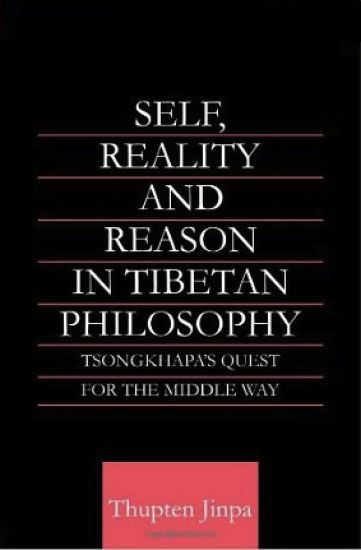
The work explores the historical and intellectual context of Tsongkhapa's philosophy and addresses the critical issues related to questions of development and originality in Tsongkhapa's thought. It also deals extensively with one of Tsongkhapa's primary concerns, namely his attempts to demonstrate that the Middle Way philosophy's deconstructive analysis does not negate the reality of the everyday world. The study's central focus, however, is the question of the existence and the nature of self. This is explored both in terms of Tsongkhapa's deconstruction of the self and his reconstruction of person. Finally, the work explores the concept of reality that emerges in Tsongkhapa's philosophy, and deals with his understanding of the relationship between critical reasoning, no-self, and religious experience.
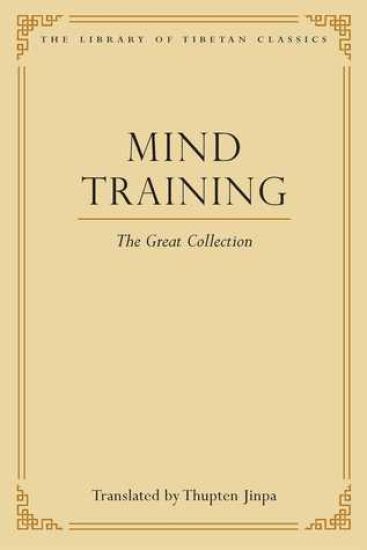
Compiled in the fifteenth century, Mind Training: The Great Collection is the earliest anthology of a special genre of Tibetan literature known as "mind training," or lojong in Tibetan. The principal focus of these texts is the systematic cultivation of such altruistic thoughts and emotions as compassion, love, forbearance, and perseverance. The mind-training teachings are highly revered by the Tibetan people for their pragmatism and down-to-earth advice on coping with the various challenges and hardships that unavoidably characterize everyday human existence. The volume contains forty-four individual texts, including the most important works of the mind training cycle, such as Serlingpa's well-known Leveling Out All Preconceptions, Atisha's Bodhisattva's Jewel Garland, Langri Thangpa's Eight Verses on Training the Mind, and Chekawa's Seven-Point Mind Training together with the earliest commentaries on these seminal texts. An accurate and lyrical translation of these texts, many of which are in metered verse, marks an important contribution to the world's literary heritage, enriching its spiritual resources.
The work explores the historical and intellectual context of Tsongkhapa's philosophy and addresses the critical issues related to questions of development and originality in Tsongkhapa's thought. It also deals extensively with one of Tsongkhapa's primary concerns, namely his attempts to demonstrate that the Middle Way philosophy's deconstructive analysis does not negate the reality of the everyday world. The study's central focus, however, is the question of the existence and the nature of self. This is explored both in terms of Tsongkhapa's deconstruction of the self and his reconstruction of person. Finally, the work explores the concept of reality that emerges in Tsongkhapa's philosophy, and deals with his understanding of the relationship between critical reasoning, no-self, and religious experience.