Kirjojen hintavertailu. Mukana 12 390 323 kirjaa ja 12 kauppaa.

Kirjailija

Tibor R. Machan

Kirjat ja teokset yhdessä paikassa: 28 kirjaa, julkaisuja vuosilta 1985-2020, suosituimpien joukossa Individual Rights Reconsidered. Vertaile teosten hintoja ja tarkista saatavuus suomalaisista kirjakaupoista.

Mukana myös kirjoitusasut: Tibor R Machan

28 kirjaa

Kirjojen julkaisuhaarukka 1985-2020.

Objectivity

Objectivity

Tibor R. Machan

Routledge
2020
nidottu
The question of objectivity is whether human beings are capable of knowing reality just as it is, or whether there is some necessary distortion in our grasp of the nature of things imposed either by the very nature of our cognitive mechanism, or by such factors as language, culture, personal ambitions, psychological disorders, and class interests. Could it be that we do not see the world at all, since we see it from a particular point of view? Can we ever satisfactorily establish that our understanding of reality is accurate, or must that always remain in doubt? In this book Professor Machan defends objectivity in philosophy, science, and everyday life from its many critics. Objectivity stands in need of a defence because it is a difficult ideal to serve, especially in an era of multiculturalism, deconstructionism, feminism, and diversity. People from different cultures report having radically different experiences, indeed radically different worlds. They usually claim that their experiences are as true as anyone else‘s. Deconstructionists tell us that we know nothing determinate beyond language, i.e., that we don‘t know what we are talking about. Feminists often maintain that women and men see the world in significantly different ways. The idea of diversity gains much of its plausibility from the idea that people from diverse backgrounds all have their own valid ways of seeing the world. The most prominent movements in Anglo-American and continental philosophy are against objectivity. Such figures as Richard Rorty and Jacques Derrida unambiguously deny that human beings are capable of knowing the world as it is. This book considers and responds to these and similar challenges to objectivity.

Objectivity

Objectivity

Tibor R. Machan

CRC Press Inc
2017
sidottu
The question of objectivity is whether human beings are capable of knowing reality just as it is, or whether there is some necessary distortion in our grasp of the nature of things imposed either by the very nature of our cognitive mechanism, or by such factors as language, culture, personal ambitions, psychological disorders, and class interests. Could it be that we do not see the world at all, since we see it from a particular point of view? Can we ever satisfactorily establish that our understanding of reality is accurate, or must that always remain in doubt? In this book Professor Machan defends objectivity in philosophy, science, and everyday life from its many critics. Objectivity stands in need of a defence because it is a difficult ideal to serve, especially in an era of multiculturalism, deconstructionism, feminism, and diversity. People from different cultures report having radically different experiences, indeed radically different worlds. They usually claim that their experiences are as true as anyone else‘s. Deconstructionists tell us that we know nothing determinate beyond language, i.e., that we don‘t know what we are talking about. Feminists often maintain that women and men see the world in significantly different ways. The idea of diversity gains much of its plausibility from the idea that people from diverse backgrounds all have their own valid ways of seeing the world. The most prominent movements in Anglo-American and continental philosophy are against objectivity. Such figures as Richard Rorty and Jacques Derrida unambiguously deny that human beings are capable of knowing the world as it is. This book considers and responds to these and similar challenges to objectivity.

Classical Individualism

Classical Individualism

Tibor R. Machan

Routledge
2014
nidottu
In Classical Individualism, Tibor R. Machan argues that individualism is far from being dead. Machan identifies, develops and defends what he calls classical individualism - an individualism humanised by classical philosophy, rooted in Aristotle rather than Hobbes. This book does not reject the social nature of human beings, but finds that every one has a self-directed agent who is responsible for what he or she does. Machan rejects all types of collectivism, including communitarianism, ethnic solidarity, racial unity, and gender identity. The ideas expressed here have important social and political implications, and will be of interest to anyone concerned with the notion of individuality and individual responsibility.
Why Is Everyone Else Wrong?

Why Is Everyone Else Wrong?

Tibor R. Machan

Springer-Verlag New York Inc.
2010
nidottu
Especially when there is a lot of political rhetoric in the air, those of us with strong political convictions are inclined to reflect on just why we hold certain views even as others who are basically like us hold very different ones. Social scientists and other thinkers struggle to explain it, but the puzzle remains—in part because they, too, disagree so much with one another. Whether the arena is politics, religion, business, scientific research, or education, individuals who operate in the same environment and experience the same conditions may have radically different interpretations of the facts and diametrically opposed convictions about how to react to them. When faced with a fundamental disagreement, we ask ourselves: Why are these folks so wrong? And how can they be so convinced that we are wrong? In this provocative monograph, Tibor Machan explores the principles of truth, reason, and ideology, with particular respect to the profound political, economic, and social crises gripping the world today. In so doing, he not only sheds light on the nature of “truth” but also suggests a framework for embracing differences to come up with creative solutions.
The Morality of Business

The Morality of Business

Tibor R. Machan

Springer-Verlag New York Inc.
2010
nidottu
Government interference in free enterprise is growing. Should they intercede in business ethics and corporate responsibility; and if so, to what extent? The Morality of Business: A Profession for Human Wealthcare goes beyond the utilitarian case in discussing the various elements of business ethics, social policy, job security, outsourcing, government regulation, stakeholder theory, advertising and property rights. "Professor Machan has done it again! Profit seeking behavior by business is ethical and prudent, but it only can be ethical when a person is free, and that depends upon having private property rights. Business ethics is not about ‘corporate citizenship,’ as so many others seem to believe. The contemplative life, so highly valued by many in academe, is made possible by the success of those in commerce. Which one lives a more ethical life? Read Machan’s, The Morality of Business for his answer." -Don Booth, Chapman University, California, USA
The Morality of Business

The Morality of Business

Tibor R. Machan

Springer-Verlag New York Inc.
2007
sidottu
Government interference in free enterprise is growing. Should they intercede in business ethics and corporate responsibility; and if so, to what extent? The Morality of Business: A Profession for Human Wealthcare goes beyond the utilitarian case in discussing the various elements of business ethics, social policy, job security, outsourcing, government regulation, stakeholder theory, advertising and property rights. "Professor Machan has done it again! Profit seeking behavior by business is ethical and prudent, but it only can be ethical when a person is free, and that depends upon having private property rights. Business ethics is not about ‘corporate citizenship,’ as so many others seem to believe. The contemplative life, so highly valued by many in academe, is made possible by the success of those in commerce. Which one lives a more ethical life? Read Machan’s, The Morality of Business for his answer." -Don Booth, Chapman University, California, USA
The Pseudo-Science of B. F. Skinner

The Pseudo-Science of B. F. Skinner

Tibor R. Machan

University Press of America
2006
nidottu
The Pseudo-Science of B.F. Skinner was Professor Tibor Machan's first book. Now, nearly forty years after its initial publication and after three dozen additional books published by Machan, it is available again through University Press of America. This study is still alive with its initial inquiry into the work of B.F. Skinner, and it is just as influential upon young students today as it was forty years ago. Was Skinner a bona fide scientist or an amateur metaphysician? Was Skinner correct to hold that only what can be observed matters when it comes to understanding ourselves? Was he correct that free will is fictional and morality is pre-scientific? Professor Machan's fascinating inquiry into Skinner's radical studies is a salute and a challenge to the corpus of his work.
Right Road to Radical Freedom

Right Road to Radical Freedom

Tibor R. Machan

Societas
2006
pokkari
This work focuses on the topic of freedom. The author starts with the old issue of free will — do we as individual human beings choose our conduct, at least partly independently, freely? He comes down on the side of libertarians who answer Yes, and scorns the compatibilism of philosophers like Daniel Dennett, who try to rescue some kind of freedom from a physically determined universe. From here he moves on to apply his belief in radical freedom to areas of life such as religion, politics, and morality, tackling subjects as diverse as taxation, private property, justice and the welfare state.
Libertarianism Defended

Libertarianism Defended

Tibor R. Machan

Ashgate Publishing Limited
2006
nidottu
Ever since the publication in 1974 of Robert Nozick's Anarchy, State, and Utopia, libertarianism has been much discussed within political philosophy, science and economy circles. Yet libertarianism has been so strongly identified with Nozick's version of it that little attention has been devoted to other than Nozick's ideas and arguments. While Nozick's version of libertarianism has preoccupied the academic discussion Nozick himself did not respond to the many criticisms raised and yet other defenders of libertarianism have not remained silent. Jan Narveson, Loren Lomasky, Eric Mack, Douglas Rasmussen, Douglas Den Uyl and many others have contributed impressive arguments of their own in support of the libertarian idea that a political system is just when it successfully secures the rights of individuals understood within the Lockean classical liberal tradition. In this book Tibor R. Machan analyses the state of the debate on libertarianism post Nozick. Going far beyond the often cursory treatment of libertarianism in major books and other publications he examines closely the alternative non-Nozickian defenses of libertarianism that have been advanced and, by applying these arguments to innumerable policy areas in the field, Machan achieves a new visibility and prominence for libertarianism.
Liberty and Justice

Liberty and Justice

Tibor R. Machan

Hoover Institution Press,U.S.
2006
nidottu
The contributors examine the interdependence of justice and liberty and define the most sensible, reasonable principles of justice as they relate to equality, property, gender, and other factors. They compare the libertarian approach to the modern liberal focus on entitlements, offer a libertarian slant on feminism and liberty, a "natural rights" approach to justice, and more.
Revisiting Marxism

Revisiting Marxism

Tibor R. Machan

University Press of America
2005
nidottu
For some time there has been no direct critique of Marx's ideas from those who value the position he most harshly attacked, bourgeois capitalism. The few who did criticize Marx were economists such as Thomas Sowell, Eugen Böhm-Bawerk, and Ludwig von Mises. Others attacked Marx's ideas, but did not actually defend the concept of capitalism. In 1987, shortly before the fall of the Soviet Union, David Conway published his Farewell to Marx, which offered a philosophical critique of Marx. This work, however, developed, in part, from a position that uncritically embraces economism, or what the author calls the "homo economicus conception of human life." In Revisting Marxism, Tibor Machan contrasts Marx's historicist collectivism with a neo-Aristotelian individualism as presented by, among others, David L. Norton and Ayn Rand. It criticizes Marxism based on this position, the one he most directly disparaged. Also included in this volume is an exchange between the author and the late Sidney Hook, perhaps the most sympathetic social democratic champion of Marx's ideas.
Libertarianism

Libertarianism

Craig Duncan; Tibor R. Machan; Martha Nussbaum

Rowman Littlefield Publishers
2005
sidottu
Libertarianism: For and Against offers dueling perspectives on the scope of legitimate government. Tibor R. Machan, a well-known political philosopher with libertarian convictions, argues for a minimal government devoted solely to protecting individual rights to life, liberty, and property. Stressing the sovereignty of each individual, Machan argues in favor of limiting democracy's scope and against the redistribution of wealth, or any other sort of taxation. In opposition to libertarianism, philosopher Craig Duncan defends democratic liberalism, which aims to ensure that all citizens have fair access to a life of dignity. This requires measures to protect equality of opportunity, as well as measures to ensure all have access to a decent minimum standard of living. In a dynamic exchange of arguments, critiques, and rebuttals, the two philosophers cut to the heart of this important debate, articulating and defending competing conceptions of such core values as political freedom and equality.
Libertarianism

Libertarianism

Craig Duncan; Tibor R. Machan; Martha Nussbaum

Rowman Littlefield Publishers
2005
nidottu
Libertarianism: For and Against offers dueling perspectives on the scope of legitimate government. Tibor R. Machan, a well-known political philosopher with libertarian convictions, argues for a minimal government devoted solely to protecting individual rights to life, liberty, and property. Stressing the sovereignty of each individual, Machan argues in favor of limiting democracy's scope and against the redistribution of wealth, or any other sort of taxation. In opposition to libertarianism, philosopher Craig Duncan defends democratic liberalism, which aims to ensure that all citizens have fair access to a life of dignity. This requires measures to protect equality of opportunity, as well as measures to ensure all have access to a decent minimum standard of living. In a dynamic exchange of arguments, critiques, and rebuttals, the two philosophers cut to the heart of this important debate, articulating and defending competing conceptions of such core values as political freedom and equality.
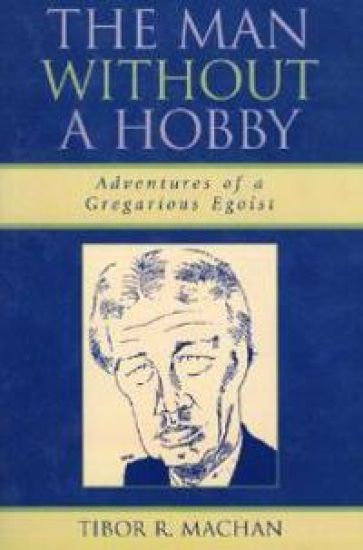
The Man Without a Hobby

The Man Without a Hobby

Tibor R. Machan

Hamilton Books
2004
pokkari
The Man Without a Hobby is the memoir of Tibor Machan, a first generation refugee who escaped both a political and a personal tyranny early in his life and embarked upon a search for an understanding of what it means to live freely and wisely. The book is a record of the main events and some interesting tidbits of his life. Detailed are Professor Machan's reflections, interpretations, and lamentations of his riskiest judgments and noteworthy achievements.
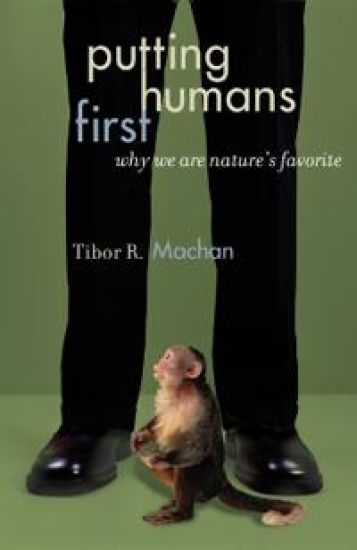
Putting Humans First

Putting Humans First

Tibor R. Machan

Rowman Littlefield Publishers
2004
sidottu
Putting Humans First passionately argues for the primacy of human life in the natural world and the corresponding justice of humans making use of animals; it disputes the concept of "animal rights" and "animal liberation." It shows human beings to be very much a part of nature, though not, ordinarily, of the wilds. Given their nature, Machan argues that human beings not only can, but ought to use nature to serve their own needs.
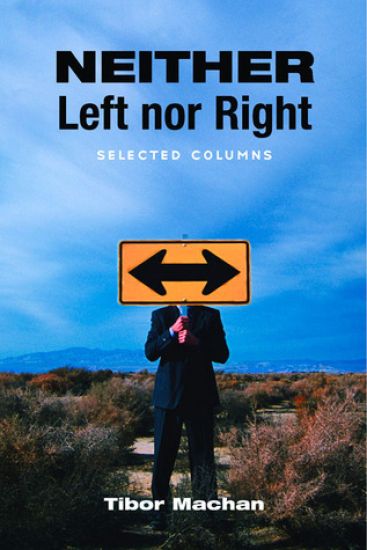
Neither Left nor Right

Neither Left nor Right

Tibor R. Machan

Hoover Institution Press,U.S.
2004
nidottu
In Neither Left nor Right, a collection of his columns, Machan, a relentless advocate of the political philosophy of libertarianism, offers his always well-reasoned, often controversial opinions on the variety of threats to individual liberty in the United States and around the world.
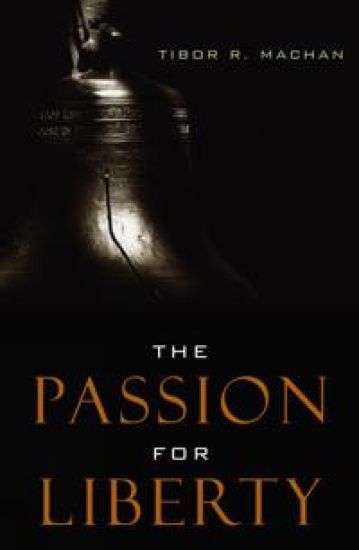
The Passion for Liberty

The Passion for Liberty

Tibor R. Machan

Rowman Littlefield Publishers
2003
nidottu
In The Passion for Liberty, Tibor R. Machan defends a libertarian conception of a free society, one in which individuals are sovereign, self-governing beings, not subject to others' will without their consent. In the tradition of John Locke, Adam Smith, Ayn Rand, and Robert Nozick, Machan argues that such a society—far from being hedonistic, licentious, or disorderly—is the best possible ideal for humans. In doing so, he addresses specific issues such as affirmative action, abortion, military intervention, and torture in light of the relationship between liberty and democracy. As freedom takes on a new urgency, The Passion for Liberty reminds us of the importance of individual liberty and why it needs to be defended.
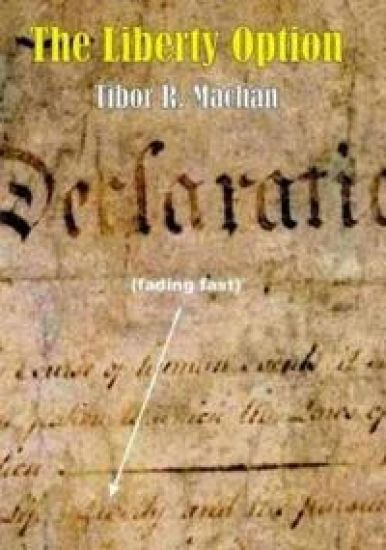
Liberty Option

Liberty Option

Tibor R. Machan

Societas
2003
pokkari
The Liberty Option advances the idea that for compelling moral as well as practical reasons it is the free society -- with the rule of law founded on the principles of private property rights, its complete respect for individual sovereignty and properly limited legal authorities -- not one or another version of statism that serves justice best, is most prosperous and encourages the greatest measure of individual virtue on the part of the citizenry. The work shows why this is so and lays out some of the most crucial implications of the idea. While the book presents a principled approach to politics, it is firmly grounded in the best and most up to date understanding of human community life and history as well as many of its complications, challenges, adversities and prospects.
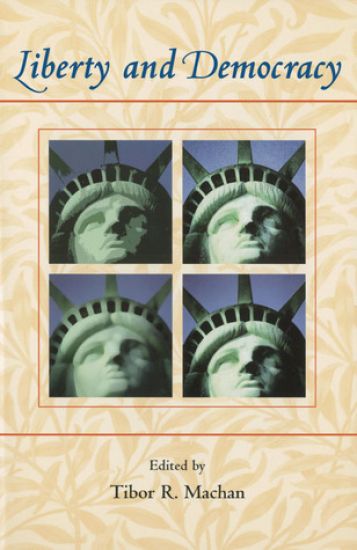
Liberty and Democracy

Liberty and Democracy

Tibor R. Machan

Hoover Institution Press,U.S.
2002
nidottu
In Liberty and Democracy, contributors grapple with the issue of the proper role of democracy in a society that is committed to respecting protecting the individual rights of all. They challenge conventional thinking, offering provocative ideas on democracy and individual freedom.
Liberty and Equality

Liberty and Equality

Tibor R. Machan

Hoover Institution Press,U.S.
2002
nidottu
This book takes an unflinching look at the difficult, often emotional issues that arise when egalitarianism collies with individual liberties, ultimately showing why the kind of egalitarianism preached by socialists and other sentimentalists is not an option in a free society.