Kirjojen hintavertailu. Mukana 12 595 353 kirjaa ja 12 kauppaa.

Kirjailija

Tieniu Tan

Kirjat ja teokset yhdessä paikassa: 6 kirjaa, julkaisuja vuosilta 2005-2023, suosituimpien joukossa Context-Aware Collaborative Prediction. Vertaile teosten hintoja ja tarkista saatavuus suomalaisista kirjakaupoista.

6 kirjaa

Kirjojen julkaisuhaarukka 2005-2023.

Heterogeneous Facial Analysis and Synthesis

Heterogeneous Facial Analysis and Synthesis

Yi Li; Huaibo Huang; Ran He; Tieniu Tan

Springer Verlag, Singapore
2020
nidottu
This book presents a comprehensive review of heterogeneous face analysis and synthesis, ranging from the theoretical and technical foundations to various hot and emerging applications, such as cosmetic transfer, cross-spectral hallucination and face rotation. Deep generative models have been at the forefront of research on artificial intelligence in recent years and have enhanced many heterogeneous face analysis tasks. Not only has there been a constantly growing flow of related research papers, but there have also been substantial advances in real-world applications. Bringing these together, this book describes both the fundamentals and applications of heterogeneous face analysis and synthesis. Moreover, it discusses the strengths and weaknesses of related methods and outlines future trends. Offering a rich blend of theory and practice, the book represents a valuable resource for students, researchers and practitioners who need to construct face analysis systems with deep generative networks.
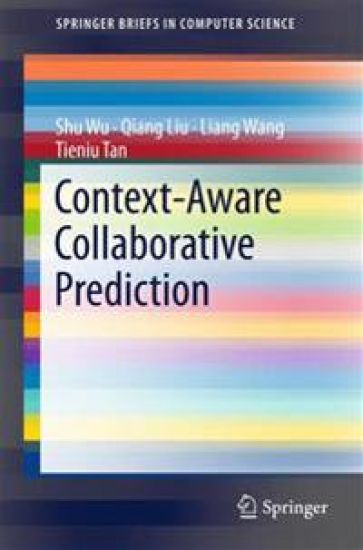
Context-Aware Collaborative Prediction

Context-Aware Collaborative Prediction

Shu Wu; Qiang Liu; Liang Wang; Tieniu Tan

Springer Verlag, Singapore
2018
nidottu
This book presents two collaborative prediction approaches based on contextual representation and hierarchical representation, and their applications including context-aware recommendation, latent collaborative retrieval and click-through rate prediction. The proposed techniques offer significant improvements over current methods, the key determinants being the incorporated contextual representation and hierarchical representation. To provide a background to the core ideas presented, it offers an overview of contextual modeling and the theory of contextual representation and hierarchical representation, which are constructed for the joint interaction of entities and contextual information. The book offers a rich blend of theory and practice, making it a valuable resource for students, researchers and practitioners who need to construct systems of information retrieval, data mining and recommendation systems with contextual information.
Artificial Intelligence: Building An Intelligent Future With Ai Technology
Artificial Intelligence (AI) is the major driving force behind many of today's scientific and technological advancements as well as industrial innovations. In particular in China, the 'Made in China 2025' campaign has set the next wave of industrialization, underpinned by AI, on the national agenda. However, there remains many areas in AI still waiting for us to break through their barriers.This book presents a number of case studies featuring AI in the areas of production, life, and national security, to demonstrate its potential as a means and tool for problem solving. The book also highlights the impact AI will have on the economy, society and national security, as well as address the pressing question of 'How far Man would have to work and live side-by-side with machines in their daily lives.'
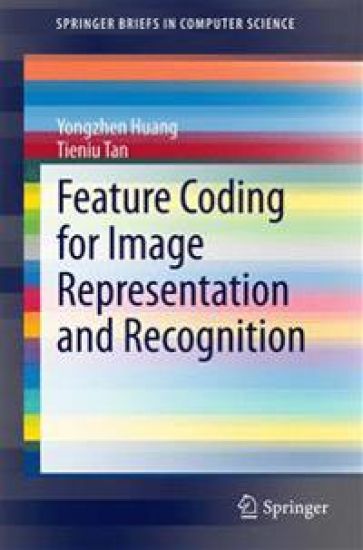
Feature Coding for Image Representation and Recognition

Feature Coding for Image Representation and Recognition

Yongzhen Huang; Tieniu Tan

Springer-Verlag Berlin and Heidelberg GmbH Co. K
2015
nidottu
This brief presents a comprehensive introduction to feature coding, which serves as a key module for the typical object recognition pipeline. The text offers a rich blend of theory and practice while reflects the recent developments on feature coding, covering the following five aspects: (1) Review the state-of-the-art, analyzing the motivations and mathematical representations of various feature coding methods; (2) Explore how various feature coding algorithms evolve along years; (3) Summarize the main characteristics of typical feature coding algorithms and categorize them accordingly; (4) Discuss the applications of feature coding in different visual tasks, analyze the influence of some key factors in feature coding with intensive experimental studies; (5) Provide the suggestions of how to apply different feature coding methods and forecast the potential directions for future work on the topic. It is suitable for students, researchers, practitioners interested in object recognition.
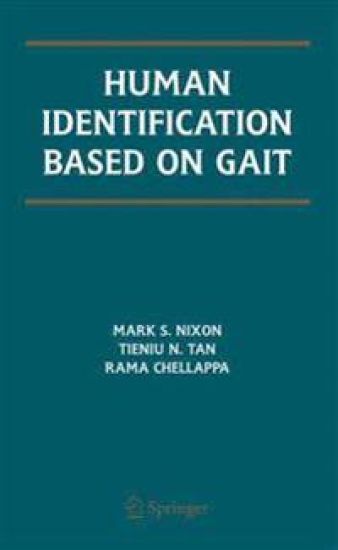
Human Identification Based on Gait

Human Identification Based on Gait

Mark S. Nixon; Tieniu Tan; Rama Chellappa

Springer-Verlag New York Inc.
2011
nidottu
Human Identification Based on Gait is the first book to address gait as a biometric. Biometrics is now in a unique position where it affects most people's lives. This is especially true of "gait", which is one of the most recent biometrics. Recognizing people by the way they walk and run implies analyzing movement which, in turn, implies analyzing sequences of images, thus requiring memory and computational performance that became available only recently. Human Identification Based on Gait introduces developments from distinguished researchers within this relatively new area of biometrics. This book clearly establishes how human gait is biometric. Human Identification Based on Gait is structured to meet the needs of professionals in industry, as well as advanced-level students in computer science.
Human Identification Based on Gait

Human Identification Based on Gait

Mark S. Nixon; Tieniu Tan; Rama Chellappa

Springer-Verlag New York Inc.
2005
sidottu
Human Identification Based on Gait is the first book to address gait as a biometric. Biometrics is now in a unique position where it affects most people's lives. This is especially true of "gait", which is one of the most recent biometrics. Recognizing people by the way they walk and run implies analyzing movement which, in turn, implies analyzing sequences of images, thus requiring memory and computational performance that became available only recently. Human Identification Based on Gait introduces developments from distinguished researchers within this relatively new area of biometrics. This book clearly establishes how human gait is biometric. Human Identification Based on Gait is structured to meet the needs of professionals in industry, as well as advanced-level students in computer science.