Kirjojen hintavertailu. Mukana 12 657 676 kirjaa ja 12 kauppaa.

Kirjailija

Tim Conley

Kirjat ja teokset yhdessä paikassa: 58 kirjaa, julkaisuja vuosilta 2003-2025, suosituimpien joukossa Analyzing a More Resilient National Positioning, Navigation, and Timing Capability. Vertaile teosten hintoja ja tarkista saatavuus suomalaisista kirjakaupoista.

58 kirjaa

Kirjojen julkaisuhaarukka 2003-2025.

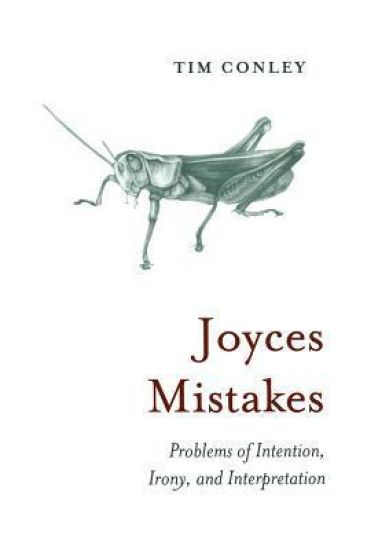
Joyces Mistakes

Joyces Mistakes

Tim Conley

University of Toronto Press
2011
pokkari
James Joyce has written that 'the man of genius makes no mistakes; his errors are the portals of discovery.' In Joyces Mistakes, Tim Conley explores the question of what constitutes an 'error' in a work of art. Using the works of James Joyce, particularly Ulysses and Finnegans Wake, as central exploratory fields, Conley argues that an 'aesthetic of error' permeates Joyce's literary productions; readers and criticism of Joyce's texts are inevitably affected by a slippery dialectic between the possibility of mistake and the potential for irony. Outlining modernism's struggle with textual authority and completion, Conley locates Joyce among his literary contemporaries, including Herman Melville, Marianne Moore, Ezra Pound, and Marcel Proust. He finds that Joyce's reconfigurations of authorial presence and his error-generating methods problematize all attempts to edit, anthologize, and even quote or cite his texts. Yet Conley goes well beyond cataloguing the instances where error is at issue in Joyce's canon; he offers a comprehensive, engaging look at theories of error. He extends his analysis of Joyce to examine the radical reshaping of cognition by 'the textual condition' (McGann), and suggests that the act of reading's propensity for diversity of error makes 'misreadings' valuable critical experiments and the basis of literary theory. Joyces Mistakes is an absorbing and sophisticated work, a portal of discovery in its own right.
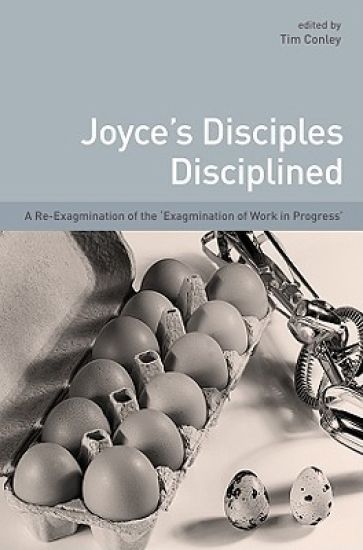
Joyce's Disciples Disciplined

Joyce's Disciples Disciplined

Tim Conley

University College Dublin Press
2010
sidottu
In 1929, ten years before James Joyce completed "Finnegans Wake", Sylvia Beach published a strange book with a stranger title: "Our Exagmination Round His Factification for Incamination of Work in Progress". Worried by the confusion and attacks that constituted the general reception of his "Work in Progress" (the working title for "Finnegans Wake"), Joyce orchestrated this collection of twelve essays and two 'letters of protest' from such writers as Samuel Beckett, Stuart Gilbert, Eugene Jolas, Robert McAlmon, and William Carlos Williams. "Our Exagmination" represents an altogether unusual hybrid of criticism and advertisement, and since its first appearance has remained a touchstone as well as a point of contention for Joyce scholars. Eighty years later, Joyce's "Disciples Disciplined" reads the "Exagmination" as an integral part of the larger composition history and interpretive context of "Finnegans Wake" itself. This new collection of essays by fourteen outstanding Joycean scholars offers one essay in response to each of the original "Exagmination" contributions. From philosophically informed exegeses and new conceptions of international modernism to considerations of dance, film, and the flourishing field of genetic studies, these essays together exemplify an interdisciplinary criticism that is also a lively and ongoing conversation with that criticism's history.
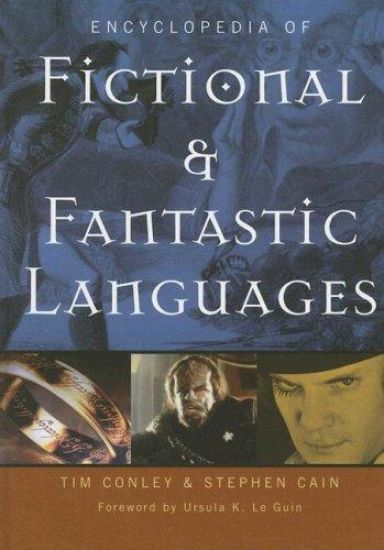
Encyclopedia of Fictional and Fantastic Languages

Encyclopedia of Fictional and Fantastic Languages

Tim Conley; Stephen Cain

Greenwood Press
2006
sidottu
Fictional languages are central to numerous creative works. This book examines such languages in a wide range of literature, films, and television shows. Included are alphabetically arranged entries on particular works. Many of these works are widely taught, such as All's Well That Ends Well, Gulliver's Travels, Nineteen Eighty-Four, and Utopia, while others are popular books, films, and television series, such as Buffy the Vampire Slayer, Cat's Cradle, The Lord of the Rings, and Star Wars. Thus the encyclopedia helps students understand texts central to the curriculum and popular culture. Each entry discusses the role of imaginary languages in a particular work. Entries range from antiquity to the present and close with suggestions for further reading. The encyclopedia ends with a selected bibliography and includes various helpful finding aids. Some of the most popular creative works are appealing because of the artificial worlds their authors create. In many of these works, fictional languages are essential to the setting and plot, and often help the author comment on social issues. This encyclopedia examines fictional and fantastic languages in a broad range of literature, films, and television shows. Each entry discusses the features of the invented language central to the work and relates it to the film, literary text, or television program. Entries provide suggestions for further reading, and the Encyclopedia closes with a selected bibliography. Because many of the works discussed are central to the curriculum, the Encyclopedia will help students understand these texts and the importance of language. At the same time, the volume's coverage of popular books, films, and television series invites students to explore more critically those works that are most likely to interest them.
Joyces Mistakes

Joyces Mistakes

Tim Conley

University of Toronto Press
2003
sidottu
James Joyce has written that 'the man of genius makes no mistakes; his errors are the portals of discovery.' In Joyces Mistakes, Tim Conley explores the question of what constitutes an 'error' in a work of art. Using the works of James Joyce, particularly Ulysses and Finnegans Wake, as central exploratory fields, Conley argues that an 'aesthetic of error' permeates Joyce's literary productions; readers and criticism of Joyce's texts are inevitably affected by a slippery dialectic between the possibility of mistake and the potential for irony. Outlining modernism's struggle with textual authority and completion, Conley locates Joyce among his literary contemporaries, including Herman Melville, Marianne Moore, Ezra Pound, and Marcel Proust. He finds that Joyce's reconfigurations of authorial presence and his error-generating methods problematize all attempts to edit, anthologize, and even quote or cite his texts. Yet Conley goes well beyond cataloguing the instances where error is at issue in Joyce's canon; he offers a comprehensive, engaging look at theories of error. He extends his analysis of Joyce to examine the radical reshaping of cognition by 'the textual condition' (McGann), and suggests that the act of reading's propensity for diversity of error makes 'misreadings' valuable critical experiments and the basis of literary theory. Joyces Mistakes is an absorbing and sophisticated work, a portal of discovery in its own right.