Kirjojen hintavertailu. Mukana 12 156 338 kirjaa ja 12 kauppaa.

Kirjailija

Tim Cresswell

Kirjat ja teokset yhdessä paikassa: 19 kirjaa, julkaisuja vuosilta 2001-2026, suosituimpien joukossa Moving Towards Transition. Vertaile teosten hintoja ja tarkista saatavuus suomalaisista kirjakaupoista.

19 kirjaa

Kirjojen julkaisuhaarukka 2001-2026.

Moving Towards Transition

Moving Towards Transition

Peter Adey; Tim Cresswell; Jane Yeonjae Lee; Anna Nikolaeva; André Nóvoa; Cristina Temenos

BLOOMSBURY PUBLISHING PLC
2023
nidottu
Drawing on an innovative project exploring current mobility transition policies and practices in 14 countries around the world, including key institutions such as the European Union and the United Nations, this book provides a critique of current transitions, mobility and transport policies. The authors consider how our mobility futures have been imagined, what they will potentially look and feel like, what lives we might live in them and what choices we might have to make to get there.
Moving Towards Transition

Moving Towards Transition

Peter Adey; Tim Cresswell; Jane Yeonjae Lee; Anna Nikolaeva; André Nóvoa; Cristina Temenos

Zed Books Ltd
2021
sidottu
Drawing on an innovative project exploring current mobility transition policies and practices in 14 countries around the world, including key institutions such as the European Union and the United Nations, this book provides a critique of current transitions, mobility and transport policies. The authors consider how our mobility futures have been imagined, what they will potentially look and feel like, what lives we might live in them and what choices we might have to make to get there.
Maxwell Street

Maxwell Street

Tim Cresswell

University of Chicago Press
2019
sidottu
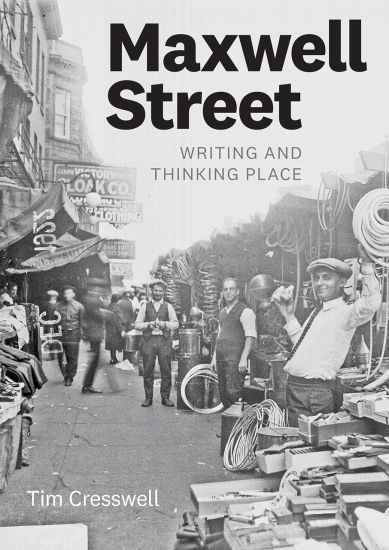
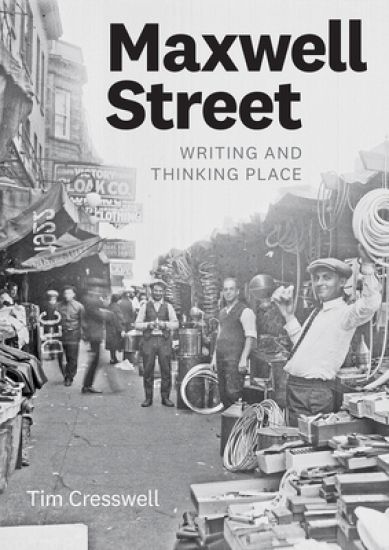
What is the nature of place, and how does one undertake to write about it? To answer these questions, geographer and poet Tim Cresswell looks to Chicago’s iconic Maxwell Street market area. Maxwell Street was for decades a place where people from all corners of the city mingled to buy and sell goods, play and listen to the blues, and encounter new foods and cultures. Now, redeveloped and renamed University Village, it could hardly be more different. In Maxwell Street, Cresswell advocates approaching the study of place as an “assemblage” of things, meanings, and practices. In exploring the neighborhood, he models this innovative approach through a montage format that exposes the different types of texts—primary, secondary, and photographic sources—that have attempted to capture the essence of the area. Cresswell studies his historical sources just as he explores the different elements of Maxwell Street—exposing them layer by layer. Brilliantly interweaving words and images, Maxwell Street sheds light on a historic Chicago neighborhood and offers a new model for how to write about place that will interest anyone in the fields of geography, urban studies, or cultural history.
Maxwell Street

Maxwell Street

Tim Cresswell

University of Chicago Press
2019
pokkari
What is the nature of place, and how does one undertake to write about it? To answer these questions, geographer and poet Tim Cresswell looks to Chicago’s iconic Maxwell Street market area. Maxwell Street was for decades a place where people from all corners of the city mingled to buy and sell goods, play and listen to the blues, and encounter new foods and cultures. Now, redeveloped and renamed University Village, it could hardly be more different. In Maxwell Street, Cresswell advocates approaching the study of place as an “assemblage” of things, meanings, and practices. In exploring the neighborhood, he models this innovative approach through a montage format that exposes the different types of texts—primary, secondary, and photographic sources—that have attempted to capture the essence of the area. Cresswell studies his historical sources just as he explores the different elements of Maxwell Street—exposing them layer by layer. Brilliantly interweaving words and images, Maxwell Street sheds light on a historic Chicago neighborhood and offers a new model for how to write about place that will interest anyone in the fields of geography, urban studies, or cultural history.
The Citizen and the Vagabond

The Citizen and the Vagabond

Tim Cresswell

UNIVERSITY OF MINNESOTA PRESS
2026
nidottu
An expansive treatise on the power relations that govern our movement The Citizen and the Vagabond develops a theoretical approach to the study of mobility and its relationship to the production, maintenance, and transformation of social and cultural hierarchies. Expanding upon his foundational work on the subject, Tim Cresswell examines human movement from around the globe to better understand the various forms of inequality and injustice that shape our lives. Establishing a framework for movement in terms of rhythm, speed, routes, and friction, Cresswell extends these themes to address the Covid-19 pandemic and subsequent lockdowns, exploring what this turbulent period reveals to us about the politics of mobility. He demonstrates that while flexibility and ease of movement are typically considered markers of personal freedom, increased mobility brings with it new modes of control and surveillance. As he investigates the hierarchies and embodied experiences that emerge amid these tensions, Cresswell employs two figures: the citizen, whose mobility within and across borders is expected and accepted, and the vagabond, whose perpetual mobility is deemed suspect and in need of ordering. In conversation with the work of theorists such as Mimi Sheller, Zygmunt Bauman, Paul Virilio, Henri Lefebvre, Ivan Illich, and Anna Tsing, Cresswell reaches beyond geography to incorporate insights from the humanities and social sciences. An interdisciplinary intervention into the study of mobility and citizenship, The Citizen and the Vagabond provides a new set of coordinates from which to grasp the shifting dynamics of movement and power. Retail e-book files for this title are screen-reader friendly with images accompanied by short alt text and/or extended descriptions.
The Citizen and the Vagabond

The Citizen and the Vagabond

Tim Cresswell

UNIVERSITY OF MINNESOTA PRESS
2026
sidottu
An expansive treatise on the power relations that govern our movement The Citizen and the Vagabond develops a theoretical approach to the study of mobility and its relationship to the production, maintenance, and transformation of social and cultural hierarchies. Expanding upon his foundational work on the subject, Tim Cresswell examines human movement from around the globe to better understand the various forms of inequality and injustice that shape our lives. Establishing a framework for movement in terms of rhythm, speed, routes, and friction, Cresswell extends these themes to address the Covid-19 pandemic and subsequent lockdowns, exploring what this turbulent period reveals to us about the politics of mobility. He demonstrates that while flexibility and ease of movement are typically considered markers of personal freedom, increased mobility brings with it new modes of control and surveillance. As he investigates the hierarchies and embodied experiences that emerge amid these tensions, Cresswell employs two figures: the citizen, whose mobility within and across borders is expected and accepted, and the vagabond, whose perpetual mobility is deemed suspect and in need of ordering. In conversation with the work of theorists such as Mimi Sheller, Zygmunt Bauman, Paul Virilio, Henri Lefebvre, Ivan Illich, and Anna Tsing, Cresswell reaches beyond geography to incorporate insights from the humanities and social sciences. An interdisciplinary intervention into the study of mobility and citizenship, The Citizen and the Vagabond provides a new set of coordinates from which to grasp the shifting dynamics of movement and power. Retail e-book files for this title are screen-reader friendly with images accompanied by short alt text and/or extended descriptions.
Muybridge and Mobility

Muybridge and Mobility

Tim Cresswell; John Ott

University of California Press
2022
pokkari
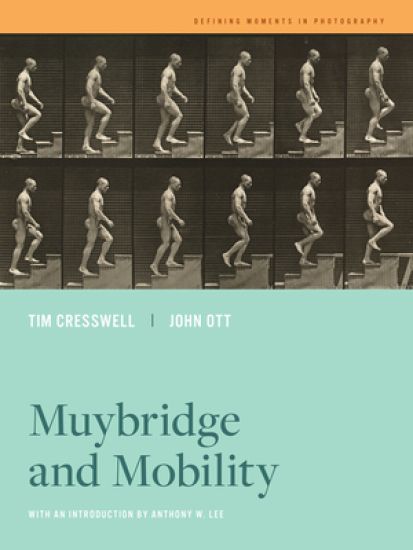
A cultural geographer and an art historian offer fresh interpretations of Muybridge’s famous motion studies through the lenses of mobility and race. In 1878, Eadweard Muybridge successfully photographed horses in motion, proving that all four hooves leave the ground at once for a split second during full gallop. This was the beginning of Muybridge’s decades-long investigation into instantaneous photography, culminating in his masterpiece Animal Locomotion. Muybridge became one of the most influential photographers of his time, and his stop-motion technique helped pave the way for the motion-picture industry, born a short decade later. Coauthored by cultural geographer Tim Cresswell and art historian John Ott, this book reexamines the motion studies as historical forms of “mobility,” in which specific forms of motion are given extraordinary significance and accrued value. Through a lively, interdisciplinary exchange, the authors explore how mobility is contextualized within the transformations of movement that marked the nineteenth century and how mobility represents the possibilities of social movement for African Americans. Together, these complementary essays look to Muybridge’s works as interventions in knowledge and experience and as opportunities to investigate larger social ramifications and possibilities.
Muybridge and Mobility

Muybridge and Mobility

Tim Cresswell; John Ott

University of California Press
2022
sidottu
A cultural geographer and an art historian offer fresh interpretations of Muybridge’s famous motion studies through the lenses of mobility and race. In 1878, Eadweard Muybridge successfully photographed horses in motion, proving that all four hooves leave the ground at once for a split second during full gallop. This was the beginning of Muybridge’s decades-long investigation into instantaneous photography, culminating in his masterpiece Animal Locomotion. Muybridge became one of the most influential photographers of his time, and his stop-motion technique helped pave the way for the motion-picture industry, born a short decade later. Coauthored by cultural geographer Tim Cresswell and art historian John Ott, this book reexamines the motion studies as historical forms of “mobility,” in which specific forms of motion are given extraordinary significance and accrued value. Through a lively, interdisciplinary exchange, the authors explore how mobility is contextualized within the transformations of movement that marked the nineteenth century and how mobility represents the possibilities of social movement for African Americans. Together, these complementary essays look to Muybridge’s works as interventions in knowledge and experience and as opportunities to investigate larger social ramifications and possibilities.
Plastiglomerate

Plastiglomerate

Tim Cresswell

Penned in the Margins
2020
nidottu
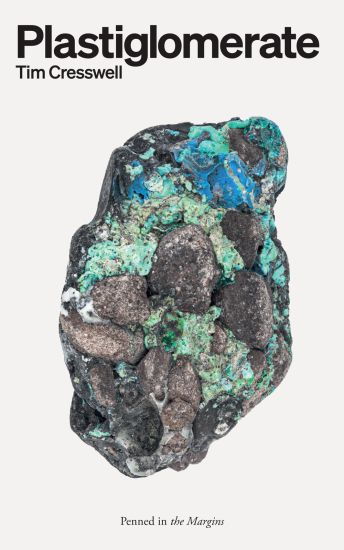
Plastiglomerate finds our world in the midst of environmental disaster: from plastic pollution and wrecked shipping to fires in the Amazon rainforest. Geographer-poet Tim Cresswell writes with the forensic eye of a professional, bending the hard vocabulary of science into a jagged but compelling lyric that telescopes from the vast to the cellular in the space of a line. Plastiglomerate completes a trilogy of poetry books that examines mankind's impact on the earth; its central poem recycles the British folk ballad 'The Twa Magicians' to make an ecological protest song fit for the Anthropocene age. But among powerful depictions of the natural world under threat - from beached whales to lost birds - it is the humanity of Cresswell's imagery that wins through: leaf-blowers in surgical masks, blue nail polish, the biro 'leaking in the heat of my pocket'. 'Engaging and unsettling poems that tell it like it is, looking unflinchingly at environmental beauty and disaster. There is redemption here too, in the warmth of human relationships - while this is indeed a world of 'ruin and plunder', it is also a place 'full of love and sap'. A powerful and memorable collection.' - Jean Sprackland
Gendered Mobilities

Gendered Mobilities

Tim Cresswell

Routledge
2016
nidottu
Being socially and geographically mobile is generally seen as one of the central aspects of women's wellbeing. Alongside health, education and political participation, mobility is indispensable in order for women to reach goals such as agency and freedom. Building on new philosophical underpinnings of 'mobility', whereby society is seen to be framed by the convergence of various mobilities, this volume focuses on the intersection of mobility, social justice and gender. The authors reflect on five highly interdependent mobilities that form and reform social life: *
Fence

Fence

Tim Cresswell

Penned in the Margins
2015
nidottu
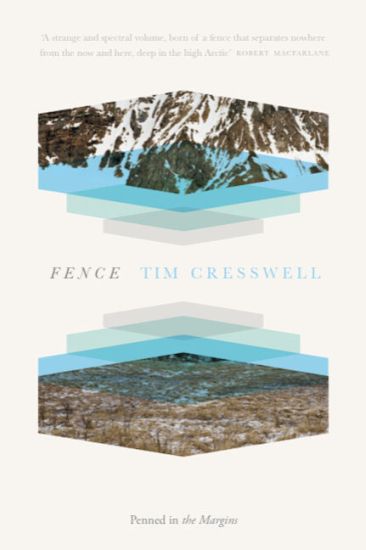
Fence is an epic of fragments that is at once beautiful and beautifully strange. In his exploration of the vast, frozen Svalbard islands, poet and geographer Tim Cresswell has created a kind of travel poetry whose taut, minimalist lyric synthesises subjects as diverse as history, politics and Arctic ecology. Echoing the mournful atmospherics of the great Anglo-Saxon elegies, this book-length poem is a powerful meditation on places that are slipping away, where 'compass gone haywire / so north'.
Place

Place

Tim Cresswell

John Wiley Sons Inc
2014
nidottu
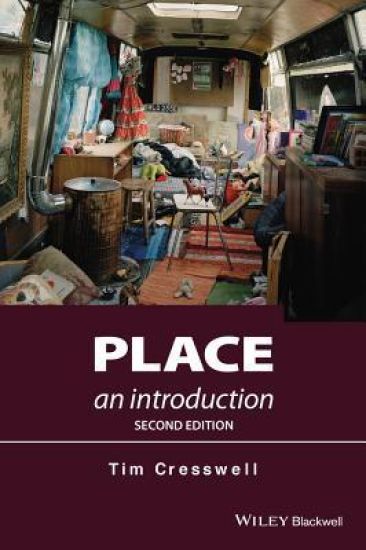
Thoroughly revised and updated, this text introduces students of human geography and allied disciplines to the fundamental concept of place, combining discussion about everyday uses of the term with the complex theoretical debates that have grown up around it. A thoroughly revised and updated edition of this highly successful short introduction to placeFeatures a new chapter on the use of place in non-geographical arenas, such as in ecological theory, art theory and practice, philosophy, and social theoryCombines discussion about everyday uses of the term 'place' with the more complex theoretical debates that have grown up around itUses familiar stories drawn from the news, popular culture, and everyday life as a way to explain abstract ideas and debatesTraces the development of the concept from the 1950s through its subsequent appropriation by cultural geographers, and the linking of place to politics
Soil

Soil

Tim Cresswell

Penned in the Margins
2013
nidottu
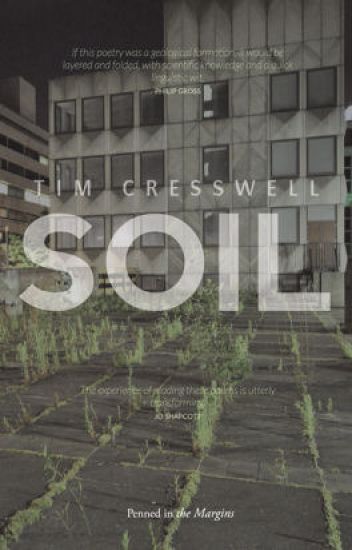
Geography and language collide in Soil, the debut collection of poetry by Tim Cresswell. His poems delight in the strange and are often situated at the cusp of the natural and urban worlds. A fox climbs to the top of a London skyscraper; municipal trees are displaced from their mountain habitats; sandworts take root in abandoned mine shafts; and geological time is glimpsed through the 'crushed structures' of the city. Cresswell is interested in hinterlands, the in-between places: airport lounges, urban parks, the muddy verge of a river. The title sequence is a startling examination of man's relationship with the very stuff of earth, redeploying the language of science and archaeology with surgical precision and an innovative flair. Already an acclaimed academic and human geographer, this book introduces Tim Cresswell as a significant new poet of place, and our changing relationship to it. Soil is a striking debut - rich, multi-layered, full of organic life and the compacted detritus of the city.
Geographies of Mobilities: Practices, Spaces, Subjects

Geographies of Mobilities: Practices, Spaces, Subjects

Tim Cresswell

Ashgate Publishing Limited
2013
nidottu
Over the past fifteen years or so, there has been a widespread and increasing fascination with the theme of mobility across the social sciences and humanities. Of course, geographers have always had an interest in mobility, but as yet they have not viewed this in the same 'mobility turn' as in other disciplines where it has been used to critique the standard approaches to the subjects. This text brings together leading academics to provide a revitalised 'geography of mobilities' informed by this wider 'mobility turn'. It makes connections between the seemingly disparate sub-disciplinary worlds of migration, transport and tourism, suggesting that each has much to learn from each other through the ontological and epistemological concern for mobility.
Geographic Thought

Geographic Thought

Tim Cresswell

Wiley-Blackwell (an imprint of John Wiley Sons Ltd)
2012
sidottu
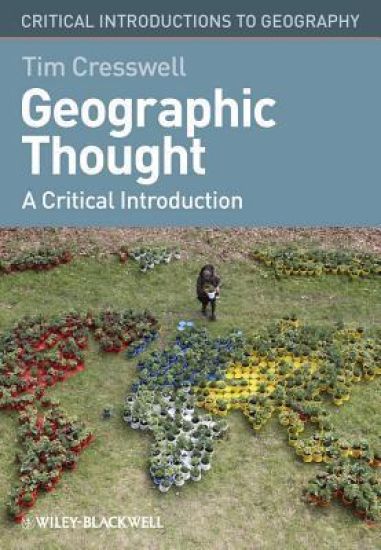
This engaging and accessible introduction to geographic thought explores the major thinkers and key theoretical developments in the field of human geography. Covers the complete range of the development of theoretical knowledge of the field, from ancient geography to contemporary non-representational theoryPresents theories in an accessible manner through the author's engaging writing styleExamines the influence of Darwin and Marx, the emergence of anarchist geographies, the impact of feminism, and myriad other important bodies of thoughtStresses the importance of geographic thought and its relevance to our understanding of what it is to be human, and to the people, places, and cultures of the world in which we live
Geographies of Mobilities: Practices, Spaces, Subjects

Geographies of Mobilities: Practices, Spaces, Subjects

Tim Cresswell

Ashgate Publishing Limited
2010
sidottu
Over the past fifteen years or so, there has been a widespread and increasing fascination with the theme of mobility across the social sciences and humanities. Of course, geographers have always had an interest in mobility, but as yet they have not viewed this in the same 'mobility turn' as in other disciplines where it has been used to critique the standard approaches to the subjects. This text brings together leading academics to provide a revitalised 'geography of mobilities' informed by this wider 'mobility turn'. It makes connections between the seemingly disparate sub-disciplinary worlds of migration, transport and tourism, suggesting that each has much to learn from each other through the ontological and epistemological concern for mobility.
Gendered Mobilities

Gendered Mobilities

Tim Cresswell

Ashgate Publishing Limited
2008
sidottu
Being socially and geographically mobile is generally seen as one of the central aspects of women's wellbeing. Alongside health, education and political participation, mobility is indispensable in order for women to reach goals such as agency and freedom. Building on new philosophical underpinnings of 'mobility', whereby society is seen to be framed by the convergence of various mobilities, this volume focuses on the intersection of mobility, social justice and gender. The authors reflect on five highly interdependent mobilities that form and reform social life: *
Tramp in America

Tramp in America

Tim Cresswell

Reaktion Books
2001
sidottu
This work vividly describes the intervention of the tramp as a social type in the United States between 1869 and 1939. Tim Cresswell considers the ways in which the figure of the tramp was imagined, written and spoken about, and how by World War II it was being reclassified, renamed and rendered invisible. The book calls into question the common assumption that mobility played a central role in the production of American identity. The author describes the "tramp scare" of the late 19th century in terms of the major factors that influenced the tramp's existence: the political and economic climate, the technology of the railroad and the after-effects of the Civil War. He goes on to explore various stereotypes associated with tramps, an example being the prevalent assumption that tramps were male and were a threat to women in domestic environments, while contemporary accounts exist of female tramps who took to the road disguised as men. Finally, he looks at the work of a number of prominent American photographers, among them Dorothea Lange, whose sympathetic portrayals signalled a change in attitude towards this often-despised group.