Kirjojen hintavertailu. Mukana 12 590 712 kirjaa ja 12 kauppaa.

Kirjailija

Tim Hollis

Kirjat ja teokset yhdessä paikassa: 38 kirjaa, julkaisuja vuosilta 2001-2025, suosituimpien joukossa Birmingham's Theater and Retail District. Vertaile teosten hintoja ja tarkista saatavuus suomalaisista kirjakaupoista.

38 kirjaa

Kirjojen julkaisuhaarukka 2001-2025.

See Alabama First: The Story of Alabama Tourism

See Alabama First: The Story of Alabama Tourism

Tim Hollis

History Press Library Editions
2013
sidottu
Tourism in the Southeast is often associated with Florida--a state that essentially defined the industry in America. Yet Alabama has a fascinating history of tourism all its own. It all began with an enterprising politician. In 1916, John Hollis Bankhead went to great lengths to ensure that one of America's first transcontinental highways went directly through Alabama. Though it was a less efficient route for highway travelers, it marked the birth of Alabama's fledgling tourism industry, which grew exponentially with each passing decade. Since he was a boy, author Tim Hollis has traveled from the Shoals to the coast and amassed an unrivaled knowledge of Alabama tourism. From restored and preserved historic destinations to campy tourist traps and outrageous roadside attractions, this is the complete story of tourism in Alabama.
Loveman's: Meet Me Under the Clock

Loveman's: Meet Me Under the Clock

Tim Hollis

History Press Library Editions
2012
sidottu
In an era when local department stores still thrived, Birmingham shoppers had different stores from which to choose. But when customers sought more than bargain prices, when they demanded unparalleled quality and outright luxury, they chose Loveman's. The first store opened in Birmingham in 1887, and the chain eventually grew to include locations in Huntsville and Montgomery, embracing those from throughout the state who valued an upscale shopping experience. Weathering the Great Depression, a devastating fire that destroyed the original location in 1934 and historic civil rights protests in the early 1960s, Loveman's proved to be an enduring name through many eras of change until finally closing its doors in 1980. Now, Birmingham historian Tim Hollis chronicles the sterling history of this celebrated store's commitment to excellence.
Wish You Were Here

Wish You Were Here

Tim Hollis

University Press of Florida
2011
sidottu
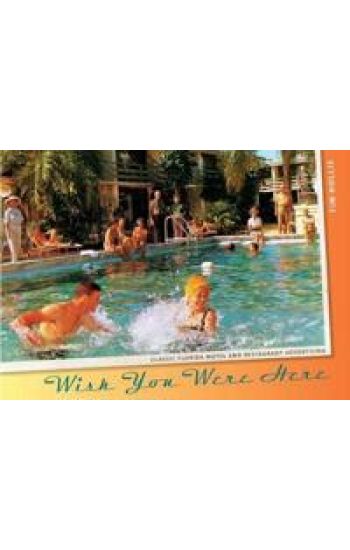
The golden age of Florida kitsch "The hotels, motels, and restaurants that catered to Florida's tourists before Disney have been lovingly explored, unearthed, highlighted, and celebrated in a lavishly illustrated 'souvenir' of a forgotten period in Florida history."--Brian Rucker, author of Arcadia and Image and Reality For most of the state's existence, Florida's economy has been driven by tourism and tourists. And after a carefree day on the beach, they need a place to sleep and eat. Wish You Were Here is a nostalgic look back at the days when a clever slogan ("Sleep to the Song of the Surf"), a pink-and-aqua paint job, a swimming pool, and air-conditioned rooms--combined with aggressive advertising through postcards, brochures, magazines, billboards, placemats, and neon signs--were the keys to capturing the tourists' dollars. Tim Hollis began collecting this memorabilia in the 1960s, when he travelled with his parents on vacation in Florida. Arranged like a scrapbook, his lighthearted review of the most interesting and unusual hotel, motel, and restaurant advertising will make you remember childhood vacations fondly--or wonder why anyone would have ever eaten or slept there. ?The nearly five hundred color images are accompanied by humorous captions. They depict unique mom-and-pop motels, early advertising from hotel chains, and countless pirate-themed seafood restaurants. The book is organized around the traditional tourism regions of the state, from the Gulf Coast's Miracle Strip to the Keys' Paradise Islands. So sit back, enjoy the trip, and please don't kick the back of the driver's seat! Tim Hollis is the author of numerous books celebrating southern history and popular culture, including See Rock City, Florida's Miracle Strip, Dixie before Disney, and Selling the Sunshine State. He lives in Birmingham, Alabama.
Pizitz: Your Store

Pizitz: Your Store

Tim Hollis

History Press Library Editions
2010
sidottu
For nearly ninety years, Pizitz offered Birmingham residents and Alabamans across the state a one-of-a-kind shopping experience. From the Enchanted Forest that sprung up every Christmas to in-store fashion shows, visiting Pizitz wasn't just a trip to the store, it was an event. Yet Pizitz was more than just a department store--it was a Birmingham institution. When Louis Pizitz opened up his first dry goods store in downtown Birmingham in 1899, he began a career as a successful businessman and a generous philanthropist, establishing a tradition of giving freely to local causes that has come to define the Pizitz family. Join Birmingham historian Tim Hollis as he recounts the fascinating history behind one of Alabama's most recognizable names and treasured retailers.
Christmas Wishes

Christmas Wishes

Tim Hollis

Stackpole Books
2010
sidottu
From plastic nativity scenes to aluminium trees, Christmas became a major marketing extravaganza in America in the mid-twentieth century. This book recalls the holiday between 1940 and 1970, courtesy of department stores, five and tens, toy manufacturers, publishing houses, and record companies. Boomers and Gen-Xers will relive memories of special holiday toys and treats, Christmas children's books by Little Golden and Wonder, holiday music released by Peter Pan and Disneyland records, and merchandising characters such as Frosty the Snowman and Montgomery Ward's Rudolph the Red-Nosed Reindeer. This title is liberally illustrated with vintage ads, book covers, record sleeves, and photographs.
Selling the Sunshine State

Selling the Sunshine State

Tim Hollis

University Press of Florida
2008
sidottu
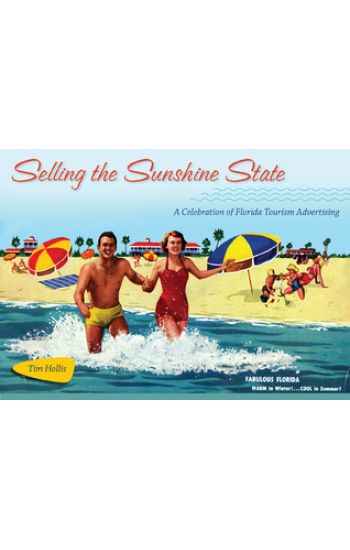
For more than a century, Florida has thrived on its image as an exotic playground. ""Selling the Sunshine State"" offers a scrapbook of bygone brochures, postcards, souvenirs, and photos, all designed to lure northerners (and fellow southerners) into the peninsula.Tim Hollis' personal collection of Florida memorabilia and mementos lie at the heart of the nearly 500 color images herein. Lovingly assembled, the book is arranged according to the state's traditional tourism department regions, including the Miracle Strip, the Big Bend, and the Gold Coast. This allows readers to discover the lost attractions and sometimes shocking appeals in promotional material created from the 1920s through the 1970s.An introductory essay on the history of Florida advertising methods and themes, along with additional commentary for each region, places the images in context. Hollis writes as a tourist, and his captions to the copious, eye-catching color illustrations transport the reader back to another era of Florida history. Nostalgic tourists, Florida natives, and anyone interested in the history of advertising will enjoy this lighthearted volume.This book offers a celebration of fun and sun through tourists' eyes.
Ain't That a Knee-Slapper

Ain't That a Knee-Slapper

Tim Hollis

University Press of Mississippi
2008
nidottu
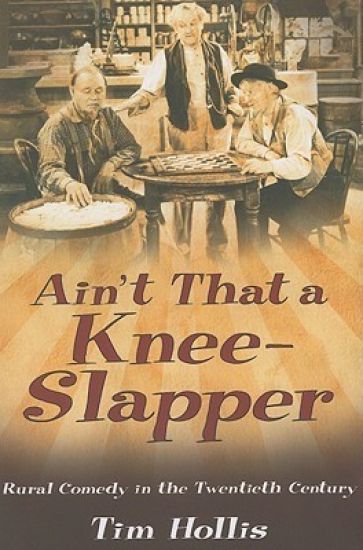
There was a time when rural comedians drew most of their humor from tales of farmers' daughters, hogs, hens, and hill country high jinks. Lum and Abner and Ma and Pa Kettle might not have toured happily under the ""Redneck"" marquee, but they were its precursors. In Ain't That a Knee-Slapper: Rural Comedy in the Twentieth Century, author Tim Hollis traces the evolution of this classic American form of humor in the mass media, beginning with the golden age of radio, when such comedians as Bob Burns, Judy Canova, and Lum and Abner kept listeners laughing. The book then moves into the motion pictures of the 1930s, 1940s, and 1950s, when the established radio stars enjoyed second careers on the silver screen and were joined by live-action renditions of the comic strip characters Li'l Abner and Snuffy Smith, along with the much-loved Ma and Pa Kettle series of films. Hollis explores such rural sitcoms as The Real McCoys in the late 1950s and from the 1960s, The Andy Griffith Show, The Beverly Hillbillies, Green Acres, Hee Haw, and many others. Along the way, readers are taken on side trips into the world of animated cartoons and television commercials that succeeded through a distinctly rural sense of fun. While rural comedy fell out of vogue and networks sacked shows in the early 1970s, the emergence of such hits as The Dukes of Hazzard brought the genre whooping back to the mainstream. Hollis concludes with a brief look at the current state of rural humor, which manifests itself in a more suburban, redneck brand of standup comedy. Tim Hollis is the author of numerous books, including Hi There, Boys and Girls! America's Local Children's TV Programs and (with Greg Ehrbar) Mouse Tracks: The Story of Walt Disney Records.
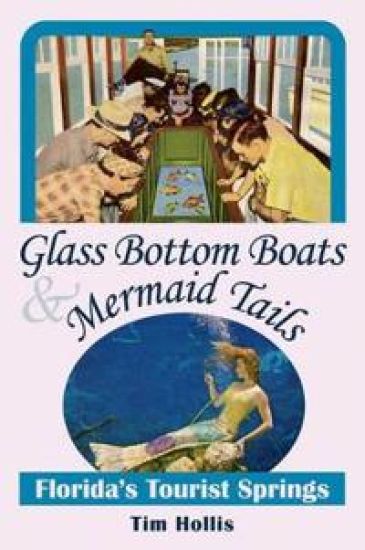
Glass Bottom Boats and Mermaid Tales

Glass Bottom Boats and Mermaid Tales

Tim Hollis

Stackpole Books
2006
pokkari
An authority on the South’s roadside history and tourism describes the history of Florida’s natural springs, discussing how such sites as Silver Springs, Wakulla Springs, Rainbow Springs, Weeki Wachee Spring, and Homosassa Springs became popular tourist attractions and assessing the impact of the development of Orlando as a world-class vacation spot on the sites. Original.
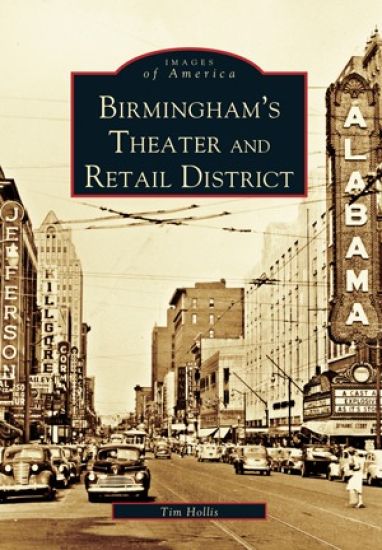
Birmingham's Theater and Retail District

Birmingham's Theater and Retail District

Tim Hollis

Arcadia Publishing (SC)
2005
nidottu
From the 1890s to the 1970s, the thriving area of Birmingham between Eighteenth and Twenty-first Streets along First, Second, and Third Avenues was the bustling heart of this quickly growing city. Before the age of the shopping mall, the downtown was the center of retail and entertainment in Birmingham. Along these streets, entrepreneurial immigrants built department stores--including Pizitz and Loveman, Joseph, and Loeb--while the marquees of the Alabama, Ritz, and Lyric theaters, among others, shined over the busy downtown sidewalks.
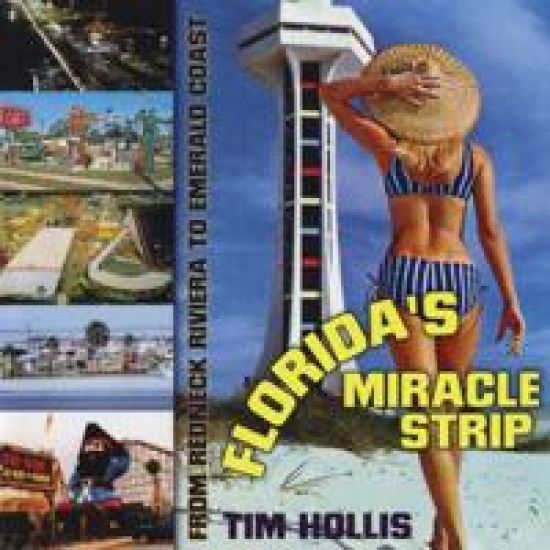
Florida's Miracle Strip

Florida's Miracle Strip

Tim Hollis

University Press of Mississippi
2004
nidottu
Since World War II, tourists have flocked to Florida's northwest Gulf Coast and sun and fun spots at Panama City Beach, Fort Walton Beach, and Pensacola Beach. Every year those visitors number in the millions. For those who long to recall how the vacationland appeared thirty, forty, or even fifty years ago, Tim Hollis has written Florida's Miracle Strip: From Redneck Riviera to Emerald Coast. In a style that informs and entertains, Hollis describes the rise of early developments, such as Long Beach Resort, and major tourist attractions, such as the Gulfarium and the Miracle Strip Amusement Park. With heartfelt nostalgia and a dose of tongue-in-cheek, he reminisces on the motels and tourist cottages; the restaurants, such as Captain Anderson's and Staff's; the elaborate miniature golf courses, such as Goofy Golf and its many imitators. He takes a special delight in recovering the memories of those quirky businesses that now exist only in faded photographs and aging postcards, such wacky tourist traps as Castle Dracula, Petticoat Junction, Tombstone Territory, and the Snake-A-Torium. In the book, Hollis examines how this area became known as the ""Miracle Strip,"" and how the local chambers of commerce got so tired of that image that the name gradually fell into disuse. The book is illustrated with a profusion of vintage photos and advertisements, most of which have not been seen in print since their original appearances. For the nostalgia lover, the snowbird, the tourist seeking yesteryear, Florida's Miracle Strip: From Redneck Riviera to Emerald Coast will be a welcome traveling companion. Tim Hollis is the author of Hi There, Boys and Girls! America's Local Children's TV Programs and Dixie Before Disney: 100 Years of Roadside Fun, both from University Press of Mississippi.
Hi There, Boys and Girls! America's Local Children's TV Programs
Whatever happened to Bozo the Clown, to Aunt Norma, to Solomon C. Whiskers, those television celebrities who hammed it up between cartoons and contests during local kids' shows? In Hi There, Boys and Girls! America's Local Children's TV Programs, Tim Hollis tracks down the story of every known local children's TV show from markets across the United States. There have been many books about children's television on the networks, and such shows as Captain Kangaroo, Howdy Doody, and Sesame Street are legends in broadcasting. However, the local branch of children's programming has received much less attention. For every performer on the scale of a Captain Kangaroo or a Buffalo Bob, there were five or six local personalities who were just as beloved by their viewers--and sometimes even more so--since these local stars could be counted on for appearances at stores, children's hospitals, and shopping centers, where kids could meet them face-to-face. Anyone over the age of thirty who grew up with a TV set will remember at least one or two of these productions. Whether it was hosted by a cowboy character, a clown such as the one on the many-franchised Bozo shows, a policeman, a sea captain who showed Popeye cartoons, or one of the gentle and lovely ladies who presided over Romper Room, these hometown stars were some of the Baby Boomers' first friends. Although children loved them, these hard-working performers garnered less respect from the rest of the TV industry. Hi There, Boys and Girls! includes a capsule history of this programming from the earliest days of radio to the early 1970s, when a combination of social changes and broadcast regulations sent most of the hosts into retirement. Walt Disney once observed that while there is very little adult in a child, there is a lot of child in every adult. This book will bring back a flood of long-submerged memories for anyone who was a child during this golden era. Tim Hollis lives in Birmingham, Alabama. His previous books include Dixie Before Disney: 100 Years of Roadside Fun (University Press of Mississippi) and Cousin Cliff: 40 Magical Years in Television.