Kirjojen hintavertailu. Mukana 12 595 353 kirjaa ja 12 kauppaa.

Kirjailija

Tim Horberry

Kirjat ja teokset yhdessä paikassa: 9 kirjaa, julkaisuja vuosilta 2008-2026, suosituimpien joukossa Human Factors for the Design, Operation, and Maintenance of Mining Equipment. Vertaile teosten hintoja ja tarkista saatavuus suomalaisista kirjakaupoista.

9 kirjaa

Kirjojen julkaisuhaarukka 2008-2026.

Human Factors for the Design, Operation, and Maintenance of Mining Equipment

Human Factors for the Design, Operation, and Maintenance of Mining Equipment

Tim Horberry; Robin Burgess-Limerick; Lisa J. Steiner

CRC Press Inc
2010
sidottu
Machines increasingly pervade the mining industry, reducing manual labor and raising production. While the use of new technologies such as remote control, vision enhancement technologies, continuous haulage, and automated equipment has grown, so has the potential for new health and safety risks. Written by leading experts from Australia and North America, Human Factors for the Design, Operation, and Maintenance of Mining Equipment covers the impact of new mining technology on human work performance and safety. Ergonomics experts Tim John Horberry, Robin Burgess-Limerick, and Lisa J. Steiner draw on their personal experience to provide up-to-date research, case studies, and examples, making the book useful, accurate, informative, and easy to read. They set the scene with a general, yet fundamental review of human factors information related to equipment. They then examine the physical environment and the importance of key concerns such as vibration, noise, heat, and dust in maintaining and operating mining equipment. The authors expand their scope by examining wider organizational and task factors related to mining equipment, including the long-standing issues of operator fatigue and stress as well as newer concerns such as distraction and information overload.A synthesis of available human factors knowledge and research, the book describes human factors principles applied to mining equipment from a multidisciplinary perspective and combines it into one volume. The authors combine their in-the-trenches experience and academic expertise to present a treatment that balances breadth with depth. The book supplies a much-needed overview of the human element in the journey to optimal equipment design of mining equipment.
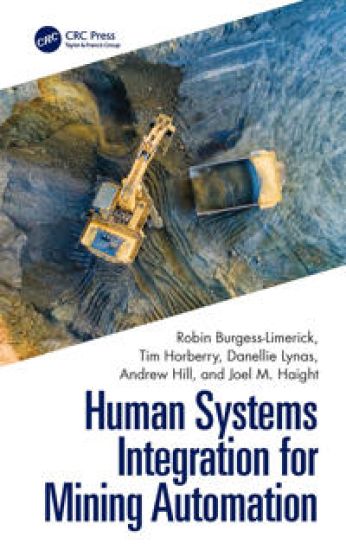
Human Systems Integration for Mining Automation

Human Systems Integration for Mining Automation

Robin Burgess-Limerick; Tim Horberry; Danellie Lynas; Andrew Hill; Joel M Haight

TAYLOR FRANCIS LTD
2025
sidottu
Human Systems Integration for Mining Automation is the professional’s guide to understanding the issues, approaches, and pitfalls associated with mining automation from a human perspective. This book delves into a timely and fast-developing issue in mining and the wider minerals industry - the design and deployment of automation. The book approaches this from a “Human Systems Integration” standpoint in which the technical and human-related aspects are jointly considered as part of an integrated, automated mining system. This accessible and readable title offers a wider Human Systems Integration framework that can be applied to mining projects. It is based on an established framework that has been developed and used successfully in other work. The framework is backed up with information obtained from mines in Australia, the USA, Canada, Sweden, and Chile and original equipment manufacturers such as Caterpillar, Komatsu, Sandvik and Epiroc. Every reader of this book will recognise the essential benefits of human systems integration for mining automation.This book will be an ideal read for industry professionals including systems engineers, safety engineers, mining engineers, human factors engineers, and engineers working on developing and deploying automation in mining and related industries including rail, road transport, and process control. It will also be of interest to students, researchers, and academics in related fields.
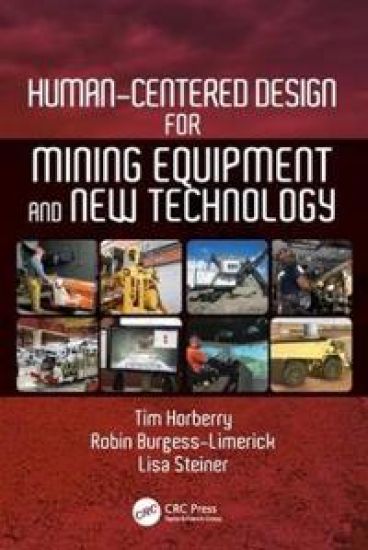
Human-Centered Design for Mining Equipment and New Technology

Human-Centered Design for Mining Equipment and New Technology

Tim Horberry; Robin Burgess-Limerick; Lisa J. Steiner

CRC Press
2018
sidottu
Human-Centered Design for Mining Equipment and New Technology first introduces Human-Centered Design (HCD) and outlines the benefits of this approach for mining equipment and new technology: HCD is a process that aims to make equipment and systems more usable and acceptable by explicitly focusing on the end-user, their tasks and their work environment/use context. The book outlines three linked areas of mining HCD: key principles, examples of design processes, and what kinds of tools for data collection and evaluation are available. The possible future uses of Human-Centered Design in more fully automated mining are presented, and the role of HCD within wider human system integration are outlined. The ‘how to’ nature of this book makes it attractive to mining equipment manufacturers, technology developers, mine site personnel, human factors researchers, safety scientists and regulators.Features: Includes an introduction useful to anyone wanting to learn about the field Provides extensive case studies of HCD which also show failures when HCD was not considered Covers cutting edge mining technology- such as proximity detection devices and new mining automation systems Directly outlines the benefits of HCD for the minerals industry Human-Centered Design for Mining Equipment and New Technology, through case studies, provides a much needed guide to undertaking HCD for mining equipment and new technology.
Human-Centered Design for Mining Equipment and New Technology

Human-Centered Design for Mining Equipment and New Technology

Tim Horberry; Robin Burgess-Limerick; Lisa J. Steiner

CRC Press
2018
nidottu
Human-Centered Design for Mining Equipment and New Technology first introduces Human-Centered Design (HCD) and outlines the benefits of this approach for mining equipment and new technology: HCD is a process that aims to make equipment and systems more usable and acceptable by explicitly focusing on the end-user, their tasks and their work environment/use context. The book outlines three linked areas of mining HCD: key principles, examples of design processes, and what kinds of tools for data collection and evaluation are available. The possible future uses of Human-Centered Design in more fully automated mining are presented, and the role of HCD within wider human system integration are outlined. The ‘how to’ nature of this book makes it attractive to mining equipment manufacturers, technology developers, mine site personnel, human factors researchers, safety scientists and regulators.Features: Includes an introduction useful to anyone wanting to learn about the field Provides extensive case studies of HCD which also show failures when HCD was not considered Covers cutting edge mining technology- such as proximity detection devices and new mining automation systems Directly outlines the benefits of HCD for the minerals industry Human-Centered Design for Mining Equipment and New Technology, through case studies, provides a much needed guide to undertaking HCD for mining equipment and new technology.
Human Systems Integration for Mining Automation

Human Systems Integration for Mining Automation

Robin Burgess-Limerick; Tim Horberry; Danellie Lynas; Andrew Hill; Joel M Haight

TAYLOR FRANCIS LTD
2026
nidottu
Human Systems Integration for Mining Automation is the professional’s guide to understanding the issues, approaches, and pitfalls associated with mining automation from a human perspective. This book delves into a timely and fast-developing issue in mining and the wider minerals industry - the design and deployment of automation. The book approaches this from a “Human Systems Integration” standpoint in which the technical and human-related aspects are jointly considered as part of an integrated, automated mining system. This accessible and readable title offers a wider Human Systems Integration framework that can be applied to mining projects. It is based on an established framework that has been developed and used successfully in other work. The framework is backed up with information obtained from mines in Australia, the USA, Canada, Sweden, and Chile and original equipment manufacturers such as Caterpillar, Komatsu, Sandvik and Epiroc. Every reader of this book will recognise the essential benefits of human systems integration for mining automation. This book will be an ideal read for industry professionals including systems engineers, safety engineers, mining engineers, human factors engineers, and engineers working on developing and deploying automation in mining and related industries including rail, road transport, and process control. It will also be of interest to students, researchers, and academics in related fields.
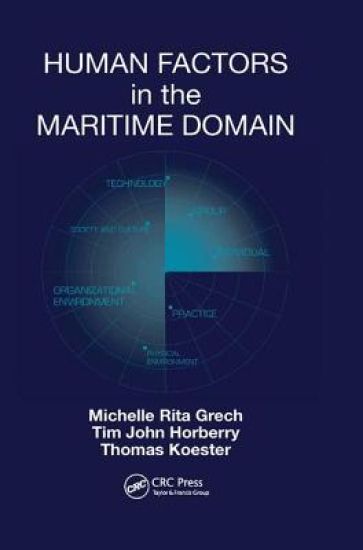
Human Factors in the Maritime Domain

Human Factors in the Maritime Domain

Michelle Grech; Tim Horberry; Thomas Koester

CRC Press
2019
nidottu
The piecemeal fashion in which human factors research has been conducted in the maritime domain makes information retrieval available only by scanning through numerous research journals and conference papers. Bringing together human factors information from this and other domains, Human Factors in the Maritime Domain integrates a common body of knowledge into one single volume. The book provides the vital background information necessary to acquire a core knowledge base and a much-needed overview of human factors within the maritime domain. It starts by putting the topic into an historical and theoretical context, moves onto more specific and detailed topics and contemporary thinking in human factors, then reviews new maritime technology. The authors take a holistic approach based on a model of the socio-technical system of work in the maritime domain. They synthesize available knowledge and research, then present in an easily acceptable framework with example, illustrations, and case studies whenever possible, making the text rigorous, useful, and enjoyable. The three authors draw on a range of diverse backgrounds including working as a maritime surveyor, transport consultant, human factors lecturer, and mechanical engineer. They have undertaken maritime research in Denmark, Australia, Malta, and the UK. They have published several other human factor books on related topics. This combination of human factors knowledge, maritime wisdom, and substantial publication experience results in a book that is effective and practical.
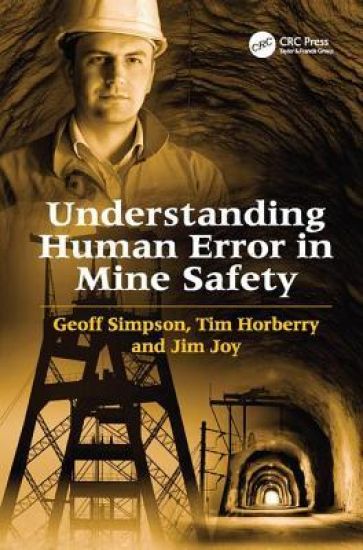
Understanding Human Error in Mine Safety

Understanding Human Error in Mine Safety

Geoff Simpson; Tim Horberry

CRC Press
2017
nidottu
The consideration of human factors issues is vital to the mining industry. As in other safety-critical domains, human performance problems constitute a significant threat to system safety, making the study of human factors an important field for improving safety in mining operations. The primary purpose of this book is to provide the reader with a much-needed overview of human factors within the mining industry, in particular to understand the role of human error in mine safety, explaining contemporary risk management and safety systems approaches. The approach taken is multidisciplinary and holistic, based on a model of the systems of work in the mining industry domain. The ingredients in this model include individual operators, groups/teams, technology/equipment, work organisation and the physical environment. Throughout the book, topics such as human error and safety management are covered through the use of real examples and case studies, allowing the reader to see the practical significance of the material presented while making the text rigorous, useful and enjoyable. Understanding Human Error in Mine Safety is written for professionals in the field, researchers and students of mining engineering, safety or human factors.
Understanding Human Error in Mine Safety

Understanding Human Error in Mine Safety

Geoff Simpson; Tim Horberry

Ashgate Publishing Limited
2009
sidottu
The consideration of human factors issues is vital to the mining industry. As in other safety-critical domains, human performance problems constitute a significant threat to system safety, making the study of human factors an important field for improving safety in mining operations. The primary purpose of this book is to provide the reader with a much-needed overview of human factors within the mining industry, in particular to understand the role of human error in mine safety, explaining contemporary risk management and safety systems approaches. The approach taken is multidisciplinary and holistic, based on a model of the systems of work in the mining industry domain. The ingredients in this model include individual operators, groups/teams, technology/equipment, work organisation and the physical environment. Throughout the book, topics such as human error and safety management are covered through the use of real examples and case studies, allowing the reader to see the practical significance of the material presented while making the text rigorous, useful and enjoyable. Understanding Human Error in Mine Safety is written for professionals in the field, researchers and students of mining engineering, safety or human factors.
Human Factors in the Maritime Domain

Human Factors in the Maritime Domain

Michelle Grech; Tim Horberry; Thomas Koester

CRC Press Inc
2008
sidottu
The piecemeal fashion in which human factors research has been conducted in the maritime domain makes information retrieval available only by scanning through numerous research journals and conference papers. Bringing together human factors information from this and other domains, Human Factors in the Maritime Domain integrates a common body of knowledge into one single volume. The book provides the vital background information necessary to acquire a core knowledge base and a much-needed overview of human factors within the maritime domain. It starts by putting the topic into an historical and theoretical context, moves onto more specific and detailed topics and contemporary thinking in human factors, then reviews new maritime technology. The authors take a holistic approach based on a model of the socio-technical system of work in the maritime domain. They synthesize available knowledge and research, then present in an easily acceptable framework with example, illustrations, and case studies whenever possible, making the text rigorous, useful, and enjoyable. The three authors draw on a range of diverse backgrounds including working as a maritime surveyor, transport consultant, human factors lecturer, and mechanical engineer. They have undertaken maritime research in Denmark, Australia, Malta, and the UK. They have published several other human factor books on related topics. This combination of human factors knowledge, maritime wisdom, and substantial publication experience results in a book that is effective and practical.