Kirjojen hintavertailu. Mukana 12 315 259 kirjaa ja 12 kauppaa.

Kirjailija

Tim Kasser

Kirjat ja teokset yhdessä paikassa: 4 kirjaa, julkaisuja vuosilta 2003-2018, suosituimpien joukossa Lucy in the Mind of Lennon. Vertaile teosten hintoja ja tarkista saatavuus suomalaisista kirjakaupoista.

4 kirjaa

Kirjojen julkaisuhaarukka 2003-2018.

Hyper-Capitalism

Hyper-Capitalism

Larry Gonick; Tim Kasser

Scribe Publications
2018
nidottu
An acerbic graphic takedown of capitalism. In Hyper-Capitalism, cartoonist Larry Gonick and psychologist Tim Kasser offer a vivid and an accessible new way to understand how global, privatising, market-worshipping hyper-capitalism is threatening human wellbeing, social justice, and the planet. Drawing from contemporary research, they describe and illustrate concepts (such as corporate power, free trade, privatisation, and deregulation) that are critical for understanding the world we live in, and movements (such as voluntary simplicity, sharing, alternatives to GDP, and protests) that have developed in response to the system. Gonick and Kasser’s pointed and profound cartoon narratives provide a deep exploration of the global economy and the movements seeking to change it, all rendered in clear, graphic — and sometimes hilarious — terms. In the process, they point the way to a healthier future for all of us.

Hypercapitalism

Hypercapitalism

Larry Gonick; Tim Kasser

The New Press
2018
nidottu
Bestselling 'overeducated cartoonist' Larry Gonick has delighted readers for years with sharp, digestible, and funny accounts of everything from the history of the universe to the intricacies of calculus. Now Gonick teams up with psychologist and scholar Tim Kasser to create an accessible and pointed cartoon guide to how global, privatising, market-worshiping hypercapitalism threatens human well-being, social justice, and the planet. But Gonick and Kasser don't stop at an analysis of how the economic system got out of whack - they also point the way to a healthier future.
Lucy in the Mind of Lennon

Lucy in the Mind of Lennon

Tim Kasser

Oxford University Press Inc
2013
sidottu
Since John Lennon composed Lucy in the Sky with Diamonds in early 1967, fans and music critics alike have argued over the meaning of the song. Is it about drugs? Is it just a lyrical response to a drawing given Lennon by his 4-year-old son Julian? Is there some deeper meaning? Professor Tim Kasser goes beyond speculative explanations by applying innovative psychological methods to the song's lyrics and music. He deeply analyzes the song's linguistic structure, its basic theme, and the way its words and music had been used by Lennon in earlier songs. As the findings accumulate, Kasser weaves them together with the facts of Lennon's life and established psychological theories to provide an integrative (and sometimes surprising) perspective on the psychological processes that led Lennon to write Lucy in the Sky with Diamonds. Kasser goes on to follow the unfolding of these personal dynamics in later Lennon songs like I am the Walrus, Yer Blues, and Working Class Hero. No other book has so closely examined this period of Lennon's life with such a sophisticated psychological approach. Kasser's methods and perspective point to the usefulness of scientific psychology for understanding why a particular person does a particular thing at a particular time, at the same time that they shed new light on this fascinating and controversial man.
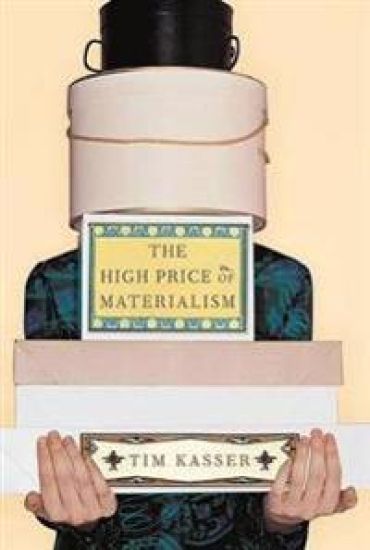
The High Price of Materialism

The High Price of Materialism

Tim Kasser

MIT Press
2003
pokkari
A study of how materialism and consumerism undermine our quality of life.In The High Price of Materialism, Tim Kasser offers a scientific explanation of how our contemporary culture of consumerism and materialism affects our everyday happiness and psychological health. Other writers have shown that once we have sufficient food, shelter, and clothing, further material gains do little to improve our well-being. Kasser goes beyond these findings to investigate how people's materialistic desires relate to their well-being. He shows that people whose values center on the accumulation of wealth or material possessions face a greater risk of unhappiness, including anxiety, depression, low self-esteem, and problems with intimacy-regardless of age, income, or culture.Drawing on a decade's worth of empirical data, Kasser examines what happens when we organize our lives around materialistic pursuits. He looks at the effects on our internal experience and interpersonal relationships, as well as on our communities and the world at large. He shows that materialistic values actually undermine our well-being, as they perpetuate feelings of insecurity, weaken the ties that bind us, and make us feel less free. Kasser not only defines the problem but proposes ways we can change ourselves, our families, and society to become less materialistic.