Kirjojen hintavertailu. Mukana 12 595 353 kirjaa ja 12 kauppaa.

Kirjailija

Tim Kreider

Kirjat ja teokset yhdessä paikassa: 6 kirjaa, julkaisuja vuosilta 2005-2019, suosituimpien joukossa Depth of Field. Vertaile teosten hintoja ja tarkista saatavuus suomalaisista kirjakaupoista.

6 kirjaa

Kirjojen julkaisuhaarukka 2005-2019.

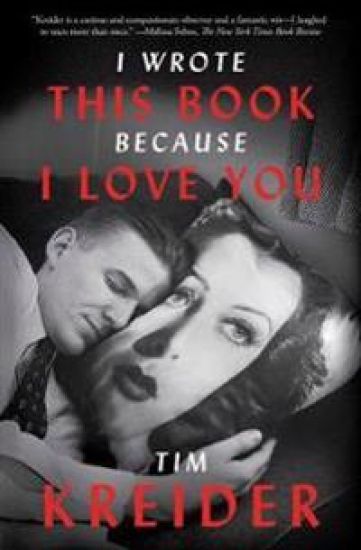
I Wrote This Book Because I Love You

I Wrote This Book Because I Love You

Tim Kreider

Simon Schuster
2019
pokkari
*A People Top 10 Book of 2018* The New York Times essayist and author of We Learn Nothing, Tim Kreider trains his singular power of observation on his (often befuddling) relationships with women.Psychologists have told him he’s a psychologist. Philosophers have told him he’s a philosopher. Religious groups have invited him to speak. He had a cult following as a cartoonist. But, above all else, Tim Kreider is an essayist—one whose deft prose, uncanny observations, dark humor, and emotional vulnerability have earned him deserved comparisons to David Sedaris, Sarah Vowell, and the late David Foster Wallace (who was himself a fan of Kreider’s humor). “Beautifully written, with just enough humor to balance his spikiness” (Booklist), I Wrote This Book Because I Love You focuses Tim’s unique perception and wit on his relationships with women—romantic, platonic, and the murky in-between. He talks about his difficulty finding lasting love and seeks to understand his commitment issues by tracking down the John Hopkins psychologist who tested him for a groundbreaking study on attachment when he was a toddler. He talks about his valued female friendships, one of which landed him on a circus train bound for Mexico. He talks about his time teaching young women at an upstate New York college, and the profound lessons they wound up teaching him. And in a hugely popular essay that originally appeared in The New York Times, he talks about his nineteen-year-old cat, wondering if it’s the most enduring relationship he’ll ever have. “In a style reminiscent of Orwell, E.B. White and David Sedaris” (The New York Times Book Review), each of these pieces is “heartbreaking, brutal, and hilarious” (Judd Apatow), and collectively they cement Kreider’s place among the best essayists working today.

We Learn Nothing: Essays

We Learn Nothing: Essays

Tim Kreider

SIMON SCHUSTER
2013
nidottu
"Kreider locates the right simile and the pith of situations as he carefully catalogues humanity's inventive and manifold ways of failing" (Publishers Weekly, starred review). In We Learn Nothing, satirical cartoonist Tim Kreider turns his funny, brutally honest eye to the dark truths of the human condition, asking big questions about human-sized problems: What if you survive a brush with death and it doesn't change you? Why do we fall in love with people we don't even like? How do you react when someone you've known for years unexpectedly changes genders? With a perfect combination of humor and pathos, these essays, peppered with Kreider's signature cartoons, leave us with newfound wisdom and a unique prism through which to examine our own chaotic journeys through life. These are the conversations you have only with best friends or total strangers, late at night over drinks, near closing time. This edition also includes the sensationally popular essay "The Busy Trap," as seen in The New York Times.
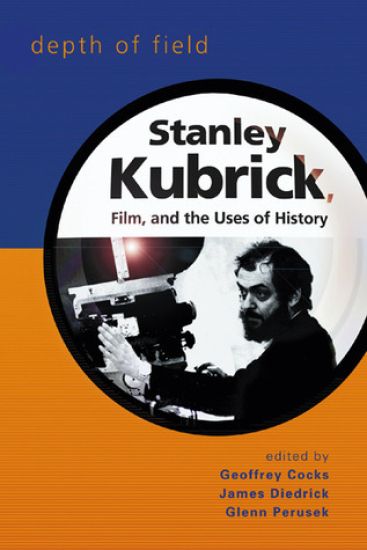
Depth of Field

Depth of Field

G.L. Ercolini; Pat J. Gehrke; Diane Johnson; Tim Kreider; Vincent LoBrutto; Peter Lowenberg; Mark Crispin Miller

University of Wisconsin Press
2006
nidottu
Director of some of the most controversial films of the twentieth century, Stanley Kubrick created a reputation as a Hollywood outsider as well as a cinematic genius. His diverse yet relatively small oeuvre - he directed only thirteen films during a career that spanned more than four decades - covers a broad range of the themes that shaped his century and continues to shape the twenty-first: war and crime, gender relations and class conflict, racism, and the fate of individual agency in a world of increasing social surveillance and control. In ""Depth of Field"", leading screenwriters and scholars analyze Kubrick's films from a variety of perspectives. They examine such groundbreaking classics as ""Dr. Strangelove and 2001: A Space Odyssey"" and later films whose critical reputations are still in flux. ""Depth of Field"" ends with three viewpoints on Kubrick's final film, ""Eyes Wide Shut"", placing it in the contexts of film history, the history and theory of psychoanalysis, and the sociology of sex and power. Probing Kubrick's whole body of work, ""Depth of Field"" is the first truly multidisciplinary study of one of the most innovative and controversial filmmakers of the twentieth century.
Depth of Field

Depth of Field

G.L. Ercolini; Pat J. Gehrke; Diane Johnson; Tim Kreider; Vincent LoBrutto; Peter Lowenberg; Mark Crispin Miller

University of Wisconsin Press
2006
sidottu
Director of some of the most controversial films of the twentieth century, Stanley Kubrick created a reputation as a Hollywood outsider as well as a cinematic genius. His diverse yet relatively small oeuvre - he directed only thirteen films during a career that spanned more than four decades - covers a broad range of the themes that shaped his century and continues to shape the twenty-first: war and crime, gender relations and class conflict, racism, and the fate of individual agency in a world of increasing social surveillance and control. In ""Depth of Field"", leading screenwriters and scholars analyze Kubrick's films from a variety of perspectives. They examine such groundbreaking classics as ""Dr. Strangelove and 2001: A Space Odyssey"" and later films whose critical reputations are still in flux. ""Depth of Field"" ends with three viewpoints on Kubrick's final film, ""Eyes Wide Shut"", placing it in the contexts of film history, the history and theory of psychoanalysis, and the sociology of sex and power. Probing Kubrick's whole body of work, ""Depth of Field"" is the first truly multidisciplinary study of one of the most innovative and controversial filmmakers of the twentieth century.