Kirjojen hintavertailu. Mukana 12 595 353 kirjaa ja 12 kauppaa.

Kirjailija

Tim Taylor

Kirjat ja teokset yhdessä paikassa: 35 kirjaa, julkaisuja vuosilta 2000-2026, suosituimpien joukossa Darkness. Vertaile teosten hintoja ja tarkista saatavuus suomalaisista kirjakaupoista.

35 kirjaa

Kirjojen julkaisuhaarukka 2000-2026.

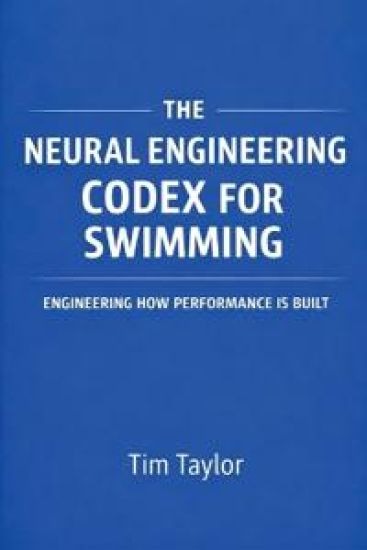
The Neural Engineering Codex for Swimming
Neural Engineering Codex - Swimming presents a science-driven framework for understanding the neurological architecture that underlies competitive swimming performance. Traditional swim manuals focus on conditioning, stroke mechanics, or mindset cues. This book instead examines how the nervous system organizes rhythm, coordination, timing, and speed execution in water - where ground feedback is absent and neural permission governs output. As a result, performance ceilings are often neurological, not purely physical. The Codex explains: Why swimmers "fade" under pressure despite perfect conditioning How neural regulation affects race execution The difference between metabolic fatigue and neural inhibition Rhythm integrity and coordination collapse Start and turn neural classification CNS permission and race-day inhibition protocols Rather than simplistic motivation training, this book offers a technical architecture that identifies where and why speed is lost. Swimming performance is a dynamic interaction between neural signaling, stability perception, and mechanical execution. Coaches and athletes who understand this interaction can diagnose performance breakdowns that traditional models cannot. Written for high-performance swim coaches, collegiate programs, federations, and elite swimmers, Neural Engineering Codex - Swimming provides a new diagnostic lens for organizing speed in water - one grounded in neural engineering principles and designed for results, not guesswork.
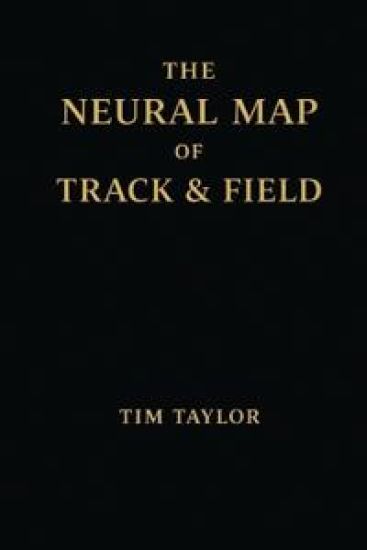
The Neural Map of Track and Field

The Neural Map of Track and Field

Tim Taylor

Puni Publishing
2026
pokkari
Track & field has spent decades refining technique, strength, and conditioning. What has remained largely unexamined is the system that governs whether those qualities remain accessible when conditions intensify. Neural Engineering for Track & Field addresses that gap. It explains the architecture that regulates access, timing, inhibition, and rhythm when speed increases and consequence becomes real. It shows why technically sound athletes fragment under pressure, why training doesn't always transfer to competition, and why performance fails in consistent patterns across events. The Neural Map of Track & Field completes the picture. While the architecture is universal, its expression is not. Sprints, hurdles, jumps, throws, and endurance expose different stress points within the same governing system. The Map makes those event-specific breakdown patterns visible. Together, these two works do different jobs. One explains how the system works. The other shows where it breaks. Track & field performance does not fail randomly. It fails by structure, and by event. Understanding both is no longer optional.
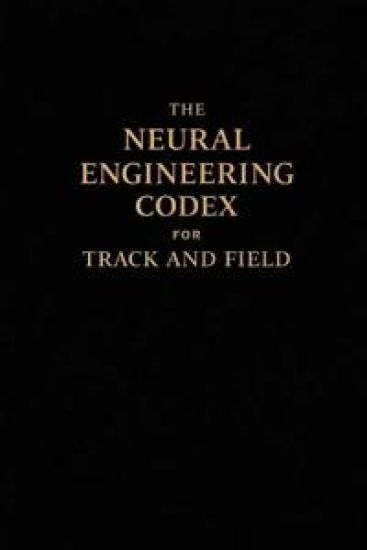
The Neural Engineering Codex for Track and Field
Track & field performance does not fail randomly. It fails by structure. Neural Engineering Codex - Track & Field explains the governing architecture that determines whether execution remains accessible when speed increases, force intensifies, and consequence becomes real. Rather than focusing on technique, drills, or training methodology, the Codex examines the neural systems that regulate access, timing, inhibition, and rhythm across all track & field disciplines. The book addresses why technically proficient athletes fragment under pressure, why physical development does not reliably translate into competition performance, and why breakdown patterns repeat across generations despite advances in coaching and sports science. It identifies a missing architectural layer beneath strength, skill, and psychology-one that governs execution long before conscious correction is possible. This is not a coaching manual and not a collection of interventions. It does not prescribe programs or exercises. Its purpose is structural: to define the laws that govern performance expression when conditions intensify. Written for federations, institutes, coaches, performance directors, and serious athletes, Neural Engineering Codex - Track & Field provides the architectural foundation upon which event-specific understanding and applied analysis can rest.
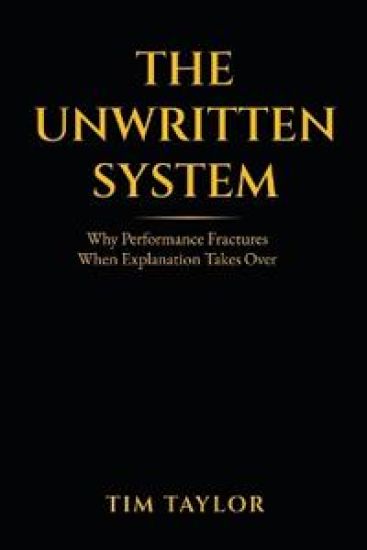
The Unwritten System

The Unwritten System

Tim Taylor

Puni Publishing
2026
sidottu
The Unwritten System is a work on performance under pressure that examines why effort, instruction, and explanation often stop producing reliable results at advanced levels of practice. It is written for professionals who operate in environments where execution, timing, and coordination matter more than motivation or belief. Across elite sport and other high-stakes performance domains, individuals frequently encounter a point where progress becomes conditional. Training intensifies, preparation becomes more sophisticated, and attention to detail increases-yet outcomes fluctuate. Performance begins to depend on context, timing, and the absence of interference rather than on effort alone. This book addresses that structural shift. Rather than offering methods, drills, or techniques, The Unwritten System explores elite performance systems from an architectural perspective. It examines how execution is organized, how timing stabilizes, and how coordination is disrupted when conscious control outlives its usefulness. The book argues that many breakdowns attributed to psychology, confidence, or mindset are in fact consequences of how learning and instruction interact with the nervous system at later stages of development. Drawing on decades of observation across high-level training environments, the work traces a recurring pattern: effort stops predicting outcome, instruction becomes interference, and systems narrow in the name of control. This shift does not represent weakness or failure, but a change in how performance must be organized to remain intact under pressure. The book challenges linear models of improvement commonly found in modern coaching theory. It examines the limits of instruction, the difference between implicit learning and conscious regulation, and why explanation can interfere with execution when speed, consequence, and timing are compressed. In doing so, it reframes collapse not as a psychological lapse, but as a structural signal. The Unwritten System is not a coaching manual and does not provide tools to apply. It offers orientation rather than instruction, clarifying why high-level performers often feel that they have "done everything right" while still encountering ceilings they cannot explain. Its focus is on execution and timing, learning and coordination, and the underlying structure that allows performance to remain coherent under pressure. Written for advanced athletes, experienced coaches, and practitioners working within high-level performance systems, this book serves as a conceptual foundation rather than a guide. It is the first volume of a three-part work examining performance structure, breakdown, and restoration.
The Unwritten System

The Unwritten System

Tim Taylor

Puni Publishing
2026
pokkari
Across disciplines and levels, performance fails in remarkably consistent ways under pressure. Execution collapses even when preparation is sound, skill is proven, and experience is deep. These failures are routinely explained using familiar language-confidence, focus, mindset, nerves-terms that describe how breakdown feels without explaining why it occurs. The Unwritten System offers a structural account of performance failure and stability. Rather than treating breakdown as a psychological or motivational problem, the book examines performance as an organised system governed by access, timing, and permission-mechanisms that change predictably when conditions intensify. Drawing on decades of observation across high-stakes performance environments, the book explains why repetition stops transferring to competition, why technically capable performers fragment under pressure, and why traditional training and psychological models fail to protect execution when consequence becomes real. It identifies a missing structural layer beneath technique, physiology, and psychology-one that has shaped outcomes for generations but has rarely been named. This is not a training manual, a self-help book, or a collection of techniques. It does not offer drills or prescriptions. Its purpose is diagnostic: to make visible the system that governs whether performance remains accessible when pressure, speed, fatigue, and visibility increase. Written for serious athletes, coaches, performance professionals, and decision-makers operating in high-responsibility environments, The Unwritten System stands as a foundational work. It can be read independently, but also functions as the architectural core of a wider body of work examining performance under exposure.
Rise of the Self-Replicators

Rise of the Self-Replicators

Tim Taylor; Alan Dorin

Springer Nature Switzerland AG
2020
nidottu
Is it possible to design robots and other machines that can reproduce and evolve? And, if so, what are the implications: for the machines, for ourselves, for our environment, and for the future of life on Earth and elsewhere?In this book the authors provide a chronological survey and comprehensive archive of the early history of thought about machine self-reproduction and evolution. They discuss contributions from philosophy, science fiction, science and engineering, and uncover many examples that have never been discussed in the Artificial Intelligence and Artificial Life literature before now. In the final chapter they provide a synthesis of the concepts discussed, offer their views on the field’s future directions, and call for a broad community discussion about the significant implications of intelligent evolving machines.The book will be of interest to general readers, and a valuable resource for researchers, practitioners, and historians engaged with ideas in artificial intelligence, artificial life, robotics, and evolutionary computing.
Praying the P's: A Prayer That Can Work for Everyone!

Praying the P's: A Prayer That Can Work for Everyone!

Susan Taylor; Tim Taylor

Independently Published
2019
nidottu
There are moments where we all find ourselves too small for a problem or too limited for the task. Perhaps we are overwhelmed by a situation we're facing financially, emotionally, physically, mentally, spiritually or relationally. We don't have the answers, or the resources, or the strength, or words to say that would help, and we need divine intervention. A problem that is too big for us to solve on our own. We don't know what to do and no one else does either. So we turn heavenward to the Almighty God of the universe and ask for His help. Except we don't know how to pray. Is there a prayer we can use for any situation, at any time, and have confidence that it will get God's attention? Actually, there is And we want to share it with you.