Kirjojen hintavertailu. Mukana 12 459 402 kirjaa ja 12 kauppaa.

Kirjailija

Timothy Beatley

Kirjat ja teokset yhdessä paikassa: 28 kirjaa, julkaisuja vuosilta 1989-2026, suosituimpien joukossa Wild Nature in Cities. Vertaile teosten hintoja ja tarkista saatavuus suomalaisista kirjakaupoista.

28 kirjaa

Kirjojen julkaisuhaarukka 1989-2026.

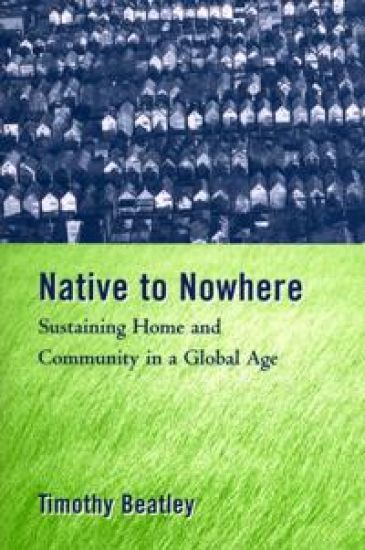
Native to Nowhere

Native to Nowhere

Timothy Beatley

Island Press
2004
nidottu
Meaningful places offer a vital counterbalance to the forces of globalization and sameness that are overtaking our world, and are an essential element in the search for solutions to current sustainability challenges. In Native to Nowhere, author Tim Beatley draws on extensive research and travel to communities across North America and Europe to offer a practical examination of the concepts of place and place-building in contemporary life. He reviews the many current challenges to place, considers trends and factors that have undermined place commitments, and discusses in detail a number of innovative ideas and compelling visions for strengthening place. Native to Nowhere brings together a wide range of new ideas and insights about sustainability and community, and introduces readers to a host of innovative projects and initiatives. It is a compelling source of information and ideas for anyone seeking to resist place homogenization and build upon the unique qualities of their local environment and community.
An Introduction to Coastal Zone Management

An Introduction to Coastal Zone Management

Timothy Beatley; David Brower; Anna K. Schwab

Island Press
2002
nidottu
This title offers a comprehensive overview of coastal planning and management issues for students and professionals in the field. Since publication of the first edition in 1994, population growth and increasing development pressures on our coasts have made the need for forward-looking, creative and sustainable visions for the future even greater. This revised edition includes: significantly updated data and statistics including discussions of population and growth trends, federal and state coastal expenditures, disaster assistance expenditures and damage levels from hurricane and coastal storms; updated legislative and programmatic material, including the Stafford Act and mitigation assistance programmes, and changes in the Coastal Zone Management Act; expanded coverage of physical and biological attributes and conditions of the coastal zone; expanded and updated discussions of innovative local coastal management; and new chapters on creative coastal design and development and lessons from coastal programmes in other countries. "An Introduction to Coastal Zone Management" addresses the serious coastal trends and pressures in the US, assesses the current policy and planning framework, and puts forth a vision for future management and sustainable coastal planning. It is an important resource for undergraduate and graduate students of coastal planning as well as for local and state officials, residents of coastal communities, environmental advocates, developers and others concerned with coastal issues.
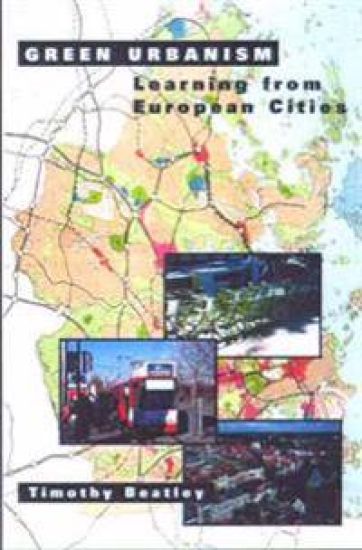
Green Urbanism

Green Urbanism

Timothy Beatley

Island Press
1999
pokkari
As the need to confront unplanned growth increases, planners, policymakers, and citizens are scrambling for practical tools and examples of successful and workable approaches. Growth management initiatives are underway in the U.S. at all levels, but many American "success stories" provide only one piece of the puzzle. To find examples of a holistic approach to dealing with sprawl, one must turn to models outside of the United States. In Green Urbanism, Timothy Beatley explains what planners and local officials in the United States can learn from the sustainable city movement in Europe. The book draws from the extensive European experience, examining the progress and policies of twenty-five of the most innovative cities in eleven European countries, which Beatley researched and observed in depth during a year-long stay in the Netherlands. Chapters examine: the sustainable cities movement in Europe examples and ideas of different housing and living options transit systems and policies for promoting transit use, increasing bicycle use, and minimizing the role of the automobile creative ways of incorporating greenness into cities ways of readjusting "urban metabolism" so that waste flows become circular programs to promote more sustainable forms of economic development sustainable building and sustainable design measures and features renewable energy initiatives and local efforts to promote solar energy ways of greening the many decisions of local government including ecological budgeting, green accounting, and other city management tools. Throughout, Beatley focuses on the key lessons from these cities -- including Vienna, Helsinki, Copenhagen, Stockholm, Zurich, Amsterdam, London, and Berlin -- and what their experience can teach us about effectively and creatively promoting sustainable development in the United States. Green Urbanism is the first full-length book to describe urban sustainability in European cities, and provides concrete examples and detailed discussions of innovative and practical sustainable planning ideas. It will be a useful reference and source of ideas for urban and regional planners, state and local officials, policymakers, students of planning and geography, and anyone concerned with how cities can become more livable.
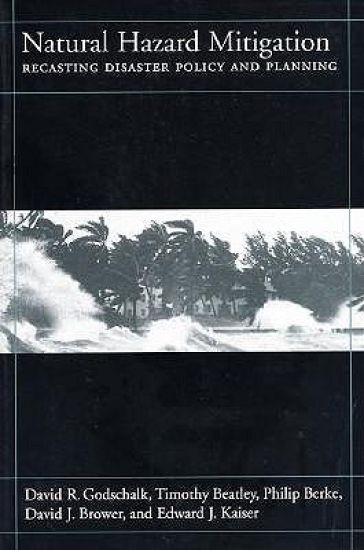
Natural Hazard Mitigation: Recasting Disaster Policy and Planning

Natural Hazard Mitigation: Recasting Disaster Policy and Planning

David Godschalk; Timothy Beatley; Philip Berke

ISLAND PRESS
1998
nidottu
The first half of the 1990s saw the largest and most costly floods, hurricanes, and earthquakes in the history of the United States. While natural hazards cannot be prevented, their human impacts can be greatly reduced through advance action that mitigates risks and reduces vulnerability. Natural Hazard Mitigation describes and analyzes the way that hazard mitigation has been carried out in the U.S. under our national disaster law, the Robert T. Stafford Disaster Relief and Emergency Assistance Act. It is the first systematic study of the complete intergovernmental system for natural hazard mitigation, including its major elements and the linkages among them. The book: analyzes the effectiveness of the Stafford Act and investigates what is contained in state hazard mitigation plans required by the Actstudies how federal hazard mitigation funds have been spentexplores what goes into decision making following a major disasterlooks at how government mitigation officials rate the effectiveness of the mitigation systemsuggests changes that could help solve the widely recognized problems with current methods of coping with disastersDamages from natural disasters are reaching catastrophic proportions, making natural hazard mitigation an important national policy issue. The findings and recommendations presented in this volume should help to strengthen natural hazard mitigation policy and practice, thereby serving to reduce drains on the federal treasury that pay for preventable recovery and relief costs, and to spare residents in areas hit by natural disasters undue suffering and expense. It is an informative and eye-opening study for planners, policymakers, students of planning and geography, and professionals working for government agencies that deal with natural hazards.
The Ecology of Place

The Ecology of Place

Timothy Beatley; Kristy Manning

Island Press
1997
pokkari
In The Ecology of Place, Timothy Beatley and Kristy Manning describe a world in which land is consumed sparingly, cities and towns are vibrant and green, local economies thrive, and citizens work together to create places of enduring value. They present a holistic and compelling approach to repairing and enhancing communities, introducing a vision of "sustainable places" that extends beyond traditional architecture and urban design to consider not just the physical layout of the development but the broad set of ways in which communities are organized and operate.
Ethical Land Use

Ethical Land Use

Timothy Beatley

Johns Hopkins University Press
1994
pokkari
"That land is a community is the basic concept of ecology", wrote Aldo Leopold in 1933, "but that land is to be loved and respected is an extension of ethics". Since then, every generation has taken up Leopold's search for a "land ethic" to guide decision-making which would balance economic considerations with concerns for beauty, sustainability and quality-of-life. Should a community preserve or develop the remaining wetlands within its jurisdiction? Should a local government allow low-income housing to be built in an affluent neighbourhood? Does a farmer continue farming despite surrounding urbanization or does he sell the land for a profit and allow further development? "Ethical Land Use" is an examination of the ethical dimensions of land use decisions and policy. Its premise is that all land use decisions - whether to build an interstate highway or maintain a suburban lawn with chemical fertilizers - invariably involve ethical choices. Historically, Beatley observes, many such decisions were made on narrow legal, technical or economic grounds rather than on a full consideration of their complex ethical and moral dimensions. Drawing on a combination of actual land use conflicts and hypothetical scenarios, Beatley offers a full description and analysis of the difficult issues faced by policymakers as well as individual citizens.
Habitat Conservation Planning

Habitat Conservation Planning

Timothy Beatley

University of Texas Press
1994
pokkari
As environmental awareness grows around the world, people are learning that a diversity of species and the habitat to support them is necessary to maintain the ecological health of the earth. At the same time, however, the pressure to develop wildlife habitat for human settlement and economic gain also grows, causing frequent clashes between the forces of development and of conservation.This pioneering study focuses on a new tool for resolving the land-use conflict-the creation of habitat conservation plans (HCPs). Timothy Beatley explores the development and early results of this provision of the United States' federal Endangered Species Act, which allows development of some habitat and a certain "take" of a protected species in return for the conservation of sufficient habitat to ensure its survival and long-term recovery.Beatley looks specifically at nine HCPs in California, Nevada, Texas, and Florida, states where biological diversity and increasing populations have triggered many conflicts. Some of the HCPs include the San Bruno Mountain HCP near San Francisco, the North Key Largo HCP in the Florida Keys, the Clark County HCP near Las Vegas, Nevada, and the Balcones Canyonlands HCP near Austin, Texas. This first comprehensive overview of habitat conservation planning in the United States will be important reading for everyone involved in land-use debates.
Catastrophic Coastal Storms

Catastrophic Coastal Storms

David R. Godschalk; David J. Brower; Timothy Beatley

Duke University Press
1989
sidottu
As people cluster on the coast in increasing numbers, coastal populations become more vulnerable to severe damage from catastrophic coastal storms. The authors contented that current public policy has proved unable to cope with the growing problem, and in response they present a comprehensive analysis of coastal storm hazards, standard policy approaches, and promising new means of managing coastal growth.Catastrophic Coastal Storms offers a solution to the policy problem by proposing a merger of hazard mitigation with development management, basing this on extensive surveys of at-risk coastal locations and case studies of post-hurricane recovery. Starting with the local level of government and proceeding to state and federal levels, the authors propose a strategy for overcoming the formidable obstacles to safeguarding the shoreline population and its structures from hurricanes and other severe storms.