Kirjojen hintavertailu. Mukana 12 459 402 kirjaa ja 12 kauppaa.

Kirjailija

Timothy D. Sisk

Kirjat ja teokset yhdessä paikassa: 8 kirjaa, julkaisuja vuosilta 2008-2024, suosituimpien joukossa International Mediation in Civil Wars. Vertaile teosten hintoja ja tarkista saatavuus suomalaisista kirjakaupoista.

Mukana myös kirjoitusasut: Timothy D Sisk

8 kirjaa

Kirjojen julkaisuhaarukka 2008-2024.

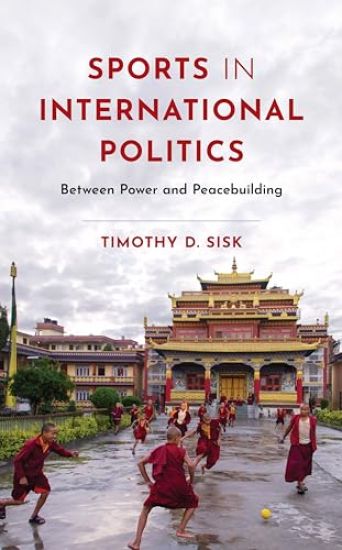
Sports in International Politics

Sports in International Politics

Timothy D. Sisk

BLOOMSBURY PUBLISHING PLC
2024
sidottu
Sport has historically been part of a broader quest of regimes for power and prestige on the world stage, and that success in global sport was a function of a country’s projection of hegemony and place in an anarchic international system. While such historical trends of politicization of sport continue—witness the nationalism on display at each Olympic games—today sport is equally seen as a strategically key approach for advancing human rights, building peace, strengthening social cohesion, and fostering development. In practical terms, international sport resides between a “realist” world of power and profit while at the same time has become an instrument of liberal internationalism that sees the advancement of individual values of rights, gender equality, and empowerment of often marginalized groups such as indigenous peoples, traumatized war victims, and those with disabilities. How does international politics affect the world of global sport, and, how -- if at all – can sport contribute to the pursuit of sustainable peace? Sports in International Politics: Between Power and Peacebuilding explores the complex linkages between power politics of the international arena, the profit-seeking, often elitist and at-times corrupt world of professional international sport, and the promise for harnessing sport to promote human rights, inclusive development, and sustainable peace in a violent world.Timothy D. Sisk presents the case that sport’s direct relationship to peace is found not in the fanfare of the Olympic Games (without reform), but in sport- and play-related contributions to humanitarian action, expanding the right to access sport and the rights of athletes of all ages and abilities, and in the well-designed employment of sport in youth-based development and peacebuilding programs and projects. Sport’s contribution to peace is found not principally in the nation-state ensnared Olympic Games, but instead step-by-step, from the bottom up through sport’s contribution to positive youth development, empathy and fairness, and through engendering trust and social cohesion at community and national levels.
Sports in International Politics

Sports in International Politics

Timothy D. Sisk

BLOOMSBURY PUBLISHING PLC
2024
nidottu
Sport has historically been part of a broader quest of regimes for power and prestige on the world stage, and that success in global sport was a function of a country’s projection of hegemony and place in an anarchic international system. While such historical trends of politicization of sport continue—witness the nationalism on display at each Olympic games—today sport is equally seen as a strategically key approach for advancing human rights, building peace, strengthening social cohesion, and fostering development. In practical terms, international sport resides between a “realist” world of power and profit while at the same time has become an instrument of liberal internationalism that sees the advancement of individual values of rights, gender equality, and empowerment of often marginalized groups such as indigenous peoples, traumatized war victims, and those with disabilities. How does international politics affect the world of global sport, and, how -- if at all – can sport contribute to the pursuit of sustainable peace? Sport and International Politics: Power, Profit, and Peace explores the complex linkages between power politics of the international arena, the profit-seeking, often elitist and at-times corrupt world of professional international sport, and the promise for harnessing sport to promote human rights, inclusive development, and sustainable peace in a violent world.Timothy D. Sisk presents the case that sport’s direct relationship to peace is found not in the fanfare of the Olympic Games (without reform), but in sport- and play-related contributions to humanitarian action, expanding the right to access sport and the rights of athletes of all ages and abilities, and in the well-designed employment of sport in youth-based development and peacebuilding programs and projects. Sport’s contribution to peace is found not principally in the nation-state ensnared Olympic Games, but instead step-by-step, from the bottom up through sport’s contribution to positive youth development, empathy and fairness, and through engendering trust and social cohesion at community and national levels.
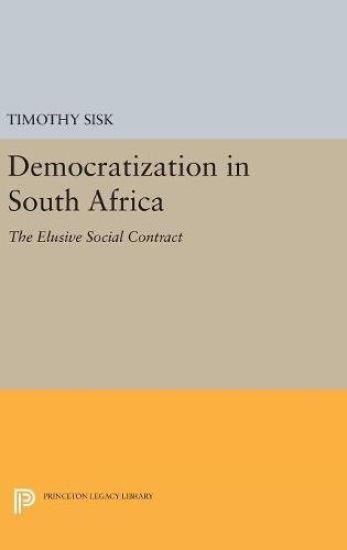
Democratization in South Africa

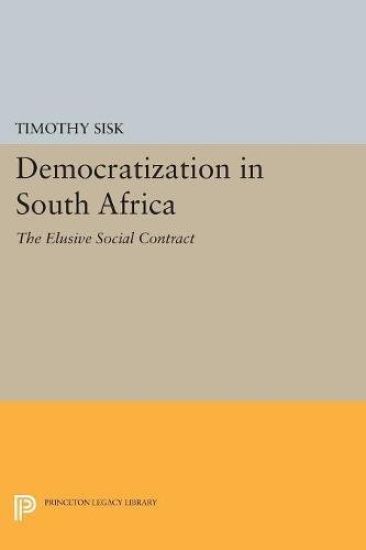
Democratization in South Africa

Timothy D. Sisk

Princeton University Press
2017
pokkari
Timothy Sisk presents a new way of conceiving the transition to democracy in South Africa. Unlike authors such as Horowitz and Lijphart, who have sought to prescribe an ideal set of post-apartheid political institutions, Sisk asks what kinds of institutions show signs of actually emerging, given recent history and present realities. He treats the problem of constructing a democratic post-apartheid society in South Africa as part of a larger condition common to societies deeply divided by ethnic, religious, racial, or national discord. Though its profound cleavages of race and class make it a "least likely" candidate for conflict resolution through democratization, Sisk argues that the centripetal pull on moderate politicians of all parties was greater than the seemingly natural polarizing trend in a divided society. This centripetal pull led to the adoption of an interim constitution in 1993 after protracted negotiations. An American Fulbright scholar sent to South Africa after the end of the 21-year rupture of official scholarly exchanges between the two countries, Sisk analyzes the changes in the strategic calculations of the white minority government, the black liberation movement, and other parties over the course of negotiations since 1990. He concludes that intermittent upsurges of violence often reinforced, rather than reduced, the incentives of leaders on both sides to negotiate a settlement that would avoid mutually damaging outcomes. Drawing on extensive interviews with political figures, as well as other primary and secondary sources, Sisk finds reason for hope that a democratic social contract can evolve, balancing majority rule with minority representation and guaranteeing equal economic opportunity and social justice. Originally published in 1994. The Princeton Legacy Library uses the latest print-on-demand technology to again make available previously out-of-print books from the distinguished backlist of Princeton University Press. These editions preserve the original texts of these important books while presenting them in durable paperback and hardcover editions. The goal of the Princeton Legacy Library is to vastly increase access to the rich scholarly heritage found in the thousands of books published by Princeton University Press since its founding in 1905.
Democratization in South Africa

Democratization in South Africa

Timothy D. Sisk

Princeton University Press
2017
sidottu
Timothy Sisk presents a new way of conceiving the transition to democracy in South Africa. Unlike authors such as Horowitz and Lijphart, who have sought to prescribe an ideal set of post-apartheid political institutions, Sisk asks what kinds of institutions show signs of actually emerging, given recent history and present realities. He treats the problem of constructing a democratic post-apartheid society in South Africa as part of a larger condition common to societies deeply divided by ethnic, religious, racial, or national discord. Though its profound cleavages of race and class make it a "least likely" candidate for conflict resolution through democratization, Sisk argues that the centripetal pull on moderate politicians of all parties was greater than the seemingly natural polarizing trend in a divided society. This centripetal pull led to the adoption of an interim constitution in 1993 after protracted negotiations. An American Fulbright scholar sent to South Africa after the end of the 21-year rupture of official scholarly exchanges between the two countries, Sisk analyzes the changes in the strategic calculations of the white minority government, the black liberation movement, and other parties over the course of negotiations since 1990. He concludes that intermittent upsurges of violence often reinforced, rather than reduced, the incentives of leaders on both sides to negotiate a settlement that would avoid mutually damaging outcomes. Drawing on extensive interviews with political figures, as well as other primary and secondary sources, Sisk finds reason for hope that a democratic social contract can evolve, balancing majority rule with minority representation and guaranteeing equal economic opportunity and social justice. Originally published in 1994. The Princeton Legacy Library uses the latest print-on-demand technology to again make available previously out-of-print books from the distinguished backlist of Princeton University Press. These editions preserve the original texts of these important books while presenting them in durable paperback and hardcover editions. The goal of the Princeton Legacy Library is to vastly increase access to the rich scholarly heritage found in the thousands of books published by Princeton University Press since its founding in 1905.
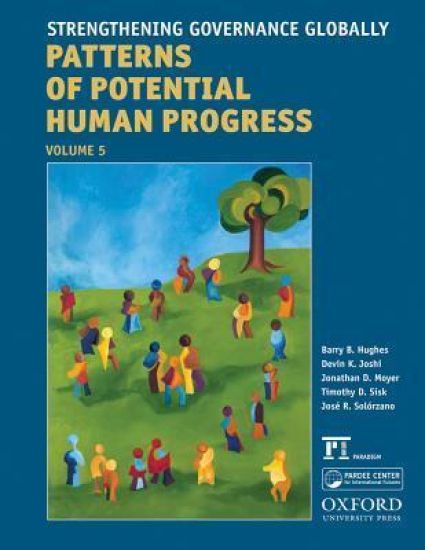
Strengthening Governance Globally

Strengthening Governance Globally

Barry B. Hughes; Devin K. Joshi; Jonathan D. Moyer; Timothy D. Sisk; Jose Roberto Solorzano

Paradigm
2014
nidottu
Strengthening Governance Globally is the fifth volume in the series 'Patterns of Potential Human Progress'. Each volume considers one key aspect of how development unfolds globally and how better to move it in desired directions. This volume identifies the provision of security, the building of government capacity, and the broadening of inclusion of governance on which high-income countries have traditionally made long historical transitions. In contrast, many developing countries today struggle with all three governance transition dimensions simultaneously. Strengthening Governance Globally uses the growing empirical database on governance variables to understand historical change.
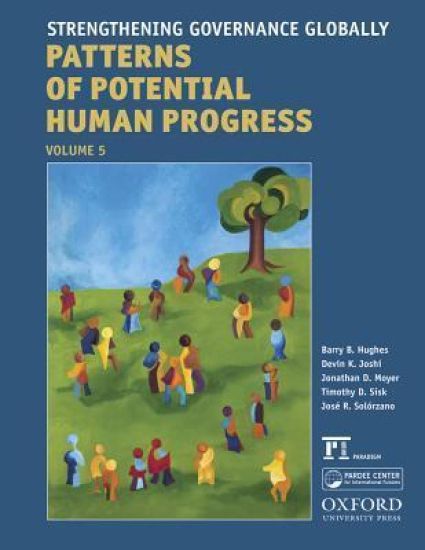
Strengthening Governance Globally

Strengthening Governance Globally

Barry B. Hughes; Devin K. Joshi; Jonathan D. Moyer; Timothy D. Sisk; Jose Roberto Solorzano

Paradigm
2014
sidottu
Strengthening Governance Globally is the fifth volume in the series 'Patterns of Potential Human Progress'. Each volume considers one key aspect of how development unfolds globally and how better to move it in desired directions. This volume identifies the provision of security, the building of government capacity, and the broadening of inclusion of governance on which high-income countries have traditionally made long historical transitions. In contrast, many developing countries today struggle with all three governance transition dimensions simultaneously. Strengthening Governance Globally uses the growing empirical database on governance variables to understand historical change.
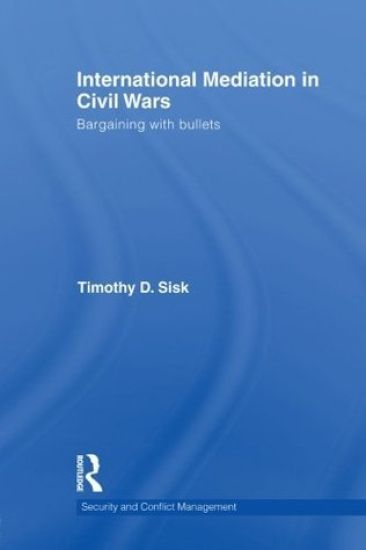
International Mediation in Civil Wars
This book evaluates the role of international mediators in bringing civil wars to an end and makes the case for ‘powerful peacemaking’ – using incentives and sanctions – to leverage parties into peace.As internal violence within countries is a hugely significant threat to international peace in the post-Cold War era, the question of how these wars end has become an urgent research and policy question. This volume explores a critical aspect of peacemaking that has yet to be sufficiently evaluated: the turbulent period beyond the onset of formal or open negotiations to end civil wars and the clinching of an initially sustainable negotiated settlement. The book argues that the transnational flow of weapons, resources, and ideas means that when civil wars today end, they are more likely to do so at the negotiating table than on the battlefield. It uses bargaining theory to develop an analytical framework to evaluate peace processes – moving from stalemate in wars to negotiated settlement – and it rigorously analyses the experiences of five cases of negotiated transitions from war and the role of international mediators: South Africa, Liberia, Burundi, Kashmir, and Sri Lanka.
International Mediation in Civil Wars
This book evaluates the role of international mediators in bringing civil wars to an end and makes the case for ‘powerful peacemaking’ – using incentives and sanctions – to leverage parties into peace.As internal violence within countries is a hugely significant threat to international peace in the post-Cold War era, the question of how these wars end has become an urgent research and policy question. This volume explores a critical aspect of peacemaking that has yet to be sufficiently evaluated: the turbulent period beyond the onset of formal or open negotiations to end civil wars and the clinching of an initially sustainable negotiated settlement. The book argues that the transnational flow of weapons, resources, and ideas means that when civil wars today end, they are more likely to do so at the negotiating table than on the battlefield. It uses bargaining theory to develop an analytical framework to evaluate peace processes – moving from stalemate in wars to negotiated settlement – and it rigorously analyses the experiences of five cases of negotiated transitions from war and the role of international mediators: South Africa, Liberia, Burundi, Kashmir, and Sri Lanka.