Kirjojen hintavertailu. Mukana 12 595 353 kirjaa ja 12 kauppaa.
Kirjailija
Timothy Hall
Kirjat ja teokset yhdessä paikassa: 13 kirjaa, julkaisuja vuosilta 2007-2023, suosituimpien joukossa Colonial America in an Atlantic World. Vertaile teosten hintoja ja tarkista saatavuus suomalaisista kirjakaupoista.
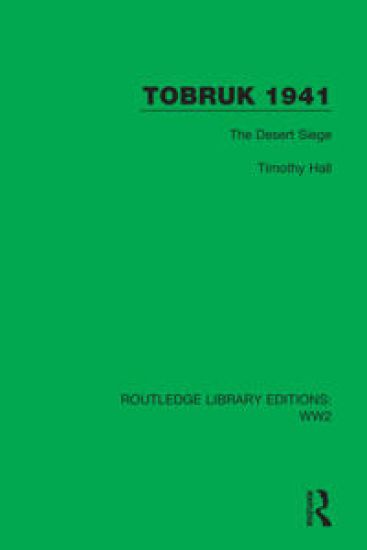
This book, first published in 1984, examines the 1941 siege of Tobruk and the experiences of the inexperienced Australian troops facing Rommel’s successful armies. It looks at the follies as well as the bravery; humane acts from both sides, locked as they were in a brutal battle; the tactics of desert warfare and siege warfare; and the challenges both sides faced from fighting in desert conditions.
This book, first published in 1984, examines the 1941 siege of Tobruk and the experiences of the inexperienced Australian troops facing Rommel’s successful armies. It looks at the follies as well as the bravery; humane acts from both sides, locked as they were in a brutal battle; the tactics of desert warfare and siege warfare; and the challenges both sides faced from fighting in desert conditions.
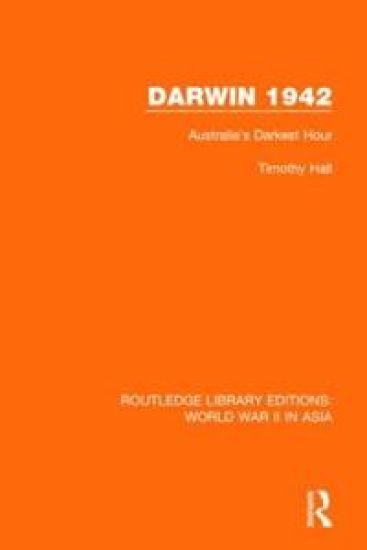
On Wednesday 18 February 1942 the Japanese air force bombed Darwin. Whilst this fact is well known, very few people know exactly what happened. Timothy Hall was the first writer to be given acess to all the official reports of the time and as a result he has been able to reveal exactly what happened on that dreadful day – a day which Sir Paul Hasluck (17th Governor-General of Australia) later described as ‘a day of national shame’. The sequence of events in Darwin that day certainly did not reflect the military honour that the War Cabinet wanted people to believe. On the contrary, for what really happened was a combination of chaos, panic and, in many cases, cowardice on an unprecented scale.
Drawing on material that had only just been released when this book was originally published in 1981, this book provides a graphic account of the war which, to all intents and purposes, was fought on Australian soil against Australian people – a war which came to the very door of Australia itself. When the Japanese landed at Rabaul on 23 January 1942 it was the start of one of the fiercest campaigns of the war. On that day, with only a handful of badly trained troops, led by inexperienced officers, Australia faced its most serious threat yet. It was to be a campaign with all the ingredients of great drama – cowardice and extraordinary courage, untrained men becoming brave, skilful fighters, torture and unimaginable brutality. On the infamous Kokoda trail, men died in their hundreds, as the Japanese advanced on Port Moresby. And when the Japanese retreated, the advancing Australian troops learnt just how brutal the fighting had been.
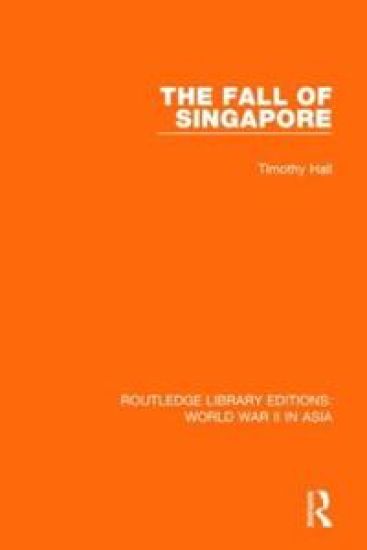
Singapore fell to the Japanese on 15 September 1942, but in 1941 Europeans on the island felt still untouched by war, lulled into security by the belief that Singapore was impregnable from the sea. However, the Planning Chief of Imperial Army Headquarters in Tokyo had realised a successful invasion could come from the north, down the Malay peninsula... Requests from less naive members of the allied forces for more men, arms and equipment were not filled. Authorities were unwilling to reveal to the civilian population the true situation. And so through accident or miscalculation, Singapore was totally unable to repel the Japanese attack. This accessible book, illustrated with black and white photos charts the course of these events.
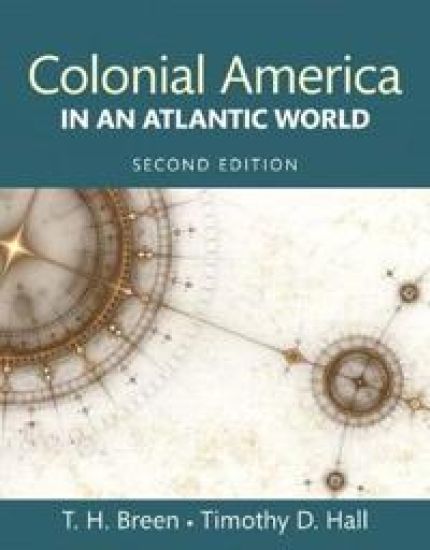
For courses in Colonial American History A story of interaction and adaptation in the Atlantic world. Colonial America in an Atlantic World presents the story of interaction and adaptation among the peoples of four continents that resulted in the development of the North American region that became the United States. Authors T.H. Breen and Timothy Hall discuss the social, political, environmental, and cultural processes set in motion by European exploration and settlement, and cover the sometimes-overlooked contributions of Native Americans and Africans to Atlantic history. Expanded to include a new, three-chapter section on the American Revolution, the second edition traces Atlantic history right up through the ratification of the U.S. Constitution in 1788.
On 19 February 1942 the Japanese air force bombed Darwin. Whilst this fact is well known, very few people know exactly what happened. Timothy Hall was the first writer to be given acess to all the official reports of the time and as a result he has been able to reveal exactly what happened on that dreadful day – a day which Sir Paul Hasluck (17th Governor-General of Australia) later described as ‘a day of national shame’. The sequence of events in Darwin that day certainly did not reflect the military honour that the War Cabinet wanted people to believe. On the contrary, for what really happened was a combination of chaos, panic and, in many cases, cowardice on an unprecented scale.
Singapore fell to the Japanese on 15 September 1942, but in 1941 Europeans on the island felt still untouched by war, lulled into security by the belief that Singapore was impregnable from the sea. However, the Planning Chief of Imperial Army Headquarters in Tokyo had realised a successful invasion could come from the north, down the Malay peninsula... Requests from less naive members of the allied forces for more men, arms and equipment were not filled. Authorities were unwilling to reveal to the civilian population the true situation. And so through accident or miscalculation, Singapore was totally unable to repel the Japanese attack. This accessible book, illustrated with black and white photos charts the course of these events.
Drawing on material that had only just been released when this book was originally published in 1981, this book provides a graphic account of the war which, to all intents and purposes, was fought on Australian soil against Australian people – a war which came to the very door of Australia itself. When the Japanese landed at Rabaul on 23 January 1942 it was the start of one of the fiercest campaigns of the war. On that day, with only a handful of badly trained troops, led by inexperienced officers, Australia faced its most serious threat yet. It was to be a campaign with all the ingredients of great drama – cowardice and extraordinary courage, untrained men becoming brave, skilful fighters, torture and unimaginable brutality. On the infamous Kokoda trail, men died in their hundreds, as the Japanese advanced on Port Moresby. And when the Japanese retreated, the advancing Australian troops learnt just how brutal the fighting had been.
The 4 volumes in this set, originally published between 1980 and 1983, bring to light and focus on the conflict between Japan and Australia and Japan and the USA. Timothy Hall’s volumes, richly illustrated with black & white photographs, used highly contentious documents as their sources and give fascinating insights into a period of Australian history which is sometimes less than gloious. John J. Sbrega’s tour de force is not only one of the most extensive annotated bibliographies on the USA and Japan in World War 2 ever published, but it also provides invaluable information on lesser known but no less important aspects of the conflict.
Broad ranging in its coverage of the liberal democratic state and other, non-democratic state formations, the book offers chapters on each of the core theories of the modern state. Each chapter is structured in the same way to allow for ease of cross-referencing and for comparisons to be drawn between theories, with parts on Context, Definition, Theorists and Practical Politics. There are chapters on: *The Emergence of the Modern State *Liberalism *Elite Theories *Marxism *Socialism *Anarchism *Conservatism *Fascism *Feminisms *The New Right *Fundamentalism *Futures The authors work on the premise that theory is relevant to everyday life, helping us to understand current political transitions and institutional formations and practices. Taking a practical view of politics, each chapter illustrates how state theory has been deployed in recent historical contexts and policy initiatives, using examples to bring the theory to life. Key Features: *Unique in considering the liberal democratic state and other, non-democratic state formations *Includes a wide range of examples, such as Marxist states in Eastern Europe and non-secular, militarist and emergent democratic states in the developing world *Covers a wide theoretical range and includes less well-known ideas and approaches such as those of fundamentalism, fascism and anarchism *Shows how different theories of the state have affected the framing and implementation of policies, or the history of political parties and movements
Broad ranging in its coverage of the liberal democratic state and other, non-democratic state formations, the book offers chapters on each of the core theories of the modern state. Each chapter is structured in the same way to allow for ease of cross-referencing and for comparisons to be drawn between theories, with parts on Context, Definition, Theorists and Practical Politics. There are chapters on: *The Emergence of the Modern State *Liberalism *Elite Theories *Marxism *Socialism *Anarchism *Conservatism *Fascism *Feminisms *The New Right *Fundamentalism *Futures The authors work on the premise that theory is relevant to everyday life, helping us to understand current political transitions and institutional formations and practices. Taking a practical view of politics, each chapter illustrates how state theory has been deployed in recent historical contexts and policy initiatives, using examples to bring the theory to life. Key Features: *Unique in considering the liberal democratic state and other, non-democratic state formations *Includes a wide range of examples, such as Marxist states in Eastern Europe and non-secular, militarist and emergent democratic states in the developing world *Covers a wide theoretical range and includes less well-known ideas and approaches such as those of fundamentalism, fascism and anarchism *Shows how different theories of the state have affected the framing and implementation of policies, or the history of political parties and movements