Kirjojen hintavertailu. Mukana 12 136 776 kirjaa ja 12 kauppaa.

Kirjailija

Timothy J. Gilfoyle

Kirjat ja teokset yhdessä paikassa: 5 kirjaa, julkaisuja vuosilta 1994-2013, suosituimpien joukossa Harlem. Vertaile teosten hintoja ja tarkista saatavuus suomalaisista kirjakaupoista.

5 kirjaa

Kirjojen julkaisuhaarukka 1994-2013.

Harlem

Harlem

Camilo Jose Vergara; Timothy J. Gilfoyle

University of Chicago Press
2013
sidottu
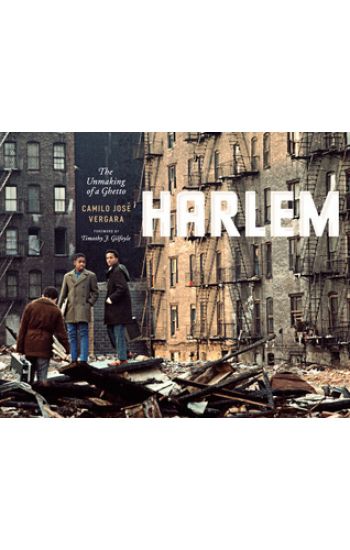
For more than a century, Harlem has been the epicenter of black America, the celebrated heart of African American life and culture - but it has also been a byword for the problems that have long plagued inner-city neighborhoods: poverty, crime, violence, disinvestment, and decay. Photographer Camilo Jose Vergara has been chronicling the neighborhood for forty-three years, and Harlem: The Unmaking of a Ghetto is an unprecedented record of urban change. Vergara began his documentation of Harlem in the tradition of such masters as Helen Levitt and Aaron Siskind, and he later turned his focus on the neighborhood's urban fabric, both the buildings that compose it and the life and culture embedded in them. By repeatedly returning to the same locations over the course of decades, Vergara is able to show us a community that is constantly changing - some areas declining, as longtime businesses give way to empty storefronts, graffiti, and garbage, while other areas gentrify, with corporate chain stores coming in to compete with the mom-and-pop shops. He also captures the ever-present street life of this densely populated neighborhood, from stoop gatherings to graffiti murals memorializing dead rappers to impersonators honoring Michael Jackson in front of the Apollo, as well as the growth of tourism and racial integration. Woven throughout the images is Vergara's own account of his project and his experience of living and working in Harlem. Taken together, his unforgettable words and images tell the stories of how Harlem and its residents navigated the segregation, dereliction, and slow recovery of the closing years of the twentieth century and the boom and racial integration of the twenty-first. A deeply personal investigation, Harlem will take its place with the best portrayals of urban life.
The Flash Press

The Flash Press

Patricia Cline Cohen; Timothy J. Gilfoyle; Helen Lefkowitz Horowitz

University of Chicago Press
2008
nidottu
Obscene, libidinous, loathsome, lascivious. Those were just some of the ways critics described the nineteenth-century weeklies that covered and publicized New York City's extensive sexual underworld. Publications like the "Flash" and the "Whip" - distinguished by a captivating brew of lowbrow humor and titillating gossip about prostitutes, theater denizens, and sporting events - were not the sort generally bound in leather for future reference, and despite their popularity with an enthusiastic readership, they quickly receded into almost complete obscurity. Recently, though, two sizable collections of these papers have resurfaced, and in "The Flash Press" three renowned scholars provide a landmark study of their significance, as well as a wide selection of their ribald articles and illustrations.Including short tales of urban life, editorials on prostitution, and moralizing rants against homosexuality, these selections epitomize a distinct form of urban journalism. Here, in addition to providing a thorough overview of this colorful reportage, its editors, and its audience, the authors examine nineteenth-century ideas of sexuality and freedom that mixed Tom Paine's republicanism with elements of the Marquis de Sade's sexual ideology. They also trace the evolution of censorship and obscenity law, showing how a string of legal battles ultimately led to the demise of the flash papers: editors were hauled into court, sentenced to jail for criminal obscenity and libel, and eventually pushed out of business - but not before they forever changed the debate over public sexuality and freedom of expression in America's most important city.
A Pickpocket's Tale

A Pickpocket's Tale

Timothy J. Gilfoyle

WW Norton Co
2007
nidottu
In George Appo's world, child pickpockets swarmed the crowded streets, addicts drifted in furtive opium dens, and expert swindlers worked the lucrative green-goods game. On a good night Appo made as much as a skilled laborer made in a year. Bad nights left him with more than a dozen scars and over a decade in prisons from the Tombs and Sing Sing to the Matteawan State Hospital for the Criminally Insane, where he reunited with another inmate, his father. The child of Irish and Chinese immigrants, Appo grew up in the notorious Five Points and Chinatown neighborhoods. He rose as an exemplar of the "good fellow," a criminal who relied on wile, who followed a code of loyalty even in his world of deception. Here is the underworld of the New York that gave us Edith Wharton, Boss Tweed, Central Park, and the Brooklyn Bridge.
Millennium Park

Millennium Park

Timothy J. Gilfoyle

University of Chicago Press
2006
sidottu
A in-depth study of a distinctive architectural landmark discusses the design and construction of Chicago's Millennium Park, a unique combination of urban park, outdoor art museum, cultural center, and performance space, detailing every step in the planning and building process in more than five hundred photographic images.