Kirjojen hintavertailu. Mukana 12 390 323 kirjaa ja 12 kauppaa.

Kirjailija

Timothy J. Shannon

Kirjat ja teokset yhdessä paikassa: 5 kirjaa, julkaisuja vuosilta 1999-2021, suosituimpien joukossa American Odysseys. Vertaile teosten hintoja ja tarkista saatavuus suomalaisista kirjakaupoista.

Mukana myös kirjoitusasut: Timothy J Shannon

5 kirjaa

Kirjojen julkaisuhaarukka 1999-2021.

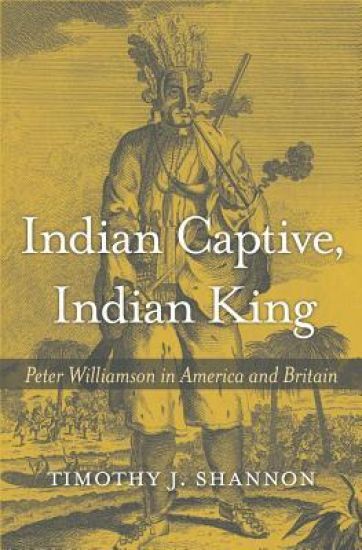
Indian Captive, Indian King

Indian Captive, Indian King

Timothy J. Shannon

Harvard University Press
2021
sidottu
In 1758 Peter Williamson appeared on the streets of Aberdeen, Scotland, dressed as a Native American and telling a remarkable tale. He claimed that as a young boy he had been kidnapped from the city and sold into slavery in America. In performances and in a printed narrative he peddled to his audiences, Williamson described his tribulations as an indentured servant, Indian captive, soldier, and prisoner of war. Aberdeen’s magistrates called him a liar and banished him from the city, but Williamson defended his story.Separating fact from fiction, Timothy J. Shannon explains what Williamson’s tale says about how working people of eighteenth-century Britain, so often depicted as victims of empire, found ways to create lives and exploit opportunities within it. Exiled from Aberdeen, Williamson settled in Edinburgh, where he cultivated enduring celebrity as the self-proclaimed “king of the Indians.” His performances and publications capitalized on the curiosity the Seven Years’ War had ignited among the public for news and information about America and its native inhabitants. As a coffeehouse proprietor and printer, he gave audiences a plebeian perspective on Britain’s rise to imperial power in North America.Indian Captive, Indian King is a history of empire from the bottom up, showing how Williamson’s American odyssey illuminates the real-life experiences of everyday people on the margins of the British Empire and how those experiences, when repackaged in travel narratives and captivity tales, shaped popular perceptions about the empire’s racial and cultural geography.
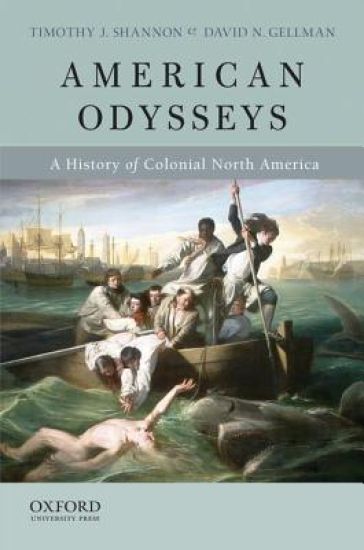
American Odysseys

American Odysseys

Timothy J Shannon; David N Gellman

Oxford University Press, USA
2013
pokkari
Written in an engaging and student-friendly style, American Odysseys examines the entire period between 1492 and 1763, covering important topics that shaped the colonial experience across time and in a variety of places. Authors Timothy J. Shannon and David N. Gellman use a thematic approach, focusing on colonial development and integration within a wider Atlantic world. Each chapter begins with the story of an individual who experienced the wonder and terror of colonization firsthand, so that students can feel a human connection to each of these topics and themes. Taken together, these figures--Indians, servants, slaves, explorers, planters--embody the full array of peoples and cultures that gave the colonial era a trans-Atlantic, multicultural character. Each chapter also features a chronology of events described in that chapter. Maps and images throughout the book help visually orient readers to the stories that comprise this concise yet broad-ranging narrative.
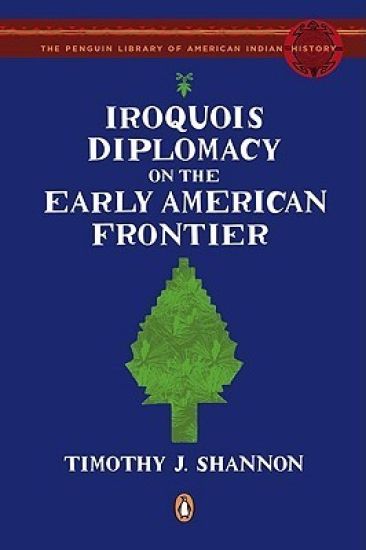
Iroquois Diplomacy on the Early American Frontier
The newest addition to the Penguin Library of American Indian History explores the most influential Native American Confederacy More than perhaps any other Native American group, the Iroquois found it to their advantage to interact with and adapt to white settlers. Despite being known as fierce warriors, the Iroquois were just as reliant on political prowess and sophisticated diplomacy to maintain their strategic position between New France and New York. Colonial observers marveled at what Benjamin Franklin called their "method of doing business" as Europeans learned to use Iroquois ceremonies and objects to remain in their good graces. Though the Iroquois negotiated with the colonial governments, they refused to be pawns of European empires, and their savvy kept them in control of much of the Northeast until the American Revolution. Iroquois Diplomacy and the Early American Frontier is a must-read for anyone fascinated by Native American history or interested in a unique perspective on the dawn of American government.
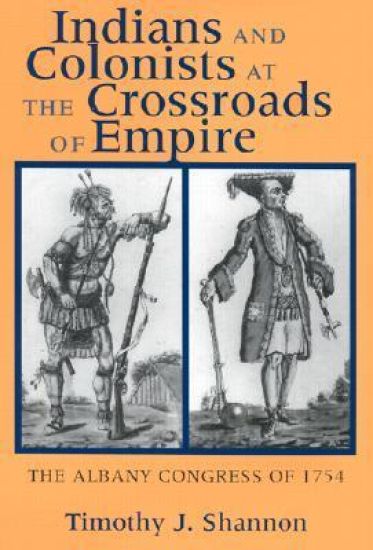
Indians and Colonists at the Crossroads of Empire

Indians and Colonists at the Crossroads of Empire

Timothy J. Shannon

Cornell University Press
2002
pokkari
On the eve of the Seven Years' War in North America, the British crown convened the Albany Congress, an Anglo-Iroquois treaty conference, in response to a crisis that threatened imperial expansion. British authorities hoped to address the impending collapse of Indian trade and diplomacy in the northern colonies, a problem exacerbated by uncooperative, resistant colonial governments. In the first book on the subject in more than forty-five years, Timothy J. Shannon definitively rewrites the historical record on the Albany Congress. Challenging the received wisdom that has equated the Congress and the plan of colonial union it produced with the origins of American independence, Shannon demonstrates conclusively the Congress's importance in the wider context of Britain's eighteenth-century Atlantic empire. In the process, the author poses a formidable challenge to the Iroquois Influence Thesis. The Six Nations, he writes, had nothing to do with the drafting of the Albany Plan, which borrowed its model of constitutional union not from the Iroquois but from the colonial delegates' British cousins.Far from serving as a dress rehearsal for the Constitutional Convention, the Albany Congress marked, for colonists and Iroquois alike, a passage from an independent, commercial pattern of intercultural relations to a hierarchical, bureaucratic imperialism wielded by a distant authority.
Indians and Colonists at the Crossroads of Empire

Indians and Colonists at the Crossroads of Empire

Timothy J. Shannon

Cornell University Press
1999
sidottu
On the eve of the Seven Years' War in North America, the British crown convened the Albany Congress, an Anglo-Iroquois treaty conference, in response to a crisis that threatened imperial expansion. British authorities hoped to address the impending collapse of Indian trade and diplomacy in the northern colonies, a problem exacerbated by uncooperative, resistant colonial governments. In the first book on the subject in more than forty-five years, Timothy J. Shannon definitively rewrites the historical record on the Albany Congress. Challenging the received wisdom that has equated the Congress and the plan of colonial union it produced with the origins of American independence, Shannon demonstrates conclusively the Congress's importance in the wider context of Britain's eighteenth-century Atlantic empire. In the process, the author poses a formidable challenge to the Iroquois Influence Thesis. The Six Nations, he writes, had nothing to do with the drafting of the Albany Plan, which borrowed its model of constitutional union not from the Iroquois but from the colonial delegates' British cousins.Far from serving as a dress rehearsal for the Constitutional Convention, the Albany Congress marked, for colonists and Iroquois alike, a passage from an independent, commercial pattern of intercultural relations to a hierarchical, bureaucratic imperialism wielded by a distant authority.