Kirjojen hintavertailu. Mukana 12 325 989 kirjaa ja 12 kauppaa.

Kirjailija

Timothy M Bonds

Kirjat ja teokset yhdessä paikassa: 6 kirjaa, julkaisuja vuosilta 2010-2022, suosituimpien joukossa Army Network-Enabled Operations. Vertaile teosten hintoja ja tarkista saatavuus suomalaisista kirjakaupoista.

Mukana myös kirjoitusasut: Timothy M. Bonds

6 kirjaa

Kirjojen julkaisuhaarukka 2010-2022.

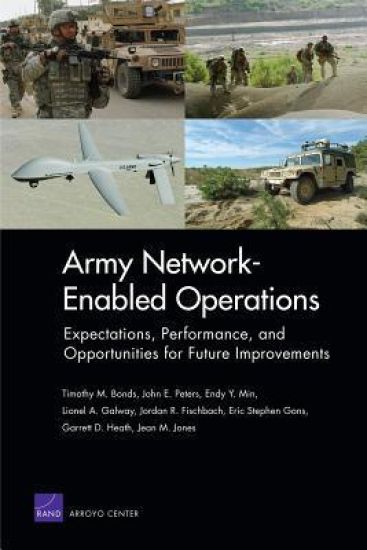
Army Network-Enabled Operations

Army Network-Enabled Operations

Timothy M. Bonds; John E. Peters; Endy Y. Min; Lionel A. Galway; Jordan R. Fischbach; Eric Stephen Gons; Garrett D. Heath; Jean M. Jones

RAND
2012
pokkari
The Army expects that the performance of ground forces can be enhanced by improving the networks that tie them together and taking advantage of their special properties. Army networks are used for command and control, intelligence, maneuver, fires, and logistics; they process, store, and transport the information used by the Army. Ultimately these networks extend into the minds of soldiers and leaders and into their interactions with each other.
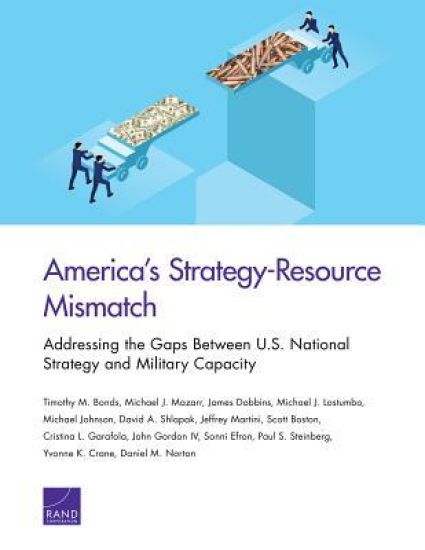
America's Strategy-Resource Mismatch

America's Strategy-Resource Mismatch

Timothy M Bonds; Michael J Mazarr; James Dobbins; Michael J Lostumbo; Michael Johnson; David A Shlapak; Jeffrey Martini; Scott Boston; Cristina L Garafola; John Gordon; Sonni Efron; Paul S Steinberg; Yvonne K Crane; Daniel M Norton

RAND
2019
nidottu
In order to defend itself and its national interests, and to maintain the trust of allies as a reliable security guarantor, the United States must match its national security policies with the resources available to support them. This report discusses the specific gaps between the stated strategic and defense policies of the United States and the resources and capabilities that would be required to implement those policies successfully.
What Role Can Land-Based, Multi-Domain Anti-Access/Area Denial Forces Play in Deterring or Defeating Aggression?

What Role Can Land-Based, Multi-Domain Anti-Access/Area Denial Forces Play in Deterring or Defeating Aggression?

Timothy M Bonds; Joel B Predd; Timothy R Heath; Michael S Chase; Michael Johnson; Michael J Lostumbo; James Bonomo; Muharrem Mane; Paul S Steinberg

RAND
2017
nidottu
Land-based, multi-domain anti-access/area denial (A2/AD) forces can play a role in deterring or defeating aggression. This report highlights growing Chinese and Russian A2/AD capabilities and potential scenarios for conflict in the Asia-Pacific region (centered on China) and the Baltic Sea (centered on Russia). Ground-based capabilities offer an affordable way for U.S. allies and partners to deter or defeat aggression.
Securing 5g

Securing 5g

Daniel Gonzales; Julia Brackup; Spencer Pfeifer; Timothy M Bonds

RAND Corporation
2022
pokkari
This report describes fifth-generation (5G) network security, the 5G supply chain, competition in 5G equipment and mobile device markets, where the United States has security advantages over China, and how to preserve those advantages in the 5G competition between the United States and China. The report provides recommendations for securing 5G networks and mobile devices of the United States, its allies, and foreign partners.
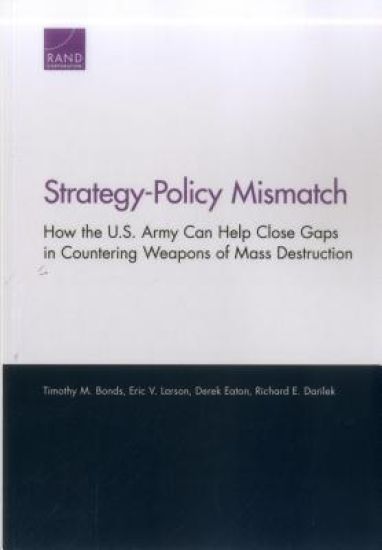
Strategy-Policy Mismatch

Strategy-Policy Mismatch

Timothy M. Bonds; Eric V. Larson; Derek Eaton; Richard E. Darilek

RAND
2014
pokkari
Although two successive presidents have determined that weapons of mass destruction (WMD) pose the greatest threat to the American people and have listed countering their proliferation as a top strategic priority, neither administration has followed through by allocating appropriate budgetary resources to it. This report addresses and analyzes the ground force capacity and capabilities needed to perform WMD elimination missions and tasks.
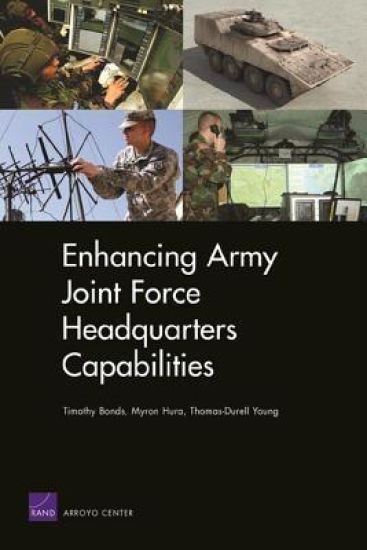
Enhancing Army Joint Force Headquarters Capabilities

Enhancing Army Joint Force Headquarters Capabilities

Timothy M. Bonds; Myron Hura; Thomas-Durell Young

RAND
2010
pokkari
The research in this document is aimed at helping the Army improve its ability to command and control joint, interagency, and multinational forces to accomplish diverse missions in a range of settings. A particular emphasis was placed on suggesting innovative ways to prepare Army headquarters, including Divisions, Corps, and Theater Armies, to perform as components of, or headquarters for, joint task forces.