Kirjojen hintavertailu. Mukana 12 390 323 kirjaa ja 12 kauppaa.

Kirjailija

Timothy Morton

Kirjat ja teokset yhdessä paikassa: 31 kirjaa, julkaisuja vuosilta 1995-2025, suosituimpien joukossa Lerin & Hystad : electronic flora. Vertaile teosten hintoja ja tarkista saatavuus suomalaisista kirjakaupoista.

31 kirjaa

Kirjojen julkaisuhaarukka 1995-2025.

Lerin & Hystad : electronic flora

Lerin & Hystad : electronic flora

Elisabet Yanagisawa; Timothy Morton; Michael Marder; Lars Lerin; Brandon LaBelle; Mats Karström; Suresh Jayaram; Emanuele Coccia; Nadia Bensbih; Giovanni Aloi; Simon Torssell Lerin; Bettina Hvidevold Hystad

Art Theory Publishing
2025
nidottu
This book documents Lerin/Hystad s meetings with more than a hundred different plants through sketches, text, and music. The otherness of the non-human is by nature inexpugnable. The baseline of our sharing the planet with them, at this point in its evolutional history, entails making kin while negotiating distance. In line with the mounting environmental concerns, artists began to nurture the desire to present less mediated encounters with nature. Central to Lerin/Hystad s modus operandi is a principle of ecological interconnectedness that manifests the undeniable presence of more than human worlds. The main objective has been that of dismantling the anthropocentric view that humans are the most perfect and intelligent species on this planet while inviting us to reconsider non-human intelligences and complexities as valuable diversity. Lerin connects sensors to the plants that Hystad has carefully drawn in their environment. The sensors register electrical currents that plants produce through their biological rhythms and that form a communicational network with animals, bacteria, and fungi. Genom teckning, text och musik, samlar den här boken Lerin/Hystads möten med över hundra olika växter. Det icke-mänskliga är, till sin natur, ofrånkomligen annorlunda oss. För att vi ska kunna samexistera på jorden krävs det därför, vid denna punkt i evolutionshistorien, att vi knyter an till det främmande samtidigt som vi också aktivt förhåller oss till dess ofrånkomliga annanhet. I takt med att miljöhoten har ökat har också konstnärerna uttryckt en ökad vilja att genom konsten möta naturen direkt. Lerin/Hystads modus operandi vilar på den ekologiska sammankopplingens princip och förutsätter att det existerar fler världar än människans. Viktigast av allt har varit att nedmontera den antropocentriska bilden av människan som planetens intelligentaste och mest fulländade varelse för att i stället lyfta fram det icke-mänskligas många komplexa intelligenser som delar av en rik mångfald. Lerin kopplar sensorer till de växter som Hystad så noggrant har tecknat i det vilda. Dessa sensorer känner sedan av alla de elektriska impulser som orsakas av växternas egen biologiska rytm och som bildar kommunikationsnätverk tillsammans med djuren, bakterierna och svamparna.

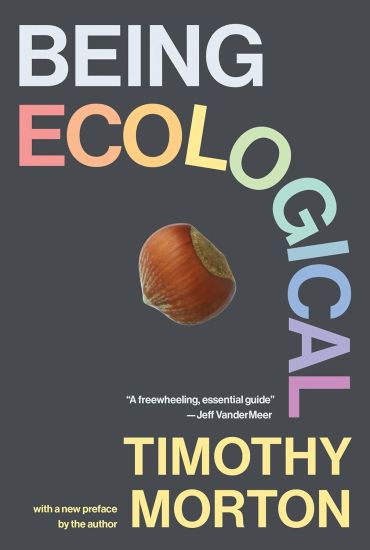
Being Ecological, with a New Preface by the Author
From "our most popular guide to the new epoch" (Guardian), a new edition of the book about ecology without information dumping, guilt inducing, or preaching to the choir. Ecology books can be confusing information dumps that are out of date by the time they hit you. Slapping you upside the head to make you feel bad. Grabbing you by the lapels while yelling disturbing facts. Handwringing in agony about "What are we going to do?" This book has none of that. Being Ecological, reissued with a new preface, doesn't preach to the eco-choir. It's for you--even, Timothy Morton explains, if you're not in the choir, even if you have no idea what choirs are. You might already be ecological. After establishing the approach of the book (no facts allowed ), Morton draws on Kant and Heidegger to help us understand living in an age of mass extinction caused by climate change. They discuss what sorts of actions count as ecological--starting a revolution? going to the garden center to smell the plants? And finally, they explore a variety of current styles of being ecological--a range of overlapping orientations rather than preformatted self-labeling. Caught up in the us-versus-them (or you-versus-everything else) urgency of ecological crisis, Morton suggests, it's easy to forget that you are a symbiotic being entangled with other symbiotic beings. Isn't that being ecological?
Hell

Hell

Timothy Morton

Columbia University Press
2024
pokkari
Hell on earth is real. The toxic fusion of big oil, Evangelical Christianity, and white supremacy has ignited a worldwide inferno, more phantasmagoric than anything William Blake could dream up and more cataclysmic than we can fathom. Escaping global warming hell, this revelatory book shows, requires a radical, mystical marriage of Christianity and biology that awakens a future beyond white male savagery.Timothy Morton argues that there is an unexpected yet profound relationship between religion and ecology that can guide a planet-scale response to the climate crisis. Spiritual and mystical feelings have a deep resonance with ecological thinking, and together they provide the resources environmentalism desperately needs in this time of climate emergency. Morton finds solutions in a radical revaluation of Christianity, furnishing ecological politics with a language of mercy and forgiveness that draws from Christian traditions without bringing along their baggage. They call for a global environmental movement that fuses ecology and mysticism and puts race and gender front and center. This nonviolent resistance can stage an all-out assault on the ultimate Satanic mill: the concept of master and slave, manifesting today in white supremacy, patriarchy, and environmental destruction. Passionate, erudite, and playful, Hell takes readers on a full-color journey into the contemporary underworld—and offers a surprising vision of salvation.
Hell

Hell

Timothy Morton

Columbia University Press
2024
sidottu
Hell on earth is real. The toxic fusion of big oil, Evangelical Christianity, and white supremacy has ignited a worldwide inferno, more phantasmagoric than anything William Blake could dream up and more cataclysmic than we can fathom. Escaping global warming hell, this revelatory book shows, requires a radical, mystical marriage of Christianity and biology that awakens a future beyond white male savagery.Timothy Morton argues that there is an unexpected yet profound relationship between religion and ecology that can guide a planet-scale response to the climate crisis. Spiritual and mystical feelings have a deep resonance with ecological thinking, and together they provide the resources environmentalism desperately needs in this time of climate emergency. Morton finds solutions in a radical revaluation of Christianity, furnishing ecological politics with a language of mercy and forgiveness that draws from Christian traditions without bringing along their baggage. They call for a global environmental movement that fuses ecology and mysticism and puts race and gender front and center. This nonviolent resistance can stage an all-out assault on the ultimate Satanic mill: the concept of master and slave, manifesting today in white supremacy, patriarchy, and environmental destruction. Passionate, erudite, and playful, Hell takes readers on a full-color journey into the contemporary underworld—and offers a surprising vision of salvation.
The Stuff of Life

The Stuff of Life

Timothy Morton

BLOOMSBURY PUBLISHING PLC
2023
sidottu
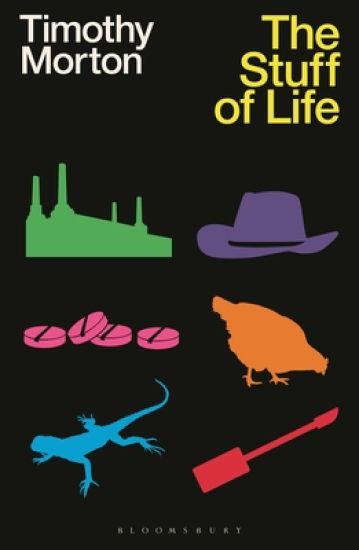
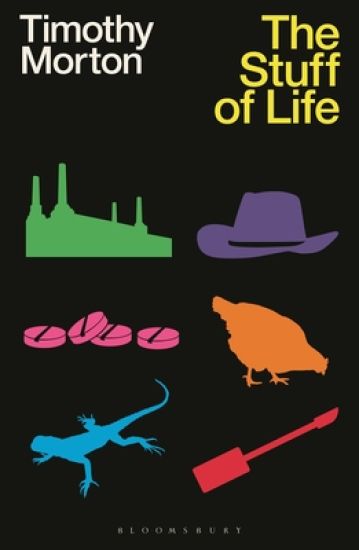
'An old teapot, used daily, can tell me more of my past than anything I recorded of it.' Sylvia Townsend WarnerThere are many ways of telling the story of a life and how we've got to where we are. The questions of why and how we think the way we do continues to preoccupy philosophers. In The Stuff of Life, Timothy Morton chooses the objects that have shaped and punctuated their life to tell the story of who they are and why they might think the way they do. These objects are 'things' in the richest sense. They are beings, non-human beings, that have a presence and a force of their own. From the looming expanse of Battersea Power Station to a packet of anti-depressants and a cowboy suit, Morton explores why 'stuff' matters and the life of these things have so powerfully impinged upon their own. Their realization, through a concealer stick, that they identify as non-binary reveals the strange and wonderful ways that objects can form our worlds.Part memoir, part philosophical exploration of the meaning of a life lived alongside and through other things, Morton asks us to think about the stuff, things, objects and buildings that have formed our realities and who we are and might be.
The Stuff of Life

The Stuff of Life

Timothy Morton

BLOOMSBURY PUBLISHING PLC
2023
nidottu
'An old teapot, used daily, can tell me more of my past than anything I recorded of it.' Sylvia Townsend WarnerThere are many ways of telling the story of a life and how we've got to where we are. The questions of why and how we think the way we do continues to preoccupy philosophers. In The Stuff of Life, Timothy Morton chooses the objects that have shaped and punctuated their life to tell the story of who they are and why they might think the way they do. These objects are 'things' in the richest sense. They are beings, non-human beings, that have a presence and a force of their own. From the looming expanse of Battersea Power Station to a packet of anti-depressants and a cowboy suit, Morton explores why 'stuff' matters and the life of these things have so powerfully impinged upon their own. Their realization, through a concealer stick, that they identify as non-binary reveals the strange and wonderful ways that objects can form our worlds.Part memoir, part philosophical exploration of the meaning of a life lived alongside and through other things, Morton asks us to think about the stuff, things, objects and buildings that have formed our realities and who we are and might be.
Spacecraft

Spacecraft

Timothy Morton

Bloomsbury Academic USA
2021
nidottu
Science fiction is filled with spacecraft. On Earth, actual rockets explode over Texas while others make their way to Mars. But what are spacecraft, and just what can they teach us about imagination, ecology, democracy, and the nature of objects? Why do certain spacecraft stand out in popular culture?If ever there were a spacecraft that could be detached from its context, sold as toys, turned into Disney rides, parodied, and flit around in everyone’s head—the Millennium Falcon would be it. Springing from this infamous Star Wars vehicle, Spacecraft takes readers on an intergalactic journey through science fiction and speculative philosophy, revealing real-world political and ecological lessons along the way. In this book Timothy Morton shows how spacecraft are never mere flights of fancy.
Magia realista

Magia realista

Timothy Morton

Open Humanities Press
2020
pokkari
En este libro, Timothy Morton explora lo que significa para las cosas advenir a la existencia, persistir y dejar de existir. Tomando ejemplos de la f sica, la biolog a, la ecolog a, el arte, la literatura y la m sica, Morton expone el contraintuitivo, pero elegante, poder explicativo de la OOO para pensar c mo opera la causalidad.
Humankind

Humankind

Timothy Morton

Verso Books
2019
nidottu
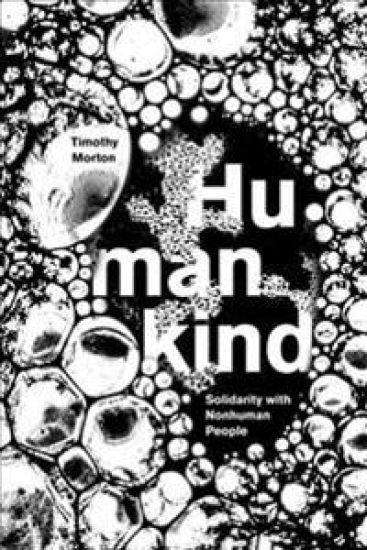
What is it that makes humans human? As science and technology challenge the boundaries between life and non-life, between organic and inorganic, this ancient question is more timely than ever. Acclaimed Object-Oriented philosopher Timothy Morton invites us to consider this philosophical issue as eminently political. In our relationship with non-humans, we decided the fate of our humanity. Becoming human, claims Morton, actually means creating a network of kindness and solidarity with non-human beings, in the name of a broader understanding of reality that both includes and overcomes the notion of species. Negotiating the politics of humanity is the first and crucial step to reclaim the upper scales of ecological coexistence, and not to let Monsanto and cryogenically suspended billionaires define them and own them.
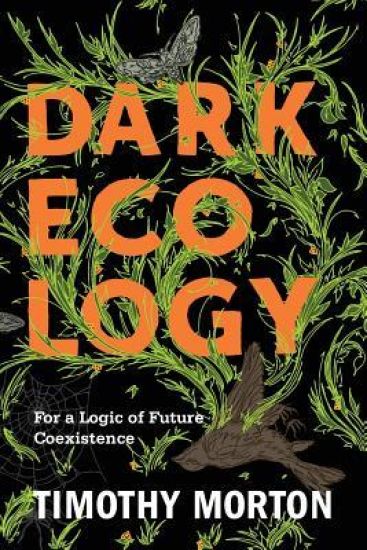
Dark Ecology

Dark Ecology

Timothy Morton

Columbia University Press
2018
pokkari
Timothy Morton argues that ecological awareness in the present Anthropocene era takes the form of a strange loop or Möbius strip, twisted to have only one side. Deckard travels this oedipal path in Blade Runner (1982) when he learns that he might be the enemy he has been ordered to pursue. Ecological awareness takes this shape because ecological phenomena have a loop form that is also fundamental to the structure of how things are.The logistics of agricultural society resulted in global warming and hardwired dangerous ideas about life-forms into the human mind. Dark ecology puts us in an uncanny position of radical self-knowledge, illuminating our place in the biosphere and our belonging to a species in a sense that is far less obvious than we like to think. Morton explores the logical foundations of the ecological crisis, which is suffused with the melancholy and negativity of coexistence yet evolving, as we explore its loop form, into something playful, anarchic, and comedic. His work is a skilled fusion of humanities and scientific scholarship, incorporating the theories and findings of philosophy, anthropology, literature, ecology, biology, and physics. Morton hopes to reestablish our ties to nonhuman beings and to help us rediscover the playfulness and joy that can brighten the dark, strange loop we traverse.
Unsettling Science and Religion

Unsettling Science and Religion

Timothy Morton

Lexington Books
2018
sidottu
This book borrows from the intellectual labor of queer theory in order to unsettle—or “queer”—the discourses of “religion” and “science,” and, by extension, the “science and religion discourse.” Drawing intellectual and social cues from works by influential theorists such as Michel Foucault, Judith Butler, and Eve Sedgwick, chapters in this volume converge on at least three common features of queer theory. First, queer theory challenges givens that on occasion still undergird religiously and scientifically informed ways of thinking. Second, it takes embodiment seriously. Third, this engagement inevitably generates new pathways for thinking about how religious and scientific “truths” matter. These three features ultimately lend support to critical investigations into the meanings of “science” and “religion,” and the relationships between the two.
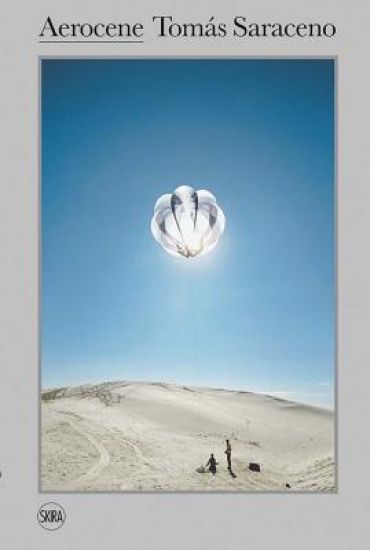
Tomás Saraceno: Aerocene

Tomás Saraceno: Aerocene

Hans Ulrich Obrist; Eva Horn; Timothy Morton; Tim Ingold

Skira
2018
sidottu
The book is an in-depth survey of the Aerocene project. The Aerocene project consists of a series of airborne sculptures made by Tom s Saraceno that will achieve the longest emissions-free journey around the world, becoming buoyant only by the heat of the Sun and infrared radiation from the surface of the Earth.
Being Ecological

Being Ecological

Timothy Morton

Pelican
2018
nidottu
'To read Being Ecological is to be caught up in a brilliant display of intellectual pyrotechnics' P.D.Smith, GuardianWhy is everything we think we know about ecology wrong?Is there really any difference between 'humans' and 'nature'?Does this mean we even have a future?Don't care about ecology? This book is for you. Timothy Morton, who has been called 'Our most popular guide to the new epoch' (Guardian), sets out to show us that whether we know it or not, we already have the capacity and the will to change the way we understand the place of humans in the world, and our very understanding of the term 'ecology'. A cross-disciplinarian who has collaborated with everyone from Björk to Hans Ulrich Obrist, Morton is also a member of the object-oriented philosophy movement, a group of forward-looking thinkers who are grappling with modern-day notions of subjectivity and objectivity, while also offering fascinating new understandings of Heidegger and Kant. Calling the volume a book containing 'no ecological facts', Morton confronts the 'information dump' fatigue of the digital age, and offers an invigorated approach to creating a liveable future.
Humankind

Humankind

Timothy Morton

Verso Books
2017
sidottu
What is it that makes humans human? As science and technology challenge the boundaries between life and non-life, between organic and inorganic, this ancient question is more timely than ever. Acclaimed Object-Oriented philosopher Timothy Morton invites us to consider this philosophical issue as eminently political. In our relationship with non-humans, we decided the fate of our humanity. Becoming human, claims Morton, actually means creating a network of kindness and solidarity with non-human beings, in the name of a broader understanding of reality that both includes and overcomes the notion of species. Negotiating the politics of humanity is the first and crucial step to reclaim the upper scales of ecological coexistence, and not to let Monsanto and cryogenically suspended billionaires define them and own them.