Kirjojen hintavertailu. Mukana 12 223 696 kirjaa ja 12 kauppaa.

Kirjailija

Timothy P. Barnard

Kirjat ja teokset yhdessä paikassa: 2 kirjaa, julkaisuja vuosilta 2017-2019, suosituimpien joukossa Imperial Creatures. Vertaile teosten hintoja ja tarkista saatavuus suomalaisista kirjakaupoista.

2 kirjaa

Kirjojen julkaisuhaarukka 2017-2019.

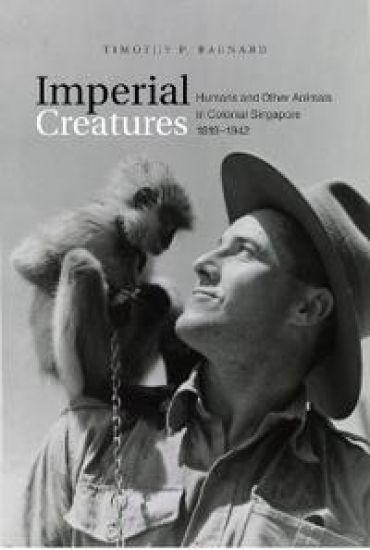
Imperial Creatures

Imperial Creatures

Timothy P. Barnard

Ridge Books
2019
nidottu
The environmental turn in the humanities and social sciences has meant a new focus on the history of animals. This is one of the first books to look across species at animals in a colonial, urban society. If imperialism is a series of power relationships, it involves not only the subjugation of human communities but also animals. What was the relationship between these two processes in colonial Singapore? How did various interactions with animals enable changes in interactions between people, and the expression of power in human terms.The imposition of imperial power relationships was a process that was often complex and messy, and it led to the creation of new communities throughout the world, including the colonial port city of Singapore. Through a multi-disciplinary consideration of fauna, this book weaves together a series of tales to document how animals were cherished, slaughtered, monitored, and employed in a colonial society, to provide insight into how imperial rule was imposed on an island in Southeast Asia. Fauna and their histories of interacting with humans, thus, become useful tools for understanding our past, revealing the effects of establishing a colony on the biodiversity of a region, and the institutions that quickly transformed it. All animals, including humans, have been creatures of imperialism in Singapore. Their stories teach us lessons about the structures that upheld such a society and how it developed over time.
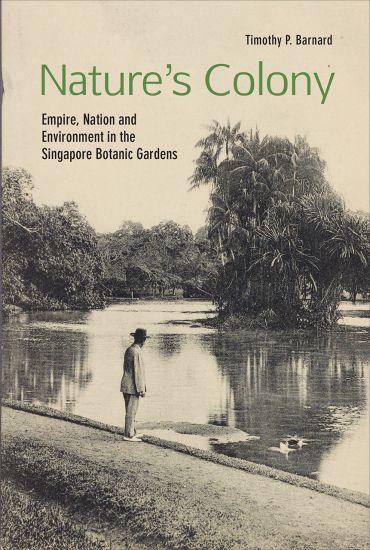
Nature's Colony

Nature's Colony

Timothy P. Barnard

NUS Press
2017
nidottu
Established in 1859, Singapore’s Botanic Gardens has been important as a park for Singaporeans and visitors, a scientific institution, and as an economic testing ground and launchpad for tropical plantation agriculture around the world. Underlying each of these stories is the broader narrative of theBotanic Gardens an arena where power and the natural world meet and interact, a story that has impact far beyond the boundaries of its grounds.Initially conceived to exploit nature for the benefit of empire, the Gardens were part of a symbolic struggle by administrators, scientists, and gardeners to assert dominance within Southeast Asia’s tropical landscape, reflecting shifting understandings of power, science and nature among local administrators and distant mentors in Britain. With the independence of Singapore, the Gardens has had to find a new role, first in the “greening” of post-independence Singapore, and now as Singapore’s first World Heritage Site.Setting the Singapore gardens alongside the Royal Botanic Gardens, Kew and botanic gardens in India, Ceylon, Mauritius and the West Indies, this book tells the story of nature’s colony — a place where plants were collected, classified and cultivated to change our understanding of the region and world.