Kirjojen hintavertailu. Mukana 12 175 739 kirjaa ja 12 kauppaa.

Kirjailija

Tina Blythe

Kirjat ja teokset yhdessä paikassa: 8 kirjaa, julkaisuja vuosilta 1997-2025, suosituimpien joukossa Facilitating Virtual Learning Communities. Vertaile teosten hintoja ja tarkista saatavuus suomalaisista kirjakaupoista.

8 kirjaa

Kirjojen julkaisuhaarukka 1997-2025.

Facilitating Virtual Learning Communities

Facilitating Virtual Learning Communities

Julie A. Moore; Natalie J. Berger; Tina Blythe

TEACHERS' COLLEGE PRESS
2025
nidottu
This practical resource offers a variety of facilitation moves and choices that one should consider when leading a virtual learning community. Do you facilitate a virtual learning community? Would you like to learn strategies and moves that ensure your participants have a valuable and meaningful experience? Protocols have been used in education circles for over 3 years to enhance both teacher and student learning. They provide a structure to have conversations around texts, student work, teacher work, dilemmas, equity, and community. Current tools like Zoom, Google Meet, and Microsoft Teams allow learning communities to easily meet online. However, it is important to create a culture of community, keep participants engaged, and facilitate group learning in these virtual environments. This book explores these topics, highlighting the voices of facilitators from around the United States who are doing this work in a variety of settings, including K– 2, universities, and state agencies. In addition, readers will find more than 3 different protocols that have been modified specifically so that they can be used in a virtual learning community setting. Book Features: Brings together in one place virtual learning communities, facilitation strategies, and the use of protocols in today's synchronous, video-based environments.Explores the differences between facilitating learning communities online and facilitating them face-to-face.Offers a variety of facilitation moves and choices that one should consider when leading a virtual learning community.Builds on the work of The Facilitator's Book of Questions, The Power of Protocols, and Going Online with Protocols.
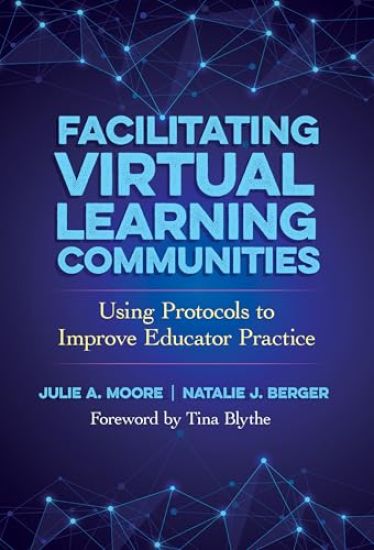
Facilitating Virtual Learning Communities

Facilitating Virtual Learning Communities

Julie A. Moore; Natalie J. Berger; Tina Blythe

TEACHERS' COLLEGE PRESS
2025
sidottu
This practical resource offers a variety of facilitation moves and choices that one should consider when leading a virtual learning community. Do you facilitate a virtual learning community? Would you like to learn strategies and moves that ensure your participants have a valuable and meaningful experience? Protocols have been used in education circles for over 3 years to enhance both teacher and student learning. They provide a structure to have conversations around texts, student work, teacher work, dilemmas, equity, and community. Current tools like Zoom, Google Meet, and Microsoft Teams allow learning communities to easily meet online. However, it is important to create a culture of community, keep participants engaged, and facilitate group learning in these virtual environments. This book explores these topics, highlighting the voices of facilitators from around the United States who are doing this work in a variety of settings, including K– 2, universities, and state agencies. In addition, readers will find more than 3 different protocols that have been modified specifically so that they can be used in a virtual learning community setting. Book Features: Brings together in one place virtual learning communities, facilitation strategies, and the use of protocols in today's synchronous, video-based environments.Explores the differences between facilitating learning communities online and facilitating them face-to-face.Offers a variety of facilitation moves and choices that one should consider when leading a virtual learning community.Builds on the work of The Facilitator's Book of Questions, The Power of Protocols, and Going Online with Protocols.
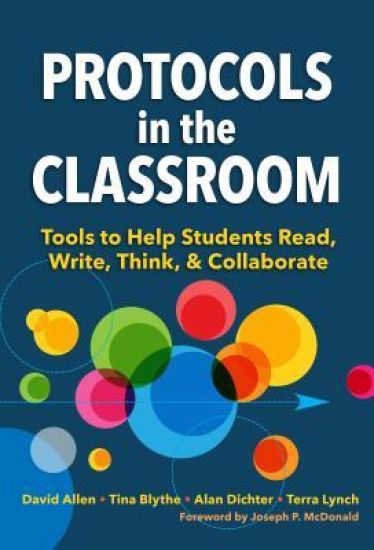
Protocols in the Classroom

Protocols in the Classroom

David Allen; Tina Blythe; Alan Dichter; Terra Lynch

Teachers' College Press
2018
nidottu
For nearly two decades, Looking Together at Student Work and The Power of Protocols have sustained educators in their professional learning. Protocols in the Classroom expands the scope of those books from teachers’ professional learning to include students’ learning, providing teachers with the tools they need to use discussion protocols to support students in developing crucial skills and habits as readers, writers, critical thinkers, and active participants within the classroom community. For each protocol the authors provide a clear set of steps, tips for teachers and students in facilitating the protocol, and a story of a teacher using the protocol with students. The book is filled with resources for getting started using protocols with students, as well as for deepening the use of protocols over time. It also relates protocols to other strategies for supporting students’ learning, including Accountable Talk, Thinking Routines, and Socratic seminars. The authors describe how protocols contribute to a schoolwide culture of discussion, inquiry, and reflection.
Facilitating for Learning

Facilitating for Learning

David Allen; Tina Blythe

Teachers' College Press
2015
nidottu
One of the most important shifts in schools in the last two decades has been the growing emphasis on collaboration among teachers and other educators. Whether you are a teacher facilitating a group for the first time or an experienced facilitator seeking to further develop your skills, this book is for you. Organized to be used as both an exploration of the role of facilitating and as a handbook of strategies, this resource covers a range of contexts that include faculty meetings, department meetings, professional learning communities, grade-level teams, and inquiry groups. This book is a perfect companion to the authors' bestseller, , which focuses on the skills needed to facilitate protocols or structured conversations. Facilitating for Learning extends the scope of that work by also examining the facilitator's responsibilities for supporting a group's learning during all parts of a meeting, between meetings, and within the larger school context and culture. It is an essential resource for teachers, administrators, coaches, and teacher educators.
Looking Together at Student Work

Looking Together at Student Work

Tina Blythe; David Allen; Barbara Schieffelin Powell

Teachers' College Press
2015
nidottu
This bestseller provides teachers and administrators with strategies for examining and discussing student work, such as essays, math problems, projects, artwork, and more. New for the Third Edition: The Microlab Protocol, a relatively quick and easy way to introduce groups to protocol-guided conversation; a new case focused on understanding the Common Core; and more detailed notes and strategies for facilitators.
The Facilitator's Book of Questions

The Facilitator's Book of Questions

David Allen; Tina Blythe

Teachers' College Press
2004
nidottu
This book of protocols is an essential tool for facilitators of groups working together to examine student and teacher work. A follow-up to Looking Together at Student Work and Assessing Student Learning, this resource considers the purposes for engaging in collaborative review and provides some of the most effective strategies for successful collaboration.
Teaching As Inquiry

Teaching As Inquiry

Alexandra Weinbaum; David Allen; Tina Blythe; Katherine Simon; Steve Seidel; Catherine Saldutti

Teachers' College Press
2004
nidottu
This book offers an engaging and effective approach to improving teacher and student learning. Based on the experiences of three leading educational organizations, the authors provide invaluable, research-based guidelines for incorporating inquiry into teacher's instructional practices and student work as part of the ongoing work of schools. In addition to discussing the lessons learned and questions raised by inquiry work, this volume includes specific considerations for determining who should be involved, what work should be under review, how it should be reviewed, and how such inquiry should be supported by the school.
The Teaching for Understanding Guide

The Teaching for Understanding Guide

Tina Blythe

Jossey-Bass Inc.,U.S.
1997
nidottu
"This handbook will both encourage and assist those teachers who take on the important challenge of helping their students to think deeply and resourcefully and to use that intellectual power constructively."--Theodore R. Sizer, chairman, Coalition of Essential Schools Walks teachers through the "teaching for understanding" process. The authors offer classroom examples, practical tips, and worksheets to help clarify the process. They also show how to select engaging and appropriate topics, set coherent unit and course goals, create dynamic learning activities, improve student performance through continual feedback, and more.