Kirjojen hintavertailu. Mukana 12 657 676 kirjaa ja 12 kauppaa.

Kirjailija

Tinni Sen

Kirjat ja teokset yhdessä paikassa: 3 kirjaa, julkaisuja vuosilta 2018-2021, suosituimpien joukossa Identifying the Complex Causes of Civil War. Vertaile teosten hintoja ja tarkista saatavuus suomalaisista kirjakaupoista.

3 kirjaa

Kirjojen julkaisuhaarukka 2018-2021.

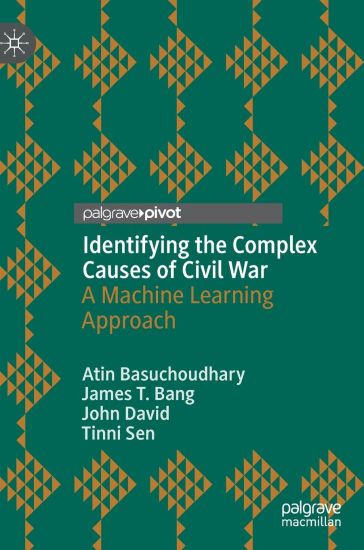
Identifying the Complex Causes of Civil War

Identifying the Complex Causes of Civil War

Atin Basuchoudhary; James T. Bang; John David; Tinni Sen

Springer Nature Switzerland AG
2021
sidottu
This book uses machine-learning to identify the causes of conflict from among the top predictors of conflict. This methodology elevates some complex causal pathways that cause civil conflict over others, thus teasing out the complex interrelationships between the most important variables that cause civil conflict. Success in this realm will lead to scientific theories of conflict that will be useful in preventing and ending civil conflict. After setting out a current review of the literature and a case for using machine learning to analyze and predict civil conflict, the authors lay out the data set, important variables, and investigative strategy of their methodology. The authors then investigate institutional causes, economic causes, and sociological causes for civil conflict, and how that feeds into their model. The methodology provides an identifiable pathway for specifying causal models. This book will be of interest to scholars in the areas of economics, political science, sociology, and artificial intelligence who want to learn more about leveraging machine learning technologies to solve problems and who are invested in preventing civil conflict.
Predicting Hotspots

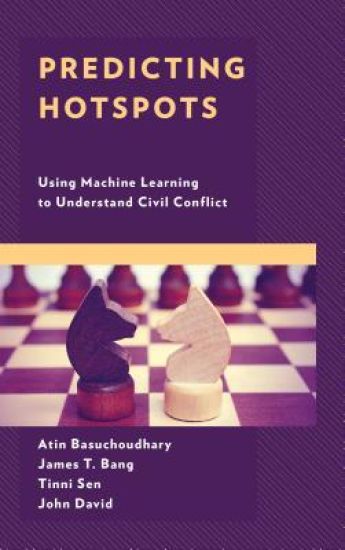
Predicting Hotspots

Atin Basuchoudhary; James T. Bang; Tinni Sen; John David

Lexington Books
2018
sidottu
This book should be useful to anyone interested in identifying the causes of civil conflict and doing something to end it. It even suggests a pathway for the lay reader. Civil conflict is a persistent source of misery to humankind. Its study, however, lacks a comprehensive theory of its causes. Nevertheless, the question of cooperation or conflict is at the heart of political economy. This book introduces Machine Learning to explore whether there even is a unified theory of conflict, and if there is, whether it is a ‘good’ one. A good theory is one that not only identifies the causes of conflict, but also identifies those causes that predict conflict. Machine learning algorithms use out of sample techniques to choose between competing hypotheses about the sources of conflict according to their predictive accuracy. This theoretically agnostic ‘picking’ has the added benefit of offering some protection against many of the problems noted in the current literature; the tangled causality between conflict and its correlates, the relative rarity of civil conflict at a global level, missing data, and spectacular statistical assumptions. This book argues that the search for a unified theory of conflict must begin among these more predictive sources of civil conflict. In fact, in the book, there is a clear sense that game theoretic rational choice models of bargaining/commitment failure predict conflict better than any other approach. In addition, the algorithms highlight the fact that conflict is path dependent - it tends to continue once started. This is intuitive in many ways but is roundly ignored as a matter of science. It should not. Further, those causes of conflict that best predict conflict can be used as policy levers to end or prevent conflict. This book should therefore be of interest to military and civil leaders engaged in ending civil conflict. Last, though not least, the book highlights how the sources of conflict affect conflict. This additional insight may allow the crafting of policies that match a country’s specific circumstance.
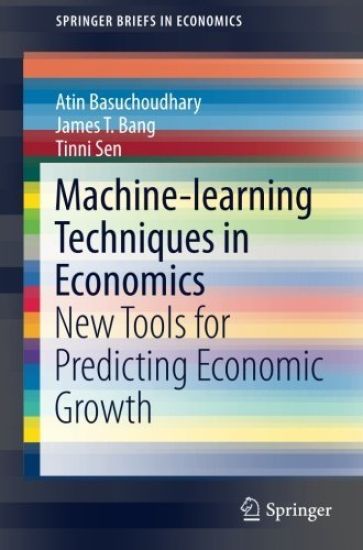
Machine-learning Techniques in Economics

Machine-learning Techniques in Economics

Atin Basuchoudhary; James T. Bang; Tinni Sen

Springer International Publishing AG
2018
nidottu
This book develops a machine-learning framework for predicting economic growth. It can also be considered as a primer for using machine learning (also known as data mining or data analytics) to answer economic questions. While machine learning itself is not a new idea, advances in computing technology combined with a dawning realization of its applicability to economic questions makes it a new tool for economists.