Kirjojen hintavertailu. Mukana 12 595 353 kirjaa ja 12 kauppaa.

Kirjailija

Tiphaine Samoyault

Kirjat ja teokset yhdessä paikassa: 3 kirjaa, julkaisuja vuosilta 2016-2026, suosituimpien joukossa Translation and Violence. Vertaile teosten hintoja ja tarkista saatavuus suomalaisista kirjakaupoista.

3 kirjaa

Kirjojen julkaisuhaarukka 2016-2026.

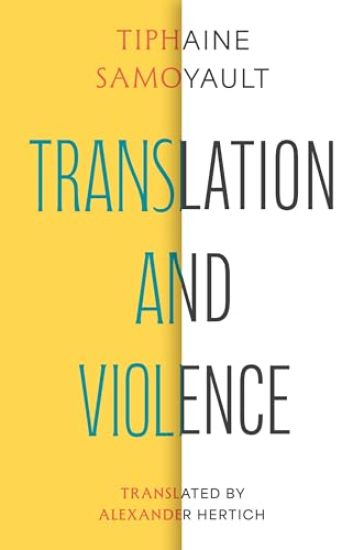
Translation and Violence

Translation and Violence

Tiphaine Samoyault

PRINCETON UNIVERSITY PRESS
2026
pokkari
Rethinking the ethics and politics of translation in the age of AI The rapid development of AI-powered translation tools is making translation more accessible than ever before, raising in a dramatic new way the old utopian promise of translation—to allow transparent dialogue across linguistic barriers. But algorithmic translation brings great risks, including increasing inequalities in linguistic representation, reinforcing the dominance of a few languages, accelerating the disappearance of vulnerable languages, and even ostensibly eliminating the need to learn foreign languages. In Translation and Violence, Tiphaine Samoyault offers a provocative rethinking of the ethics and politics of translation in the age of AI. She shows how translation can be linguistically and politically violent—but also how it can be a means of resistance, justice, and reparation. The book examines links between translation and violence during European colonialism and South African apartheid, under totalitarian regimes, and in Nazi camps. It engages with numerous philosophers and translation theorists, among them Derrida, Berman, Meschonnic, Glissant, and Spivak. And it offers detailed analyses of important literary texts that illustrate the violences of translating, including works by Proust, Primo Levi, Celan, and Perec. Despite the violence that translation can do, Translation and Violence argues for a theory and practice of translation that can contribute to dialogue between cultures, literatures, and languages, and to the political possibility of creating a common world.
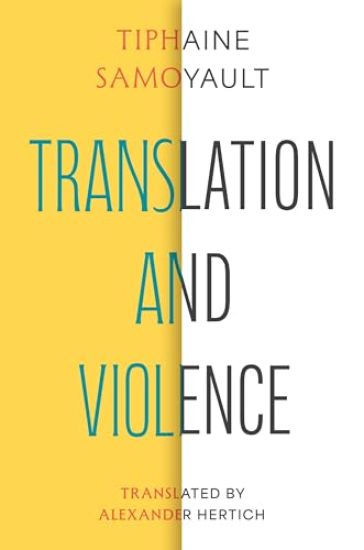
Translation and Violence

Translation and Violence

Tiphaine Samoyault

PRINCETON UNIVERSITY PRESS
2026
sidottu
Rethinking the ethics and politics of translation in the age of AI The rapid development of AI-powered translation tools is making translation more accessible than ever before, raising in a dramatic new way the old utopian promise of translation—to allow transparent dialogue across linguistic barriers. But algorithmic translation brings great risks, including increasing inequalities in linguistic representation, reinforcing the dominance of a few languages, accelerating the disappearance of vulnerable languages, and even ostensibly eliminating the need to learn foreign languages. In Translation and Violence, Tiphaine Samoyault offers a provocative rethinking of the ethics and politics of translation in the age of AI. She shows how translation can be linguistically and politically violent—but also how it can be a means of resistance, justice, and reparation. The book examines links between translation and violence during European colonialism and South African apartheid, under totalitarian regimes, and in Nazi camps. It engages with numerous philosophers and translation theorists, among them Derrida, Berman, Meschonnic, Glissant, and Spivak. And it offers detailed analyses of important literary texts that illustrate the violences of translating, including works by Proust, Primo Levi, Celan, and Perec. Despite the violence that translation can do, Translation and Violence argues for a theory and practice of translation that can contribute to dialogue between cultures, literatures, and languages, and to the political possibility of creating a common world.
Barthes

Barthes

Tiphaine Samoyault; Jonathan Culler

Polity Press
2016
sidottu
Roland Barthes (1915-1980) was a central figure in the thought of his time, but he was also something of an outsider. His father died in the First World War, he enjoyed his mother’s unfailing love, he spent long years in the sanatorium, and he was aware of his homosexuality from an early age: all this soon gave him a sense of his own difference. He experienced the great events of contemporary history from a distance. However, his life was caught up in the violent, intense sweep of the twentieth century, a century that he helped to make intelligible. This major new biography of Barthes, based on unpublished material never before explored (archives, journals and notebooks), sheds new light on his intellectual positions, his political commitments and his ideas, beliefs and desires. It details the many themes he discussed, the authors he defended, the myths he castigated, the polemics that made him famous and his acute ear for the languages of his day. It also underscores his remarkable ability to see which way the wind was blowing Ð and he is still a compelling author to read in part because his path-breaking explorations uncovered themes that continue to preoccupy us today. Barthes’s life story gives substance and cohesion to his career, which was guided by desire, perspicacity and an extreme sensitivity to the material from which the world is shaped Ð as well as a powerful refusal to accept any authoritarian discourse. By allowing thought to be based on imagination, he turned thinking into both an art and an adventure. This remarkable biography enables the reader to enter into Barthes’s life and grasp the shape of his existence, and thus understand the kind of writer he became and how he turned literature into life itself.