Kirjojen hintavertailu. Mukana 12 206 185 kirjaa ja 12 kauppaa.

Kirjailija

Tirthankar Roy

Kirjat ja teokset yhdessä paikassa: 29 kirjaa, julkaisuja vuosilta 1999-2026, suosituimpien joukossa Natural Disasters and Indian History. Vertaile teosten hintoja ja tarkista saatavuus suomalaisista kirjakaupoista.

29 kirjaa

Kirjojen julkaisuhaarukka 1999-2026.

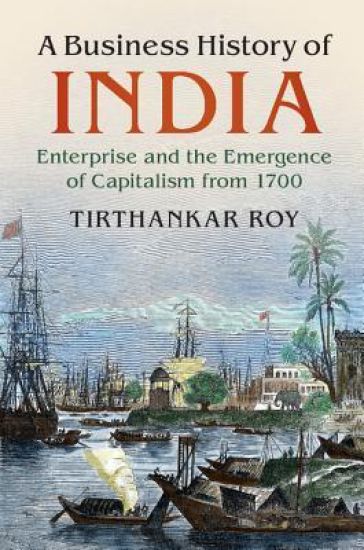
A Business History of India

A Business History of India

Tirthankar Roy

Cambridge University Press
2018
sidottu
In recent decades, private investment has led to an economic resurgence in India. But this is not the first time the region has witnessed impressive business growth. There have been many similar stories over the past 300 years. India's economic history shows that capital was relatively expensive. How, then, did capitalism flourish in the region? How did companies and entrepreneurs deal with the shortage of key resources? Has there been a common pattern in responses to these issues over the centuries? Through detailed case studies of firms, entrepreneurs, and business commodities, Tirthankar Roy answers these questions. Roy bridges the approaches of business and economic history, illustrating the development of a distinctive regional capitalism. On each occasion of growth, connections with the global economy helped firms and entrepreneurs better manage risks. Making these deep connections between India's economic past and present shows why history matters in its remaking of capitalism today.
The Economy of South Asia

The Economy of South Asia

Tirthankar Roy

Springer International Publishing AG
2017
sidottu
This book explores the historical roots of rapid economic growth in South Asia, with reference to politics, markets, resources, and the world economy. Roy posits that, after an initial slow period of growth between 1950 and the 1980s, the region has been growing rapidly and fast catching up with the world on average levels of living. Why did this turnaround happen? Does it matter? Is it sustainable? The author answers these questions by drawing connections, comparisons, and parallels between the five large countries in the region: India, Pakistan, Bangladesh, Sri Lanka and Nepal. It shows why, despite differences in political experience between these countries, similarities in resources and markets could produce similar trajectories. Home to a fifth of the world’s population, South Asia’s transformation has the power to change the world. Most accounts of the process focus on individual nations, but by breaking out of that mould, Roy takes on the region as a whole, and delivers a radical new interpretation of why the economy of South Asia is changing so fast.
Law and the Economy in Colonial India

Law and the Economy in Colonial India

Tirthankar Roy; Anand V. Swamy

University of Chicago Press
2016
sidottu
Since the economic reforms of the 1990s, India's economy has grown rapidly. To sustain growth and foreign investment over the long run requires a well-developed legal infrastructure for conducting business, including cheap and reliable contract enforcement and secure property rights. But it's widely acknowledged that India's legal infrastructure is in urgent need of reform, plagued by problems, including slow enforcement of contracts and land laws that differ from state to state. How has this situation arisen, and what can boost business confidence and encourage long-run economic growth? Tirthankar Roy and Anand V. Swamy trace the beginnings of the current Indian legal system to the years of British colonial rule. They show how India inherited an elaborate legal system from the British colonial administration, which incorporated elements from both British Common Law and indigenous institutions. In the case of property law, especially as it applied to agricultural land, indigenous laws and local political expediency were more influential in law-making than concepts borrowed from European legal theory. Conversely, with commercial law, there was considerable borrowing from Europe. In all cases, the British struggled with limited capacity to enforce their laws and an insufficient knowledge of the enormous diversity and differentiation within Indian society. A disorderly body of laws, not conducive to production and trade, evolved over time. Roy and Swamy's careful analysis not only sheds new light on the development of legal institutions in India, but also offers insights for India and other emerging countries through a look at what fosters the types of institutions that are key to economic growth.
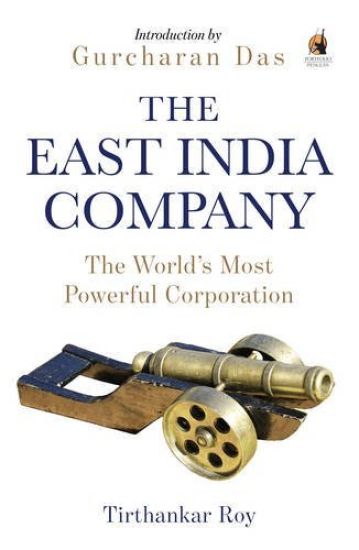
The East India Company

The East India Company

Tirthankar Roy; Gurcharan Das

Penguin Random House India
2016
pokkari
The East India Company is an interesting inspection of how a colonial company defined the way we do business today'-BusinessWorld this groundbreaking study examines how the East India Company founded an empire in India at the same time it started losing ground in business. For over 200 years, the Company's vast business network had spanned Persia, India, China, Indonesia and North America. But in the late 1700s, its career took a dramatic turn, and it ended up being an empire builder. In this fascinating account, Tirthankar Roy reveals how the Company's trade with India changed it - and how the Company changed Indian business. Fitting together many pieces of a vast jigsaw puzzle, the book explores how politics meshed so closely with the conduct of business then, and what that tells us about doing business now. 'One of the first major attempts to tell the company's story from an Indian business perspective' - Financial Express
Natural Disasters and Indian History
This short and exploratory study is the first to engage with a social and economic history of natural disasters in India. Based on the study of a number of events that occurred in colonial India between 1770 and 1935, the author argues that the impact of natural disasters requires a graded sense of time. The book draws on three themes-market, politics, and knowledge, roughly corresponding to three time scales-the short, the medium, and the long run, respectively. These frame the case studies of famines, earthquakes, and storms covered in the book. These studies illustrate that disasters become devastating events by impairing the capacity of the state and civil society; they create gainers and losers; and they destroy cooperation. Yet, as the author points out, disasters have also enabled new understandings of nature, state, and society, on the basis of which useful new knowledge could grow.
Rethinking Economic Change in India

Rethinking Economic Change in India

Tirthankar Roy

Routledge
2007
nidottu
As author of the hugely influential The Economic History of India 1857-1947, Tirthankar Roy has established himself as the leading contemporary economic historian of India. Here, Roy turns his attention to labour and livelihood and the nature of economic change in the Subcontinent. This book covers:economic history of modern India rural labour labour-intensive industrialization women and industrialization.Challenging the prevailing wisdom on Indian economic growth - that it is bound up with Marxian, postcolonial class analysis - Roy formulates a new view. Commercialization, surplus labour and uncertainty are seen as equally important and the end result reconciles the increasingly opposed view of economists and historians.
Rethinking Economic Change in India

Rethinking Economic Change in India

Tirthankar Roy

Routledge
2005
sidottu
As author of the hugely influential The Economic History of India 1857-1947, Tirthankar Roy has established himself as the leading contemporary economic historian of India. Here, Roy turns his attention to labour and livelihood and the nature of economic change in the Subcontinent. This book covers:economic history of modern India rural labour labour-intensive industrialization women and industrialization.Challenging the prevailing wisdom on Indian economic growth - that it is bound up with Marxian, postcolonial class analysis - Roy formulates a new view. Commercialization, surplus labour and uncertainty are seen as equally important and the end result reconciles the increasingly opposed view of economists and historians.
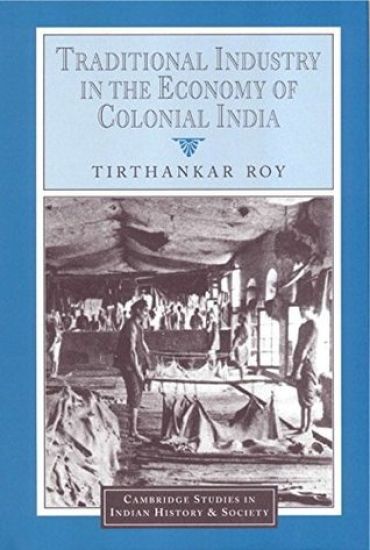
Traditional Industry in the Economy of Colonial India

Traditional Industry in the Economy of Colonial India

Tirthankar Roy

Cambridge University Press
1999
sidottu
The majority of workers in South Asia are employed in industries that rely on manual labour and craft skills. Some of these industries have existed for centuries and survived great changes in consumption and technology over the last 150 years. In earlier studies, historians of the region focused on mechanized rather than craft industries, arguing that traditional manufacturing was destroyed or devitalized during the colonial period, and that 'modern' industry is substantially different. Exploring material from research into five traditional industries, Tirthankar Roy's book contests these notions, demonstrating that while traditional industry did evolve during the Industrial Revolution, these transformations had a positive rather than destructive effect on manufacturing generally. In fact, the book suggests, the major industries in post-independence India were shaped by such transformations. Tirthankar Roy's book offers penetrating insights into India's economic and social history.