Kirjojen hintavertailu. Mukana 12 503 988 kirjaa ja 12 kauppaa.

Kirjailija

Tison Pugh

Kirjat ja teokset yhdessä paikassa: 35 kirjaa, julkaisuja vuosilta 2009-2026, suosituimpien joukossa An Introduction to the Gawain Poet. Vertaile teosten hintoja ja tarkista saatavuus suomalaisista kirjakaupoista.

35 kirjaa

Kirjojen julkaisuhaarukka 2009-2026.

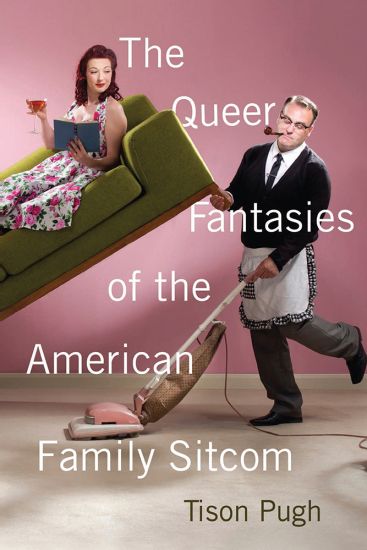
The Queer Fantasies of the American Family Sitcom

The Queer Fantasies of the American Family Sitcom

Tison Pugh

Rutgers University Press
2018
nidottu
Winner of the 2019 John Leo and Dana Heller Award for the Best Work in LGBTQ Studies from the PCAThe Queer Fantasies of the American Family Sitcom examines the evasive depictions of sexuality in domestic and family-friendly sitcoms. Tison Pugh charts the history of increasing sexual depiction in this genre while also unpacking how sitcoms use sexuality as a source of power, as a kind of camouflage, and as a foundation for family building. The book examines how queerness, at first latent, became a vibrant yet continually conflicted part of the family-sitcom tradition. Taking into account elements such as the casting of child actors, the use of and experimentation with plot traditions, the contradictory interpretive valences of comedy, and the subtle subversions of moral standards by writers and directors, Pugh points out how innocence and sexuality conflict on television. As older sitcoms often sit on a pedestal of nostalgia as representative of the Golden Age of the American Family, television history reveals a deeper, queerer vision of family bonds. Download open access ebook here.
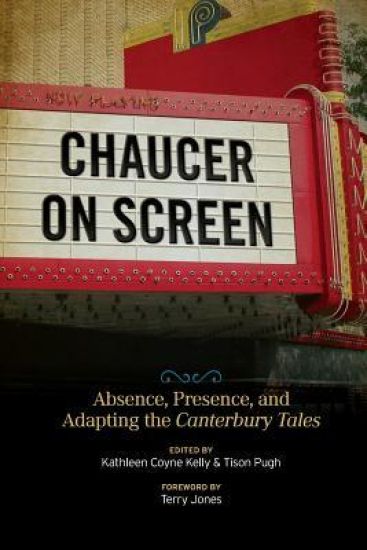
Chaucer on Screen

Chaucer on Screen

Kathleen Coyne Kelly; Tison Pugh

Ohio State University Press
2016
pokkari
Unlike William Shakespeare, Jane Austen, Charles Dickens, and other great authors who have enjoyed continued success in Hollywood, Geoffrey Chaucer has largely been shunted to the margins of the cinematic world. Chaucer on Screen: Absence, Presence, and Adapting the Canterbury Tales, edited by Kathleen Coyne Kelly and Tison Pugh, investigates the various translations of Chaucer and the Canterbury Tales to film and television, tracing out how the legacies of the great fourteenth-century English poet have been revisited and reinterpreted through visual media. Contributors to this volume address the question of why Chaucer is so rarely adapted to the screen, and then turn to the occasional, often awkward, attempts to adapt his narratives, including such works as Michael Powell and Emeric Pressburger's lyrical A Canterbury Tale (1944), Pier Paolo Pasolini's still-controversial I racconti di Canterbury (1972), Bud Lee's soft-core The Ribald Tales of Canterbury (1985), Brian Helgeland's A Knight's Tale (2001), and BBC television productions, among others. Chaucer on Screen aims to rethink some of the premises of adaptation studies and to erase the ideological lines between textual sources and visual reimaginings in the certainty that many pleasures, scholarly and otherwise, can found in multiple media across disparate eras.
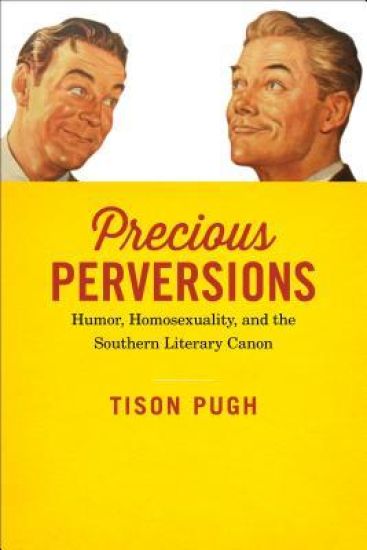
Precious Perversions

Precious Perversions

Tison Pugh

Louisiana State University Press
2016
sidottu
Southern literature has long been heralded for its tragic sentiments, in its somber and necessary acknowledgments of the region's tormented past, as it has concomitantly asserted an overarchingly heteronormative vision of Southern life. Yet a pantheon of great authors, ranging from Tennessee Williams, Carson McCullers, and Truman Capote to the present-day voices of Florence King, Dorothy Allison, and David Sedaris, collectively attest both to the vibrancy of queer experience and to the prevalence of humor found in this rich regional canon. In Precious Perversions: Humor, Homosexuality, and the Southern Literary Canon, Tison Pugh challenges the premises that elevate William Faulkner and diminish Rita Mae Brown, that esteem Walker Percy yet marginalize David Sedaris, by arguing for the inclusion of gay comic authors as defining voices in the field. By redefining the tenets of Southern literature, Pugh reveals its long-overlooked or discounted aspects of gay humor. Noting, for example, that Tennessee Williams is revered as a dramatist who probes the heart of the human condition rather than for his submerged camp humor, and that Truman Capote's comic cinema and literature never eclipsed his more serious works, Pugh establishes a history of mainstream and academic critique that has consistently ignored queer humor. Likewise, Florence King and Rita Mae Brown wrote defining narratives of Southern lesbian experience in, respectively, Confessions of a Failed Southern Lady and Rubyfruit Jungle, yet they are almost entirely neglected in accounts of the literary South. More recently, the author shows, the critical reception of Dorothy Allison's Bastard Out of Carolina testifies to an overarching interest in the traumatic aspects of her poetry and fiction rather than in her humor and its cathartic power. Pugh also asserts that David Sedaris, as a writer of the post-Southern South, who appears to fall beyond the parameters of regional literature for many readers, creates a new, humorous vision of the South that recognises both its pained history and its grudging accession to modernity. Drawing from works of key queer, Southern writers, Pugh sets forth a new vision of Southern literature- one illuminated by the humor of gay voices no longer at the margins.
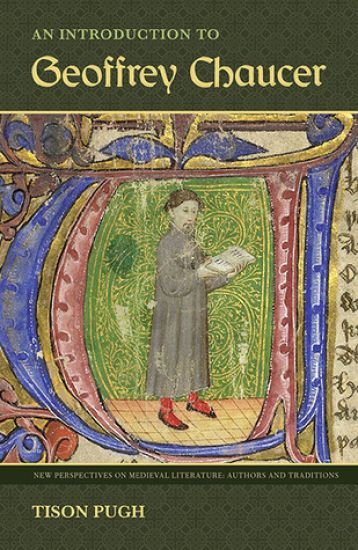
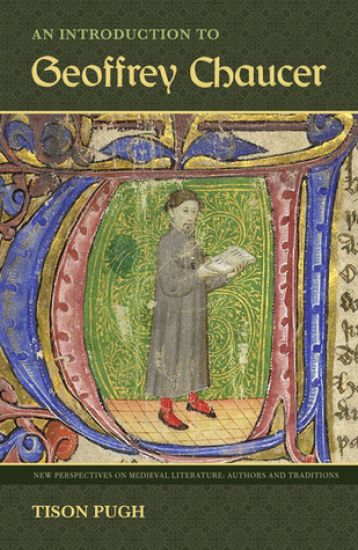
An Introduction to Geoffrey Chaucer

An Introduction to Geoffrey Chaucer

Tison Pugh

University Press of Florida
2014
nidottu
Geoffrey Chaucer is widely considered the father of English literature. This introduction begins with a review of his life and the cultural milieu of fourteenth-century England and then expands into analyses of such major works as The Parliament of Fowls, Troilus and Criseyde, and, of course, the Canterbury Tales, examining them alongside a selection of lesser known verses. One of the early hurdles faced by students of Chaucer is achieving ease and fluency with Middle English, but Tison Pugh provides a clear and concise pronunciation guide and a glossary to help novice readers navigate Chaucer's literature in its original language. Additional critical apparatus, including a survey of the writer's sources and brief summaries of major plot lines, make An Introduction to Geoffrey Chaucer an indispensable resource for students, teachers, and anyone who has ever wanted to learn more about this crucial figure of English literature.
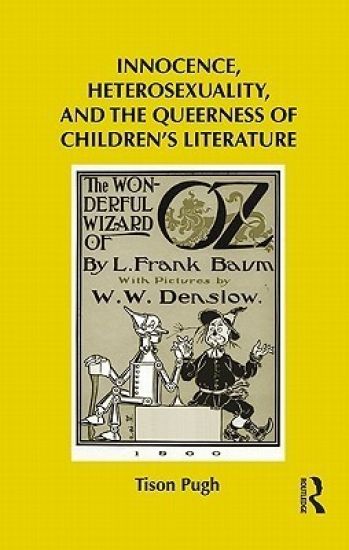
Innocence, Heterosexuality, and the Queerness of Children's Literature
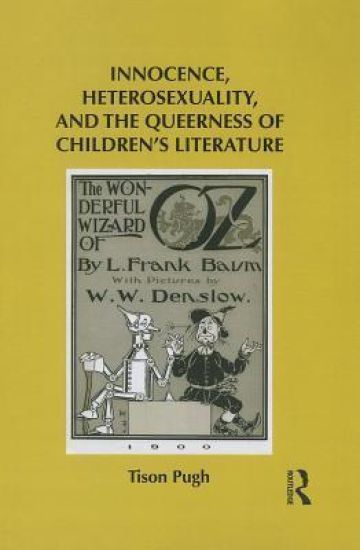
Innocence, Heterosexuality, and the Queerness of Children’s Literature examines distinguished classics of children’s literature both old and new—including L. Frank Baum’s Oz books, Laura Ingalls Wilder’s Little House series, J. K. Rowling’s Harry Potter novels, Lemony Snicket’s A Series of Unfortunate Events, and Stephenie Meyer’s Twilight series—to explore the queer tensions between innocence and heterosexuality within their pages. Pugh argues that children cannot retain their innocence of sexuality while learning about normative heterosexuality, yet this inherent paradox runs throughout many classic narratives of literature for young readers. Children’s literature typically endorses heterosexuality through its invisible presence as the de facto sexual identity of countless protagonists and their families, yet heterosexuality’s ubiquity is counterbalanced by its occlusion when authors shield their readers from forthright considerations of one of humanity’s most basic and primal instincts. The book demonstrates that tensions between innocence and sexuality render much of children’s literature queer, especially when these texts disavow sexuality through celebrations of innocence. In this original study, Pugh develops interpretations of sexuality that few critics have yet ventured, paving the way for future scholarly engagement with larger questions about the ideological role of children's literature and representations of children's sexuality.Tison Pugh is Associate Professor in the Department of English at the University of Central Florida. He is the author of Queering Medieval Genres and Sexuality and Its Queer Discontents in Middle English Literature and has published on children’s literature in such journals as Children’s Literature, The Lion and the Unicorn, and Marvels and Tales.
Great Writing 5 with Online Access Code

Great Writing 5 with Online Access Code

Keith Folse; Tison Pugh

Cengage ELT
2014
muu
Now with engaging National Geographic images, the new edition of the Great Writing series helps students write better sentences, paragraphs, and essays. The new Foundations level meets the needs of low-level learners through practice in basic grammar, vocabulary, and spelling, while all levels feature clear explanations, student writing models, and meaningful practice opportunities. The new edition of the Great Writing series is the perfect writing solution for all learners from beginning to advanced.
Queer Chivalry

Queer Chivalry

Tison Pugh

Louisiana State University Press
2013
sidottu
For the U.S. South, the myth of chivalric masculinity dominates the cultural and historical landscape. Visions of white southern men as archetypes of honor and gentility run throughout regional narratives with little regard for the actions and, at times, the atrocities committed by such men. In Queer Chivalry, Tison Pugh exposes the inherent contradictions in these depictions of cavalier manhood, investigating the foundations of southern gallantry as a reincarnated and reauthorized version of medieval masculinity. Pugh argues that the idea of masculinity - particularly as seen in works by prominent southern authors from Mark Twain to Ellen Gilchrist - constitutes a cultural myth that queerly demarcates accepted norms of manliness, often by displaying the impossibility of its achievement. Beginning with Twain's famous critique of ""the Sir Walter disease"" that pilloried the South, Pugh focuses on authors who questioned the code of chivalry by creating protagonists whose quests for personal knighthood prove quixotic. Through detailed readings of major works - including Twain's A Connecticut Yankee in King Arthur's Court, Flannery O'Connor's short fiction, John Kennedy Toole's A Confederacy of Dunces, Robert Penn Warren's A Place to Come To, Walker Percy's novels, and Gilchrist's The Annunciation - Pugh demonstrates that the hypermasculinity of white-knight ideals only draws attention to the ambiguous gender of the literary southern male.Employing insights from gender and psychoanalytic theory, Queer Chivalry contributes to recent critical discussions of the cloaked anxieties about gender and sexuality in southern literature. Ultimately, Pugh uncovers queer limits in the cavalier mythos, showing how facts and fictions contributed to the ideological formulation of the South.
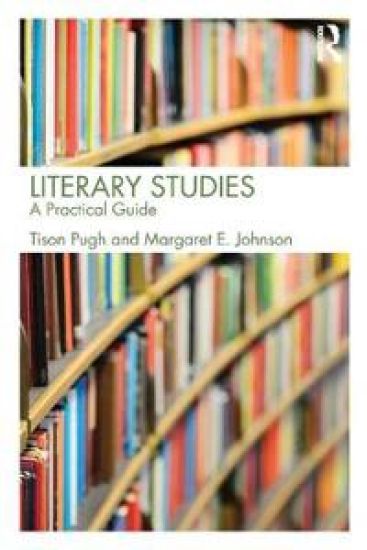
Literary Studies

Literary Studies

Tison Pugh; Margaret E. Johnson

Routledge
2013
sidottu
Literary Studies: A Practical Guide provides a comprehensive foundation for the study of English, American, and world literatures, giving students the critical skills they need to best develop and apply their knowledge. Designed for use in a range of literature courses, it begins by outlining the history of literary movements, enabling students to contextualize a given work within its cultural and historical moment. Specific focus is then given to the use of literary theory and the analysis of:PoetryProse fiction and novelsPlaysFilms.A detailed unit provides clear and concise introductions to literary criticism and theory, encouraging students to nurture their unique insights into a range of texts with these critical tools. Finally, students are guided through the process of generating ideas for essays, considering the role of secondary criticism in their writing, and formulating literary arguments. This practical volume is an invaluable resource for students, providing them with the tools to succeed in any English course.
Literary Studies

Literary Studies

Tison Pugh; Margaret E. Johnson

Routledge
2013
nidottu
Literary Studies: A Practical Guide provides a comprehensive foundation for the study of English, American, and world literatures, giving students the critical skills they need to best develop and apply their knowledge. Designed for use in a range of literature courses, it begins by outlining the history of literary movements, enabling students to contextualize a given work within its cultural and historical moment. Specific focus is then given to the use of literary theory and the analysis of:PoetryProse fiction and novelsPlaysFilms.A detailed unit provides clear and concise introductions to literary criticism and theory, encouraging students to nurture their unique insights into a range of texts with these critical tools. Finally, students are guided through the process of generating ideas for essays, considering the role of secondary criticism in their writing, and formulating literary arguments. This practical volume is an invaluable resource for students, providing them with the tools to succeed in any English course.
An Introduction to Geoffrey Chaucer

An Introduction to Geoffrey Chaucer

Tison Pugh

University Press of Florida
2013
sidottu
Geoffrey Chaucer is widely considered the father of English literature. This introduction begins with a review of his life and the cultural milieu of fourteenth-century England and then expands into analyses of such major works as The Parliament of Fowls, Troilus and Criseyde, and, of course, the Canterbury Tales, examining them alongside a selection of lesser known verses.One of the early hurdles faced by students of Chaucer is achieving ease and fluency with Middle English, but Tison Pugh provides a clear and concise pronunciation guide and a glossary to help novice readers navigate Chaucer’s literature in its original language. Additional critical apparatus, including a survey of the writer’s sources and brief summaries of major plot lines, make An Introduction to Geoffrey Chaucer an indispensable resource for students, teachers, and anyone who has ever wanted to learn more about this crucial figure of English literature.
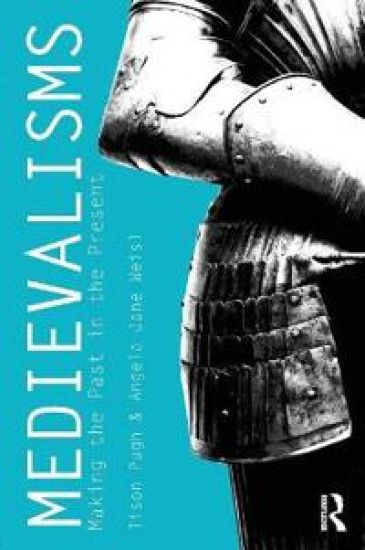
Medievalisms

Medievalisms

Tison Pugh; Angela Weisl

Routledge
2012
nidottu
From King Arthur and Robin Hood, through to video games and jousting-themed restaurants, medieval culture continues to surround us and has retained a strong influence on literature and culture throughout the ages. This fascinating and illuminating guide is written by two of the leading contemporary scholars of medieval literature, and explores:The influence of medieval cultural concepts on literature and film, including key authors such as Shakespeare, Tennyson, and Mark TwainThe continued appeal of medieval cultural figures such as Dante, King Arthur, and Robin HoodThe influence of the medieval on such varied disciplines such as politics, music, children’s literature, and art.Contemporary efforts to relive the Middle Ages. Medievalisms: Making the Past in the Present surveys the critical field and sets the boundaries for future study, providing an essential background for literary study from the medieval period through to the twenty-first century.
Medievalisms

Medievalisms

Tison Pugh; Angela Weisl

Routledge
2012
sidottu
From King Arthur and Robin Hood, through to video games and jousting-themed restaurants, medieval culture continues to surround us and has retained a strong influence on literature and culture throughout the ages. This fascinating and illuminating guide is written by two of the leading contemporary scholars of medieval literature, and explores:The influence of medieval cultural concepts on literature and film, including key authors such as Shakespeare, Tennyson, and Mark TwainThe continued appeal of medieval cultural figures such as Dante, King Arthur, and Robin HoodThe influence of the medieval on such varied disciplines such as politics, music, children’s literature, and art.Contemporary efforts to relive the Middle Ages. Medievalisms: Making the Past in the Present surveys the critical field and sets the boundaries for future study, providing an essential background for literary study from the medieval period through to the twenty-first century.
Innocence, Heterosexuality, and the Queerness of Children's Literature
Innocence, Heterosexuality, and the Queerness of Children’s Literature examines distinguished classics of children’s literature both old and new—including L. Frank Baum’s Oz books, Laura Ingalls Wilder’s Little House series, J. K. Rowling’s Harry Potter novels, Lemony Snicket’s A Series of Unfortunate Events, and Stephenie Meyer’s Twilight series—to explore the queer tensions between innocence and heterosexuality within their pages. Pugh argues that children cannot retain their innocence of sexuality while learning about normative heterosexuality, yet this inherent paradox runs throughout many classic narratives of literature for young readers. Children’s literature typically endorses heterosexuality through its invisible presence as the de facto sexual identity of countless protagonists and their families, yet heterosexuality’s ubiquity is counterbalanced by its occlusion when authors shield their readers from forthright considerations of one of humanity’s most basic and primal instincts. The book demonstrates that tensions between innocence and sexuality render much of children’s literature queer, especially when these texts disavow sexuality through celebrations of innocence. In this original study, Pugh develops interpretations of sexuality that few critics have yet ventured, paving the way for future scholarly engagement with larger questions about the ideological role of children's literature and representations of children's sexuality.Tison Pugh is Associate Professor in the Department of English at the University of Central Florida. He is the author of Queering Medieval Genres and Sexuality and Its Queer Discontents in Middle English Literature and has published on children’s literature in such journals as Children’s Literature, The Lion and the Unicorn, and Marvels and Tales.
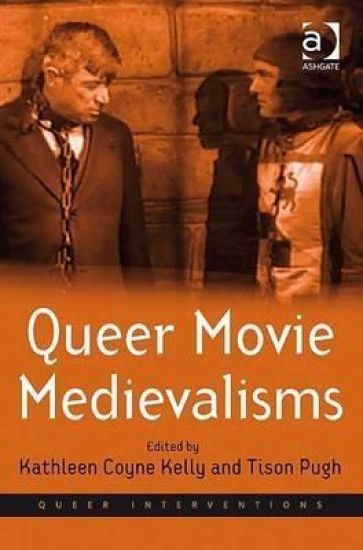
Queer Movie Medievalisms

Queer Movie Medievalisms

Tison Pugh

Ashgate Publishing Limited
2009
sidottu
How is history even possible, since it involves recapturing a past already lost? It is through this urge to understand, feel and experience, that films based on medieval history are made. They attempt to re-create the past, but can only do so through a queer re-visioning that inevitably replicates modernity. In these mediations between past and present, history becomes misty, and so, too, do constructions of gender and sexuality leading to the impossibility of heterosexuality, or of any sexuality, predicated upon cinematic medievalism. Queer Movie Medievalisms is the first book of its kind to grapple with the ways in which mediations between past and present, as registered on the silver screen, queerly undercut assumptions about sexuality throughout time. It will be of great interest to scholars of Gender and Sexuality, Cultural and Media Studies, Film Studies and Medieval History.