Kirjojen hintavertailu. Mukana 12 585 458 kirjaa ja 12 kauppaa.
Kirjailija
Titus Ebenezer Kwofie
Kirjat ja teokset yhdessä paikassa: 4 kirjaa, julkaisuja vuosilta 2012-2026, suosituimpien joukossa Decarbonization of Building Energy in Developing Countries. Vertaile teosten hintoja ja tarkista saatavuus suomalaisista kirjakaupoista.
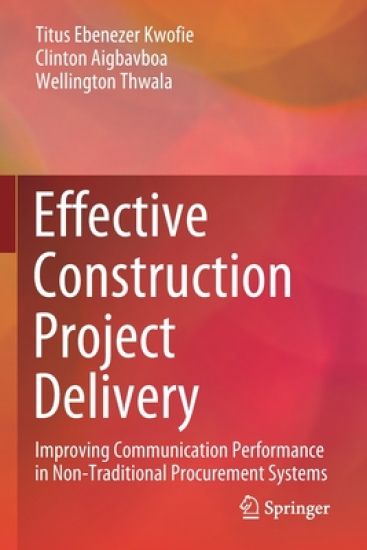
This book focuses on the development of communication skills in the context of non-traditional procurement and construction projects. It helps readers to understand the fundamentals of non-traditional procurement, and highlights the inherent communication challenges that arise, as well as how to solve them.The book is divided into four parts, the first of which provides an introduction to communication, discussing the theoretical concepts and contextual nature of communication as well as its benefits. The second part goes into more depth, discussing communication in the context of construction project delivery and non-traditional procurement systems, what these two terms actually mean, and what effective communication looks like in these contexts. Part III offers solutions to the inherent challenges of communication, including the use of information and communications technology, while the book’s fourth and final part explores the future of construction communication. Given the scope of its content, the book represents a valuable asset for researchers, professionals and students in the areas of procurement management and construction management.
This book focuses on the development of communication skills in the context of non-traditional procurement and construction projects. It helps readers to understand the fundamentals of non-traditional procurement, and highlights the inherent communication challenges that arise, as well as how to solve them.The book is divided into four parts, the first of which provides an introduction to communication, discussing the theoretical concepts and contextual nature of communication as well as its benefits. The second part goes into more depth, discussing communication in the context of construction project delivery and non-traditional procurement systems, what these two terms actually mean, and what effective communication looks like in these contexts. Part III offers solutions to the inherent challenges of communication, including the use of information and communications technology, while the book’s fourth and final part explores the future of construction communication. Given the scope of its content, the book represents a valuable asset for researchers, professionals and students in the areas of procurement management and construction management.