Kirjojen hintavertailu. Mukana 12 152 606 kirjaa ja 12 kauppaa.

Kirjailija

Toby Miller

Kirjat ja teokset yhdessä paikassa: 38 kirjaa, julkaisuja vuosilta 1993-2026, suosituimpien joukossa Globalization and Sport. Vertaile teosten hintoja ja tarkista saatavuus suomalaisista kirjakaupoista.

38 kirjaa

Kirjojen julkaisuhaarukka 1993-2026.

Globalization and Sport

Globalization and Sport

Toby Miller; Geoffrey A Lawrence; Jim McKay; David Rowe

SAGE Publications Inc
2001
sidottu
Sport is the most universal feature of popular culture. It crosses language barriers and slices through national boundaries, attracting both spectators and participants, to a common lingua franca of passions, obsessions and desires. This book brings to light the connections between sport and culture. It argues that although sport is obviously a source of pleasure, it is also part of the government of everyday life. The creation of a sporting calendar, movements of rational recreation and the development of physical education in the public sector, are read as ways of disciplining and shaping urban-industrial populations. In addition, sport is examined as a principal front of globalization. The sports process draws together dispersed communities and generates economic wealth. The book demonstrates how commodification, bureaucratization and ideology are fundamental to the organization of sporting cultures.

Globalization and Sport

Globalization and Sport

Toby Miller; Geoffrey A Lawrence; Jim McKay; David Rowe

SAGE Publications Inc
2001
nidottu
Sport is the most universal feature of popular culture. It crosses language barriers and slices through national boundaries, attracting both spectators and participants, to a common lingua franca of passions, obsessions and desires. This book brings to light the connections between sport and culture. It argues that although sport is obviously a source of pleasure, it is also part of the government of everyday life. The creation of a sporting calendar, movements of rational recreation and the development of physical education in the public sector, are read as ways of disciplining and shaping urban-industrial populations. In addition, sport is examined as a principal front of globalization. The sports process draws together dispersed communities and generates economic wealth. The book demonstrates how commodification, bureaucratization and ideology are fundamental to the organization of sporting cultures.

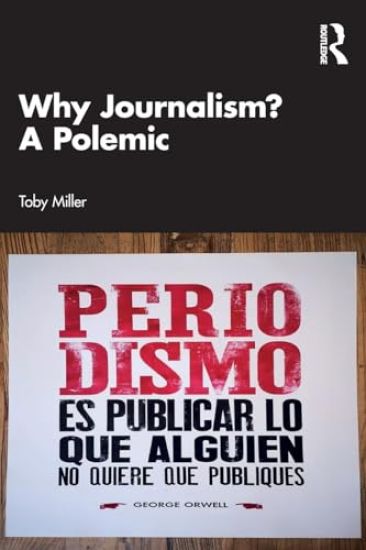
Why Journalism? A Polemic

Why Journalism? A Polemic

Toby Miller

TAYLOR FRANCIS LTD
2024
nidottu
This new book from Toby Miller engages with journalism from within the cultural studies tradition, addressing fundamental claims for the profession and its biggest contemporary challenges: critiques, objectivity, and insecurity. Why Journalism? A Polemic considers four key aspects of contemporary journalism in terms of theoretical relevance and historic tasks that are not usually considered in parallel:Citizenship: political, economic, and culturalEnvironment: the climate crisis and reporters’ material impactSports: the importance of the popular; andTechnology: its former, current, and future significanceWith examples drawn from Latin America, Spain, and France as well as the US and Britain, the query animating these investigations returns again and again, implicitly and explicitly: why journalism? Miller argues for an answer to that dilemma that will involve a fundamental shift in how reporters, proprietors, professors, students, and states view the profession. This is essential reading for scholars and students of media and cultural studies as well as journalism studies.
Why Journalism? A Polemic

Why Journalism? A Polemic

Toby Miller

TAYLOR FRANCIS LTD
2024
sidottu
This new book from Toby Miller engages with journalism from within the cultural studies tradition, addressing fundamental claims for the profession and its biggest contemporary challenges: critiques, objectivity, and insecurity. Why Journalism? A Polemic considers four key aspects of contemporary journalism in terms of theoretical relevance and historic tasks that are not usually considered in parallel:Citizenship: political, economic, and culturalEnvironment: the climate crisis and reporters’ material impactSports: the importance of the popular; andTechnology: its former, current, and future significanceWith examples drawn from Latin America, Spain, and France as well as the US and Britain, the query animating these investigations returns again and again, implicitly and explicitly: why journalism? Miller argues for an answer to that dilemma that will involve a fundamental shift in how reporters, proprietors, professors, students, and states view the profession. This is essential reading for scholars and students of media and cultural studies as well as journalism studies.
Violence

Violence

Toby Miller

Routledge
2022
nidottu
Using discourses from across the conceptual and geographical board, Toby Miller argues for a different way of understanding violence, one that goes beyond supposedly universal human traits to focus instead on the specificities of history, place, and population as explanations for it. Violence engages these issues in a wide-ranging interdisciplinary form, examining definitions and data, psychology and ideology, gender, nation-states, and the media by covering several foundational questions: how has violence been defined, historically and geographically?has it decreased or increased over time?which regions of the world are the most violent?does violence correlate with economies, political systems, and religions?what is the relationship of gender and violence?what role do the media play? This book is a powerful introduction to the study of violence, ideal for students and researchers across the human sciences, most notably sociology, American and area studies, history, media and communication studies, politics, literature, and cultural studies.
A COVID Charter, A Better World

A COVID Charter, A Better World

Toby Miller

Rutgers University Press
2021
nidottu
With unprecedented speed, scientists have raced to develop vaccines to bring the COVID-19 pandemic under control and restore a sense of normalcy to our lives. Despite the havoc and disruption the pandemic has caused, it’s exposed exactly why we should not return to life as we once knew it. Our current profit-driven healthcare systems have exacerbated global inequality and endangered public health, and we must take this opportunity to construct a new social order that understands public health as a basic human right. A COVID Charter, A Better World outlines the steps needed to reform public policies and fix the structural vulnerabilities that the current pandemic has made so painfully clear. Leading scholar Toby Miller argues that we must resist neoliberalism’s tendency to view health in terms of individual choices and market-driven solutions, because that fails to preserve human rights. He addresses the imbalance of geopolitical power to explain how we arrived at this point and shows that the pandemic is more than just a virus—it’s a social disease. By examining how the U.S., Britain, Mexico, and Colombia have responded to the COVID-19 crisis, Miller investigates corporate, scientific, and governmental decision-making and the effects those decisions have had on disadvantaged local communities. Drawing from human rights charters ratified by various international organizations, he then proposes a COVID charter, calling for a new world that places human lives above corporate profits.
A COVID Charter, A Better World

A COVID Charter, A Better World

Toby Miller

Rutgers University Press
2021
sidottu
With unprecedented speed, scientists have raced to develop vaccines to bring the COVID-19 pandemic under control and restore a sense of normalcy to our lives. Despite the havoc and disruption the pandemic has caused, it’s exposed exactly why we should not return to life as we once knew it. Our current profit-driven healthcare systems have exacerbated global inequality and endangered public health, and we must take this opportunity to construct a new social order that understands public health as a basic human right. A COVID Charter, A Better World outlines the steps needed to reform public policies and fix the structural vulnerabilities that the current pandemic has made so painfully clear. Leading scholar Toby Miller argues that we must resist neoliberalism’s tendency to view health in terms of individual choices and market-driven solutions, because that fails to preserve human rights. He addresses the imbalance of geopolitical power to explain how we arrived at this point and shows that the pandemic is more than just a virus—it’s a social disease. By examining how the U.S., Britain, Mexico, and Colombia have responded to the COVID-19 crisis, Miller investigates corporate, scientific, and governmental decision-making and the effects those decisions have had on disadvantaged local communities. Drawing from human rights charters ratified by various international organizations, he then proposes a COVID charter, calling for a new world that places human lives above corporate profits.
Violence

Violence

Toby Miller

Routledge
2020
sidottu
Using discourses from across the conceptual and geographical board, Toby Miller argues for a different way of understanding violence, one that goes beyond supposedly universal human traits to focus instead on the specificities of history, place, and population as explanations for it. Violence engages these issues in a wide-ranging interdisciplinary form, examining definitions and data, psychology and ideology, gender, nation-states, and the media by covering several foundational questions: how has violence been defined, historically and geographically?has it decreased or increased over time?which regions of the world are the most violent?does violence correlate with economies, political systems, and religions?what is the relationship of gender and violence?what role do the media play? This book is a powerful introduction to the study of violence, ideal for students and researchers across the human sciences, most notably sociology, American and area studies, history, media and communication studies, politics, literature, and cultural studies.
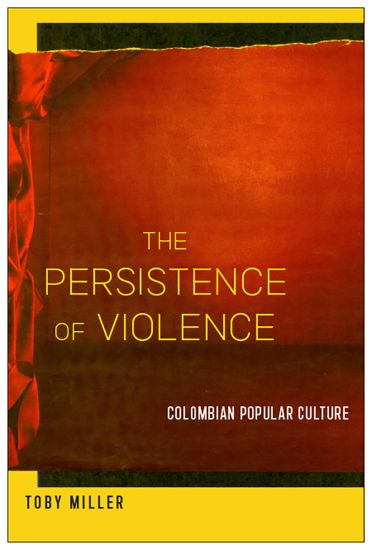
The Persistence of Violence

The Persistence of Violence

Toby Miller

Rutgers University Press
2020
nidottu
Colombia’s headline story, about the peace process with guerrilla and its attendant controversies, does not consider the fundamental contradiction of a nation that spans generosity and violence, warmth and hatred—products of its particular pattern of invasion, dispossession, and enslavement. The Persistence of Violence fills that gap in understanding. Colombia is a place that is two countries in one—the ideal and the real—summed up in the idiomatic expression, not unique to Colombia, but particularly popular there, "Hecha la ley, hecha la trampa" (When you pass a law, you create a loophole). Less cynically, and more poetically, the Nobel Laureate Gabriel García Márquez deemed Colombians capable of both the most noble acts and the most abject ones, in a world where it seems anyone might do anything, from the beautiful to the horrendous.The Persistence of Violence draws on those contradictions and paradoxes to look at how violence—and resistance to it—characterize Colombian popular culture, from football to soap opera to journalism to tourism to the environment.
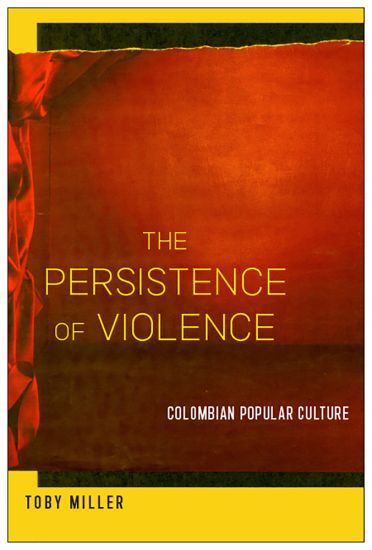
The Persistence of Violence

The Persistence of Violence

Toby Miller

Rutgers University Press
2020
sidottu
Colombia’s headline story, about the peace process with guerrilla and its attendant controversies, does not consider the fundamental contradiction of a nation that spans generosity and violence, warmth and hatred—products of its particular pattern of invasion, dispossession, and enslavement. The Persistence of Violence fills that gap in understanding. Colombia is a place that is two countries in one—the ideal and the real—summed up in the idiomatic expression, not unique to Colombia, but particularly popular there, "Hecha la ley, hecha la trampa" (When you pass a law, you create a loophole). Less cynically, and more poetically, the Nobel Laureate Gabriel García Márquez deemed Colombians capable of both the most noble acts and the most abject ones, in a world where it seems anyone might do anything, from the beautiful to the horrendous.The Persistence of Violence draws on those contradictions and paradoxes to look at how violence—and resistance to it—characterize Colombian popular culture, from football to soap opera to journalism to tourism to the environment.
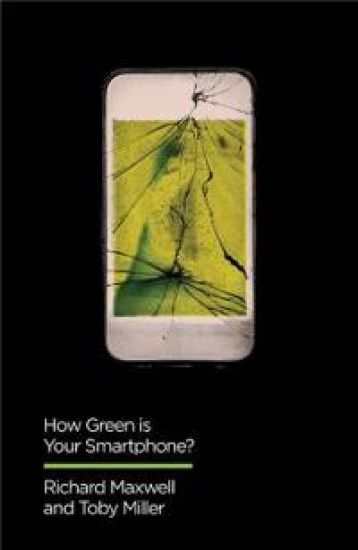
How Green is Your Smartphone?

How Green is Your Smartphone?

Richard Maxwell; Toby Miller

Polity Press
2019
nidottu
Every day we are inundated by propaganda that claims life will be better once we are connected to digital technology. Poverty, famine, and injustice will end, and the economy will be “green.” All anyone needs is the latest smartphone. In this succinct and lively book, Maxwell and Miller take a critical look at contemporary gadgets and the systems that connect them, shedding light on environmental risks. Contrary to widespread claims, consumer electronics and other digital technologies are made in ways that cause some of the worst environmental disasters of our time – conflict-minerals extraction, fatal and life-threatening occupational hazards, toxic pollution of ecosystems, rising energy consumption linked to increased carbon emissions, and e-waste. Nonetheless, a greener future is possible, in which technology meets its emancipatory and progressive potential. How Green is Your Smartphone? encourages us to look at our phones in a wholly new way, and is important reading for anyone concerned by the impact of everyday technologies on our environment.
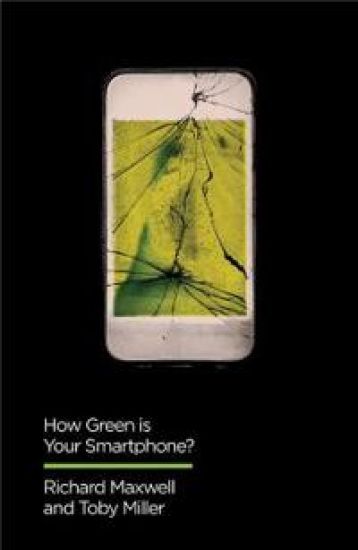
How Green is Your Smartphone?

How Green is Your Smartphone?

Richard Maxwell; Toby Miller

Polity Press
2019
sidottu
Every day we are inundated by propaganda that claims life will be better once we are connected to digital technology. Poverty, famine, and injustice will end, and the economy will be “green.” All anyone needs is the latest smartphone. In this succinct and lively book, Maxwell and Miller take a critical look at contemporary gadgets and the systems that connect them, shedding light on environmental risks. Contrary to widespread claims, consumer electronics and other digital technologies are made in ways that cause some of the worst environmental disasters of our time – conflict-minerals extraction, fatal and life-threatening occupational hazards, toxic pollution of ecosystems, rising energy consumption linked to increased carbon emissions, and e-waste. Nonetheless, a greener future is possible, in which technology meets its emancipatory and progressive potential. How Green is Your Smartphone? encourages us to look at our phones in a wholly new way, and is important reading for anyone concerned by the impact of everyday technologies on our environment.
Greenwashing Culture

Greenwashing Culture

Toby Miller

Routledge
2017
sidottu
Greenwashing Culture examines the complicity of culture with our environmental crisis. Through its own carbon footprint, the promotion of image-friendly environmental credentials for celebrities, and the mutually beneficial engagement with big industry polluters, Toby Miller argues that culture has become an enabler of environmental criminals to win over local, national, and international communities.Topics include:the environmental liabilities involved in digital and print technologies used by cultural institutions and their consumers;Hollywood's 'green celebrities' and the immense ecological impact of their jet-setting lifestyles and filmmaking itself;high profile sponsorship deals between museums and oil and gas companies, such as BP's sponsorship of Tate Britain;radical environmental reform, via citizenship and public policy, illustrated by the actions of Greenpeace against Shell's sponsorship of Lego.This is a thought-provoking introduction to the harmful impact of greenwashing. It is essential reading for students of cultural studies and environmental studies, and those with an interest in environmental activism.
Greenwashing Culture

Greenwashing Culture

Toby Miller

Routledge
2017
nidottu
Greenwashing Culture examines the complicity of culture with our environmental crisis. Through its own carbon footprint, the promotion of image-friendly environmental credentials for celebrities, and the mutually beneficial engagement with big industry polluters, Toby Miller argues that culture has become an enabler of environmental criminals to win over local, national, and international communities.Topics include:the environmental liabilities involved in digital and print technologies used by cultural institutions and their consumers;Hollywood's 'green celebrities' and the immense ecological impact of their jet-setting lifestyles and filmmaking itself;high profile sponsorship deals between museums and oil and gas companies, such as BP's sponsorship of Tate Britain;radical environmental reform, via citizenship and public policy, illustrated by the actions of Greenpeace against Shell's sponsorship of Lego.This is a thought-provoking introduction to the harmful impact of greenwashing. It is essential reading for students of cultural studies and environmental studies, and those with an interest in environmental activism.
Greenwashing Sport

Greenwashing Sport

Toby Miller

Routledge
2017
sidottu
Professional sports promote their green credentials and yet remain complicit in our global environmental crisisSports are responsible for significant carbon footprints through stadium construction and energy use, player and spectator travel, and media coverage. The impact of sports on climate change is further compounded by sponsorship deals with the gas and petroleum industries—imbuing those extractive corporations with a positive image by embedding them within the everyday pleasure of sport. Toby Miller argues that such activities amount to "greenwashing". Scrutinizing motor racing, association football, and the Olympics, Miller weighs up their environmental policies, their rhetoric of conservation and sustainability, and their green credentials. The book concludes with the role of green citizenship and organic fan activism in promoting pro-environmental sports.This is a must-read for students and researchers in media, communications, sociology, cultural studies, and environmental studies.
Greenwashing Sport

Greenwashing Sport

Toby Miller

Routledge
2017
nidottu
Professional sports promote their green credentials and yet remain complicit in our global environmental crisisSports are responsible for significant carbon footprints through stadium construction and energy use, player and spectator travel, and media coverage. The impact of sports on climate change is further compounded by sponsorship deals with the gas and petroleum industries—imbuing those extractive corporations with a positive image by embedding them within the everyday pleasure of sport. Toby Miller argues that such activities amount to "greenwashing". Scrutinizing motor racing, association football, and the Olympics, Miller weighs up their environmental policies, their rhetoric of conservation and sustainability, and their green credentials. The book concludes with the role of green citizenship and organic fan activism in promoting pro-environmental sports.This is a must-read for students and researchers in media, communications, sociology, cultural studies, and environmental studies.
Global Media Studies

Global Media Studies

Toby Miller; Marwan M. Kraidy

Polity Press
2016
sidottu
Global Media Studies is unique in its coverage of places, peoples, institutions, and discourses. Toby Miller and Marwan M. Kraidy provide a comprehensive ?how-to? guide to the study of media, going far beyond the established English-language literature and drawing on the best methods and research from around the world. They look at political economy, global policymaking and governance, and the past and present manifestations of cultural imperialism. In addition to providing a survey of the field, the book introduces a new form of textual analysis, with a special focus on reality television, as well as models of audience research. The authors include original analyses of the US, European, Latin American, and Arab worlds, and case studies of mobile telephony, the impact of US media, and reality television. This original and uniquely global textbook will be an essential resource for students of global media and international communication.
Global Media Studies

Global Media Studies

Toby Miller; Marwan M. Kraidy

Polity Press
2016
nidottu
Global Media Studies is unique in its coverage of places, peoples, institutions, and discourses. Toby Miller and Marwan M. Kraidy provide a comprehensive ?how-to? guide to the study of media, going far beyond the established English-language literature and drawing on the best methods and research from around the world. They look at political economy, global policymaking and governance, and the past and present manifestations of cultural imperialism. In addition to providing a survey of the field, the book introduces a new form of textual analysis, with a special focus on reality television, as well as models of audience research. The authors include original analyses of the US, European, Latin American, and Arab worlds, and case studies of mobile telephony, the impact of US media, and reality television. This original and uniquely global textbook will be an essential resource for students of global media and international communication.
The Other Guy

The Other Guy

Derek A. Burrill; Toby Miller

Peter Lang Publishing Inc
2014
sidottu
Suffering from «manopause» and «Low T», underemployed and unwilling to grow up, «the other guy» has emerged as an important figure in modern media masculinity. From the films of Judd Apatow to sitcoms and popular music, this new breed of man is desperately attempting to change with the times, but is often unable (or unwilling) to understand the new landscape. Avoiding rhetorics of victimization, Derek A. Burrill charts and analyzes the other guy in order to understand how men see themselves, in media and in culture at large.