Kirjojen hintavertailu. Mukana 12 390 323 kirjaa ja 12 kauppaa.

Kirjailija

Todd A. Henry

Kirjat ja teokset yhdessä paikassa: 4 kirjaa, julkaisuja vuosilta 2014-2026, suosituimpien joukossa Profits of Queerness. Vertaile teosten hintoja ja tarkista saatavuus suomalaisista kirjakaupoista.

4 kirjaa

Kirjojen julkaisuhaarukka 2014-2026.

Profits of Queerness

Profits of Queerness

Todd A. Henry

UNIVERSITY OF HAWAI'I PRESS
2026
nidottu
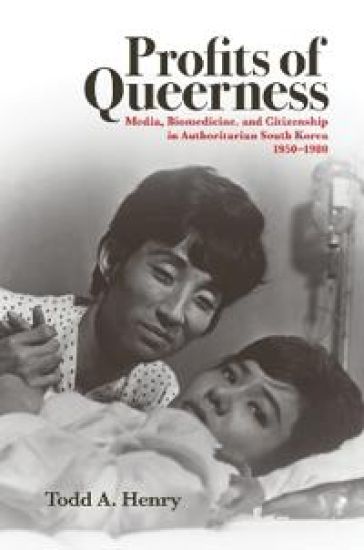
This groundbreaking, interdisciplinary study reassesses South Korea’s tumultuous era of authoritarian development (1950–1980) through previously obscured yet illuminating histories of queerness—defined as gender variance, atypical anatomies, and same-sex sexuality, among other nonnormative expressions. Instead of primarily viewing these histories through minoritarian or liberal lenses, Todd A. Henry adopts universalizing and provincializing approaches to examine how societal conformity to dimorphic expectations of gender, sex, and sexuality was foundational to the operation of militarized capitalism in this postcolonial and still-divided nation, thus revealing how biopolitical assessments of citizenship produced rigid boundaries and hierarchized valuations of human life. As such, he urges researchers of Korean Studies to pursue more fully embodied methodologies, also encouraging practitioners of LGBTI Studies to include "Hot War" and non-Western cultures in their Euro-American-centric theorizing. Drawing on a broad range of understudied sources—including scientific case reports, journalistic exposés, question-and-answer columns, newspaper cartoons, popular films, and oral histories—Profits of Queerness meticulously documents how the commanding but contested intersection of mass media, sexual medicine, and everyday policing reestablished such categorical distinctions as "men" versus "women" and "healthy" versus "deviant," among other binaries. In particular, Henry argues that sensationalizing reporters, pathologizing doctors, surveilling officers, and everyday vigilantes consolidated a "mass dictatorship" characterized by androcentric, heteropatriarchal, and capitalist goals—aims regularly concealed by triumphalist narratives of the country’s "miraculous" recovery from the Korean War (1950–1953) and its industrialized "take-off" under the developmental dictatorship of Park Chung Hee (1961–1979). To highlight the agency of queer and intersex persons silenced in these accounts, he deploys the bottom-up notion of "shadow reading," tracing how marginalized actors transformed pejorative depictions, diagnoses, and rulings into empowering practices on the fringes of an illiberal polity. Ultimately, Henry shows how a contradictory mixture of "queerphobia" and "queerphilia" intersected as a core dynamic of South Korean "hetero-authoritarianism." More broadly, he posits these critical concepts as necessary to both understand and challenge new and ongoing forms of psychosomatic domination (re)emerging across the world today.
Profits of Queerness

Profits of Queerness

Todd A. Henry

UNIVERSITY OF HAWAI'I PRESS
2026
sidottu
This groundbreaking, interdisciplinary study reassesses South Korea’s tumultuous era of authoritarian development (1950–1980) through previously obscured yet illuminating histories of queerness—defined as gender variance, atypical anatomies, and same-sex sexuality, among other nonnormative expressions. Instead of primarily viewing these histories through minoritarian or liberal lenses, Todd A. Henry adopts universalizing and provincializing approaches to examine how societal conformity to dimorphic expectations of gender, sex, and sexuality was foundational to the operation of militarized capitalism in this postcolonial and still-divided nation, thus revealing how biopolitical assessments of citizenship produced rigid boundaries and hierarchized valuations of human life. As such, he urges researchers of Korean Studies to pursue more fully embodied methodologies, also encouraging practitioners of LGBTI Studies to include "Hot War" and non-Western cultures in their Euro-American-centric theorizing. Drawing on a broad range of understudied sources—including scientific case reports, journalistic exposés, question-and-answer columns, newspaper cartoons, popular films, and oral histories—Profits of Queerness meticulously documents how the commanding but contested intersection of mass media, sexual medicine, and everyday policing reestablished such categorical distinctions as "men" versus "women" and "healthy" versus "deviant," among other binaries. In particular, Henry argues that sensationalizing reporters, pathologizing doctors, surveilling officers, and everyday vigilantes consolidated a "mass dictatorship" characterized by androcentric, heteropatriarchal, and capitalist goals—aims regularly concealed by triumphalist narratives of the country’s "miraculous" recovery from the Korean War (1950–1953) and its industrialized "take-off" under the developmental dictatorship of Park Chung Hee (1961–1979). To highlight the agency of queer and intersex persons silenced in these accounts, he deploys the bottom-up notion of "shadow reading," tracing how marginalized actors transformed pejorative depictions, diagnoses, and rulings into empowering practices on the fringes of an illiberal polity. Ultimately, Henry shows how a contradictory mixture of "queerphobia" and "queerphilia" intersected as a core dynamic of South Korean "hetero-authoritarianism." More broadly, he posits these critical concepts as necessary to both understand and challenge new and ongoing forms of psychosomatic domination (re)emerging across the world today.
Assimilating Seoul

Assimilating Seoul

Todd A. Henry

University of California Press
2016
pokkari
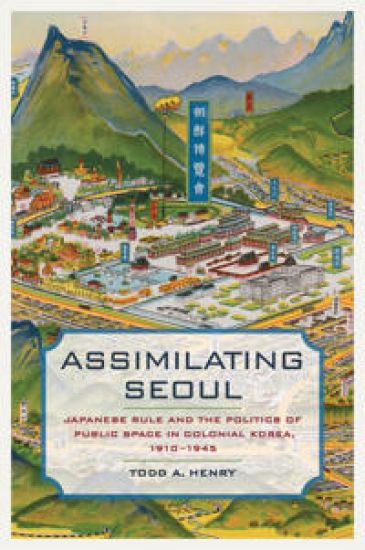
Assimilating Seoul, the first book-length study written in English about Seoul during the colonial period, challenges conventional nationalist paradigms by revealing the intersection of Korean and Japanese history in this important capital. Through microhistories of Shinto festivals, industrial expositions, and sanitation campaigns, Todd A. Henry offers a transnational account that treats the city's public spaces as "contact zones," showing how residents negotiated pressures to become loyal, industrious, and hygienic subjects of the Japanese empire. Unlike previous, top-down analyses, this ethnographic history investigates modalities of Japanese rule as experienced from below. Although the colonial state set ambitious goals for the integration of Koreans, Japanese settler elites and lower-class expatriates shaped the speed and direction of assimilation by bending government initiatives to their own interests and identities. Meanwhile, Korean men and women of different classes and generations rearticulated the terms and degree of their incorporation into a multiethnic polity. Assimilating Seoul captures these fascinating responses to an empire that used the lure of empowerment to disguise the reality of alienation.
Assimilating Seoul

Assimilating Seoul

Todd A. Henry

University of California Press
2014
sidottu
Assimilating Seoul, the first book-length study written in English about Seoul during the colonial period, challenges conventional nationalist paradigms by revealing the intersection of Korean and Japanese history in this important capital. Through microhistories of Shinto festivals, industrial expositions, and sanitation campaigns, Todd A. Henry offers a transnational account that treats the city's public spaces as "contact zones," showing how residents negotiated pressures to become loyal, industrious, and hygienic subjects of the Japanese empire. Unlike previous, top-down analyses, this ethnographic history investigates modalities of Japanese rule as experienced from below. Although the colonial state set ambitious goals for the integration of Koreans, Japanese settler elites and lower-class expatriates shaped the speed and direction of assimilation by bending government initiatives to their own interests and identities. Meanwhile, Korean men and women of different classes and generations rearticulated the terms and degree of their incorporation into a multiethnic polity. Assimilating Seoul captures these fascinating responses to an empire that used the lure of empowerment to disguise the reality of alienation.