Kirjojen hintavertailu. Mukana 12 390 323 kirjaa ja 12 kauppaa.
Kirjailija
Todd D Still
Kirjat ja teokset yhdessä paikassa: 8 kirjaa, julkaisuja vuosilta 2014-2024, suosituimpien joukossa The Acts of the Apostles – A Newly Discovered Commentary. Vertaile teosten hintoja ja tarkista saatavuus suomalaisista kirjakaupoista.
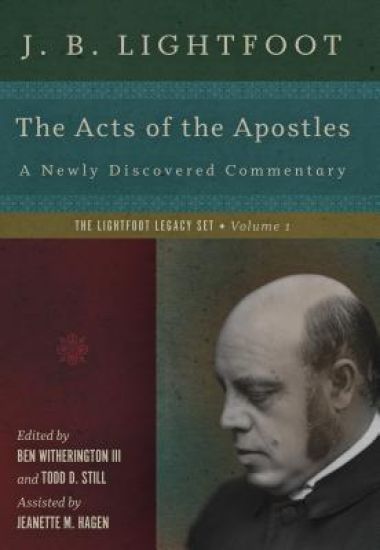
Preaching's Survey of Bibles and Bible Reference InterVarsity Press is proud to present The Lightfoot Legacy, a three-volume set of previously unpublished material from J. B. Lightfoot, one of the great biblical scholars of the modern era. In the spring of 2013, Ben Witherington III discovered hundreds of pages of biblical commentary by Lightfoot in the Durham Cathedral Library. While incomplete, these commentaries represent a goldmine for historians and biblical scholars, as well as for the many people who have found Lightfoot's work both informative and edifying, deeply learned and pastorally sensitive. Among those many pages were two sets of lecture notes on the Acts of the Apostles. Together they amount to a richly detailed, albeit unfinished, commentary on Acts 1-21. The project of writing a commentary on Acts had long been on Lightfoot's mind, and in the 1880s he wrote an article about the book for the second British edition of William Smith's Dictionary of the Bible. Thankfully, that is not all he left behind. Now on display for all to see, these commentary notes reveal a scholar well ahead of his time, one of the great minds of his or any generation. Well over a century later, The Acts of the Apostles remains a relevant and significant resource for the church today.
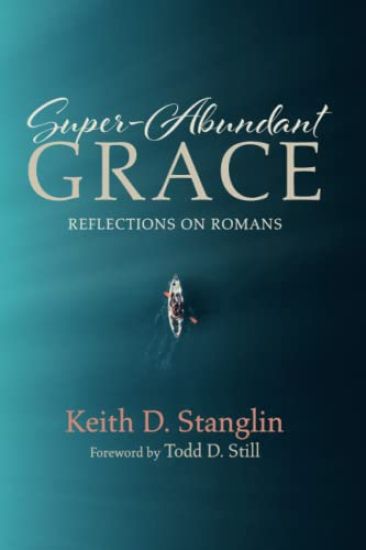
What is the apostle Paul's message in his Letter to the Romans? And how does it apply to us today? Is there more to learn about Romans, and is there more for the church to hear today? Keith Stanglin takes this familiar epistle and makes sense of its author's original intent and its meaning for believers now. With attention both to the historical background and to our contemporary situation, he offers thirty-one meditations that take readers through the entire letter, beginning with the ancient arguments and arriving at modern exhortation. Each chapter is accompanied by discussion questions for use in classes and study groups. For scholars serving the church, this book is a welcome supplement to a technical commentary. For non-specialists, it is an introduction to Romans and an invitation to seek its wisdom. All readers will see Paul's message of God's grace in fresh ways.
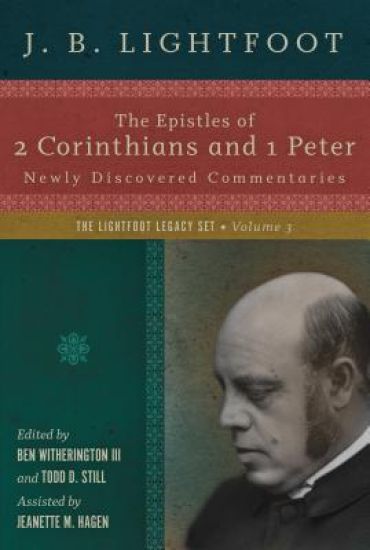
InterVarsity Press is proud to present The Lightfoot Legacy, a three-volume set of previously unpublished material from J. B. Lightfoot, one of the great biblical scholars of the modern era. In the spring of 2013, Ben Witherington III discovered hundreds of pages of biblical commentary by Lightfoot in the Durham Cathedral Library. While incomplete, these commentaries represent a goldmine for historians and biblical scholars, as well as for the many people who have found Lightfoot's work both informative and edifying, deeply learned and pastorally sensitive. In addition to the material on the Acts of the Apostles and the Gospel of St. John, published in volumes one and two, respectively, there were fragments on 2 Corinthians and 1 Peter. Lightfoot was well known as a Pauline expert given his commentaries on Galatians, Philippians, Colossians and Philemon, and fragments of his work on Romans, 1 Corinthians, Ephesians, and 1 and 2 Thessalonians were published posthumously. It is therefore a delight to have his notes on 2 Corinthians available for the first time. Lightfoot was also interested in the life and work of Peter. The introduction to his commentary on 1 Peter provides insightful analysis of the chronology and context of the epistle. Lightfoot seeks to demonstrate that Peter knew Paul's work and that these two great apostles were in harmony regarding theology and ethics. Now complete, these three commentary volumes reveal a scholar well ahead of his time, one of the great minds of his or any generation.
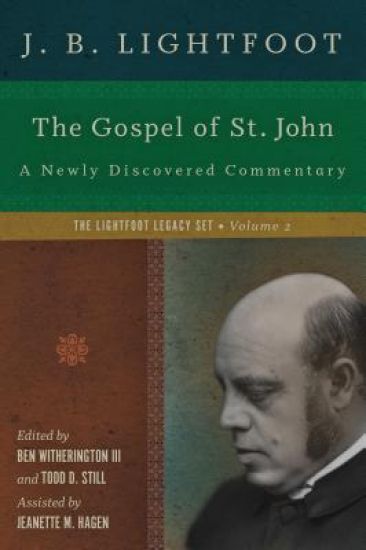
Preaching's Survey of Bibles and Bible Reference award InterVarsity Press is proud to present The Lightfoot Legacy, a three-volume set of previously unpublished material from J. B. Lightfoot, one of the great biblical scholars of the modern era. In the spring of 2013, Ben Witherington III discovered hundreds of pages of biblical commentary by Lightfoot in the Durham Cathedral Library. While incomplete, these commentaries represent a goldmine for historians and biblical scholars, as well as for the many people who have found Lightfoot's work both informative and edifying, deeply learned and pastorally sensitive. In addition to the material on the Acts of the Apostles, published in volume one, there were detailed notes on the Fourth Gospel, a text that Lightfoot loved and lectured on frequently. These pages contain his commentary notes for John 1-12. Lightfoot had long wanted to write a commentary on the Gospel of John, but he was unable to do so due to more pressing demands on his time, as well as his respect for his colleague B. F. Westcott. As a result, though he continued to compile notes on the text, they never saw the light of day until now. Included alongside the commentary are Lightfoot's long out-of-print essays on the historical reliability of the Fourth Gospel. Now on display for all to see, these commentary volumes reveal a scholar well ahead of his time, one of the great minds of his or any generation.
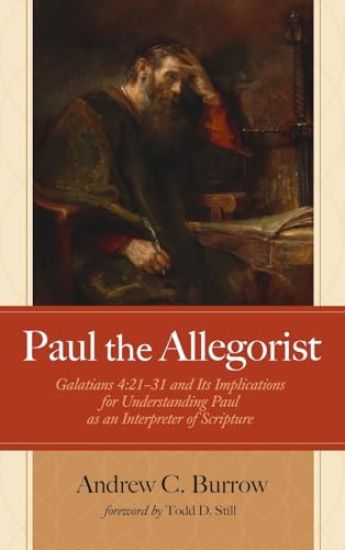
In a moment of great crisis, the apostle Paul gave new meanings to characters and events within Genesis 16-21 without completely denying or replacing their prior meanings. This interpretive practice, as found in Galatians 4:21-31, has troubled interpreters of Scripture since the fourth century. This book demonstrates that Paul's practice was allegorical and provides a more precise understanding of his practice by comparing Paul with three roughly contemporary interpreters of Scripture: interpreters who composed the sectarian texts of the Dead Sea Scrolls, the interpreter Philo, and the author of the Epistle of Barnabas. This book identifies Paul's interpretive work, explains how he used his allegorical practice to accomplish it, and reveals the implications of this practice for understanding him as an interpreter of Scripture. It helps resolve a debate ongoing for nearly two millennia by answering the questions, What does Paul do in Galatians 4:21-31, and why does it matter?