Kirjojen hintavertailu. Mukana 12 595 353 kirjaa ja 12 kauppaa.
Kirjailija
Todd D. Zakrajsek
Kirjat ja teokset yhdessä paikassa: 14 kirjaa, julkaisuja vuosilta 2017-2026, suosituimpien joukossa The Science of Learning Meets AI. Vertaile teosten hintoja ja tarkista saatavuus suomalaisista kirjakaupoista.
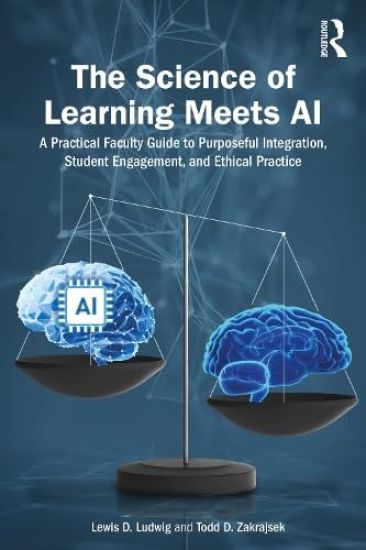
This research-grounded guide helps college educators use generative AI to strengthen, not sideline, what they already know about effective teaching. Drawing on decades of experience in faculty development and learning science, Ludwig and Zakrajsek propose a three-stage progression model—Adapt, Create, Embed—to help faculty from any discipline thoughtfully incorporate AI into their teaching. Rather than chasing the latest tech tools, this book focuses on how AI can deepen student learning by enhancing time-tested frameworks such as TILT, Universal Design for Learning, Bloom’s Taxonomy, and Backward Design, all summarized in a handy appendix. Each chapter includes classroom-tested examples, reflection prompts, and activities ready for individual exploration or group discussion. Whether you’re skeptical, curious, or cautiously optimistic, this book offers a clear, practical path to using AI as a partner, not a replacement, in ways that support students and reinvigorate teaching.
This research-grounded guide helps college educators use generative AI to strengthen, not sideline, what they already know about effective teaching. Drawing on decades of experience in faculty development and learning science, Ludwig and Zakrajsek propose a three-stage progression model—Adapt, Create, Embed—to help faculty from any discipline thoughtfully incorporate AI into their teaching. Rather than chasing the latest tech tools, this book focuses on how AI can deepen student learning by enhancing time-tested frameworks such as TILT, Universal Design for Learning, Bloom’s Taxonomy, and Backward Design, all summarized in a handy appendix. Each chapter includes classroom-tested examples, reflection prompts, and activities ready for individual exploration or group discussion. Whether you’re skeptical, curious, or cautiously optimistic, this book offers a clear, practical path to using AI as a partner, not a replacement, in ways that support students and reinvigorate teaching.
This streamlined adaption of the best-selling book The New Science of Learning: How to Learn in Harmony with Your Brain is a distillation of the most essential and immediately effective tips and strategies selected specifically to put college students on the path to success.In this primer, Zakrajsek masterfully translates complex findings from cognitive psychology and neuroscience into easy-to-understand concepts that can be used immediately to learn faster and retain information longer. Readers will come away with strategies that have been demonstrated throughout the world to improve learning, as well as a greatly enhanced understanding of how the learning process works. Taking just a few hours to read the material in this book and practice what has been assembled for learners at any level may well prove to be one of the best decisions a college student can make.Essentials of the New Science of Learning: The Power of Learning in Harmony With Your Brain is ideal for individual student use or as a powerful supplement to any course, in any course, across the college curriculum.
This streamlined adaption of the best-selling book The New Science of Learning: How to Learn in Harmony with Your Brain is a distillation of the most essential and immediately effective tips and strategies selected specifically to put college students on the path to success.In this primer, Zakrajsek masterfully translates complex findings from cognitive psychology and neuroscience into easy-to-understand concepts that can be used immediately to learn faster and retain information longer. Readers will come away with strategies that have been demonstrated throughout the world to improve learning, as well as a greatly enhanced understanding of how the learning process works. Taking just a few hours to read the material in this book and practice what has been assembled for learners at any level may well prove to be one of the best decisions a college student can make.Essentials of the New Science of Learning: The Power of Learning in Harmony With Your Brain is ideal for individual student use or as a powerful supplement to any course, in any course, across the college curriculum.
Classroom Assessment Techniques: Formative Feedback Tools for College and University Teachers A practical, research-based handbook for using assessment to improve learning. This completely revised and updated third edition of Classroom Assessment Techniques provides a research-based, engaging guide to assessing student learning where it matters most—at course and classroom levels. Informed by the latest international educational research and 30 years of classroom assessment practice, this practical handbook is designed for postsecondary teachers from all disciplines, faculty and academic developers, and assessment professionals. It offers field-tested guidance, tools, and advice for planning, designing, and implementing formative assessment in face-to-face, hybrid, and fully online classrooms, analyzing resulting data, and using that data to improve student learning. Classroom Assessment Techniques, 3rd Edition, is a practical, clearly written handbook for busy professionals. It contains a wealth of useful resources, including: 50-plus CATs (classroom assessment techniques) – flexible formative assessment tools easily adaptable for use in a wide range of disciplines and contexts.Case studies and examples illustrating how college and university faculty have applied these techniques to improve learningA new “Course Learning Outcomes Inventory” (CLOI)—a self-assessment tool for identifying and prioritizing the most relevant learning outcomes to assessThe original “Teaching Goals Inventory” (TGI) which offers an alternate, teaching-focused approach to setting assessment prioritiesMultiple ways to quickly find the most appropriate tool. CATs are indexed by discipline examples, Bloom’s Taxonomy, Biggs and Tang’s SOLO Taxonomy, the CLOI, and the TGIBrief chapters explaining what formative assessment is, how it can improve student learning, how to gather and provide formative feedback, how to link classroom assessment with broader/other assessment efforts, and how to collaborate with students and colleaguesEach CAT provides a brief, self-contained “recipe” including a description, steps for implementation, dos and don’ts, and relevant references
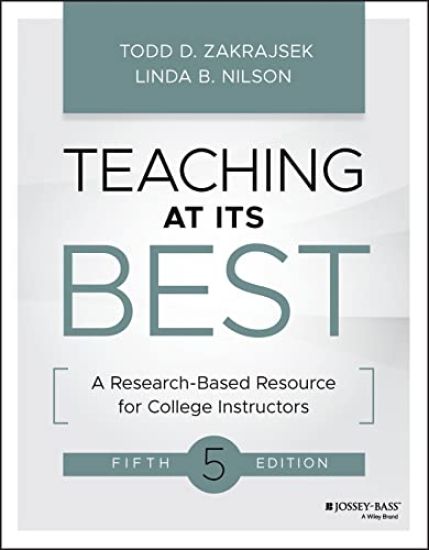
A complete, accessible, evidence-based guide to better teaching in higher education This higher education playbook provides a wealth of research-backed practices for nearly every aspect of effective teaching throughout higher education. It is filled with practical guidance and proven techniques designed to help you improve student learning, both face-to-face and online. Already a bestselling research-based toolbox written for college instructors of any experience level, Teaching at Its Best just got even better. What is new? A lot. For this updated 5th edition, Todd Zakrajsek joins Linda Nilson to create a powerful collaboration, drawing on nearly 90 combined years as internationally recognized faculty developers and faculty members. One of the most comprehensive books on effective teaching and learning, the 5th edition of Teaching at its Best brings new concepts, new research, and additional perspectives to teaching in higher education. In this book, you will find helpful advice on active learning, interactive lecturing, self-regulated learning, the science of learning, giving and receiving feedback, and so much more. Each chapter has been revised where necessary to reflect current higher education pedagogy and now includes two reflection questions and one application prompt to reflect on your teaching and stimulate peer discussions. Discover the value of course design and how to write effective learning outcomesLearn which educational technology is worthwhile and which is a waste of timeCreate a welcoming classroom environment that boosts motivationExplore detailed explanations of techniques, formats, activities, and exercises—both in person and online Enjoy reading about teaching strategies and educational concepts Whether used as a resource for new and seasoned faculty, a guide for teaching assistants, or a tool to facilitate faculty development, this research-based book is highly regarded across all institutional types.
While preserving the elements that have made the previous two editions so successful—such as chapters on sleep, exercise, memory and mindset—this third edition introduces students to wholly new aspects of brain function and how they impact learning; and furthermore, addresses the challenges of learning online.By introducing new concepts, strategies, and applications related to learning and memory that are based on current findings in cognitive, social, and motivational psychology, this text offers a richer and more complete picture of how brain science illuminates how we learn. Students assigned this book will be equipped to design effective learning plans, employ new strategies, recognize learning traps, discover ways to work effectively in groups, improve recall, and realize better academic performance through test-taking and paper-writing strategies.This new edition also addresses the concerns of all students—particularly those unfamiliar with the college setting and its expectations and assumptions—and offers strategies for success. In keeping with the preceding editions, this book introduces students to concepts, techniques, strategies, tips, and ideas to help them be academically stronger students, advance faster in their studies, and demonstrate what they have learned more effectively—in short, how anyone can learn to be a better learner by learning how to learn in harmony with their brain.The book remains compact and student-friendly, offers examples of practice, and includes discussion questions at the end of each chapter.
While preserving the elements that have made the previous two editions so successful—such as chapters on sleep, exercise, memory and mindset—this third edition introduces students to wholly new aspects of brain function and how they impact learning; and furthermore, addresses the challenges of learning online.By introducing new concepts, strategies, and applications related to learning and memory that are based on current findings in cognitive, social, and motivational psychology, this text offers a richer and more complete picture of how brain science illuminates how we learn. Students assigned this book will be equipped to design effective learning plans, employ new strategies, recognize learning traps, discover ways to work effectively in groups, improve recall, and realize better academic performance through test-taking and paper-writing strategies.This new edition also addresses the concerns of all students—particularly those unfamiliar with the college setting and its expectations and assumptions—and offers strategies for success. In keeping with the preceding editions, this book introduces students to concepts, techniques, strategies, tips, and ideas to help them be academically stronger students, advance faster in their studies, and demonstrate what they have learned more effectively—in short, how anyone can learn to be a better learner by learning how to learn in harmony with their brain.The book remains compact and student-friendly, offers examples of practice, and includes discussion questions at the end of each chapter.
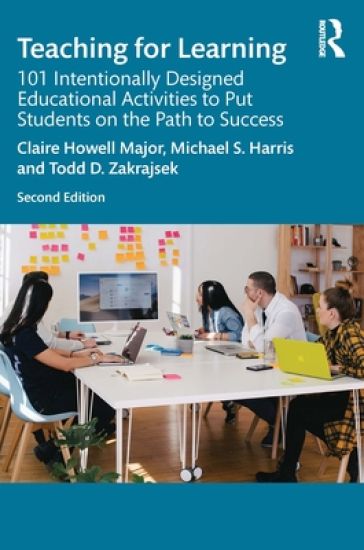
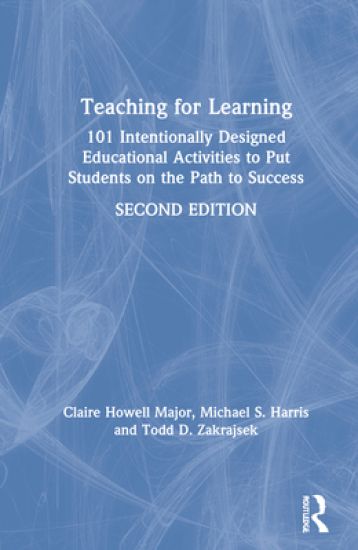
Teaching for Learning is a comprehensive, practical resource for instructors that highlights and synthesizes proven teaching methods and active learning strategies. Each of the 101 entries describes an approach and lists its essential features and elements, demonstrates how the approach may be used in various educational contexts, reviews findings from the research literature, and describes techniques to improve effectiveness. Fully revised and updated to reflect the latest research and innovations in the field, this second edition also features critical new content on adapting techniques for use in online courses.
Teaching for Learning is a comprehensive, practical resource for instructors that highlights and synthesizes proven teaching methods and active learning strategies. Each of the 101 entries describes an approach and lists its essential features and elements, demonstrates how the approach may be used in various educational contexts, reviews findings from the research literature, and describes techniques to improve effectiveness. Fully revised and updated to reflect the latest research and innovations in the field, this second edition also features critical new content on adapting techniques for use in online courses.
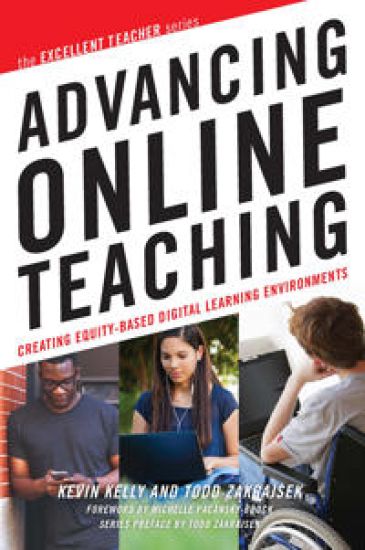
The goal of teaching online is fundamentally the same as teaching face-to-face: facilitating the learning of all students to the greatest extent possible.This book differs from other books on online teaching in that, in the process of offering guidance on course design and planning, developing outcomes and appropriate engaging activities, managing the workload and assessment, the authors pay explicit attention throughout to the distinct and diverse needs of students and offer effective strategies to accommodate them in a comprehensive and inclusive way by using the principles of Universal Design for Learning. By following those principles from the outset when planning a course, all students will benefit, and most particularly those whom the research shows have the greatest achievement gaps when taking online courses -- males, first generation and low income students, those from underrepresented minority groups, the academically underprepared, students with disabilities, and those with limited online access or lacking readiness for online learning. Beyond good planning and design, Kelly and Zakrajsek offer ideas for creating inclusive course environments and activities, such as using culturally appropriate content and making it accessible in multiple formats. They also share methods to foster faculty-learner interaction and increase personal connections with students, and among students, through group activities or learning communities, which are so critical to motivation and success.Faculty new to online teaching as well as more experienced readers will find a wealth of practical guidance on developing and honing both fully online and blended courses and, as importantly, a wealth of proven ideas to help the new generation of students with diverse needs to succeed.
The goal of teaching online is fundamentally the same as teaching face-to-face: facilitating the learning of all students to the greatest extent possible.This book differs from other books on online teaching in that, in the process of offering guidance on course design and planning, developing outcomes and appropriate engaging activities, managing the workload and assessment, the authors pay explicit attention throughout to the distinct and diverse needs of students and offer effective strategies to accommodate them in a comprehensive and inclusive way by using the principles of Universal Design for Learning. By following those principles from the outset when planning a course, all students will benefit, and most particularly those whom the research shows have the greatest achievement gaps when taking online courses -- males, first generation and low income students, those from underrepresented minority groups, the academically underprepared, students with disabilities, and those with limited online access or lacking readiness for online learning. Beyond good planning and design, Kelly and Zakrajsek offer ideas for creating inclusive course environments and activities, such as using culturally appropriate content and making it accessible in multiple formats. They also share methods to foster faculty-learner interaction and increase personal connections with students, and among students, through group activities or learning communities, which are so critical to motivation and success.Faculty new to online teaching as well as more experienced readers will find a wealth of practical guidance on developing and honing both fully online and blended courses and, as importantly, a wealth of proven ideas to help the new generation of students with diverse needs to succeed.
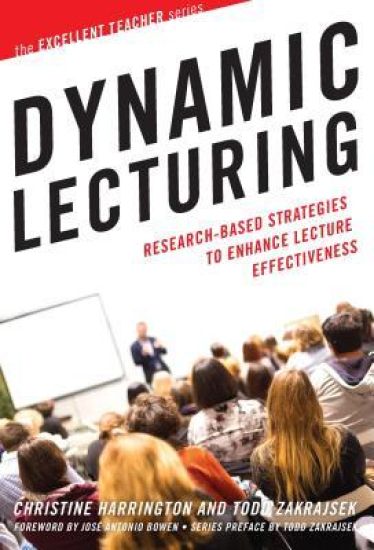
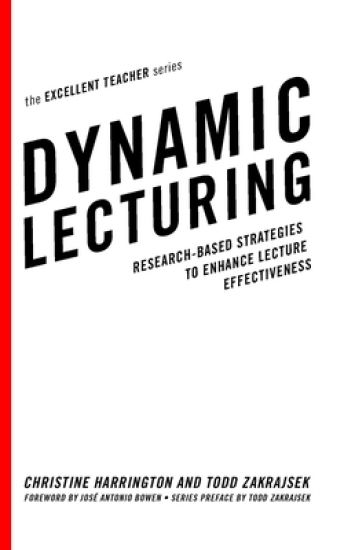
Is the lecture an outmoded teaching method that inhibits active learning or is it a potentially powerful tool that is an essential part of every teacher’s repertoire?This book presents up-to-date research on the different types of lecture, on what constitutes effective lecturing, and on the impact of lecturing when done appropriately and well. It fills the void in professional development resources on how to lecture, validating the practice when it’s aligned with the educational mission of creating engaged learning environments.Christine Harrington and Todd Zakrajsek demonstrate that, rather than lecture and active learning being mutually exclusive or either-or propositions, the effectiveness of the former can be greatly enhanced when combined with active learning techniques through what they define as dynamic lecturing; and provide context about the need to balance these approaches to meet the needs of students as they progress from novice to advanced learners.They present a range of strategies that enhance student learning during lectures. They open each chapter with the evidence behind each lecturing strategy they describe, and conclude with practical suggestions for quick application in the classroom. They offer readers the lecture planning and evaluation tools for reworking their lectures in ways that provide high-level engagement and achievement for their students. The opening section of the book explores the benefits of lecturing and describes the different modalities of lecture, with an assessment of the advantages and disadvantages of each. The second section focuses on educational strategies to enhance the lecture, including, among others, activating prior knowledge, emphasizing important points, effectively using multi-media, making concepts meaningful via examples, and the importance of retrieval practice. Each covers the underlying theory and research, and advice on how to align the engagement techniques with instructional goals. The book concludes with guidance on effective planning for lecturing and helping chairs, administrators, or peers engage in effective evaluation of the lecture.This is a dynamic resource for all faculty interested in revitalizing their teaching. The strategies are succinct, easy to incorporate into lectures and, done well, will have immediate impact and increase student mastery of course content.
Is the lecture an outmoded teaching method that inhibits active learning or is it a potentially powerful tool that is an essential part of every teacher’s repertoire?This book presents up-to-date research on the different types of lecture, on what constitutes effective lecturing, and on the impact of lecturing when done appropriately and well. It fills the void in professional development resources on how to lecture, validating the practice when it’s aligned with the educational mission of creating engaged learning environments.Christine Harrington and Todd Zakrajsek demonstrate that, rather than lecture and active learning being mutually exclusive or either-or propositions, the effectiveness of the former can be greatly enhanced when combined with active learning techniques through what they define as dynamic lecturing; and provide context about the need to balance these approaches to meet the needs of students as they progress from novice to advanced learners.They present a range of strategies that enhance student learning during lectures. They open each chapter with the evidence behind each lecturing strategy they describe, and conclude with practical suggestions for quick application in the classroom. They offer readers the lecture planning and evaluation tools for reworking their lectures in ways that provide high-level engagement and achievement for their students. The opening section of the book explores the benefits of lecturing and describes the different modalities of lecture, with an assessment of the advantages and disadvantages of each. The second section focuses on educational strategies to enhance the lecture, including, among others, activating prior knowledge, emphasizing important points, effectively using multi-media, making concepts meaningful via examples, and the importance of retrieval practice. Each covers the underlying theory and research, and advice on how to align the engagement techniques with instructional goals. The book concludes with guidance on effective planning for lecturing and helping chairs, administrators, or peers engage in effective evaluation of the lecture.This is a dynamic resource for all faculty interested in revitalizing their teaching. The strategies are succinct, easy to incorporate into lectures and, done well, will have immediate impact and increase student mastery of course content.