Kirjojen hintavertailu. Mukana 12 595 353 kirjaa ja 12 kauppaa.

Kirjailija

Todd Gitlin

Kirjat ja teokset yhdessä paikassa: 16 kirjaa, julkaisuja vuosilta 1994-2022, suosituimpien joukossa The Opposition. Vertaile teosten hintoja ja tarkista saatavuus suomalaisista kirjakaupoista.

16 kirjaa

Kirjojen julkaisuhaarukka 1994-2022.

The Opposition

The Opposition

Todd Gitlin

Guernica Editions,Canada
2022
pokkari
On civil rights and America's 1960s New Left movement. Set during America's 1960s New Left movement, The Opposition tells the story of twenty-something young men and women linked by a fierce desire to change the world who become involved in the civil rights and anti-war movements, when under the pressure of Vietnam, and America, unraveling, their web of passion and pain reaches a breaking point. Four women and four men meet in a Midwestern college town in 1963. As racist violence surges in the Deep South, they are seized by the civil rights movement. They all take part in demonstrations; Melissa, who is black, leaves to help voter registration in Mississippi, and several decide to organize in a poor white community in Cleveland. One of the women, Sally, has an illegal abortion. As the Vietnam war accelerates and things go awry with community organizing, some of the group get involved in antiwar projects, and another of the women, Valerie, goes to Mexico to study art. Matt, the son of a pro-war minister, is summoned by his draft board, and has a powerful drug experience on his way into draft resistance. The group rendezvous in Chicago during the Democratic Convention of August 1968 and the police do not take kindly to them. Passions flair and arguments erupt amid street fights. One of the activists, Kurt, reconsiders confrontations and decides to work with a liberal Congressman to lobby for legislation to end the war. Ronnie, a radical filmmaker, and his lover, Marcia, the daughter of Holocaust survivors, get close to the just-founded Weathermen. The novel moves through these eight lives to a tragic conclusion.
The Battle for People's Park, Berkeley 1969

The Battle for People's Park, Berkeley 1969

Tom Dalzell; Todd Gitlin; Steve Wasserman

Heyday Books
2019
sidottu
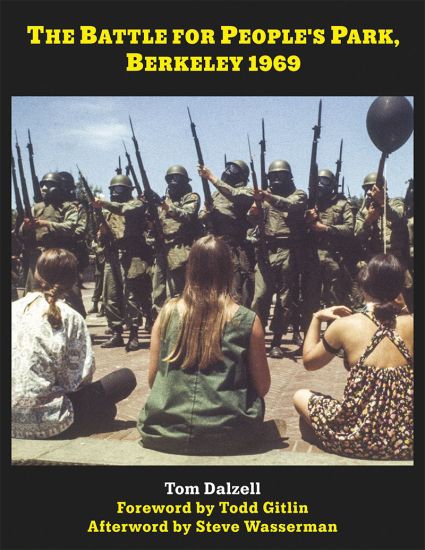
“Resplendent.... A masterwork of history.”—Ron Jacobs, CounterpunchIn eyewitness testimonies and hundreds of remarkable photographs, The Battle for People's Park, Berkeley 1969 commemorates the fiftieth anniversary of one of the most searing conflicts that closed out the tumultuous 1960s: the Battle for People's Park. In April 1969, a few Berkeley activists planted the first tree on a University of California-owned, abandoned city block on Telegraph Avenue. Hundreds of people from all over the city helped build the park as an expression of a politics of joy. The University was appalled, and warned that unauthorized use of the land would not be tolerated; and on May 15, which would soon be known as Bloody Thursday, a violent struggle erupted, involving thousands of people. Hundreds were arrested, martial law was declared, and the National Guard was ordered by then-Governor Ronald Reagan to crush the uprising and to occupy the entire city. The police fired shotguns against unarmed students. A military helicopter gassed the campus indiscriminately, causing schoolchildren miles away to vomit. One man died from his wounds. Another was blinded. The vicious overreaction by Reagan helped catapult him into national prominence. Fifty years on, the question still lingers: Who owns the Park?
Inside Prime Time

Inside Prime Time

Todd Gitlin

Routledge
2017
sidottu
Prime time: those precious few hours every night when the three major television networks garner millions of dollars while tens of millions of Americans tune in. Inside Prime Time is a classic study of the workings of the Hollywood television industry, newly available with an updated introduction. Inside Prime Time takes us behind the scenes to reveal how prime-time shows get on the air, stay on the air, and are shaped by the political and cultural climate of their times. It provides an ethnography of the world of American commercial television, an analysis of that world's unwritten rules, and the most extensive study of the industry ever made.
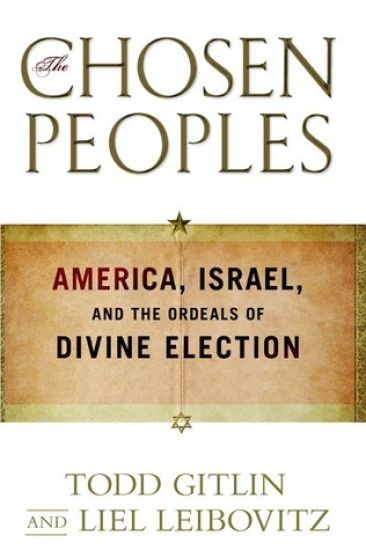
Chosen Peoples: America, Israel, and the Ordeals of Divine Election
The Chosen Peoples reveals the fascinating relationship between America and Israel through their shared conviction of divine destiny that binds them through history, hope, and conflict. Americans and Israelis have often thought that their nations were chosen, in perpetuity, to do God's work. This belief in divine election is a potent, living force, one that has guided and shaped both peoples and nations throughout their history and continues to do so to this day. Through great adversity and despite serious challenges, Americans and Jews, leaders and followers, have repeatedly faced the world fortified by a sense that their nation has a providential destiny. As Todd Gitlin and Liel Leibovitz argue in this original and provocative book, what unites the two allies in a "special friendship" is less common strategic interests than this deep-seated and lasting theological belief that they were chosen by God. The United States and Israel each has understood itself as a nation placed on earth to deliver a singular message of enlightenment to a benighted world. Each has stumbled through history wrestling with this strange concept of chosenness, trying both to grasp the meaning of divine election and to bear the burden it placed them under. It was this idea that provided an indispensable justification when the Americans made a revolution against Britain, went to war with and expelled the Indians, expanded westward, built an overseas empire, and most recently waged war in Iraq. The equivalent idea gave rise to the Jewish people in the first place, sustained them in exodus and exile, and later animated the Zionist movement, inspiring the Israelis to vanquish their enemies and conquer the West Bank and the Gaza Strip. Everywhere you look in American and Israeli history, the idea of chosenness is there. The Chosen Peoples delivers a bold new take on both nations' histories. It shows how deeply the idea of chosenness has affected not only their enthusiasts but also their antagonists. It digs deeply beneath the superficialities of headlines, the details of negotiations, the excuses and justifications that keep cropping up for both nations' successes and failures. It shows how deeply ingrained is the idea of a chosen people in both nations' histories--and yet how complicated that idea really is. And it offers interpretations of chosenness that both nations dearly need in confronting their present-day quandaries. Weaving together history, theology, and politics, The Chosen Peoples vividly retells the dramatic story of two nations bound together by a wild and sacred idea, takes unorthodox perspectives on some of our time's most searing conflicts, and offers an unexpected conclusion: only by taking the idea of chosenness seriously, wrestling with its meaning, and assuming its responsibilities can both nations thrive.
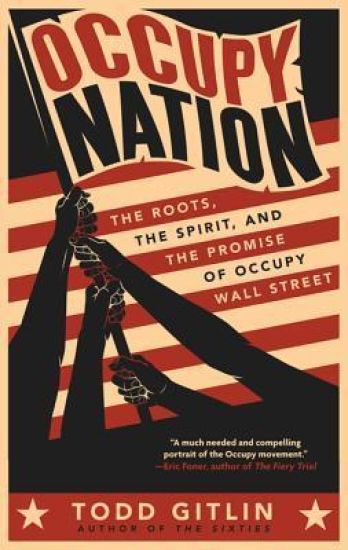
Occupy Nation

Occupy Nation

Todd Gitlin

It Books
2012
nidottu
Occupy Wall Street is somewhere between a moment and a movement. Moment or movement, it's the fastest growing phenomenon on the left in decades. In three weeks, Occupy traversed a distance that took three years during the movement against the Vietnam war - from incredulity to trivialization to respect and popularity. It has changed the national debate with its We are the 99 percent slogan, which garnered near instant support throughout the country. In the course of a few weeks of human events, Occupy whipped up an incandescent compound of joy, anger, hope, and resolve - and most importantly, the promise of truly changing the political map. Yet despite its widespread appeal, Occupy Wallstreet has been poorly understood - on both the left and the right - by journalists, pundits, politicians, and everyday Americans alike. With "Occupy Nation", Todd Gitlin explores the origins, the spirit, the uniqueness and predecessors, the inner tensions, and the outlooks of the OWS movement. Providing both a unique interpretation of where the movement has come from while teasing out the significant role it's likely to play in political culture over the coming years, "Occupy Nation" is the book for anyone looking to understand the revolution playing out before their eyes.
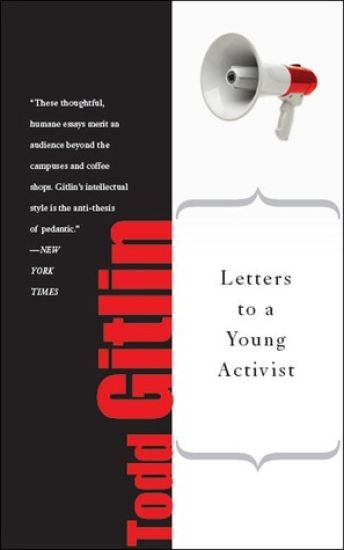
Letters to a Young Activist

Letters to a Young Activist

Todd Gitlin

Basic Books
2012
pokkari
"Be original. See what happens." So Todd Gitlin advises the young mind burning to take action to right the wrongs of the world but also looking for bearings, understanding, direction, and practical examples. In Letters to a Young Activist , Gitlin looks back at his eventful life, recalling his experience as president of the formidable Students for a Democratic Society in the'60s, contemplating the spirit of activism, and arriving at some principles of action to guide the passion and energy of those wishing to do good. Through a series of letters, he imparts to a new generation of radicals and activists the passion he felt as an angry young man and the wisdom he has attained as a mature political writer, teacher, and father. Gitlin considers the three complementary motives of duty, love, and adventure, reflects on the changing nature of idealism, and shows how righteous action requires realistic as well as idealistic thinking. And he looks forward to an uncertain future that is nevertheless full of possibility, a future where patriotism and intelligent skepticism are not mutually exclusive. With compassion and hard-won insight, Gitlin invites the young activist to enter imaginatively into some of the dilemmas, moral and practical, of being a modern citizen- the dilemmas that affect not only the problems of what to think but also the problems of what to love and how to live.
Undying

Undying

Todd Gitlin

Counterpoint LLC
2011
nidottu
November 2004: George W. Bush is re-elected. Five days later, Alan Meister, a New York professor of philosophy, is diagnosed with lymphoma--not that he can prove the two are connected. While coping with the rigors of chemotherapy, Alan begins work on a long-postponed book titled The Health of a Sick Man, arguing that the core of Friedrich Nietzsche's philosophical thought was a decades-long attempt to cope with his lifelong incapacities--his blinding headaches, upset stomach, weak vision, and all-around frailty, not least his vexed relations with women. As Alan's treatment proceeds, he finds relief by imagining Nietzsche not as a historical figure, but as a character in his daily life, a reminder that his own heart continues to beat. Rooted in the author's personal experience with lymphoma, this novel is a compound of reminiscences, aphorisms, anecdotes, and encounters: with Alan's errant daughter Natasha, who has returned home to help care for him; with mortal friends; with a mysterious hospital roommate; with students; with contemporary life as it reaches him through the newspapers and his readings. Steady, spare, and often bracingly funny, Undying cries out in a robust voice: I am.
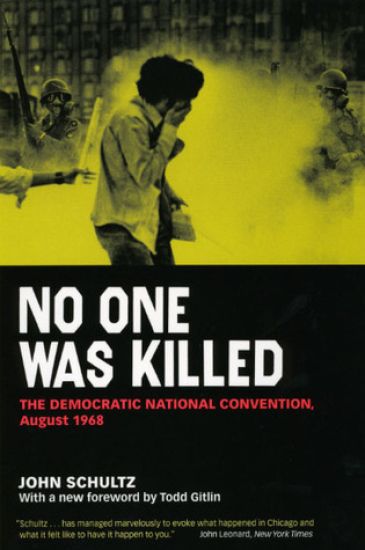
No One Was Killed

No One Was Killed

John Schultz; Todd Gitlin

University of Chicago Press
2009
nidottu
While other writers contemplated the events of the 1968 Chicago riots from the safety of their hotel rooms, John Schultz was in the city streets, being threatened by police, choking on tear gas, and listening to all the rage, fear, and confusion around him. The result, "No One Was Killed", is his account of the contradictions and chaos of convention week, the adrenaline, the sense of drama and history, and how the mainstream press was getting it all wrong.
The Bulldozer and the Big Tent: Blind Republicans, Lame Democrats, and the Recovery of American Ideals
This book, by one of America's most intelligent and decent political writers, tells liberals how the conservative movement rose and fell, and how they could emulate its successes while avoiding its failures.--George Packer, author of Blood of the Liberals and The Assassins' Gate "No one is better than Todd Gitlin at describing the crucial dynamic through which movements gain or lose political power. Justly celebrated for his seminal work on such dynamics during the 1960s, Gitlin now explains everything that's happened since, with passion and wisdom--and happily, because of Bushism's collapse, legitimate optimism about the future."--Michael Tomasky, Editor, Guardian America "An impassioned yet realistic plea for Democrats and liberals to become more serious about politics. They would do well to follow his advice."--Alan Wolfe, Director, Boisi Center for Religion and American Public Life, Boston College "A brilliant and indispensable book. Gitlin convincingly urges liberals to take seriously the greater difficulty the Democrats have forging cohesion among identity-based groups over the Republicans persuading the less diverse Republican base to bury disagreements in the drive for victory. Gitlin argues that Democrats will have to bite the bullet and unite under a big tent. It's a hard lesson for ardent newcomers to the movement to swallow. Gitlin is dead right."--Thomas B. Edsall, Special Correspondent, The New Republic "This is an indispensable book by one of our most gifted public intellectuals. Todd Gitlin explains--with splendid scholarship, reporting, and wit--how the Bush machine debased our political life and how progressives, in all their variety, are struggling to build a new majority. It is the best guide we have to America's recent past and its possible future."--Michael Kazin, author of A Godly Hero: The Life of William Jennings Bryan and Professor of History, Georgetown University
Media Unlimited: How the Torrent of Images and Sounds Overwhelms Our Lives
Both a startling analysis and a charged polemic, this revised edition of Media Unlimited: How the Torrent of Images and Sounds Overwhelms Our Lives reveals the unending stream of manufactured images and sounds as a defining feature of our civilization and a perverse culmination of Western hopes for freedom. With an afterword by the author. In this original look at our electronically glutted, speed-addicted world, sociology professor and cultural historian Todd Gitlin evokes a reality of relentless sensation, instant transition, and nonstop stimulus, which he argues is anything but progress. He shows how all media, all the time fuels celebrity worship, paranoia, and irony, and how attempts to ward off the onrush become occasion for yet more media. Far from bringing about a "new information age," Gitlin argues, the digital torrent has fostered a society of disposable emotions and casual commitments, and threatens to make democracy a sideshow. "A balanced yet biting critique . . . Gitlin is a savvy guide to our increasingly kinetic times."--San Francisco Chronicle
The Intellectuals and the Flag

The Intellectuals and the Flag

Todd Gitlin

Columbia University Press
2007
pokkari
"The tragedy of the left is that, having achieved an unprecedented victory in helping stop an appalling war, it then proceeded to commit suicide." So writes Todd Gitlin about the aftermath of the Vietnam War in this collection of writings that calls upon intellectuals on the left to once again engage American public life and resist the trappings of knee-jerk negativism, intellectual fads, and political orthodoxy. Gitlin argues for a renewed sense of patriotism based on the ideals of sacrifice, tough-minded criticism, and a willingness to look anew at the global role of the United States in the aftermath of 9/11. Merely criticizing and resisting the Bush administration will not do-the left must also imagine and propose an America reformed. Where then can the left turn? Gitlin celebrates the work of three prominent postwar intellectuals: David Riesman, C. Wright Mills, and Irving Howe. Their ambitious, assertive, and clearly written works serve as models for an intellectual engagement that forcefully addresses social issues and remains affirmative and comprehensive. Sharing many of the qualities of these thinkers' works, Todd Gitlin's blunt, frank analysis of the current state of the left and his willingness to challenge orthodoxies pave the way for a revival in leftist thought and a new liberal patriotism.
The Intellectuals and the Flag

The Intellectuals and the Flag

Todd Gitlin

Columbia University Press
2005
sidottu
"The tragedy of the left is that, having achieved an unprecedented victory in helping stop an appalling war, it then proceeded to commit suicide." So writes Todd Gitlin about the aftermath of the Vietnam War in this collection of writings that calls upon intellectuals on the left to once again engage American public life and resist the trappings of knee-jerk negativism, intellectual fads, and political orthodoxy. Gitlin argues for a renewed sense of patriotism based on the ideals of sacrifice, tough-minded criticism, and a willingness to look anew at the global role of the United States in the aftermath of 9/11. Merely criticizing and resisting the Bush administration will not do-the left must also imagine and propose an America reformed. Where then can the left turn? Gitlin celebrates the work of three prominent postwar intellectuals: David Riesman, C. Wright Mills, and Irving Howe. Their ambitious, assertive, and clearly written works serve as models for an intellectual engagement that forcefully addresses social issues and remains affirmative and comprehensive. Sharing many of the qualities of these thinkers' works, Todd Gitlin's blunt, frank analysis of the current state of the left and his willingness to challenge orthodoxies pave the way for a revival in leftist thought and a new liberal patriotism.
The Whole World Is Watching

The Whole World Is Watching

Todd Gitlin

University of California Press
2003
pokkari
'The whole world is watching!' chanted the demonstrators in the Chicago streets in 1968, as the TV cameras beamed images of police cracking heads into homes everywhere. In this classic book, originally published in 1980, acclaimed media critic Todd Gitlin first scrutinizes major news coverage in the early days of the antiwar movement. Drawing on his own experiences (he was president of the Students for a Democratic Society in 1963-64) and on interviews with key activists and news reporters, he shows in detail how the media first ignore new political developments, then select and emphasize aspects of the story that treat movements as oddities. He then demonstrates how the media glare made leaders into celebrities and estranged them from their movement base; how it inflated the importance of revolutionary rhetoric, destabilizing the movement, then promoted 'moderate' alternatives - all the while spreading the antiwar message. Finally, Gitlin draws together a theory of news coverage as a form of anti-democratic social management - which he sees at work also in media treatment of the anti-nuclear and other later movements. Updated for 2003 with a new preface, "The Whole World Is Watching" is a subtle and sensitive book, true to the passions and ironic reversals of its subject, and filled with provocative insights that apply to the media's relationship with all activist movements.
Inside Prime Time

Inside Prime Time

Todd Gitlin

University of California Press
2000
pokkari
With a New Introduction Unsurpassed since its first publication, "Inside Prime Time" is the only book to take us behind the scenes to reveal how prime-time shows get on the air, stay on the air, and are shaped by the political and cultural climate of their times. Using more than 200 interviews with network executives, producers, writers, agents, and actors, as well as months of on-set investigation during the networks' more prosperous years, sociologist and critic Todd Gitlin takes us into a frantic world searching for hit shows. The result is both a lucid picture of the mechanics of prime time and a series of vivid stories of what succeeded or failed, and why.His analysis includes a blow-by-blow account of how the exceptional police series "Hill Street Blues" succeeded against all odds before eventually succumbing to formula itself. No one else has analyzed, as Gitlin has, the inside track that links executives and producers, or the efforts of worried advertisers, hopeful writers, and the lobbyists of the fundamentalist right to shape America's waking hours.In a new introduction, Gitlin describes the elements of the new television order, and argues that the proliferation of cable channels and the decline of the old networks have not fundamentally changed the business mentality that guides decisions about the entertainment that will fill Americans' leisure time.
Sixties

Sixties

Todd Gitlin

Bantam Doubleday Dell Publishing Group
1999
nidottu
Say "the Sixties" and the images start coming, images of a time when all authority was defied and millions of young Americans thought they could change the world--either through music, drugs, and universal love or by "putting their bodies on the line" against injustice and war.Todd Gitlin, the highly regarded writer, media critic, and professor of sociology at the University of California, Berkeley, has written an authoritative and compelling account of this supercharged decade--a decade he helped shape as an early president of Students for a Democratic Society (SDS) and an organizer of the first national demonstration against the Vietnam war. Part critical history, part personal memoir, part celebration, and part meditation, this critically acclaimed work resurrects a generation on all its glory and tragedy.
Inside Prime Time

Inside Prime Time

Todd Gitlin

Routledge
1994
nidottu
Prime time: those precious few hours every night when the three major television networks garner millions of dollars while tens of millions of Americans tune in. Inside Prime Time is a classic study of the workings of the Hollywood television industry, newly available with an updated introduction. Inside Prime Time takes us behind the scenes to reveal how prime-time shows get on the air, stay on the air, and are shaped by the political and cultural climate of their times. It provides an ethnography of the world of American commercial television, an analysis of that world's unwritten rules, and the most extensive study of the industry ever made.