Kirjojen hintavertailu. Mukana 12 595 353 kirjaa ja 12 kauppaa.

Kirjailija

Todd May

Kirjat ja teokset yhdessä paikassa: 31 kirjaa, julkaisuja vuosilta 1993-2025, suosituimpien joukossa Nonviolent Resistance. Vertaile teosten hintoja ja tarkista saatavuus suomalaisista kirjakaupoista.

31 kirjaa

Kirjojen julkaisuhaarukka 1993-2025.

Nonviolent Resistance

Nonviolent Resistance

Todd May

Polity Press
2015
sidottu
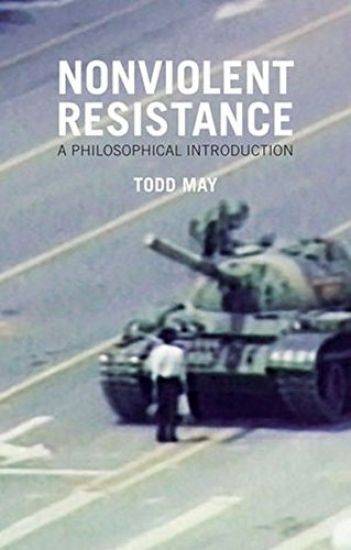
We see nonviolent resistance all over today’s world, from Egypt’s Tahrir Square to New York Occupy. Although we think of the last century as one marked by wars and violent conflict, in fact it was just as much a century of nonviolence as the achievements of Mohandas Gandhi and Martin Luther King, Jr. and peaceful protests like the one that removed Ferdinand Marcos from the Philippines clearly demonstrate. But what is nonviolence? What makes a campaign a nonviolent one, and how does it work? What values does it incorporate? In this unique study, Todd May, a philosopher who has himself participated in campaigns of nonviolent resistance, offers the first extended philosophical reflection on the particular and compelling political phenomenon of nonviolence. Drawing on both historical and contemporary examples, he examines the concept and objectives of nonviolence, and considers the different dynamics of nonviolence, from moral jiu-jitsu to nonviolent coercion. May goes on to explore the values that infuse nonviolent activity, especially the respect for dignity and the presupposition of equality, before taking a close-up look at the role of nonviolence in today’s world. Students of politics, peace studies, and philosophy, political activists, and those interested in the shape of current politics will find this book an invaluable source for understanding one of the most prevalent, but least reflected upon, political approaches of our world.
Nonviolent Resistance

Nonviolent Resistance

Todd May

Polity Press
2015
nidottu
We see nonviolent resistance all over today’s world, from Egypt’s Tahrir Square to New York Occupy. Although we think of the last century as one marked by wars and violent conflict, in fact it was just as much a century of nonviolence as the achievements of Mohandas Gandhi and Martin Luther King, Jr. and peaceful protests like the one that removed Ferdinand Marcos from the Philippines clearly demonstrate. But what is nonviolence? What makes a campaign a nonviolent one, and how does it work? What values does it incorporate? In this unique study, Todd May, a philosopher who has himself participated in campaigns of nonviolent resistance, offers the first extended philosophical reflection on the particular and compelling political phenomenon of nonviolence. Drawing on both historical and contemporary examples, he examines the concept and objectives of nonviolence, and considers the different dynamics of nonviolence, from moral jiu-jitsu to nonviolent coercion. May goes on to explore the values that infuse nonviolent activity, especially the respect for dignity and the presupposition of equality, before taking a close-up look at the role of nonviolence in today’s world. Students of politics, peace studies, and philosophy, political activists, and those interested in the shape of current politics will find this book an invaluable source for understanding one of the most prevalent, but least reflected upon, political approaches of our world.
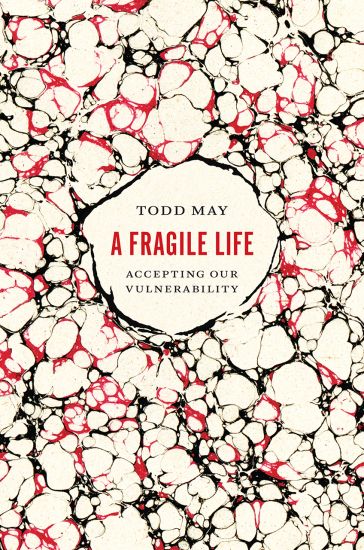
A Fragile Life

A Fragile Life

Todd May

THE UNIVERSITY OF CHICAGO PRESS
2025
nidottu
Offering a guide on how to positively engage suffering, Todd May ultimately lays out a new way of thinking about how we exist in the world, one that reassures us that our suffering, rather than a failure of physical or psychological resilience, is a powerful and essential part of life itself It is perhaps our noblest cause, and certainly one of our oldest: to end suffering. Think of the Buddha, Chuang Tzu, or Marcus Aurelius: stoically composed figures impervious to the torments of the wider world, living their lives in complete serenity—and teaching us how to do the same. After all, isn’t a life free from suffering the ideal? Isn’t it what so many of us seek? Absolutely not, argues Todd May in this provocative but compassionate book. In a moving examination of life and the trials that beset it, he shows that our fragility, our ability to suffer, is actually one of the most important aspects of our humanity. May starts with a simple but hard truth: suffering is inevitable. At the most basic level, we suffer physically—a sprained ankle or a bad back. But we also suffer insults and indifference. We suffer from overburdened schedules and unforeseen circumstances, from moral dilemmas and emotional heartaches. Even just thinking about our own mortality—the fact that we only live one life—can lead us to tremendous suffering. No wonder philosophies such as Buddhism, Taosim, Stoicism, and even Epicureanism—all of which counsel us to rise above these plights—have had appeal over the centuries. May highlights the tremendous value of these philosophies and the ways they can guide us toward better lives, but he also exposes a major drawback to their tenets: such invulnerability is too emotionally disengaged from the world, leading us to place too great a distance between ourselves and our experience. Rather than seeking absolute immunity, he argues most of us just want to hurt less and learn how to embrace and accept what suffering we do endure in a meaningful way.
Should We Go Extinct?

Should We Go Extinct?

Todd May

RANDOM HOUSE USA INC
2024
sidottu
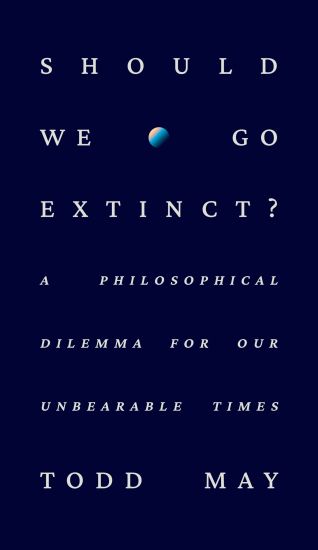
Philosophical advisor to the hit NBC sitcom The Good Place contemplates the future of humanity--whether we should bring new humans into the world, or if the world would be better without us These days it's harder than ever to read a paper, watch TV, or even just sit at home looking out the window without contemplating the title question of philosopher Todd May's book: Should We Go Extinct? We live in an age characterized by worries about human extinction, particularly in light of the environmental changes wrought by the climate crisis. Discussion of our possible demise appears in newspapers and magazines around the country as well as on social media and at dinner tables. However, we have yet to confront directly the ultimate question of whether we should still be here in the first place. Now, more than ever, many people wonder whether we should bring more human beings into the world when it seems increasingly clear that not only do we face bleak prospects as a species but also that we seem powerless to rein in the damage our existence causes the Earth and those we share it with. In Should We Go Extinct? May reasons both for and against further procreation. He discusses the value that only humans can bring to the world and to one another as well as the goods, like art and music, that would be lost were we no longer to be here. On the other side of the ledger, he details the suffering we cause to nature and the non-human world. May considers the prospects and the complexities involved with such changes as an end to factory farming, curbing scientific testing of animals, reducing the human population, and seeking to develop empathy with our fellow creatures. In this brief but important book, May asks an essential question: How do we value what human beings add to the world against the harm and pain we cause each other and other living creatures? With sensitivity and wit, he offers a framework for an approach to the future that will make the book's title question feel less urgent--and more likely to elicit a humane response.
Care

Care

Todd May

AGENDA PUBLISHING
2023
nidottu
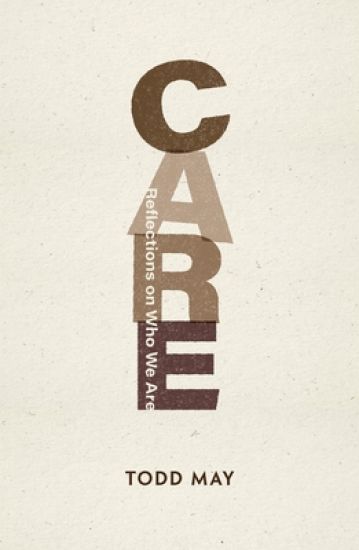
Caring is a central aspect of our being. Without it, we would just float along in the world, attaching ourselves superficially to one activity after another as they came up. Caring anchors us to the world and to each other. And yet, understanding what caring is and how it operates in our lives is a challenge. Todd May meets that challenge, canvassing various approaches to care and offering an overview of the key role it plays in our lives. With wit and insight, May addresses the difficulties between understanding care as a reflective attitude and as an emotion, between care and love, between caring for humans and for non-human animals, between self-care and concern for others, and between care and vulnerability.
Care

Care

Todd May

AGENDA PUBLISHING
2023
sidottu
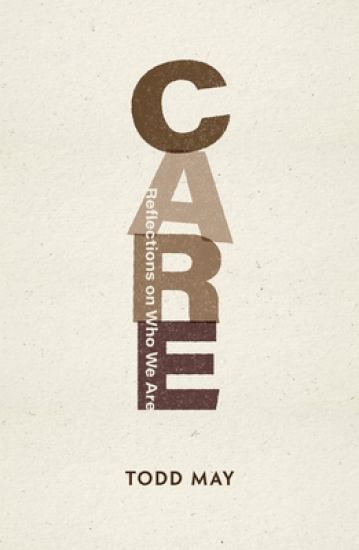
Caring is a central aspect of our being. Without it, we would just float along in the world, attaching ourselves superficially to one activity after another as they came up. Caring anchors us to the world and to each other. And yet, understanding what caring is and how it operates in our lives is a challenge. Todd May meets that challenge, canvassing various approaches to care and offering an overview of the key role it plays in our lives. With wit and insight, May addresses the difficulties between understanding care as a reflective attitude and as an emotion, between care and love, between caring for humans and for non-human animals, between self-care and concern for others, and between care and vulnerability.
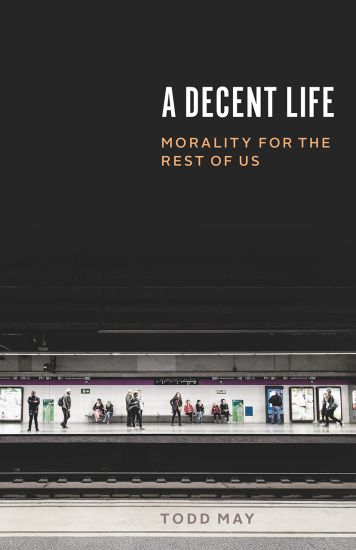
A Decent Life

A Decent Life

Todd May

University of Chicago Press
2021
nidottu
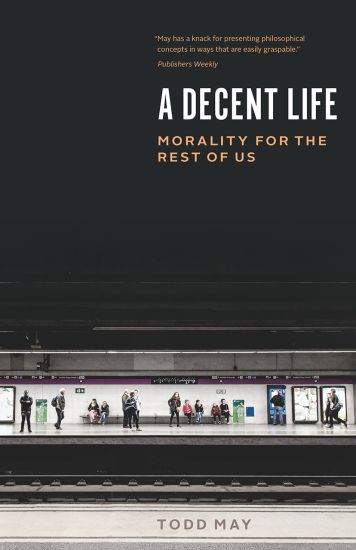
You’re probably never going to be a saint. Even so, let’s face it: you could be a better person. We all could. But what does that mean for you? In a world full of suffering and deprivation, it’s easy to despair—and it’s also easy to judge ourselves for not doing more. Even if we gave away everything we own and devoted ourselves to good works, it wouldn’t solve all the world’s problems. It would make them better, though. So is that what we have to do? Is anything less a moral failure? Can we lead a fundamentally decent life without taking such drastic steps? Todd May has answers. He’s not the sort of philosopher who tells us we have to be model citizens who display perfect ethics in every decision we make. He’s realistic: he understands that living up to ideals is a constant struggle. In A Decent Life, May leads readers through the traditional philosophical bases of a number of arguments about what ethics asks of us, then he develops a more reasonable and achievable way of thinking about them, one that shows us how we can use philosophical insights to participate in the complicated world around us. He explores how we should approach the many relationships in our lives—with friends, family, animals, people in need—through the use of a more forgiving, if no less fundamentally serious, moral compass. With humor, insight, and a lively and accessible style, May opens a discussion about how we can, realistically, lead the good life that we aspire to. A philosophy of goodness that leaves it all but unattainable is ultimately self-defeating. Instead, Todd May stands at the forefront of a new wave of philosophy that sensibly reframes our morals and redefines what it means to live a decent life.
Kenneth Lonergan

Kenneth Lonergan

Todd May

Bloomsbury Academic
2020
nidottu
Kenneth Lonergan’s three films—You Can Count on Me (2000), Margaret (2011), and Manchester by the Sea (2016)—are rife with philosophical complexities. They challenge simple philosophical approaches to central issues of human behaviour. In particular, they ask questions about how to cope with suffering that one cannot overcome, the role that self- deception plays in people’s lives and how to think about characters who do not embody simplistic moral ideas of virtue and vice. By philosophically engaging with these themes as they unfold in Lonergan’s films, we are then able to formulate a more nuanced answer to the questions they pose. Kenneth Lonergan: Philosophical Filmmaker will draw from Lonergan’s films and plays, along with the philosophical literature on the topics that they explore. The rich history of philosophical reflection surrounding these areas enables the reader to determine how the themes central to Lonergan’s work have combined to create a rich cinematic oeuvre.
Kenneth Lonergan

Kenneth Lonergan

Todd May

Bloomsbury Academic
2020
sidottu
Kenneth Lonergan’s three films—You Can Count on Me (2000), Margaret (2011), and Manchester by the Sea (2016)—are rife with philosophical complexities. They challenge simple philosophical approaches to central issues of human behaviour. In particular, they ask questions about how to cope with suffering that one cannot overcome, the role that self- deception plays in people’s lives and how to think about characters who do not embody simplistic moral ideas of virtue and vice. By philosophically engaging with these themes as they unfold in Lonergan’s films, we are then able to formulate a more nuanced answer to the questions they pose. Kenneth Lonergan: Philosophical Filmmaker will draw from Lonergan’s films and plays, along with the philosophical literature on the topics that they explore. The rich history of philosophical reflection surrounding these areas enables the reader to determine how the themes central to Lonergan’s work have combined to create a rich cinematic oeuvre.
A Decent Life

A Decent Life

Todd May

University of Chicago Press
2019
sidottu
You're probably never going to be a saint. Even so, let's face it: you could be a better person. We all could. But what does that mean for you? In a world full of suffering and deprivation, it's easy to despair--and it's also easy to judge ourselves for not doing more. Even if we gave away everything we own and devoted ourselves to good works, it wouldn't solve all the world's problems. It would make them better, though. So is that what we have to do? Is anything less a moral failure? Can we lead a fundamentally decent life without taking such drastic steps? Todd May has answers. He's not the sort of philosopher who tells us we have to be model citizens who display perfect ethics in every decision we make. He's realistic: he understands that living up to ideals is a constant struggle. In A Decent Life, May leads readers through the traditional philosophical bases of a number of arguments about what ethics asks of us, then he develops a more reasonable and achievable way of thinking about them, one that shows us how we can use philosophical insights to participate in the complicated world around us. He explores how we should approach the many relationships in our lives--with friends, family, animals, people in need--through the use of a more forgiving, if no less fundamentally serious, moral compass. With humor, insight, and a lively and accessible style, May opens a discussion about how we can, realistically, lead the good life that we aspire to. A philosophy of goodness that leaves it all but unattainable is ultimately self-defeating. Instead, Todd May stands at the forefront of a new wave of philosophy that sensibly reframes our morals and redefines what it means to live a decent life.
A Fragile Life

A Fragile Life

Todd May

University of Chicago Press
2017
sidottu
It is perhaps our noblest cause, and certainly one of our oldest: to end suffering. Think of the Buddha, Chuang Tzu, or Marcus Aurelius: stoically composed figures impervious to the torments of the wider world, living their lives in complete serenity and teaching us how to do the same. After all, isn't a life free from suffering the ideal? Isn't it what so many of us seek? Absolutely not, argues Todd May in this provocative but compassionate book. In a moving examination of life and the trials that beset it, he shows that our fragility, our ability to suffer, is actually one of the most important aspects of our humanity. May starts with a simple but hard truth: suffering is inevitable. At the most basic level, we suffer physically a sprained ankle or a bad back. But we also suffer insults and indifference. We suffer from overburdened schedules and unforeseen circumstances, from moral dilemmas and emotional heartaches. Even just thinking about our own mortality the fact that we only live one life can lead us to tremendous suffering. No wonder philosophies such as Buddhism, Taosim, Stoicism, and even Epicureanism all of which counsel us to rise above these plights have had appeal over the centuries. May highlights the tremendous value of these philosophies and the ways they can guide us toward better lives, but he also exposes a major drawback to their tenets: such invulnerability is too emotionally disengaged from the world, leading us to place too great a distance between ourselves and our experience. Rather than seeking absolute immunity, he argues most of us just want to hurt less and learn how to embrace and accept what suffering we do endure in a meaningful way. Offering a guide on how to positively engage suffering, May ultimately lays out a new way of thinking about how we exist in the world, one that reassures us that our suffering, rather than a failure of physical or psychological resilience, is a powerful and essential part of life itself.
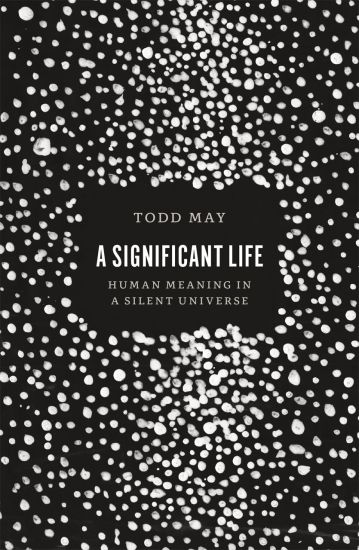
A Significant Life

A Significant Life

Todd May

University of Chicago Press
2016
nidottu
What makes for a good life, or a beautiful one, or, perhaps most important, a meaningful one? Throughout history most of us have looked to our faith, our relationships, or our deeds for the answer. But in A Significant Life, philosopher Todd May offers an exhilarating new way of thinking about these questions, one deeply attuned to life as it actually is: a work in progress, a journey and often a narrative. Offering moving accounts of his own life and memories alongside rich engagements with philosophers from Aristotle to Heidegger, he shows us where to find the significance of our lives: in the way we live them. May starts by looking at the fundamental fact that life unfolds over time, and as it does so, it begins to develop certain qualities, certain themes. Our lives can be marked by intensity, curiosity, perseverance, or many other qualities that become guiding narrative values. These values lend meanings to our lives that are distinct from but also interact with the universal values we are taught to cultivate, such as goodness or happiness. Offering a fascinating examination of a broad range of figures from music icon Jimi Hendrix to civil rights leader Fannie Lou Hamer, from cyclist Lance Armstrong to The Portrait of a Lady's Ralph Touchett to Claus von Stauffenberg, a German officer who tried to assassinate Hitler May shows that narrative values offer a rich variety of criteria by which to assess a life, specific to each of us and yet widely available. They offer us a way of reading ourselves, who we are, and who we might like to be. Clearly and eloquently written, A Significant Life is a recognition and a comfort, a celebration of the deeply human narrative impulse by which we make even if we don't realize it meaning for ourselves. It offers a refreshing way to think of an age-old question, of quite simply, what makes a life worth living.
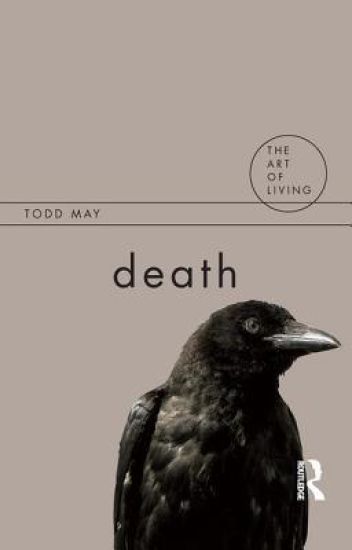
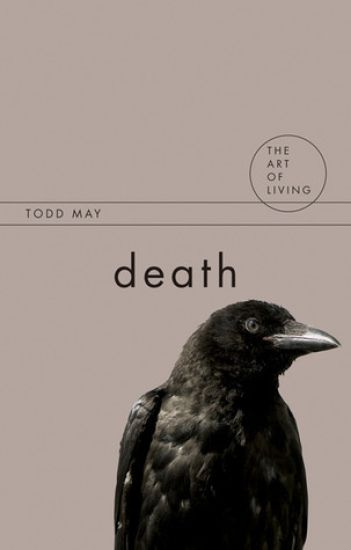
Death

Death

Todd May

Routledge
2016
sidottu
The fact that we will die, and that our death can come at any time, pervades the entirety of our living. There are many ways to think about and deal with death. Among those ways, however, a good number of them are attempts to escape its grip. In this book, Todd May seeks to confront death in its power. He considers the possibility that our mortal deaths are the end of us, and asks what this might mean for our living. What lessons can we draw from our mortality? And how might we live as creatures who die, and who know we are going to die?In answering these questions, May brings together two divergent perspectives on death. The first holds that death is not an evil, or at least that immortality would be far worse than dying. The second holds that death is indeed an evil, and that there is no escaping that fact. May shows that if we are to live with death, we need to hold these two perspectives together. Their convergence yields both a beauty and a tragedy to our living that are inextricably entwined.Drawing on the thoughts of many philosophers and writers - ancient and modern - as well as his own experience, May puts forward a particular view of how we might think about and, more importantly, live our lives in view of the inescapability of our dying. In the end, he argues, it is precisely the contingency of our lives that must be grasped and which must be folded into the hours or years that remain to each of us, so that we can live each moment as though it were at once a link to an uncertain future and yet perhaps the only link we have left.
Friendship in an Age of Economics

Friendship in an Age of Economics

Todd May

Lexington Books
2014
nidottu
We live in an age of economics. We are encouraged not only to think of our work but also of our lives in economic terms. In many of our practices, we are told that we are consumers and entrepreneurs. What has come to be called neoliberalism is not only a theory of market relations; it is a theory of human relations. Friendship in an Age of Economics both describes and confronts this new reality. It confronts it on some familiar terrain: that of friendship. Friendship, particularly close or deep friendship, resists categorization into economic terms. In a sustained investigation of friendship, this book shows how friendship offers an alternative to neoliberal relationships and can help lay the groundwork for resistance to it.
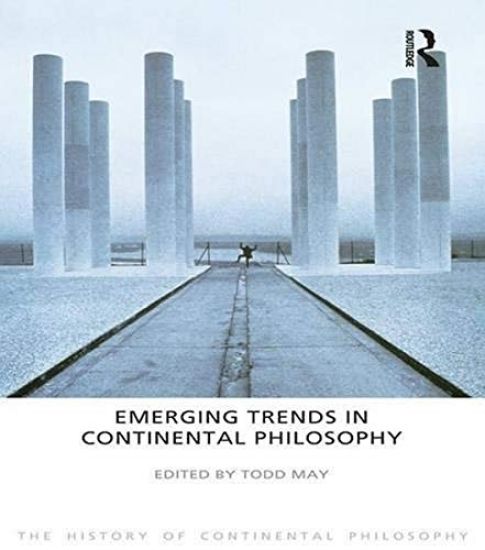
Emerging Trends in Continental Philosophy

Emerging Trends in Continental Philosophy

Todd May

Acumen Publishing Ltd
2013
sidottu
"Emerging Trends in Continental Philosophy" presents a comprehensive and accessible analysis of the most recent developments in European thought. From feminist thought to environmental philosophy to analytic themes in Continental philosophy to recent discussions of citizenship, "Emerging Trends" offers an overview of the currents animating contemporary Continental philosophy. The volume focuses on thematic developments rather than individual figures, allowing the reader to follow the threads that weave different thinkers together. Each essay is written by an expert in the area covered, displaying the passion of these experts for the fields they discuss without lapsing into jargon. The volume provides a broad map of the landscape of recent European thought as well as the latest thinking from leading scholars on key themes.
Emerging Trends in Continental Philosophy

Emerging Trends in Continental Philosophy

Todd May

Acumen Publishing Ltd
2013
nidottu
"Emerging Trends in Continental Philosophy" presents a comprehensive and accessible analysis of the most recent developments in European thought. From feminist thought to environmental philosophy to analytic themes in Continental philosophy to recent discussions of citizenship, "Emerging Trends" offers an overview of the currents animating contemporary Continental philosophy. The volume focuses on thematic developments rather than individual figures, allowing the reader to follow the threads that weave different thinkers together. Each essay is written by an expert in the area covered, displaying the passion of these experts for the fields they discuss without lapsing into jargon. The volume provides a broad map of the landscape of recent European thought as well as the latest thinking from leading scholars on key themes.
Friendship in an Age of Economics

Friendship in an Age of Economics

Todd May

Lexington Books
2012
sidottu
We live in an age of economics. We are encouraged not only to think of our work but also of our lives in economic terms. In many of our practices, we are told that we are consumers and entrepreneurs. What has come to be called neoliberalism is not only a theory of market relations; it is a theory of human relations. Friendship in an Age of Economics both describes and confronts this new reality. It confronts it on some familiar terrain: that of friendship. Friendship, particularly close or deep friendship, resists categorization into economic terms. In a sustained investigation of friendship, this book shows how friendship offers an alternative to neoliberal relationships and can help lay the groundwork for resistance to it.
Contemporary Political Movements and the Thought of Jacques Ranciere
In this book, Todd May shows how democratic progressive politics can happen and how it is happening in very different arenas. He takes an intensive look at a range of contemporary political movements and shows how, to one degree or another, they exemplify the political thought of Jacques Ranciere. May's easy, clear writing style means that no philosophical background is required. Following an essential overview of Ranciere's thought he considers the following groups: the Algerian refugee movement in Montreal for citizenship, the first Palestinian intifada, the politics of equality and identity politics in relation to the Zapatista movement, a local food co-op in South Carolina and an anarchist press in Oakland. Essentially this book shows how political theory and practice can enlighten one another and in an age of cynicism, fear and despair, Todd May suggests there is hope for the possibility of progressive democratic action. It will appeal to Ranciere students, scholars and political activists alike.
Death

Death

Todd May

Acumen Publishing Ltd
2009
nidottu
The fact that we will die, and that our death can come at any time, pervades the entirety of our living. There are many ways to think about and deal with death. Among those ways, however, a good number of them are attempts to escape its grip. In this book, Todd May seeks to confront death in its power. He considers the possibility that our mortal deaths are the end of us, and asks what this might mean for our living. What lessons can we draw from our mortality? And how might we live as creatures who die, and who know we are going to die?In answering these questions, May brings together two divergent perspectives on death. The first holds that death is not an evil, or at least that immortality would be far worse than dying. The second holds that death is indeed an evil, and that there is no escaping that fact. May shows that if we are to live with death, we need to hold these two perspectives together. Their convergence yields both a beauty and a tragedy to our living that are inextricably entwined.Drawing on the thoughts of many philosophers and writers - ancient and modern - as well as his own experience, May puts forward a particular view of how we might think about and, more importantly, live our lives in view of the inescapability of our dying. In the end, he argues, it is precisely the contingency of our lives that must be grasped and which must be folded into the hours or years that remain to each of us, so that we can live each moment as though it were at once a link to an uncertain future and yet perhaps the only link we have left.