Kirjojen hintavertailu. Mukana 12 502 989 kirjaa ja 12 kauppaa.

Kirjailija

Todd Meyers

Kirjat ja teokset yhdessä paikassa: 18 kirjaa, julkaisuja vuosilta 2012-2025, suosituimpien joukossa Farming Across Borders. Vertaile teosten hintoja ja tarkista saatavuus suomalaisista kirjakaupoista.

18 kirjaa

Kirjojen julkaisuhaarukka 2012-2025.

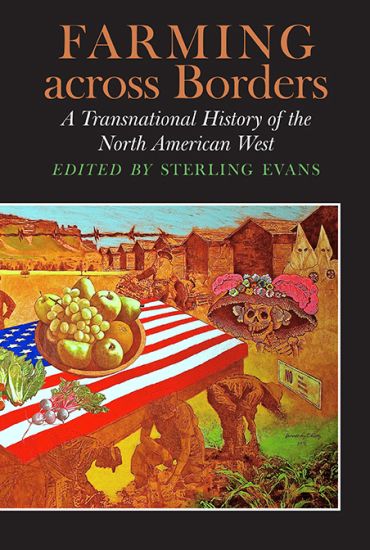
Farming Across Borders

Farming Across Borders

Timothy P. Bowman; Kristin Hoganson; Laura Hooton; Josh MacFadyen; Todd Meyers; Peter S Morris; Andrew Dunlop; Alicia Marion Dewey; John Weber; Sonia Hernandez; Rosa E Cobos; Matt Caire-Perez; Paige Raibmon; Jason McCollom; Thomas D Isern; Suzzanne Kelley; Anthony Carlson; Stephen Mumme; Tisa Anders

Texas A M University Press
2017
sidottu
Farming across Borders uses agricultural history to connect the regional experiences of the American West, northern Mexico, western Canada, and the North American side of the Pacific Rim, now writ large into a broad history of the North American West. Case studies of commodity production and distribution, trans-border agricultural labor, and environmental change unite to reveal new perspectives on a historiography traditionally limited to a regional approach.Sterling Evans has curated nineteen essays to explore the contours of “big” agricultural history. Crops and commodities discussed include wheat, cattle, citrus, pecans, chiles, tomatoes, sugar beets, hops, henequen, and more. Toiling over such crops, of course, were the people of the North American West, and as such, the contributing authors investigate the role of agricultural labor, from braceros and Hutterites to women working in the sorghum fields and countless other groups in between.As Evans concludes, “society as a whole (no matter in what country) often ignores the role of agriculture in the past and the present.” Farming across Borders takes an important step toward cultivating awareness and understanding of the agricultural, economic, and environmental connections that loom over the North American West regardless of lines on a map. In the words of one essay, “we are tied together . . . in a hundred different ways.”

Gone Gone

Gone Gone

Todd Meyers

DUKE UNIVERSITY PRESS
2025
pokkari
In Gone Gone, Todd Meyers reckons with grief in the face of overdose death and with the afterlives of loss created by the opioid crisis. Through conversations with friends, lovers, and family members of those who are gone, Meyers brings readers into an inquiry about lives shared, told through tenderness and tragedy. Meyers seeks to find methods to record and convey the many experiences of grief in ways that do not simply consign sorrow to the world of drugs and addiction. Blending prose, poetry, and ethnography, Gone Gone is a lucid and devastating record that reminds readers that the grief felt by those who lose ones they love to overdose is varied and untamable.
Gone Gone

Gone Gone

Todd Meyers

DUKE UNIVERSITY PRESS
2025
sidottu
In Gone Gone, Todd Meyers reckons with grief in the face of overdose death and with the afterlives of loss created by the opioid crisis. Through conversations with friends, lovers, and family members of those who are gone, Meyers brings readers into an inquiry about lives shared, told through tenderness and tragedy. Meyers seeks to find methods to record and convey the many experiences of grief in ways that do not simply consign sorrow to the world of drugs and addiction. Blending prose, poetry, and ethnography, Gone Gone is a lucid and devastating record that reminds readers that the grief felt by those who lose ones they love to overdose is varied and untamable.
All That Was not Her

All That Was not Her

Todd Meyers

Duke University Press
2022
pokkari
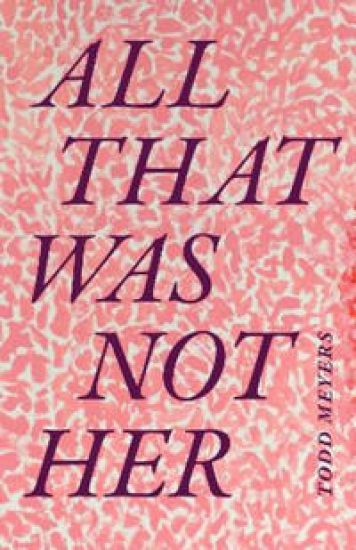
While studying caregiving and chronic illness in families living in situations of economic and social insecurity in Baltimore, anthropologist Todd Meyers met a woman named Beverly. In All That Was Not Her Meyers presents an intimate ethnographic portrait of Beverly, stitching together small moments they shared scattered over months and years and, following her death, into the present. He meditates on the possibilities of writing about someone who is gone-what should be represented, what experiences resist rendering, what ethical challenges exist when studying the lives of others. Meyers considers how chronic illness is bound up in the racialized and socioeconomic conditions of Beverly’s life and explores the stakes of the anthropologist’s engagement with one subject. Even as Meyers struggles to give Beverly the final word, he finds himself unmade alongside her. All That Was Not Her captures the complexity of personal relationships in the field and the difficulty of their ending.
All That Was not Her

All That Was not Her

Todd Meyers

Duke University Press
2022
sidottu
While studying caregiving and chronic illness in families living in situations of economic and social insecurity in Baltimore, anthropologist Todd Meyers met a woman named Beverly. In All That Was Not Her Meyers presents an intimate ethnographic portrait of Beverly, stitching together small moments they shared scattered over months and years and, following her death, into the present. He meditates on the possibilities of writing about someone who is gone-what should be represented, what experiences resist rendering, what ethical challenges exist when studying the lives of others. Meyers considers how chronic illness is bound up in the racialized and socioeconomic conditions of Beverly’s life and explores the stakes of the anthropologist’s engagement with one subject. Even as Meyers struggles to give Beverly the final word, he finds himself unmade alongside her. All That Was Not Her captures the complexity of personal relationships in the field and the difficulty of their ending.
Violence's Fabled Experiment: Kleine Edition 27

Violence's Fabled Experiment: Kleine Edition 27

Richard Baxstrom; Todd Meyers

Walther Konig Verlag
2018
nidottu
Here, Baxstrom and Meyers examine how violence and an unmarked, stubbornly persistent conception of "nature" weave into the fabric of the human in the recent work of three important filmmakers: Werner Herzog, Joshua Oppenheimer (particularly The Act of Killing and The Look of Silence) and Lucien Castaing-Taylor.
The Human Body in the Age of Catastrophe

The Human Body in the Age of Catastrophe

Stefanos Geroulanos; Todd Meyers

University of Chicago Press
2018
pokkari
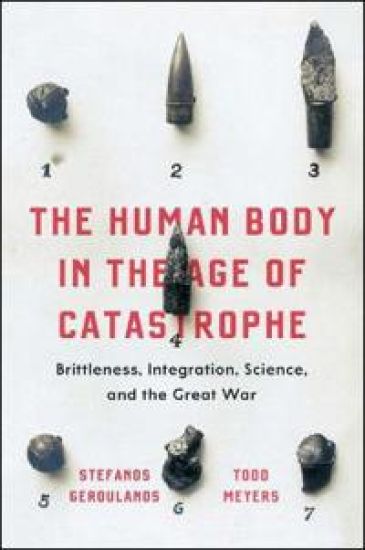
The injuries suffered by soldiers during WWI were as varied as they were brutal. How could the human body suffer and often absorb such disparate traumas? Why might the same wound lead one soldier to die but allow another to recover? In The Human Body in the Age of Catastrophe, Stefanos Geroulanos and Todd Meyers uncover a fascinating story of how medical scientists came to conceptualize the body as an integrated yet brittle whole. Responding to the harrowing experience of the Great War, the medical community sought conceptual frameworks to understand bodily shock, brain injury, and the wildly divergence between patients. Geroulanos and Meyers carefully trace how this emerging constellation of concepts became essential for thinking about integration, individuality, fragility, and collapse far beyond medicine: in fields as diverse as anthropology, political economy, psychoanalysis, and cybernetics. Moving effortlessly between the history of medicine and intellectual history, The Human Body in the Age of Catastrophe is an intriguing look into the conceptual underpinnings of the world the Great War ushered in.
The Human Body in the Age of Catastrophe

The Human Body in the Age of Catastrophe

Stefanos Geroulanos; Todd Meyers

University of Chicago Press
2018
sidottu
The injuries suffered by soldiers during WWI were as varied as they were brutal. How could the human body suffer and often absorb such disparate traumas? Why might the same wound lead one soldier to die but allow another to recover? In The Human Body in the Age of Catastrophe, Stefanos Geroulanos and Todd Meyers uncover a fascinating story of how medical scientists came to conceptualize the body as an integrated yet brittle whole. Responding to the harrowing experience of the Great War, the medical community sought conceptual frameworks to understand bodily shock, brain injury, and the wildly divergence between patients. Geroulanos and Meyers carefully trace how this emerging constellation of concepts became essential for thinking about integration, individuality, fragility, and collapse far beyond medicine: in fields as diverse as anthropology, political economy, psychoanalysis, and cybernetics. Moving effortlessly between the history of medicine and intellectual history, The Human Body in the Age of Catastrophe is an intriguing look into the conceptual underpinnings of the world the Great War ushered in.
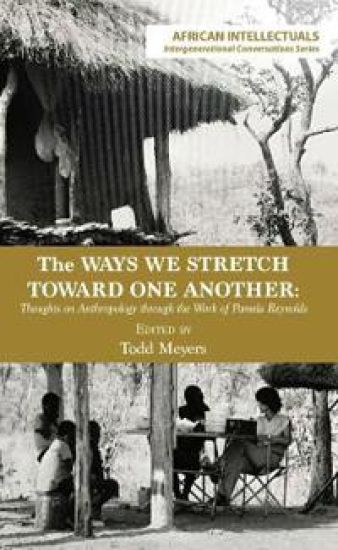
The Ways We Stretch Toward One Another
The Ways We Stretch Toward One Another is a collection of essays on the work of Pamela Reynolds. The essays take cues from Reynolds' decades-long contributions to the field of anthropology in different ways. The authors weave Reynolds' groundbreaking scholarship on the anthropology of childhood--of labour, of family, of resistance, justice, war and suffering--through the terms of their own work, in places and contexts that may at first appear quite distant from the villages of Zimbabwe and townships of South Africa that feature in Reynolds' ethnographies. The Ways We Stretch Toward One Another is about anthropologists stretching in thought and practice toward one another, between generations, toward the people encountered in the field, through worlds entered and past, and how, in turn, these worlds lean into our own. At the core of each essay is a question about how we learn, how we pass lessons on, how we assume the mantle of anthropology for understanding the contemporary world--something that often requires folding intellectual friendships into the tools of our practice. The Ways We Stretch Toward One Another demonstrates how a master anthropologist has come to shape the priorities of others, in terms that are both creative and aware.Contributors: Thomas Cousins, Stefanos Geroulanos, Todd Meyers, Pamela Reynolds, Fiona Ross, and Vaibhav Saria; and a Foreword by Francis B. Nyamnjoh
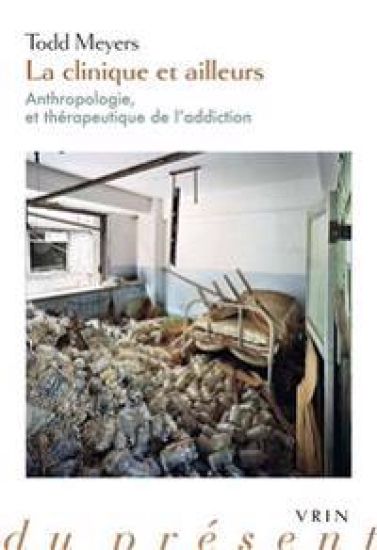
La Clinique Et Ailleurs: Anthropologie Et Therapeutique de L'Addiction
La clinique et ailleurs est un ouvrage qui porte sur les problemes de signification que souleve la toxicomanie, et propose une analyse de l'evolution recente des termes dans lesquels se deploie aujourd'hui l'intervention medicale. Sur la base d'entretiens menes avec un petit groupe d'adolescents qu'il a suivis depuis leur admission en centre de desintoxication jusqu'a leur retour dans le monde exterieur - soit depuis la clinique jusqu'au retour a la maison, dans leurs quartiers ou encore dans d'autres structures institutionnelles - Todd Meyers dresse le portrait de ce en quoi consiste une existence qui se structure peu a peu autour de l'intervention pharmaceutique. Ce qui l'interesse n'est pas l'economie de la drogue mais plutot l'economie therapeutique, c'est-a-dire la maniere dont de nouveaux marches, de nouveaux modes de soin, des conceptions tres laches de ce qui constitue un succes ou un echec therapeutiques concourent tous ensemble a donner forme a l'addiction et a la guerison. Ce livre s'offre a la fois comme une meditation anthropologique, une reflexion demonstrative sur les limites theoriques et methodologiques auxquelles se heurte la recherche medicale, et une contribution importante dans le champ de la philosophie de la therapeutique individuelle.
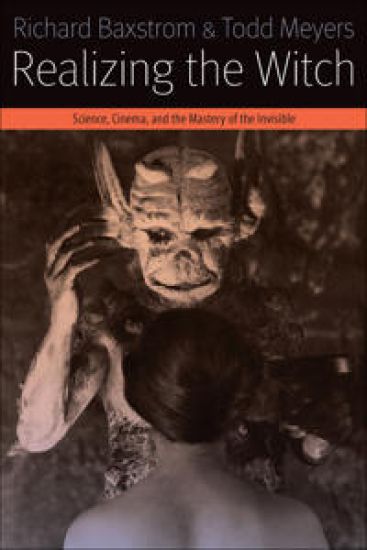
Realizing the Witch

Realizing the Witch

Richard Baxstrom; Todd Meyers

Fordham University Press
2015
pokkari
Benjamin Christensen's Häxan (The Witch, 1922) stands as a singular film within the history of cinema. Deftly weaving contemporary scientific analysis and powerfully staged historical scenes of satanic initiation, confession under torture, possession, and persecution, Häxan creatively blends spectacle and argument to provoke a humanist re-evaluation of witchcraft in European history as well as the contemporary treatment of female "hysterics" and the mentally ill. In Realizing the Witch, Baxstrom and Meyers show how Häxan opens a window onto wider debates in the 1920s regarding the relationship of film to scientific evidence, the evolving study of religion from historical and anthropological perspectives, and the complex relations between popular culture, artistic expression, and concepts in medicine and psychology. Häxan is a film that travels along the winding path of art and science rather than between the narrow division of "documentary" and "fiction." Baxstrom and Meyers reveal how Christensen's attempt to tame the irrationality of "the witch" risked validating the very "nonsense" that such an effort sought to master and dispel. Häxan is a notorious, genre-bending, excessive cinematic account of the witch in early modern Europe. Realizing the Witch not only illustrates the underrated importance of the film within the canons of classic cinema, it lays bare the relation of the invisible to that which we cannot prove but nevertheless "know" to be there.
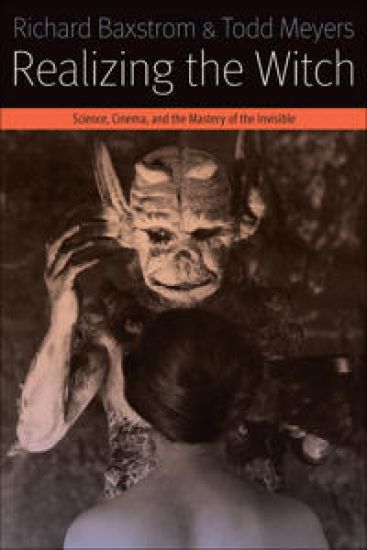
Realizing the Witch

Realizing the Witch

Richard Baxstrom; Todd Meyers

FORDHAM UNIVERSITY PRESS
2015
sidottu
Benjamin Christensen's Häxan (The Witch, 1922) stands as a singular film within the history of cinema. Deftly weaving contemporary scientific analysis and powerfully staged historical scenes of satanic initiation, confession under torture, possession, and persecution, Häxan creatively blends spectacle and argument to provoke a humanist re-evaluation of witchcraft in European history as well as the contemporary treatment of female "hysterics" and the mentally ill. In Realizing the Witch, Baxstrom and Meyers show how Häxan opens a window onto wider debates in the 1920s regarding the relationship of film to scientific evidence, the evolving study of religion from historical and anthropological perspectives, and the complex relations between popular culture, artistic expression, and concepts in medicine and psychology. Häxan is a film that travels along the winding path of art and science rather than between the narrow division of "documentary" and "fiction." Baxstrom and Meyers reveal how Christensen's attempt to tame the irrationality of "the witch" risked validating the very "nonsense" that such an effort sought to master and dispel. Häxan is a notorious, genre-bending, excessive cinematic account of the witch in early modern Europe. Realizing the Witch not only illustrates the underrated importance of the film within the canons of classic cinema, it lays bare the relation of the invisible to that which we cannot prove but nevertheless "know" to be there.
Cytomegalovirus

Cytomegalovirus

Hervé Guibert; Todd Meyers

Fordham University Press
2015
pokkari
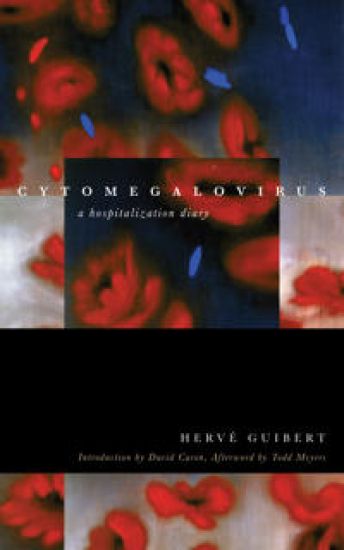
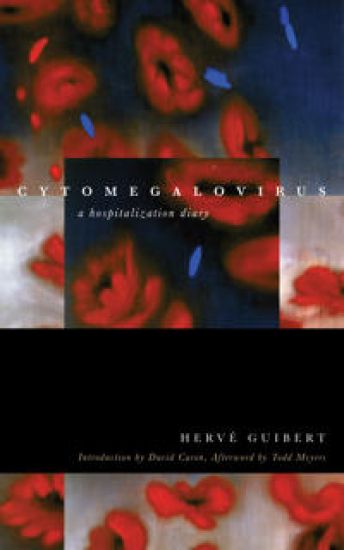
By the time of his death, Herve Guibert had become a singular literary voice on the impact of AIDS in France. He was prolific. His oeuvre contained some twenty novels, including To the Friend Who Did Not Save My Life and The Compassion Protocol. He was thirty-six years old. In Cytomegalovirus, Guibert offers an autobiographical narrative of the everyday moments of his hospitalization because of complications of AIDS. Cytomegalovirus is spare, biting, and anguished. Guibert writes through the minutiae of living and of death—as a quality of invention, of melancholy, of small victories in the face of greater threats—at the moment when his sight (and life) is eclipsed. This new edition includes an Introduction and Afterword contextualizing Guibert's work within the history of the AIDS pandemic, its relevance in the contemporary moment, and the importance of understanding the quotidian aspects of terminal illness.
Cytomegalovirus

Cytomegalovirus

Hervé Guibert; Todd Meyers

Fordham University Press
2015
sidottu
By the time of his death, Herve Guibert had become a singular literary voice on the impact of AIDS in France. He was prolific. His oeuvre contained some twenty novels, including To the Friend Who Did Not Save My Life and The Compassion Protocol. He was thirty-six years old. In Cytomegalovirus, Guibert offers an autobiographical narrative of the everyday moments of his hospitalization because of complications of AIDS. Cytomegalovirus is spare, biting, and anguished. Guibert writes through the minutiae of living and of death—as a quality of invention, of melancholy, of small victories in the face of greater threats—at the moment when his sight (and life) is eclipsed. This new edition includes an Introduction and Afterword contextualizing Guibert's work within the history of the AIDS pandemic, its relevance in the contemporary moment, and the importance of understanding the quotidian aspects of terminal illness.
The Clinic and Elsewhere

The Clinic and Elsewhere

Todd Meyers

University of Washington Press
2013
sidottu
Despite increasingly nuanced understandings of the neurobiology of addiction and a greater appreciation of the social and economic conditions that allow drug dependency to persist, there remain many unknowns regarding the individual experience of substance abuse and its treatment. In recent years, novel pharmaceutical therapies have given rise to both new hopes for recovery and renewed fears about drug diversion and abuse. In The Clinic and Elsewhere, Todd Meyers looks at the problems of meaning caused by drug dependency and appraises the changing terms of medical intervention today.By following a group of adolescents from the time they enter drug rehabilitation treatment through their reentry into the outside world-the clinic, their homes and neighborhoods, and other institutional settings-Meyers traces patterns of life that become mediated by pharmaceutical intervention. His focus is not on the drug economy but rather on the therapeutic economy, where new markets, transactions of care, and highly porous conceptions of success and failure come together to shape addiction and recovery. The book is at once a meditative work of anthropology, a demonstration of the theoretical and methodological limits of medical research, and a forceful intervention into the philosophy of therapeutics at the level of the individual.Watch the trailer: http://www.youtube.com/watch?v=-Nfyy21fxp8&list=UUge4MONgLFncQ1w1C_BnHcw&index=12&feature=plc
The Clinic and Elsewhere

The Clinic and Elsewhere

Todd Meyers

University of Washington Press
2013
pokkari
Despite increasingly nuanced understandings of the neurobiology of addiction and a greater appreciation of the social and economic conditions that allow drug dependency to persist, there remain many unknowns regarding the individual experience of substance abuse and its treatment. In recent years, novel pharmaceutical therapies have given rise to both new hopes for recovery and renewed fears about drug diversion and abuse. In The Clinic and Elsewhere, Todd Meyers looks at the problems of meaning caused by drug dependency and appraises the changing terms of medical intervention today.By following a group of adolescents from the time they enter drug rehabilitation treatment through their reentry into the outside world-the clinic, their homes and neighborhoods, and other institutional settings-Meyers traces patterns of life that become mediated by pharmaceutical intervention. His focus is not on the drug economy but rather on the therapeutic economy, where new markets, transactions of care, and highly porous conceptions of success and failure come together to shape addiction and recovery. The book is at once a meditative work of anthropology, a demonstration of the theoretical and methodological limits of medical research, and a forceful intervention into the philosophy of therapeutics at the level of the individual.Watch the trailer: http://www.youtube.com/watch?v=-Nfyy21fxp8&list=UUge4MONgLFncQ1w1C_BnHcw&index=12&feature=plc
Chagas Disease

Chagas Disease

François Delaporte; Todd Meyers

Fordham University Press
2012
pokkari
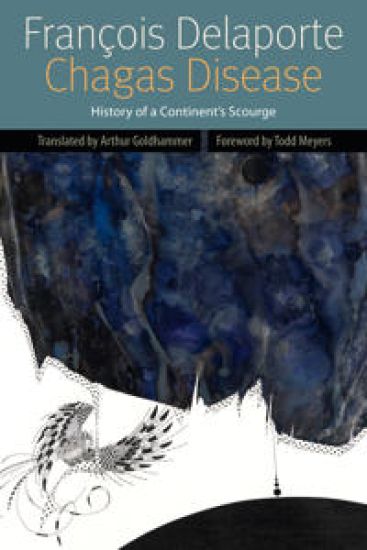
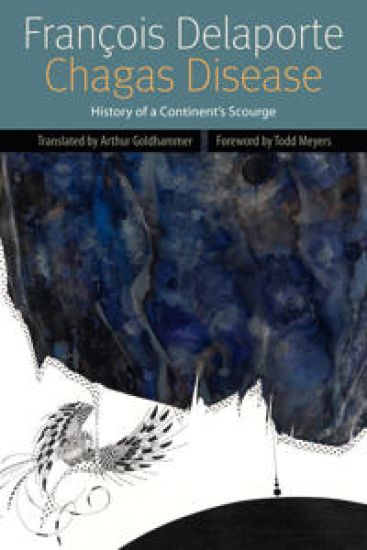
François Delaporte's Chagas Disease chronicles Brazilian medicine's encounter with a disease, an insect, and a history of discovery. Between 1909 and 1911, Carlos Chagas described an infection (pathogenic trypanosome), its intermediate host, and the illness that he believed it caused, parasitic thyroiditis. Chagas's work did not lack significance: the disease that came to share his name would be one of Latin America's most serious endemic diseases. However, the clinical identification of the disease through "Romaña's sign" (a palpebral edema or swelling of the eyelid) some decades later marked a transformation in the general medical knowledge of the disease and its basis altogether. Not only was the disease entity that Chagas had described shown to be a nosological illusion, but twenty-five years of scientific controversy turned out to have been based on a misunderstanding. The continued use of the term "Chagas's Disease" even after Cecilio Romaña's discovery thus refers to a fundamental ambiguity. Delaporte dispels this ambiguity by re-examining the various discoveries, dead ends, controversies, and major epistemological transformations that marked the history of the disease––a history that begins with the creation of the Oswaldo Cruz Institute in Rio de Janeiro and ends in the forests of Santa Fe in northern Argentina. Delaporte's study shows how an epistemological focus can add depth to the history of medicine and complexity to accounts of scientific discovery.
Chagas Disease

Chagas Disease

François Delaporte; Todd Meyers

Fordham University Press
2012
sidottu
François Delaporte's Chagas Disease chronicles Brazilian medicine's encounter with a disease, an insect, and a history of discovery. Between 1909 and 1911, Carlos Chagas described an infection (pathogenic trypanosome), its intermediate host, and the illness that he believed it caused, parasitic thyroiditis. Chagas's work did not lack significance: the disease that came to share his name would be one of Latin America's most serious endemic diseases. However, the clinical identification of the disease through "Romaña's sign" (a palpebral edema or swelling of the eyelid) some decades later marked a transformation in the general medical knowledge of the disease and its basis altogether. Not only was the disease entity that Chagas had described shown to be a nosological illusion, but twenty-five years of scientific controversy turned out to have been based on a misunderstanding. The continued use of the term "Chagas's Disease" even after Cecilio Romaña's discovery thus refers to a fundamental ambiguity. Delaporte dispels this ambiguity by re-examining the various discoveries, dead ends, controversies, and major epistemological transformations that marked the history of the disease––a history that begins with the creation of the Oswaldo Cruz Institute in Rio de Janeiro and ends in the forests of Santa Fe in northern Argentina. Delaporte's study shows how an epistemological focus can add depth to the history of medicine and complexity to accounts of scientific discovery.