Kirjojen hintavertailu. Mukana 12 595 353 kirjaa ja 12 kauppaa.

Kirjailija

Todd Nathan Thompson

Kirjat ja teokset yhdessä paikassa: 3 kirjaa, julkaisuja vuosilta 2015-2025, suosituimpien joukossa A Laughable Empire. Vertaile teosten hintoja ja tarkista saatavuus suomalaisista kirjakaupoista.

3 kirjaa

Kirjojen julkaisuhaarukka 2015-2025.

A Laughable Empire

A Laughable Empire

Todd Nathan Thompson

Pennsylvania State University Press
2025
pokkari
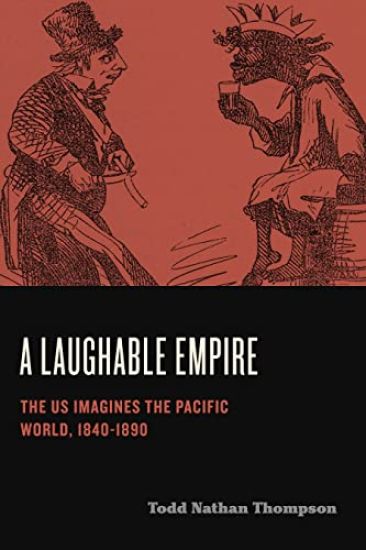
In the nineteenth-century United States, jokes, comic anecdotes, and bons mots about the Pacific Islands and Pacific Islanders tried to make the faraway and unfamiliar either understandable or completely incomprehensible (i.e., “other”) to American readers. A Laughable Empire examines this substantial archival corpus, attempting to make sense of nineteenth-century American humor about Hawai‘i and the rest of the Pacific world.Todd Nathan Thompson collects and interprets these comic, sometimes racist depictions of Pacific culture in nineteenth-century American print culture. Drawing on an archive of almanac and periodical humor, sea yarns, jest books, and literary comedy, Thompson demonstrates how jokes and humor functioned sometimes in the service of and sometimes in resistance to US imperial ambitions. Thompson also includes Indigenous voices and jokes lampooning Americans and their customs to show how humor served as an important cultural contact zone between the United States and the Pacific world. He considers how nineteenth-century Americans and Pacific Islanders alike used humor to employ stereotypes or to question them, to “other” the unknown or to interrogate, laughingly, the process by which “othering” occurs and is disseminated.Incisive and detailed, A Laughable Empire documents American humor about Pacific geography, food, dress, speech, and customs. Thompson sheds new light not only on nineteenth-century America’s imperial ambitions but also on its deep anxieties.
A Laughable Empire

A Laughable Empire

Todd Nathan Thompson

Pennsylvania State University Press
2023
sidottu
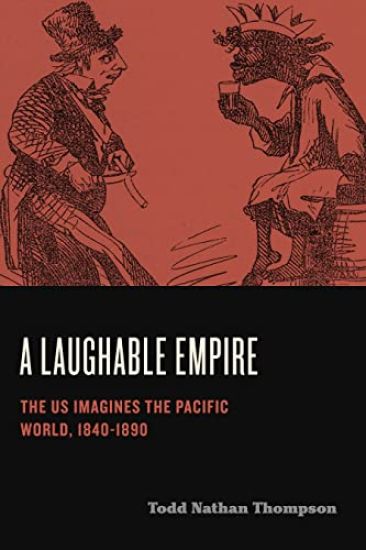
In the nineteenth-century United States, jokes, comic anecdotes, and bons mots about the Pacific Islands and Pacific Islanders tried to make the faraway and unfamiliar either understandable or completely incomprehensible (i.e., “other”) to American readers. A Laughable Empire examines this substantial archival corpus, attempting to make sense of nineteenth-century American humor about Hawai‘i and the rest of the Pacific world.Todd Nathan Thompson collects and interprets these comic, sometimes racist depictions of Pacific culture in nineteenth-century American print culture. Drawing on an archive of almanac and periodical humor, sea yarns, jest books, and literary comedy, Thompson demonstrates how jokes and humor functioned sometimes in the service of and sometimes in resistance to US imperial ambitions. Thompson also includes Indigenous voices and jokes lampooning Americans and their customs to show how humor served as an important cultural contact zone between the United States and the Pacific world. He considers how nineteenth-century Americans and Pacific Islanders alike used humor to employ stereotypes or to question them, to “other” the unknown or to interrogate, laughingly, the process by which “othering” occurs and is disseminated.Incisive and detailed, A Laughable Empire documents American humor about Pacific geography, food, dress, speech, and customs. Thompson sheds new light not only on nineteenth-century America’s imperial ambitions but also on its deep anxieties.
The National Joker

The National Joker

Todd Nathan Thompson

Southern Illinois University Press
2015
sidottu
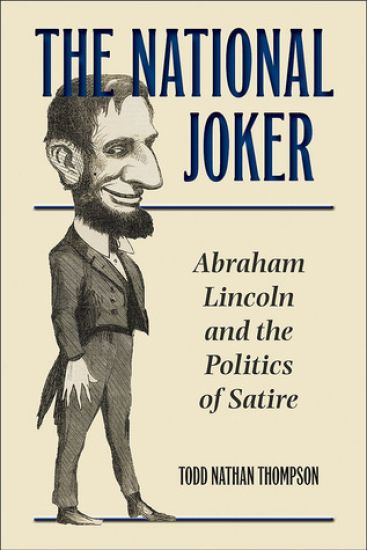
Abraham Lincoln’s love of jokes— hear­ing them, telling them, drawing morals from them—prompted critics to dub Lin­coln “the National Joker.” Interestingly, the political cartoons and print satires that mocked Lincoln often trafficked in precisely the same images and terms Lincoln humorously used to charac­terize himself. In this intriguing study, Todd Nathan Thompson considers the politically productive tension between Lincoln’s use of satire and satiric treat­ments of him in political cartoons, humour periodicals, joke books, and campaign literature. Thompson traces Lincoln’s comic sources and explains how, in reapplying others’ jokes and stories to political circumstances, he transformed humour into satire. Time and time again, Thompson shows, Lin­coln engaged in self-mockery, turning negative assumptions or depictions of him—as ugly, cowardly, jocular, inexperienced—into positive traits that identified him as an everyman while attacking his opponents’ claims to greatness, heroism, and experience as aristocratic or demagogic. By fashion­ing a folksy, fallible persona, Thompson shows, Lincoln was able to use satire as a weapon without being severely wounded by it.Thompson also considers how Lin­coln used political cartoons and other media to craft the particular Lincoln image of the “self-made man,” under­scores exceptions to Lincoln’s ability to mitigate negative depictions, and closely examines political cartoons from both the 1860 and 1864 elections. Throughout, Thompson’s deft analysis preserves Lincoln’s popular humour. This enjoyable volume will appeal to schol­ars of history, politics, literature, and cultural studies as well as to those of American humour and satire.