Kirjojen hintavertailu. Mukana 12 595 353 kirjaa ja 12 kauppaa.

Kirjailija

Tom Britton

Kirjat ja teokset yhdessä paikassa: 4 kirjaa, julkaisuja vuosilta 2000-2012, suosituimpien joukossa Stochastic Epidemic Models and Their Statistical Analysis. Vertaile teosten hintoja ja tarkista saatavuus suomalaisista kirjakaupoista.

4 kirjaa

Kirjojen julkaisuhaarukka 2000-2012.

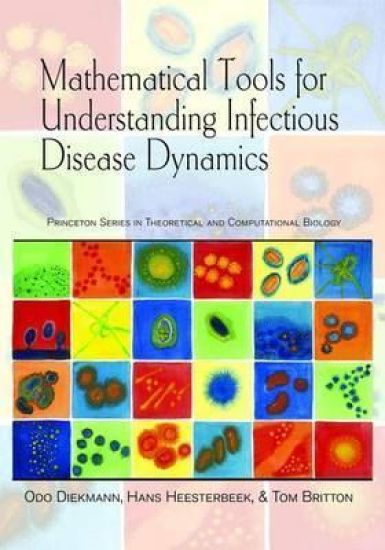
Mathematical Tools for Understanding Infectious Disease Dynamics

Mathematical Tools for Understanding Infectious Disease Dynamics

Odo Diekmann; Hans Heesterbeek; Tom Britton

PRINCETON UNIVERSITY PRESS
2012
sidottu
Mathematical modeling is critical to our understanding of how infectious diseases spread at the individual and population levels. This book gives readers the necessary skills to correctly formulate and analyze mathematical models in infectious disease epidemiology, and is the first treatment of the subject to integrate deterministic and stochastic models and methods. Mathematical Tools for Understanding Infectious Disease Dynamics fully explains how to translate biological assumptions into mathematics to construct useful and consistent models, and how to use the biological interpretation and mathematical reasoning to analyze these models. It shows how to relate models to data through statistical inference, and how to gain important insights into infectious disease dynamics by translating mathematical results back to biology. This comprehensive and accessible book also features numerous detailed exercises throughout; full elaborations to all exercises are provided. * Covers the latest research in mathematical modeling of infectious disease epidemiology * Integrates deterministic and stochastic approaches * Teaches skills in model construction, analysis, inference, and interpretation * Features numerous exercises and their detailed elaborations * Motivated by real-world applications throughout

Stokastik

Stokastik

Sven Erick Alm; Tom Britton

Liber
2008
sidottu
Stokastik är en ny, grundläggande lärobok i matematisk statistik. Utöver teori innehåller boken ett stort antal lösta exempel samt ett ännu större antal övningar och problem, alla med facit och många med separata ledningar. Boken lämpar sig som kurslitteratur i matematisk statistik för civilingenjörsutbildningar, matematik- och naturvetenskapliga utbildningar, samt till fristående kurser i matematisk statistik. Valda delar av boken lämpar sig för en första kurs i matematisk statistik på 5-10 hp enligt det nya Bolognasystemet medan resterande delar kan utgöra en fortsättningskurs på 5-10 hp.
Sannolikhetslära och statistik

Sannolikhetslära och statistik

Tom Britton; Hans Garmo

Studentlitteratur AB
2002
nidottu
Mängden tillgänglig information växer i snabb takt varför behovet av kunskaper i statistik och sannolikhetslära blir allt viktigare, vilket även framgår av skolans nya läroplaner. Det kan gälla vitt skilda företeelser så som att rätt tolka diagram, att värdera ”vetenskapliga slutsatser” baserade på empiriska undersökningar och att skärskåda tidningsrubriker om osannolika händelser. Sannolikhetslära och statistik har som uppgift att lära elever att kritiskt granska statistiska undersökningar, att själva kunna utföra mindre statistiska undersökningar, att kunna illustrera insamlade data grafiskt och beräkna enklare sannolikheter.Denna bok är skriven för blivande lärare och vänder sig speciellt till studenter på lärarprogrammet med matematik som ett av sina huvudämnen och med inriktning på grundskolans senare år eller på gymnasieskolan. Områden som behandlas i boken är sannolikhetslära, principerna för statistisk slutledningsförmåga samt planering av statistiska undersökningar och grafisk illustration av desamma. Boken gör detta med fokus på relevansen för blivande lärare och hur det kan tas upp i skolutbildningen. Boken innehåller en mängd lösta exempel och övningar med facit, varav många lämpar sig att användas i skolundervisningen. Förhoppningen är att boken även fungerar som en allmän introduktion till sannolikhetslära och statistik för den intresserade. Boken förutsätter matematikkunskaper motsvarande ungefär gymnasiekompetens.
Stochastic Epidemic Models and Their Statistical Analysis

Stochastic Epidemic Models and Their Statistical Analysis

Hakan Andersson; Tom Britton

Springer-Verlag New York Inc.
2000
nidottu
The present lecture notes describe stochastic epidemic models and methods for their statistical analysis. Our aim is to present ideas for such models, and methods for their analysis; along the way we make practical use of several probabilistic and statistical techniques. This will be done without focusing on any specific disease, and instead rigorously analyzing rather simple models. The reader of these lecture notes could thus have a two-fold purpose in mind: to learn about epidemic models and their statistical analysis, and/or to learn and apply techniques in probability and statistics. The lecture notes require an early graduate level knowledge of probability and They introduce several techniques which might be new to students, but our statistics. intention is to present these keeping the technical level at a minlmum. Techniques that are explained and applied in the lecture notes are, for example: coupling, diffusion approximation, random graphs, likelihood theory for counting processes, martingales, the EM-algorithm and MCMC methods. The aim is to introduce and apply these techniques, thus hopefully motivating their further theoretical treatment. A few sections, mainly in Chapter 5, assume some knowledge of weak convergence; we hope that readers not familiar with this theory can understand the these parts at a heuristic level. The text is divided into two distinct but related parts: modelling and estimation.