Kirjojen hintavertailu. Mukana 12 595 353 kirjaa ja 12 kauppaa.

Kirjailija

Tom Goodfellow

Kirjat ja teokset yhdessä paikassa: 6 kirjaa, julkaisuja vuosilta 2016-2026, suosituimpien joukossa Living the Urban Periphery. Vertaile teosten hintoja ja tarkista saatavuus suomalaisista kirjakaupoista.

6 kirjaa

Kirjojen julkaisuhaarukka 2016-2026.

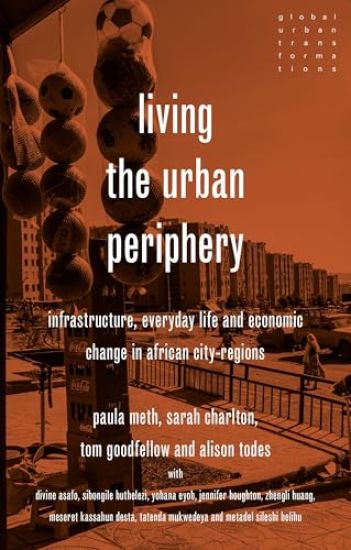
Living the Urban Periphery

Living the Urban Periphery

Paula Meth; Sarah Charlton; Tom Goodfellow; Alison Todes

MANCHESTER UNIVERSITY PRESS
2026
nidottu
The edges of cities are increasingly understood as places of dynamism and change, but there is little research on African urban peripheries, the nature of building, growth, investment and decline that is shaping them and how these are lived. This co-authored monograph draws on findings from an extensive comparative study on Ethiopia and South Africa, in conversation with a related study on Ghana. It examines African urban peripheries through a dual focus on the experiences of living in these changing contexts, alongside the logics driving their transformation. Through its conceptualisation and application of five ‘logics of periphery’, it offers unique, contextually-informed insights into the generic processes shaping urban peripheries, and the variable ways in which these are playing out in contemporary Africa for those living the peripheries. This electronic version has been made freely available under a Creative Commons (CC BY-NC-ND) licence, thanks to the support of the Economic and Social Research Council (ESRC).
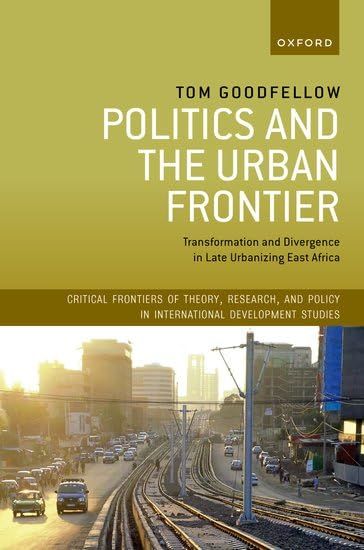
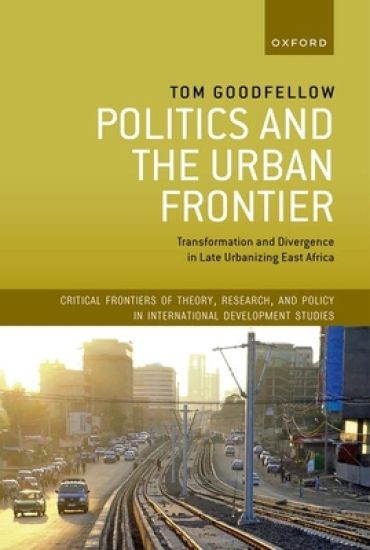
Politics and the Urban Frontier

Politics and the Urban Frontier

Tom Goodfellow

Oxford University Press
2024
nidottu
Despite the rise of global technocratic ideals of city-making, cities around the world are not merging into indistinguishable duplicates of one another. In fact, as the world urbanizes, urban formations remain diverse in their socioeconomic and spatial characteristics, with varying potential to foster economic development and social justice. In this book, Tom Goodfellow argues that these differences are primarily rooted in politics, and if we continue to view cities as economic and technological projects to be managed rather than terrains of political bargaining and contestation, the quest for better urban futures is doomed to fail. Dominant critical approaches to urban development tend to explain difference with reference to the variegated impacts of neoliberal regulatory institutions. This, however, neglects the multiple ways in which the wider politics of capital accumulation and distribution drive divergent forms of transformation in different urban places. In order to unpack the politics that shapes differential urban development, this book focuses on East Africa as the global urban frontier: the least urbanized but fastest urbanizing region in the world. Drawing on a decade of research spanning three case study countries (Ethiopia, Rwanda, and Uganda), Politics and the Urban Frontier provides the first sustained, book-length comparative analysis of urban development trajectories in Eastern Africa and the political dynamics that underpin them. Through a focus on infrastructure investment, urban propertyscapes, street-level trading economies, and urban political protest, it offers a multi-scalar, historically-grounded, and interdisciplinary analysis of the urban transformations unfolding in the world's most dynamic crucible of urban change.
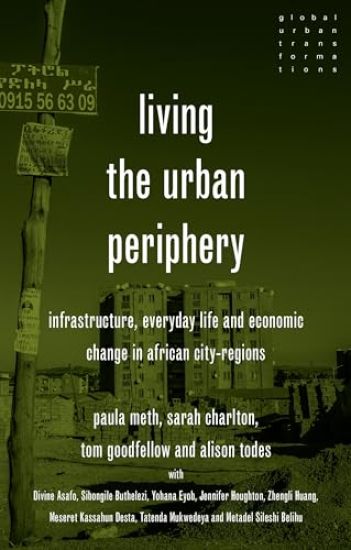
Living the Urban Periphery

Living the Urban Periphery

Paula Meth; Sarah Charlton; Tom Goodfellow; Alison Todes

MANCHESTER UNIVERSITY PRESS
2024
sidottu
The edges of cities are increasingly understood as places of dynamism and change, but there is little research on African urban peripheries, the nature of building, growth, investment and decline that is shaping them and how these are lived. This co-authored monograph draws on findings from an extensive comparative study on Ethiopia and South Africa, in conversation with a related study on Ghana. It examines African urban peripheries through a dual focus on the experiences of living in these changing contexts, alongside the logics driving their transformation. Through its conceptualisation and application of five ‘logics of periphery’, it offers unique, contextually-informed insights into the generic processes shaping urban peripheries, and the variable ways in which these are playing out in contemporary Africa for those living the peripheries.This electronic version has been made freely available under a Creative Commons (CC BY-NC-ND) licence, thanks to the support of the Economic and Social Research Council (ESRC).
Politics and the Urban Frontier

Politics and the Urban Frontier

Tom Goodfellow

Oxford University Press
2022
sidottu
This is an open access title available under the terms of a CC BY-NC-ND 4.0 International licence. It is free to read on the Oxford Academic platform and offered as a free PDF download from OUP and selected open access locations. Despite the rise of global technocratic ideals of city-making, cities around the world are not merging into indistinguishable duplicates of one another. In fact, as the world urbanizes, urban formations remain diverse in their socioeconomic and spatial characteristics, with varying potential to foster economic development and social justice. In this book, Tom Goodfellow argues that these differences are primarily rooted in politics, and if we continue to view cities as economic and technological projects to be managed rather than terrains of political bargaining and contestation, the quest for better urban futures is doomed to fail. Dominant critical approaches to urban development tend to explain difference with reference to the variegated impacts of neoliberal regulatory institutions. This, however, neglects the multiple ways in which the wider politics of capital accumulation and distribution drive divergent forms of transformation in different urban places. In order to unpack the politics that shapes differential urban development, this book focuses on East Africa as the global urban frontier: the least urbanized but fastest urbanizing region in the world. Drawing on a decade of research spanning three case study countries (Ethiopia, Rwanda, and Uganda), Politics and the Urban Frontier provides the first sustained, book-length comparative analysis of urban development trajectories in Eastern Africa and the political dynamics that underpin them. Through a focus on infrastructure investment, urban propertyscapes, street-level trading economies, and urban political protest, it offers a multi-scalar, historically-grounded, and interdisciplinary analysis of the urban transformations unfolding in the world's most dynamic crucible of urban change.
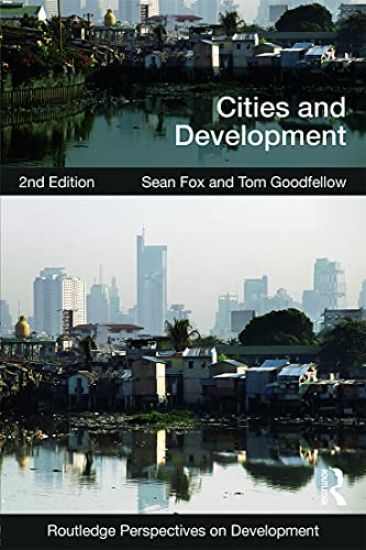
Cities and Development

Cities and Development

Sean Fox; Tom Goodfellow

Routledge
2016
nidottu
For the first time in human history more people now live and towns and cities than in rural areas. In the wealthier countries of the world, the transition from predominantly rural to urban habitation is more or less complete. But in many parts of Africa, Asia and Latin America, urban populations are expanding rapidly. Current UN projections indicate that virtually all population growth in the world over the next 30 years will be absorbed by towns and cities in developing countries. These simple demographic facts have profound implications for those concerned with understanding and addressing the pressing global development challenges of reducing poverty, promoting economic growth, improving human security and confronting environmental change.This revised and expanded second edition of Cities and Development explores the dynamic relationship between urbanism and development from a global perspective. The book surveys a wide range of topics, including: the historical origins of world urbanization; the role cities play in the process of economic development; the nature of urban poverty and the challenge of promoting sustainable livelihoods; the complexities of managing urban land, housing, infrastructure and urban services; and the spectres of endemic crime, conflict and violence in urban areas. This updated volume also contains two entirely new chapters: one that examines the links between urbanisation and environmental change, and a second that focuses on urban governance and politics. Adopting a multidisciplinary perspective, the book critically engages with debates in urban studies, geography and international development studies. Each chapter includes supplements in the form of case studies, chapter summaries, questions for discussion and suggested further readings. The book is targeted at upper-level undergraduate and graduate students interested in geography, urban studies and international development studies, as well as policy makers, urban planners and development practitioners.
Cities and Development

Cities and Development

Sean Fox; Tom Goodfellow

Routledge
2016
sidottu
For the first time in human history more people now live and towns and cities than in rural areas. In the wealthier countries of the world, the transition from predominantly rural to urban habitation is more or less complete. But in many parts of Africa, Asia and Latin America, urban populations are expanding rapidly. Current UN projections indicate that virtually all population growth in the world over the next 30 years will be absorbed by towns and cities in developing countries. These simple demographic facts have profound implications for those concerned with understanding and addressing the pressing global development challenges of reducing poverty, promoting economic growth, improving human security and confronting environmental change.This revised and expanded second edition of Cities and Development explores the dynamic relationship between urbanism and development from a global perspective. The book surveys a wide range of topics, including: the historical origins of world urbanization; the role cities play in the process of economic development; the nature of urban poverty and the challenge of promoting sustainable livelihoods; the complexities of managing urban land, housing, infrastructure and urban services; and the spectres of endemic crime, conflict and violence in urban areas. This updated volume also contains two entirely new chapters: one that examines the links between urbanisation and environmental change, and a second that focuses on urban governance and politics. Adopting a multidisciplinary perspective, the book critically engages with debates in urban studies, geography and international development studies. Each chapter includes supplements in the form of case studies, chapter summaries, questions for discussion and suggested further readings. The book is targeted at upper-level undergraduate and graduate students interested in geography, urban studies and international development studies, as well as policy makers, urban planners and development practitioners.