Kirjojen hintavertailu. Mukana 12 595 353 kirjaa ja 12 kauppaa.

Kirjailija

Tom McDonough

Kirjat ja teokset yhdessä paikassa: 4 kirjaa, julkaisuja vuosilta 2017-2021, suosituimpien joukossa Christopher Williams. Vertaile teosten hintoja ja tarkista saatavuus suomalaisista kirjakaupoista.

4 kirjaa

Kirjojen julkaisuhaarukka 2017-2021.

Christopher Williams

Christopher Williams

Markus Krajewski; Tom McDonough; Christopher Williams

VERLAG DER BUCHHANDLUNG WALTHER KONIG
2021
tuotepaketti
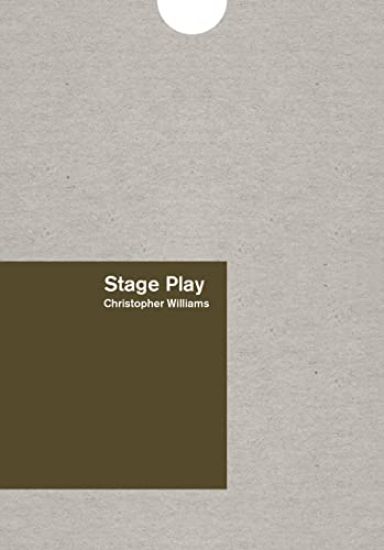
Writings, documentation and more from Williams' 2017 play This slipcased, four-volume set focuses on Christopher Williams' (born 1956) theatrical work Stage Play, first presented in 2017 at Miller's Studio in Z rich. It contains the playscript, publicity and research documents, the artist's series of open letters and an interview with historian Markus Krajewski on the ceramic tile fa ades of postwar Cologne.
The Walls Have the Floor

The Walls Have the Floor

Tom McDonough; Whitney Phillips

MIT Press
2018
pokkari
The graffiti of the French student and worker uprising of May 1968, capturing participatory politics in action.Graffiti itself became a form of freedom.-Julien Besancon, The Walls Have the FloorFifty years ago, in 1968, barricades were erected in the streets of Paris for the first time since the Paris Commune of nearly one hundred years before. The events of May 1968 began with student protests against the Vietnam War and American imperialism, expanded to rebellion over student living conditions and resistance to capitalist consumerism. An uprising at the Sorbonne was followed by wildcat strikes across France, uniting students and workers and bringing the country's economy to a halt. There have been many accounts of these events. This book tells the story in a different way, through the graffiti inscribed by protestors as they protested.The graffiti collected here is by turns poetic, punning, hopeful, sarcastic, and crude. It quotes poets as often as it does political thinkers. Many wrote "I have nothing to write," signaling not their naivete but their desire to participate. Other anonymous declarations included "Prohibiting prohibited"; "The dream is reality"; "The walls have ears. Your ears have walls"; "Exaggeration is the beginning of invention"; "Comrades, you're nitpicking"; "You don't beg for the right to live, you take it"; and "I came/I saw/I believed." A meeting is called at the Grand Amphitheater of the Sorbonne: "Agenda: the worldwide revolution." This was interactive, participatory politics before Twitter and Facebook.Although the revolution of May 1968 didn't topple the government (Charles de Gaulle fled the country, only to return; in June, his party won a resounding electoral mandate), it made history. In The Walls Have the Floor, Julien Besancon collected traces of this history before the walls were painted over, and published this collection in July 1968 even as the paint was drying. Read today, the graffiti of 1968 captures, in a way no conventional history can, the defining spontaneity of the events.
Boredom

Boredom

Tom McDonough

MIT Press
2017
pokkari
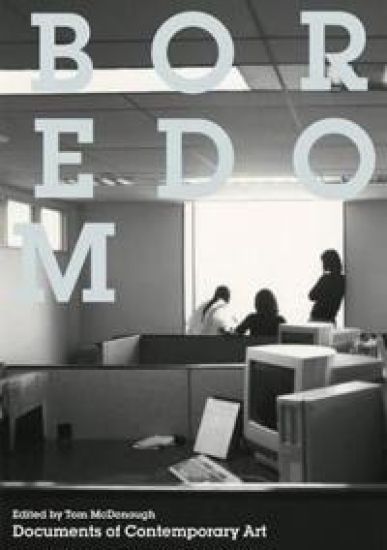
Without boredom, arguably there is no modernity: the current sense of the word emerged simultaneously with industrialization, mass politics, and consumerism. From Manet onward, when art represents the everyday within modern life, encounters with tedium are inevitable. And from modernism's retreat into abstraction to subsequent demands placed on audiences from the late 1960s to the present, the viewer's endurance of repetition, slowness, or other forms of monotony has become an anticipated feature of gallery-going. In contemporary art, boredom is no longer viewed as a singular experience; rather, it is contingent on diverse social identifications and cultural positions, and extends from a malign condition to be struggled against, to an experience to be embraced or explored as a site of resistance.Here, the range of boredoms associated with our neoliberal moment is contextualized in a long view which encompasses the political critique of boredom in 1960s France; the simultaneous aesthetic embrace in the USA of silence, repetition, or indifference in Fluxus, Pop, Minimalism, and conceptual art; the development of feminist diagnoses of malaise in art, performance and film; Punk's social critique and its influence on theories of the postmodern; and the recognition from the end of the 1980s of a specific form of ennui experienced in former communist states. Today, with the emergence of new forms of labor alienation and personal intrusion, deadening forces extend even further into subjective experience, making the divide between a critical and an aesthetic use of boredom ever more tenuous.