

Kirjailija
Tom Moore
Kirjat ja teokset yhdessä paikassa: 19 kirjaa, julkaisuja vuosilta 2000-2025, suosituimpien joukossa Becoming Roman, Being Gallic, Staying British. Vertaile teosten hintoja ja tarkista saatavuus suomalaisista kirjakaupoista.
19 kirjaa
Kirjojen julkaisuhaarukka 2000-2025.

From the go-to boutique bakery in Victoria, BC, this cookbook--with over 85 recipes--satisfies every sweet, savory, and in-between craving you might have, all while making you a better baker. Every morning, for over a decade, locals and visitors alike have lined up outside Crust Bakery, eager to taste their delicious, rustic baking. It's the kind of baking you dream of filling your home with. And now, you can Within the pages of this debut cookbook, Crust founding chef and co-owner Tom Moore shares recipes for the bakery's most popular menu items, breaking them down into manageable steps and peppering in hints and tips to help you achieve success at home. You'll have no trouble making the perfect baked good, whether you're craving: Pies and Tarts: Impress with Crust's famous Lemon Passion Fruit Slice, the genius Vanilla Cr me Br l e Tarts to go, or the breakfast/lunch barrier-breaking Bacon, Tomato, and Smoked Cheddar Quiche.Muffins, Scones, and Squares: Explore Tom's Australian-inspired Banana and Macadamia Muffins, or the simple yet scrumptious treat from his daughter: Abby's Favorite Chocolate Rice Krispie Squares.Cakes: Indulge in the multi-season celebration of Zucchini Marmalade Cake or the multi-tiered decadence of Mr. Rich Birthday Cake.Cookies: Share Tom's cheeky take on a Down Under favorite with Tom Tams or the "little black dress of cookies," the Pecan and Dark Chocolate Chunk Cookies.Breads: Nurture a surefire Sourdough Starter day by day (to use for a number of recipes) or enjoy Cinnamon Brioche Scrolls and Aussie Crunch Rolls.After years teaching at his own culinary school, Tom has anticipated every baker's question (and woe) with a helpful troubleshooting section. Because sometimes your dough just won't rise--and Crust will tell you why These are bakery-quality recipes that every home baker can make with confidence.

From Chuck Noll's Steelers to the Peyton Manning-era Colts through Tom Brady and the Buccaneers, legendary NFL coach Tom Moore recalls his nearly 50-year role in the evolution of football and the keys to player-centric coaching.Tom Moore is not only the oldest NFL coach ever, but he is also hailed as the greatest NFL assistant coach of all-time--though he humbly cites the talent and hard work of his players as the keys to his success. In six different decades, he has served as a guru to the likes of Tom Brady, Peyton Manning, Terry Bradshaw, Franco Harris, Barry Sanders, Marshall Faulk, Edgerrin James, Lynn Swann, John Stallworth, Mike Webster, Randall McDaniel, Cris Carter, Marvin Harrison, and more.In The Players' Coach, Moore recounts the most exceptional players-first coaching career in the history of the game, talks football with his proteges and underdog athletes alike, and lays out the principles that helped him define the modern gridiron.In an era of systems, analytics, and Xs and Os, Moore maintains a refreshing focus on the Jimmys and Joes --and the results speak for themselves: twenty-five postseason appearances, fifteen division titles, and four Super Bowl victories in an ongoing career that has included the Steelers, Vikings, Lions, Saints, Colts, Jets, Titans, Cardinals, and Buccaneers.With an inspirational life story, timeless coaching tips, and a hard-earned leadership philosophy, The Players' Coach is destined to be a football classic.


This fully updated sixth edition of a classic classroom text is essential reading for core courses in archaeology.Archaeology: An Introduction explains how the subject emerged from an amateur pursuit in the eighteenth century into a serious discipline and explores changing trends in interpretation in recent decades. The authors convey the excitement of archaeology while helping readers to evaluate new discoveries by explaining the methods and theories that lie behind them. In addition to drawing upon examples and case studies from many regions of the world and periods of the past, the book incorporates the authors’ own fieldwork, research and teaching. It continues to include key reference and further reading sections to help new readers find their way through the ever-expanding range of archaeological publications and online sources as well as colour illustrations and boxed topic sections to increase comprehension.Serving as an accessible and lucid textbook, and engaging students with contemporary issues, this book is designed to support students studying Archaeology at an introductory level.New to the sixth edition:Inclusion of the latest survey and imaging techniques, such as the use of drones and eXtended reality.Updated material on developments in dating, DNA analysis, isotopes and population movement, including consideration of the ethical considerations of these techniques.Coverage of new developments in archaeological theory, such as the material turn/ontological turn, and work on issues of equality, diversity and inclusion.A whole new chapter covering archaeology in the present, including new sections on heritage and public archaeology, and an updated consideration of archaeology’s relationship with the climate crisis.A revised glossary with over 200 new additions or updates.

This fully updated sixth edition of a classic classroom text is essential reading for core courses in archaeology.Archaeology: An Introduction explains how the subject emerged from an amateur pursuit in the eighteenth century into a serious discipline and explores changing trends in interpretation in recent decades. The authors convey the excitement of archaeology while helping readers to evaluate new discoveries by explaining the methods and theories that lie behind them. In addition to drawing upon examples and case studies from many regions of the world and periods of the past, the book incorporates the authors’ own fieldwork, research and teaching. It continues to include key reference and further reading sections to help new readers find their way through the ever-expanding range of archaeological publications and online sources as well as colour illustrations and boxed topic sections to increase comprehension.Serving as an accessible and lucid textbook, and engaging students with contemporary issues, this book is designed to support students studying Archaeology at an introductory level.New to the sixth edition:Inclusion of the latest survey and imaging techniques, such as the use of drones and eXtended reality.Updated material on developments in dating, DNA analysis, isotopes and population movement, including consideration of the ethical considerations of these techniques.Coverage of new developments in archaeological theory, such as the material turn/ontological turn, and work on issues of equality, diversity and inclusion.A whole new chapter covering archaeology in the present, including new sections on heritage and public archaeology, and an updated consideration of archaeology’s relationship with the climate crisis.A revised glossary with over 200 new additions or updates.
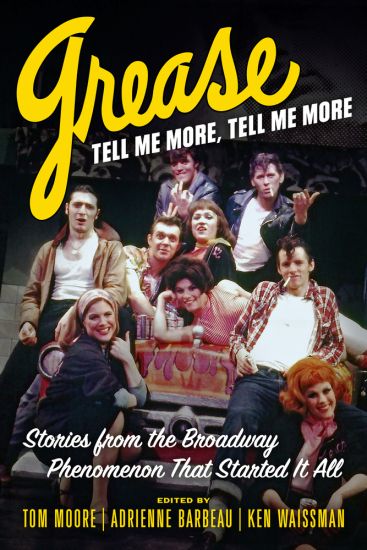
Grease, Tell Me More, Tell Me More
Tom Moore; Adrienne Barbeau; Ken Waissman
Chicago Review Press
2024
pokkari
Grease, Tell Me More, Tell Me More is a fabulous rockin’ and rollin’ origin story with every juicy inspiration that went into creating it. . . . A must read for all Grease fans." - Didi Conn, Grease’s “Frenchy”What started as an amateur play with music in a converted trolly barn in Chicago hit Broadway fifty years ago—and maintains its cultural impact today. Grease opened downtown in the Eden Theatre February 14, 1972, short of money, short of audience, short of critical raves, and seemingly destined for a short run. But like the little engine that could, this musical of high school kids from the 1950s moved uptown. On December 8, 1979, it became the longest running show—play or musical—in Broadway history. Grease: Tell Me More, Tell Me More is a collection of memories and stories from over one hundred actors and musicians, including the creative team and crew who were part of the original Broadway production and in the many touring companies it spawned. Here are stories—some touching, some hilariously funny—from names you may recognize: Barry Bostwick, John Travolta, Adrienne Barbeau, Treat Williams, Marilu Henner, Peter Gallagher, and others you may not: Danny Jacobson, creator of Mad About You; Tony-winning Broadway directors Walter Bobbie and Jerry Zaks; bestselling authors Laurie Graff and John Lansing; television stars Ilene Kristen, Ilene Graff, and Lisa Raggio, and many, many more. Read about the struggles, the battles, and the ultimate triumphs achieved in shaping the story, characters, and music into the iconic show now universally recognized the world over.

From My Life, the autobiography of the famed music critic Eduard Hanslick, appeared toward the end of his life, in 1894, when it went through three printings. It was republished in 1911, and again, more recently, in 1987, by Bärenreiter, and in 2011, by Taschenbuch. Born in Prague, Hanslick studied piano with Tomaschek, and though, like other compatriots and contemporaries, he studied law and became a government functionary, he went on to become the most noted and honored music critic in nineteenth-century Vienna, making his mark with his relatively brief disquisition On the Musically Beautiful, first issued in 1854. In the Brahms-Wagner controversy, he was on the side of the former, and was the target of Wagner’s vicious anti-semitism, even though he had been among the first to champion Wagner’s work in Vienna. His long and informative autobiography has never appeared in complete translation to English or any other language.

Disgrace is the first truly global history of sexual violence. The book explores how sexual violence varies widely across time and place, from nineteenth-century peasant women in Ireland who were abducted as a way of forcing marriage, to date-raped high-school students in twentieth-century America, and from girls and women violated by Russian soldiers in 1945 to Dalit women raped by men of higher castes today. It delves into the factors that facilitate violence – including institutions, ideologies and practices – but also gives voice to survivors and activists, drawing inspiration from their struggles. Ultimately, Joanna Bourke intends to forge a transnational feminism that will promote a more harmonious, equal and rape- and violence-free world.

Sexual contact with non-human animals is one of the last taboos but, for a practice that is generally regarded as abhorrent, it is remarkable how many books, films, plays, paintings and photographs depict the subject. In this book renowned historian Joanna Bourke explores the history of human-animal sexuality and examines how the meanings of the words ‘bestiality’ or ‘zoophilia’ have changed. Are people who are sexually attracted to non-human animals psychiatrically ill, or are they normal people who happen to have a minority sexual orientation? How are we to understand human-animal love, as well as other issues within the discourse surrounding sexuality, such as violence, consent and abuse?This book draws queer theory, post-human philosophy, disability studies and the history of the senses into the debate to ask, what would an ethics of animal loving look like? What does it mean to love non-human animals? More pertinently: what does it mean to love?
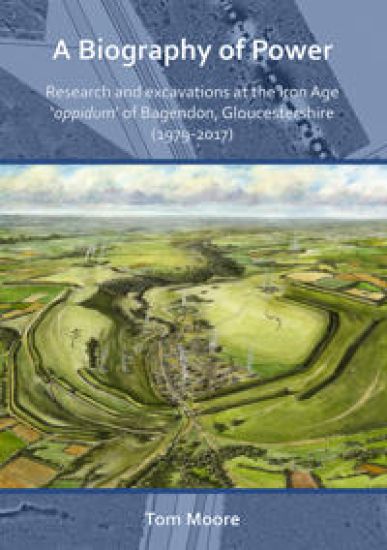
A Biography of Power: Research and Excavations at the Iron Age 'oppidum' of Bagendon, Gloucestershire (1979-2017)
Tom Moore
Archaeopress
2020
nidottu
A Biography of Power explores the changing nature of power and identity from the Iron Age to Roman period in Britain. Presenting detailed excavation results and integrating a range of comprehensive specialist studies, the book provides fresh insights into the origins and nature of one of the lesser-known, but perhaps most significant, Late Iron Age oppida in Britain: Bagendon in Gloucestershire. Combining the results of a large-scale geophysical survey with analysis of both historic and new excavations, this volume reassesses Iron Age occupation at Bagendon. It reveals evidence for diverse artisanal activities and complex regional exchange networks that saw livestock, and people, travelling to Bagendon from west of the Severn. The results of the excavation of two morphologically unusual, banjo-like enclosures, and of one of the previously unexamined dykes, has revealed that the Bagendon oppidum had earlier origins and more complex roles than previously envisaged. The volume also provides new insights into the nature of the Iron Age and Roman landscape in which Bagendon was situated. Detailing the discovery of two, previously unknown, Roman villas at Bagendon demonstrates the continued significance of this landscape in the early Roman province. This volume redefines Bagendon as a landscape of power, offering important insights into the changing nature of societies from the Middle Iron Age to the Roman period. It calls for a radical reassessment of how we define oppida complexes and their socio-political importance at the turn of the 1st millennium BC. Contains contributions from Sophia Adams, Michael J. Allen, Sam Bithell, Cameron Clegg, Geoffrey Dannell, Lorne Elliott, Elizabeth Foulds, Freddie Foulds, Christopher Green, Darren Gröcke, Derek Hamilton, Colin Haselgrove, Yvonne Inall, Tina Jakob, Mandy Jay, Sally Kellett, Robert Kenyon, Mark Landon, Edward McSloy, Janet Montgomery, J.A. Morley-Stone, Geoff Nowell, Charlotte O’Brien, Chris Ottley, Cynthia Poole, Richard Reece, Harry Robson, Ruth Shaffrey, John Shepherd, Jane Timby, Dirk Visser, D.F. Williams, Steven Willis.

Iowa Gunmakers in the 1800's
Jim Whisker; Tom Moore
Createspace Independent Publishing Platform
2018
nidottu
A history of early Iowa gunmakers and gunsmiths. Over 700 biographical entries and 52 Iowa made guns from the 1800's are photographed. Iowa is one of our States that underwent a complete transformation in the 1800's. Iowa was part of the Louisiana Purchase in 1803. But the territory was not officially opened to settlement until June 1, 1833. We then became part of the Wisconsin Territory from 1836-1838. And from 1838-1846 we became the Iowa Territory until Statehood was granted in 1846. Development quickly moved from areas along the Mississippi River across the entire State. The original State Capitol was moved from the east central city of Iowa City to Des Moines in central Iowa in 1857. Farming spread across the land and the need for gunsmithing, blacksmithing and all other services was everywhere. Many industrious people filled the needs as they arose, becoming adept at multiple enterprises. To earn a living at that time was difficult. There are many examples of individuals who were at some point in their lives farmers, blacksmiths, gunsmiths, doctors, dentists and merchants. Some wore many of these "hats" at the same time. We hope this book gives the reader a little insight into the lives of our early settlers and as you read through you may find information on some of your very own ancestors.

The Roving Archery Course: A guide for course planning, construction, and appreciation
Spence Colby; Tom Moore
Createspace Independent Publishing Platform
2017
nidottu
This rollicking manual will enlighten you to the joys of planning, constructing, running or appreciating a well founded roving archery course What's a roving archery course? Any time you take a bow and go for a walk, shooting at things other than live game as you go -- that's roving archery. Popular with groups as diverse as the Boy Scouts, the Society for Creative Anachronism, Buck-skinners, bow hunters, field archers, 3-D shooters, or the folks that enjoy "stump hunting", his book will guide you down the trail to understanding the elements of a great roving range and provide hints to success for your own efforts. Packed with photos and illustrations, useful tips, and personal reflections from over 45 of shooting a bow at things, this book is both handy and amusing. A necessary book for the shelf of any archer
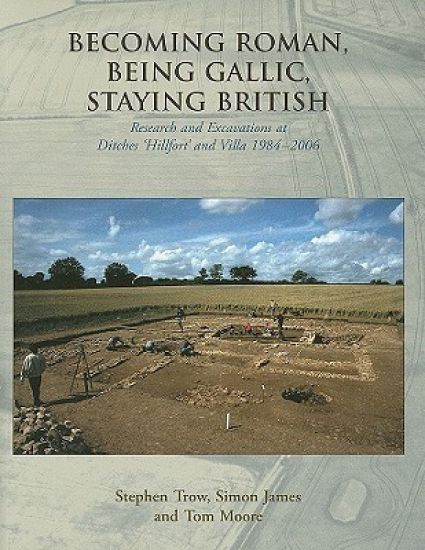
Becoming Roman, Being Gallic, Staying British
Stephen Trow; Simon James; Tom Moore
Oxbow Books
2008
nidottu
Excavations carried out from 1984-1985 at Ditches in Gloucestershire identified a large, late Iron Age enclosure which contained a remarkably early Roman villa. This long awaited excavation report reinterprets this evidence in the light of more recent studies of the late Iron Age-Roman transition. It extends our understanding of the Ditches-Bagendon-Cirencester oppida complex, and corroborates the latest thinking on the nature of Romanisation. New conceptions are challenging the significance of the Claudian invasion of AD 43, suggesting that Roman political influence in southern Britain was much more important than commonly thought decades before this. The Roman take-over was a long drawn-out process, which began especially with intimate links between Caesar and his successors and the dynasts they supported or implanted in Britain on the other. High status archaeological sites are central to these relations, including the so-called oppida , developed in southern Britain in the decades between Caesar's raids and the Claudian occupation. Ditches provides further corroborative evidence. Several phases of Romano-British building were uncovered, revealing an unusual sequence of development for a villa in the region and representing an exceptionally early villa beyond south-east England. Discoveries included a well-preserved cellar and a range of finds, including Gallo-Belgic wares, Iron Age coins, coin moulds, Venus figurines and brooches indicating high-status occupation. The form and date of the villa also provides evidence of connections between the late Iron Age elites and communities of southern England and Gaul. Further evidence suggests the villa was abandoned in the later second century AD, emphasising the unusual sequence of the site.

The Gentle Way: A Self-Help Guide for Those Who Believe in Angels
Tom Moore
Light Technology Publications
2006
nidottu

Oxbow says: In this synthesis of archaeological evidence for Iron Age societies in the Severn-Cotswolds, Tom Moore seeks to examine patterns of social organisation and process of social and landscape change from c.800 BC to the mid-late 1st century AD. The chapters look in turn at sites across the landscape, especially through cropmarks, settlements, houses and other structures, burials, and material culture evidence (pottery, querns, salt production, metalwork, coins, agricultural production, glass beads).
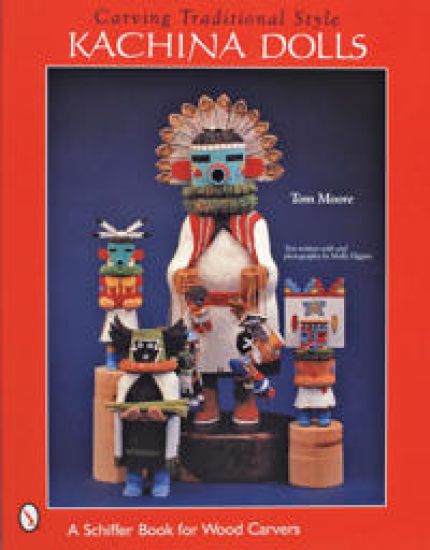
This book is written for beginning and intermediate wood carvers interested in carving a traditional Hopi kachina-style doll. Tom Moore, a respected kachina-style doll carver for forty years, provides historical information about the evolution of kachina dolls and kachina carvings. He traces the art form from the early days, when the dolls were intended to be educational toys for children, until modern times, when they became wood sculptures collected by non-Hopis, costing thousands of dollars. This fascinating book provides patterns, respectful background information, and step-by-step instructions for carving and painting Corn Dancer, Poli Sio Hemis, and Crow Mother in the traditional manner. Tom’s interpretations of the dolls include the traditional “belly-acher” pose, bright colors of the 1980s style, and the all-wood approach currently favored by Hopi carvers. The book provides a photo gallery, index of terms, and lists of tools used and materials required.