Kirjojen hintavertailu. Mukana 12 459 402 kirjaa ja 12 kauppaa.

Kirjailija

Tom O'Donoghue

Kirjat ja teokset yhdessä paikassa: 29 kirjaa, julkaisuja vuosilta 1997-2025, suosituimpien joukossa Irish Speakers and Schooling in the Gaeltacht, 1900 to the Present. Vertaile teosten hintoja ja tarkista saatavuus suomalaisista kirjakaupoista.

Mukana myös kirjoitusasut: Tom O’Donoghue

29 kirjaa

Kirjojen julkaisuhaarukka 1997-2025.

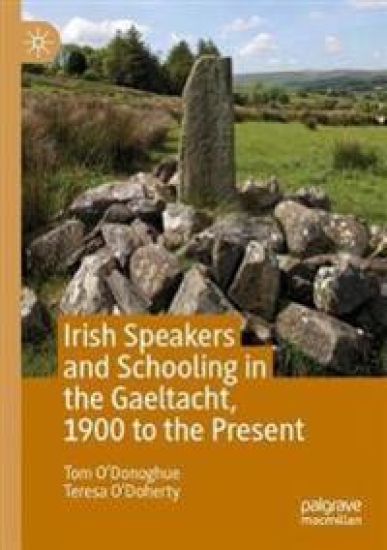
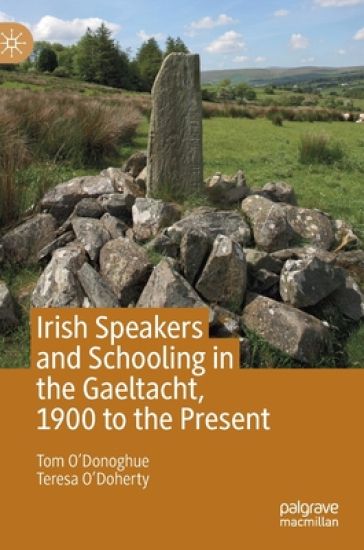
Irish Speakers and Schooling in the Gaeltacht, 1900 to the Present

Irish Speakers and Schooling in the Gaeltacht, 1900 to the Present

Tom O'Donoghue; Teresa O'Doherty

Springer Nature Switzerland AG
2019
sidottu
This book offers the first full-length study of the education of children living within the Gaeltacht, the Irish-speaking communities in Ireland, from 1900 to the present day. While Irish was once the most common language spoken in Ireland, by 1900 the areas in which native speakers of Irish were located contracted to such an extent that they became clearly identifiable from the majority English-speaking parts. In the mid-1920s, the new Irish Free State outlined the broad parameters of the boundaries of these areas under the title of ‘the Gaeltacht’. This book is concerned with the schooling of children there. The Irish Free State, from its establishment in 1922, eulogized the people of the Gaeltacht, maintaining they were pious, heroic and holders of the characteristics of an invented ancient Irish race. Simultaneously, successive governments did very little to try to regenerate the Gaeltacht or to ensure Gaeltacht children would enjoy equality of education opportunity. Furthermore, children in the Gaeltacht had to follow the same primary school curriculum as was prescribed for the majority English speaking population. The central theme elaborated on throughout the book is that this schooling was one of a number of forces that served to maintain the people of the Gaeltacht in a marginalized position in Irish society.
The Development of University Teaching Over Time

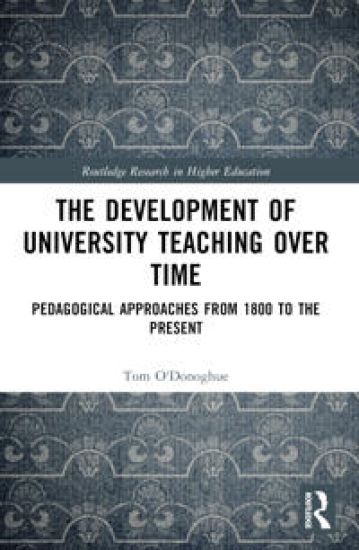
The Development of University Teaching Over Time

Tom O'Donoghue

TAYLOR FRANCIS LTD
2025
nidottu
Examining two centuries of university education, this book charts the development of pedagogical approaches since the year 1800 and how they have transformed higher education. While institutions for promoting advanced learning in various forms have existed in Asia, Africa, and the Arab world for centuries, the beginning of the nineteenth century saw the emergence of the modern model of a university with which we are familiar today. This book argues that, in the time since, seven broad teaching approaches were developed across the world which continue to be used today: the disputation, the lecture, the tutorial, the research seminar, workplace teaching, teaching through material making, and role-play. O’Donoghue demonstrates how each has been reconfigured and developed over time in response to the changing nature of higher education, as well as society more generally. This expansive book will be of great interest to historians of education, scholars of education more generally, and teacher practitioners interested in the pedagogical models that shape modern academia.
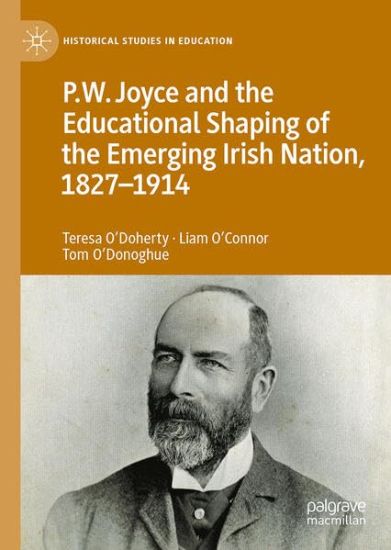
P.W. Joyce and the Educational Shaping of the Emerging Irish Nation, 1827-1914

P.W. Joyce and the Educational Shaping of the Emerging Irish Nation, 1827-1914

Teresa O'Doherty; Liam O’Connor; Tom O'Donoghue

Springer International Publishing AG
2024
sidottu
This book provides an exposition on the professional and cultural life of Patrick Weston Joyce (1827–1914), more popularly known as P. W. Joyce, who lived and worked during the final phase of British rule in Ireland. The focus throughout is very much on how family, locale, and schooling influenced this significant Irish patriot, polymath, and pioneering pedagogue who worked across a range of disciplines, including education, language, history, and music. Moreover, attention is paid to how his achievements were possible only because of the variety of leading roles he played in the development of the Irish National School System between 1845 and 1893. Thus positioned, Joyce was in many ways a significant choreographer of a slow revolution in which education, in both formal and informal settings, was used to educate the Irish people regarding their cultural heritage.
The Development of University Teaching Over Time

The Development of University Teaching Over Time

Tom O'Donoghue

TAYLOR FRANCIS LTD
2024
sidottu
Examining two centuries of university education, this book charts the development of pedagogical approaches since the year 1800 and how they have transformed higher education.While institutions for promoting advanced learning in various forms have existed in Asia, Africa, and the Arab world for centuries, the beginning of the nineteenth century saw the emergence of the modern model of a university with which we are familiar today. This book argues that, in the time since, seven broad teaching approaches were developed across the world which continue to be used today: the disputation, the lecture, the tutorial, the research seminar, workplace teaching, teaching through material making, and role-play. O’Donoghue demonstrates how each has been reconfigured and developed over time in response to the changing nature of higher education, as well as society more generally.This expansive book will be of great interest to historians of education, scholars of education more generally, and teacher practitioners interested in the pedagogical models that shape modern academia.
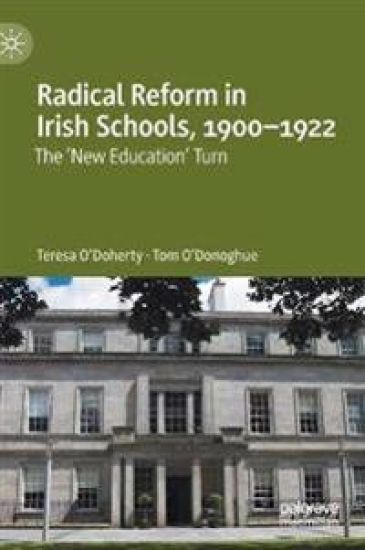
Radical Reform in Irish Schools, 1900-1922

Radical Reform in Irish Schools, 1900-1922

Teresa O'Doherty; Tom O'Donoghue

Springer Nature Switzerland AG
2022
nidottu
This book examines the radical reform that occurred during the final two decades of British rule in Ireland when William Starkie (1860–1920) presided as Resident Commissioner for the Board. Following the lead of industrialized nations, Irish members of parliament sought to encourage the establishment of a state-funded school system during the early nineteenth century. The year 1831 saw the creation of the Irish National School System. Central to its workings was the National Board of Education which had the responsibility for distributing government funds to aid in the building of schools, the payment of inspectors and teachers, the publication of textbooks, and the cost of teacher training. In the midst of radical political and cultural change within Ireland, visionaries and leaders like Starkie filled an indispensable role in Irish education. They oversaw the introduction of a radical child-centered primary school curriculum, often referred to as the ‘new education’. Filling a gap inIrish history, this book provides a much needed overview of the changes that occurred in primary education during the 22 years leading up to Ireland’s independence.
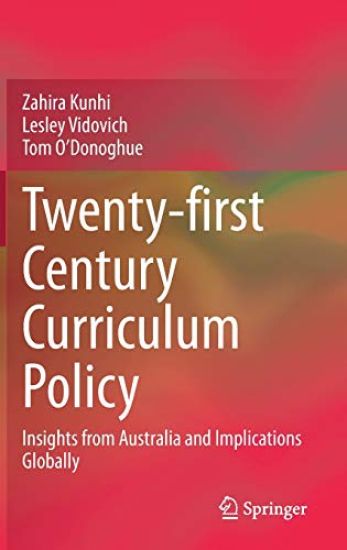
Twenty-first Century Curriculum Policy

Twenty-first Century Curriculum Policy

Zahira Kunhi; Lesley Vidovich; Tom O'Donoghue

Springer Nature Switzerland AG
2022
nidottu
This book focuses on the phenomenon of a ‘21st century curriculum’ and its role in preparing students for work and life in a rapidly changing global knowledge society. Its context is the global and diverse national influences on education policy agendas. The central concepts in the academic literature that underpins the phenomenon are globalisation, curriculum, and policy. The analysis spans global influences on the development of ‘21st century curriculum’ policy, the construction of such policy at the national and State levels in Australia, and the enactment of such policy in three select case-study schools and in relation to which both similarities and differences are identified. The global to local span and the international relevance of the exposition are both revisited to highlight major findings, to discuss them in relation to recent literature and to offer propositions about ‘21st century curriculum’ development that are of wide interest and relevance. Recommendations for policy and practice as well as possible future directions for research in the field follow.
Piety and Privilege

Piety and Privilege

Tom O'Donoghue; Judith Harford

Oxford University Press
2021
sidottu
For centuries, the Catholic Church around the world insisted it had a right to provide and organize its own schools. It decreed also that while nation states could lay down standards for secular curricula, pedagogy, and accommodation, Catholic parents should send their children to Catholic schools and be able to do so without suffering undue financial disadvantage. Thus, from the Pope down, the Church expressed deep opposition to increasing state intervention in schooling, especially during the nineteenth century. By the end of the 1920s however, it was satisfied with the school system in only a small number of countries. Ireland was one of those. There, the majority of primary and secondary schools were Catholic schools. The State left their management in the hands of clerics while simultaneously accepting financial responsibility for maintenance and teachers' salaries. During the period 1922-1967, the Church, unhindered by the State, promoted within the schools' practices aimed at 'the salvation of souls' and at the reproduction of a loyal middle class and clerics. The State supported that arrangement with the Church also acting on its behalf in aiming to produce a literate and numerate citizenry, in pursuing nation building, and in ensuring the preparation of an adequate number of secondary school graduates to address the needs of the public service and the professions. All of that took place at a financial cost much lower than the provision of a totally State-funded system of schooling would have entailed. Piety and Privilege seeks to understand the dynamic between Church and State through the lens of the twentieth century Irish education system.
Radical Reform in Irish Schools, 1900-1922

Radical Reform in Irish Schools, 1900-1922

Teresa O'Doherty; Tom O'Donoghue

Springer Nature Switzerland AG
2021
sidottu
This book examines the radical reform that occurred during the final two decades of British rule in Ireland when William Starkie (1860–1920) presided as Resident Commissioner for the Board. Following the lead of industrialized nations, Irish members of parliament sought to encourage the establishment of a state-funded school system during the early nineteenth century. The year 1831 saw the creation of the Irish National School System. Central to its workings was the National Board of Education which had the responsibility for distributing government funds to aid in the building of schools, the payment of inspectors and teachers, the publication of textbooks, and the cost of teacher training. In the midst of radical political and cultural change within Ireland, visionaries and leaders like Starkie filled an indispensable role in Irish education. They oversaw the introduction of a radical child-centered primary school curriculum, often referred to as the ‘new education’. Filling a gap inIrish history, this book provides a much needed overview of the changes that occurred in primary education during the 22 years leading up to Ireland’s independence.
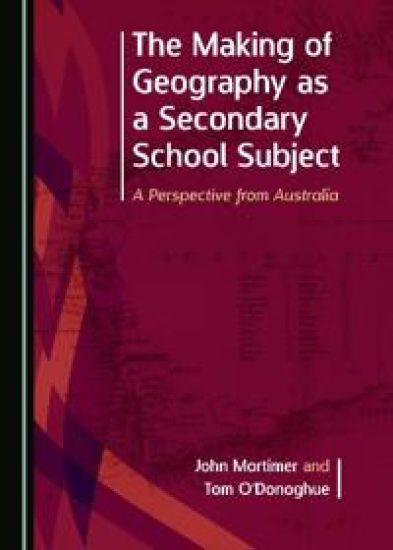
The Making of Geography as a Secondary School Subject

The Making of Geography as a Secondary School Subject

John Mortimer; Tom O’Donoghue

Cambridge Scholars Publishing
2021
sidottu
No work has ever been produced previously that shows how historically geography has been constructed as a subject for the senior years of secondary schooling in Western Australia from 1917 to 1997. In doing so, this book contributes to the existing corpus of international research on the history of curriculum and particularly the history of geography as a senior secondary school subject. Much of it is based on primary sources, including the textbooks and atlases used, along with syllabus manuals and geography examination papers. It also provides a framework for investigating the construction of senior secondary school geography curricula in other constituencies, and could act as a model for engaging in further research in curriculum history for other school subjects state-wide, nationally and internationally. The book also makes an important contribution to the fields of curriculum design, curriculum development and curriculum innovation. It will be of great interest to historians of education, comparative educationists, education leaders, policy makers and librarians.
Twenty-first Century Curriculum Policy

Twenty-first Century Curriculum Policy

Zahira Kunhi; Lesley Vidovich; Tom O'Donoghue

Springer Nature Switzerland AG
2021
sidottu
This book focuses on the phenomenon of a ‘21st century curriculum’ and its role in preparing students for work and life in a rapidly changing global knowledge society. Its context is the global and diverse national influences on education policy agendas. The central concepts in the academic literature that underpins the phenomenon are globalisation, curriculum, and policy. The analysis spans global influences on the development of ‘21st century curriculum’ policy, the construction of such policy at the national and State levels in Australia, and the enactment of such policy in three select case-study schools and in relation to which both similarities and differences are identified. The global to local span and the international relevance of the exposition are both revisited to highlight major findings, to discuss them in relation to recent literature and to offer propositions about ‘21st century curriculum’ development that are of wide interest and relevance. Recommendations for policy and practice as well as possible future directions for research in the field follow.
Irish Speakers and Schooling in the Gaeltacht, 1900 to the Present

Irish Speakers and Schooling in the Gaeltacht, 1900 to the Present

Tom O'Donoghue; Teresa O'Doherty

Springer Nature Switzerland AG
2020
nidottu
This book offers the first full-length study of the education of children living within the Gaeltacht, the Irish-speaking communities in Ireland, from 1900 to the present day. While Irish was once the most common language spoken in Ireland, by 1900 the areas in which native speakers of Irish were located contracted to such an extent that they became clearly identifiable from the majority English-speaking parts. In the mid-1920s, the new Irish Free State outlined the broad parameters of the boundaries of these areas under the title of ‘the Gaeltacht’. This book is concerned with the schooling of children there. The Irish Free State, from its establishment in 1922, eulogized the people of the Gaeltacht, maintaining they were pious, heroic and holders of the characteristics of an invented ancient Irish race. Simultaneously, successive governments did very little to try to regenerate the Gaeltacht or to ensure Gaeltacht children would enjoy equality of education opportunity. Furthermore, children in the Gaeltacht had to follow the same primary school curriculum as was prescribed for the majority English speaking population. The central theme elaborated on throughout the book is that this schooling was one of a number of forces that served to maintain the people of the Gaeltacht in a marginalized position in Irish society.
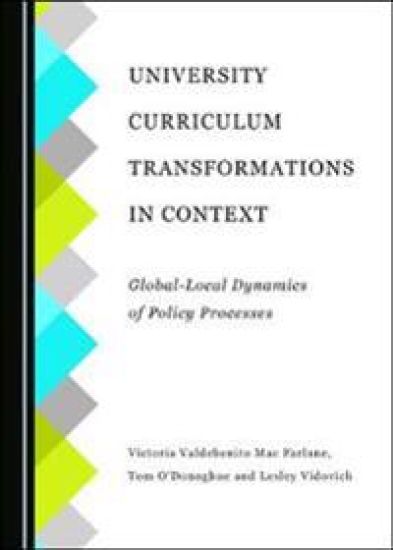
University Curriculum Transformations in Context

University Curriculum Transformations in Context

Victoria Valdebenito Mac Farlane; Lesley Vidovich; Tom O’Donoghue

Cambridge Scholars Publishing
2020
sidottu
Education systems and universities around the world are currently seeking to strengthen their competitive positioning in today's global knowledge era through curriculum policy transformations. These are taking place as a result of ideological shifts and policy flows, as well as networks between global and local levels, leading to radical university changes in curricula.Chile is no exception to this general trend. Here, universities are particularly aiming to address the challenges presented by globalization, internationalization and the global knowledge society. A major associated strategy involves the production and enactment of what is termed a '21st century curriculum policy', which refers to a curriculum that promotes the acquisition of such higher-order skills as creative and critical thinking, collaboration and problem-solving skills. The book details associated international influences in this regard, and presents a detailed exposition of how some universities in Chile have been addressing the challenges they face. Adopting a policy trajectory framework focused on four main contexts of policy processes (namely, policy influences, policy text production, policy enactment and longer-term policy outcomes), it focuses on case studies of three universities. The major informing concepts considered include neo-liberalism, nationalism, competing educational perspectives, powerful knowledge actors, high-stakes testing, equity, and social justice, among others. 'Food for thought' is provided for policy makers, curriculum developers and teachers not only in Chile, but also internationally.
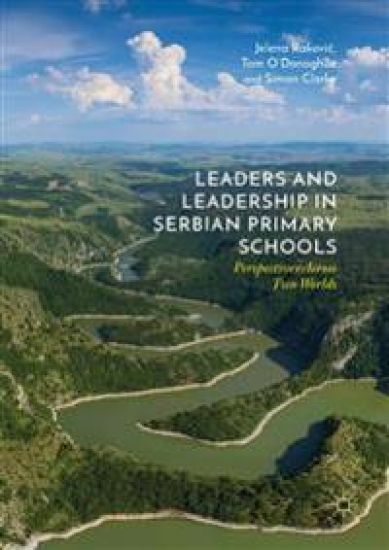
Leaders and Leadership in Serbian Primary Schools

Leaders and Leadership in Serbian Primary Schools

Jelena Rakovic; Tom O'Donoghue; Simon Clarke

Springer Nature Switzerland AG
2019
sidottu
This book explores the perspectives of primary school leaders in Serbia as they attempt to navigate its changing political, social and economic situation. As a post-socialist and post-conflict country, Serbia has moved from a state-ruled and planned economy to market-oriented consumerism and competitiveness. In the midst of a rapidly changing and evolving country, school leaders have found themselves on the front lines of a system where infrastructure and support have not been implemented consistently. The clash between the complexities of Serbia’s history and attempts to align education policies to those of the European Union has created unique challenges for primary school leaders: they are expected to be both objects and agents of change in a context where their own political position and relationships with students, parents and the teaching profession at large have been irrevocably altered. By illuminating the perspectives of the leaders themselves, this book emphasises the importance of these actors on the front line of Serbian education: its findings can equally be applied to other post-Communist and post-conflict contexts.
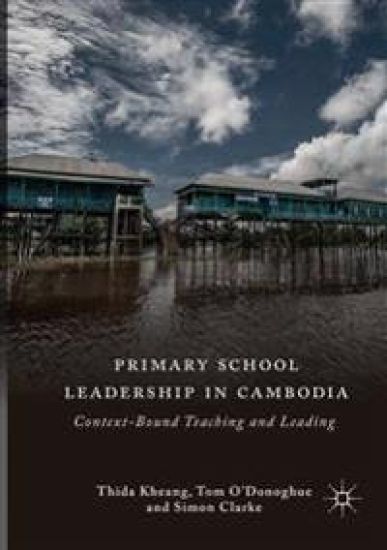
Primary School Leadership in Cambodia

Primary School Leadership in Cambodia

Thida Kheang; Tom O'Donoghue; Simon Clarke

Springer Nature Switzerland AG
2018
nidottu
This book investigates the relationship between context and leadership in post-conflict Cambodia. Building on the understanding that approaches to leadership are tightly woven within the contexts that leaders operate, the authors examine the case of primary school leadership in Cambodia. A low-income and post-conflict society rocked by civil war and genocide between the 1960s and the 1990s, the country is – perhaps unsurprisingly – faced with numerous challenges as it engages in the process of national rehabilitation and reconstruction, particularly in relation to the education system. The authors provide a comprehensive historical background to primary school leadership not only in Cambodia, but in post-conflict environments more broadly: informing school leadership preparation, development and support, and facilitating understanding of the context in which school leaders work. This book will be of value to students and scholars of primary school education and education in post-conflict countries, as well as to practitioners and policy makers.
Planning Your Qualitative Research Thesis and Project
The new edition of Planning Your Qualitative Research Thesis and Project provides easily accessible worked examples and valuable models which can be used as guides for plans and proposals. By demonstrating the thought and forward planning that is required when proposing a credible interpretivist study, this book provides the reader with all the theory and practical understanding necessary to conduct a successful qualitative research project. This new edition provides examples of contemporary topics related to a range of countries across the developed and developing world, and new chapters which include: An example of a ‘perspectives‘ study Policy studies and the interpretivist paradigm Life history studies Interactionist historical studies The interpretivist paradigm and research based on ‘problem focused‘ ideas With chapters and studies providing contemporary and relevant examples, this new edition is the perfect introductory guide for students looking to complete their first qualitative thesis project. Bridging the gap between theory and practice, it is an accessible introduction, and an invaluable resource for early stage doctoral students, and for students undertaking research and enquiry.
Planning Your Qualitative Research Thesis and Project
The new edition of Planning Your Qualitative Research Thesis and Project provides easily accessible worked examples and valuable models which can be used as guides for plans and proposals. By demonstrating the thought and forward planning that is required when proposing a credible interpretivist study, this book provides the reader with all the theory and practical understanding necessary to conduct a successful qualitative research project. This new edition provides examples of contemporary topics related to a range of countries across the developed and developing world, and new chapters which include: An example of a ‘perspectives‘ study Policy studies and the interpretivist paradigm Life history studies Interactionist historical studies The interpretivist paradigm and research based on ‘problem focused‘ ideas With chapters and studies providing contemporary and relevant examples, this new edition is the perfect introductory guide for students looking to complete their first qualitative thesis project. Bridging the gap between theory and practice, it is an accessible introduction, and an invaluable resource for early stage doctoral students, and for students undertaking research and enquiry.
Primary School Leadership in Cambodia

Primary School Leadership in Cambodia

Thida Kheang; Tom O'Donoghue; Simon Clarke

Springer International Publishing AG
2018
sidottu
This book investigates the relationship between context and leadership in post-conflict Cambodia. Building on the understanding that approaches to leadership are tightly woven within the contexts that leaders operate, the authors examine the case of primary school leadership in Cambodia. A low-income and post-conflict society rocked by civil war and genocide between the 1960s and the 1990s, the country is – perhaps unsurprisingly – faced with numerous challenges as it engages in the process of national rehabilitation and reconstruction, particularly in relation to the education system. The authors provide a comprehensive historical background to primary school leadership not only in Cambodia, but in post-conflict environments more broadly: informing school leadership preparation, development and support, and facilitating understanding of the context in which school leaders work. This book will be of value to students and scholars of primary school education and education in post-conflict countries, as well as to practitioners and policy makers.
Global to Local Curriculum Policy Processes

Global to Local Curriculum Policy Processes

Susan Ledger; Lesley Vidovich; Tom O'Donoghue

Springer International Publishing AG
2016
nidottu
This book explores the dynamics of curriculum policy processes involved in the adoption, production and enactment of the International Baccalaureate Primary Years Programme (IBPYP), accredited by the International Baccalaureate Organization (IBO). It addresses deficits in current literature and provides insight into and the complexities involved within a framework that takes cognisance of the relationships between global, regional, national and local levels of education policy processes. In doing so, it contributes to the current body of research on international education, remote education and policy processes. The IBPYP is one of the three programmes that go to make up the increasingly popular suite of programmes offered by the IBO. Given the exponential growth of international schools caused by an ever changing globalized world and a mobile workforce, international curriculum policy is becoming more complex. This has lead to a recognition of the need for a range of policy analysis studies in the field. The study presented in this book was conceptualised in the light of such recognition. This relatively uncharted field has been explored by focusing on one of the most ‘unusual’ settings. Accordingly, the adoption, production and enactment of the IBPYO at three remote international schools has been examined. The study also addresses how the phenomena of ‘international schools’ and ‘remote schools’ complement or compete with, each other. This results in a better understanding of the educational policies informing both ‘international schools’ and ‘remote schools’ and the interconnectivity that might exist between them.
Understanding Contemporary Education
Understanding Contemporary Education offers an essential exploration of key concepts and issues in education that will allow education studies students, as well as trainee and practising teachers to engage in reflection, not only on work at the classroom level, but on education more broadly. Using detailed examples, the book problematises many popular and taken-for-granted views, allowing the reader to challenge and seriously consider the nature of the education enterprise.In each chapter, a concept is carefully considered, with major features, controversies, and strengths and weaknesses highlighted. Key follow-up questions challenge the reader to reflect on specific issues, and encourage involvement, not just in their own teaching, but in the planning and determination of the total programme of their school, and where possible, that of the nation.The book is divided into seven main parts:The Social Context of EducationEducation PolicyCurriculumTeaching and LearningLeadership in EducationTeacher Preparation International Developments in Education.Drawing upon a wide variety of theoretical positions, Understanding Contemporary Education provides an accessible introduction to key themes and concepts in education, challenging readers to fully consider the purpose of education and to reflect intelligently on issues that affect all schools. It is a must-read book for those on education studies courses, as well as trainee and practising teachers.