Kirjojen hintavertailu. Mukana 12 537 541 kirjaa ja 12 kauppaa.

Kirjailija

Tom Spalding

Kirjat ja teokset yhdessä paikassa: 4 kirjaa, julkaisuja vuosilta 2014-2025, suosituimpien joukossa Walking as Critical Pedagogy. Vertaile teosten hintoja ja tarkista saatavuus suomalaisista kirjakaupoista.

4 kirjaa

Kirjojen julkaisuhaarukka 2014-2025.

Walking as Critical Pedagogy

Walking as Critical Pedagogy

Maggie O'Neill; Danielle O'Donovan; John Barimo; Gerard Mullally; Amin Sharifi Isaloo; Kieran Keohane; Tom Spalding; Katharina Swirak; Tom Boland; Ray Griffin

TAYLOR FRANCIS LTD
2025
sidottu
Defining the principles and practices of walking as critical pedagogy, this book engages with social questions and challenges related to understandings of the Anthropocene.Through a series of chapters that operationalize walking as a form of participatory pedagogy, it explores issues including migration and borders, sustainability and climate change, gender and feminist thought, the labour market, crime and rehabilitation, and urban life and regeneration. Showing how walking enables us to learn creatively, convivially, and critically on the move in city spaces, while thinking relationally, the authors demonstrate the importance of space, time and place: the layers of history embedded in the present, and the importance of active, embodied, participatory, collaborative and creative learning.A pioneering approach to walking as a form of engagement and learning, Walking as Critical Pedagogy will appeal to researchers and students across the social sciences interested in new methods and research methodologies, and creative ways of teaching and learning about - and engaging with - major global issues in society.
Walking as Critical Pedagogy

Walking as Critical Pedagogy

Maggie O'Neill; Danielle O'Donovan; John Barimo; Gerard Mullally; Amin Sharifi Isaloo; Kieran Keohane; Tom Spalding; Katharina Swirak; Tom Boland; Ray Griffin

TAYLOR FRANCIS LTD
2025
nidottu
Defining the principles and practices of walking as critical pedagogy, this book engages with social questions and challenges related to understandings of the Anthropocene.Through a series of chapters that operationalize walking as a form of participatory pedagogy, it explores issues including migration and borders, sustainability and climate change, gender and feminist thought, the labour market, crime and rehabilitation, and urban life and regeneration. Showing how walking enables us to learn creatively, convivially, and critically on the move in city spaces, while thinking relationally, the authors demonstrate the importance of space, time and place: the layers of history embedded in the present, and the importance of active, embodied, participatory, collaborative and creative learning.A pioneering approach to walking as a form of engagement and learning, Walking as Critical Pedagogy will appeal to researchers and students across the social sciences interested in new methods and research methodologies, and creative ways of teaching and learning about - and engaging with - major global issues in society.
Designed for Life

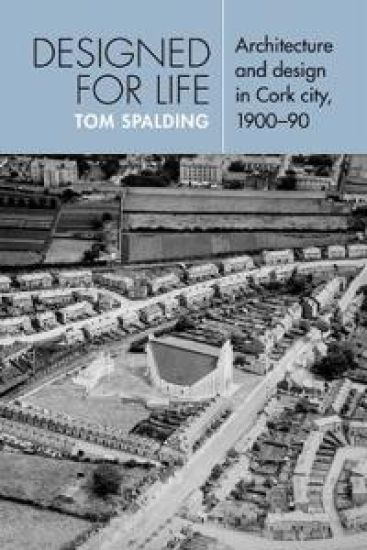
Designed for Life

Tom Spalding

CORK UNIVERSITY PRESS
2025
sidottu
Designed for Life: Architecture and design in Cork city, 1900-90 is the first detailed study of twentieth century design dedicated to an Irish provincial city and sets the standard for examining this fascinating period. Whilst the political and military history of Cork have been exhaustively studied, the physical changes to the city have largely been ignored, and little published on the houses, pubs, factories and other quotidian buildings where its people spent their lives. Whilst focusing on buildings, the book also includes examples of interior design, graphic design and corporate identity.Though a few notable buildings (the Modern masterpiece of the church of Christ the King, and the 1915 Celtic Revival Honan Chapel) have been explored, the design history of the city has only been briefly investigated. In the absence of extensive detailed, well-referenced and solid research, the twentieth century architectural patrimony of the city has been largely left to fend for itself, with the result that many important buildings have been demolished or insensitively altered. The book consists of an Introduction setting the scene for the place of design in Ireland and Cork in the twentieth century and a Conclusion which questions the city's self-identification as 'The Rebel City'. The remaining ten chapters are arranged chronologically with each focusing on a different building typology. As well as exploring the design of the city, this book aims to do three other things. By presenting the social and design history of the city it will raise awareness of the value and uniqueness of what remains, promoting a pride in the urban realm. Secondly, it is intended that it will spur the curiosity of other researchers, both amateur and professional, to study the field further, picking up the threads laid down here. Finally, it will provide reliable data which can be used by those seeking to protect and restore surviving buildings to their former glory.
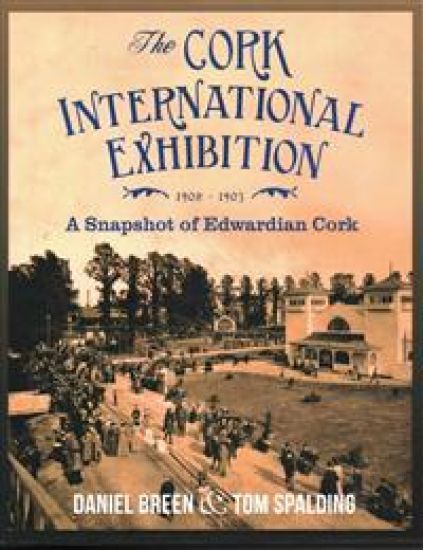
The Cork International Exhibition,1902-1903

The Cork International Exhibition,1902-1903

Daniel Breen; Tom Spalding

Irish Academic Press Ltd
2014
sidottu
In this accessible and attractive book, beautiful illustrations accompany an involving contextualization of life in Ireland's Cork City at the beginning of the 20th century. Focusing on the "International Exhibition of Manufactures, Arts, Products and Industries," a monumental event which opened its doors in the summer of 1902 and which Cork City has not paid witness to before or since, local historians Daniel Breen and Tom Spalding provide an enlightening account of an Irish city during a time when civic and cultural life was celebrated in the spirit of the age, and not obscured by the divisive politics that severely marked the preceding century and following decade. The book provides a picture of Edwardian Cork, going beyond reportage to instill a real sense of the age. The International Exhibition was emblematic of this remarkably cooperative period, seeing individuals of strongly opposing political backgrounds working in unison and interacting with a huge array of international exhibitors from as far away as Russia, China, and Turkey. As an exhibition devoted to art and industry, the Cork International Exhibition acted as a focal point that expanded upon contemporary art, architecture, music, sports, and more. Filled with colorful illustrations of archival material, this elegant book presents a complete picture of the astonishing scale and vibrancy of this immense occasion in Ireland's social history. Exhibitions of this kind were showcased in major global cities, such as London, Paris, Glasgow, St. Louis, and Chicago. The fact that it came to a burgeoning city such as Cork, ahead of Belfast or Dublin, was of historic importance within Ireland.