Kirjojen hintavertailu. Mukana 12 595 353 kirjaa ja 12 kauppaa.

Kirjailija

Tom Steffen

Kirjat ja teokset yhdessä paikassa: 10 kirjaa, julkaisuja vuosilta 2008-2024, suosituimpien joukossa Reflections on 21st Century Orality. Vertaile teosten hintoja ja tarkista saatavuus suomalaisista kirjakaupoista.

10 kirjaa

Kirjojen julkaisuhaarukka 2008-2024.

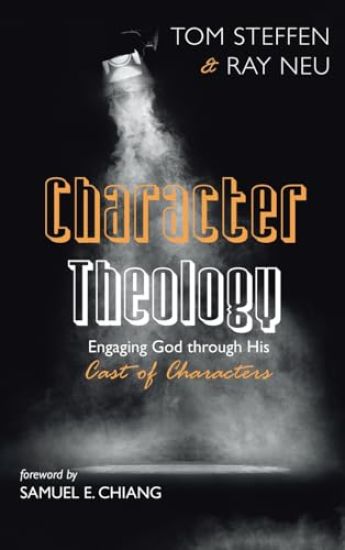
Character Theology

Character Theology

Tom Steffen; Ray Neu; Samuel E Chiang

Pickwick Publications
2024
sidottu
Character Theology provides a natural, universal way for the world to engage God through his chosen cast of characters. As the media eras continue to change (oral to print to digital-virtual), too many Bible scholars, and consequently pastors and Bible teachers in the West and beyond, lack capability to effectively communicate Scripture to Millennials, Gen Z, and Gen Alpha. These generations find little if any relevance in the Christianity promoted by those stuck in modernity's sticky abstract systematic theology. Character Theology relates, sticks, and transforms these generations. Why? Because people grasp and engage God most naturally and precisely through his interaction with biblical characters and their interaction with each other Characters communicate the Creator's characteristics. The roadmap to the recovery and expansion of Christianity in the twenty-first century will be through Bible characters.
Reflections on 21st Century Orality

Reflections on 21st Century Orality

Tom Steffen; Enoch Wan

Western Academic Press
2022
pokkari
This book is a collection of papers on "orality," based on the research findings of a dozen contributors. The twelve chapters are organized into two parts. The first part focuses on the integration of "orality" with several disciplines such as hermeneutics, homiletics, the arts, etc. Part two is regional studies of Africa, South America, global south, etc. It is a collective reflection on "orality" in the context of 21st century historically, theoretically and pedagogically.
The Return of Oral Hermeneutics

The Return of Oral Hermeneutics

Tom Steffen; William Bjoraker; R Daniel Shaw

Wipf Stock Publishers
2020
pokkari
Have Western exegetes turned an Eastern book into a Western one? Has our fondness for a fixed printed text capable of being analyzed with precision and exactitude blinded us to other hermeneutic possibilities? Does God require all people to be able to analyze grammar to interpret Scripture? Does God assume all people can interpret Scripture through oral means? The authors recognize the effects of centuries of literacy socialization that produced a blind spot in the Western Christian world--the neglect by most in the academies, agencies, and assemblies of the foundational and forceful role orality had on the biblical text and teaching. From the inspired spoken word of the prophets, including Jesus (pre-text), to the elite literate scribes who painstakingly hand-printed the sacred text, to post-text interpretation and teaching, the footprint of orality throughout the entire process is acutely visible to those having the oral-aural influenced eyes of the Mediterranean ancients. Could oral hermeneutics be the "mother of relational theology"?
The Return of Oral Hermeneutics

The Return of Oral Hermeneutics

Tom Steffen; William Bjoraker; R Daniel Shaw

Wipf Stock Publishers
2020
sidottu
Have Western exegetes turned an Eastern book into a Western one? Has our fondness for a fixed printed text capable of being analyzed with precision and exactitude blinded us to other hermeneutic possibilities? Does God require all people to be able to analyze grammar to interpret Scripture? Does God assume all people can interpret Scripture through oral means? The authors recognize the effects of centuries of literacy socialization that produced a blind spot in the Western Christian world--the neglect by most in the academies, agencies, and assemblies of the foundational and forceful role orality had on the biblical text and teaching. From the inspired spoken word of the prophets, including Jesus (pre-text), to the elite literate scribes who painstakingly hand-printed the sacred text, to post-text interpretation and teaching, the footprint of orality throughout the entire process is acutely visible to those having the oral-aural influenced eyes of the Mediterranean ancients. Could oral hermeneutics be the "mother of relational theology"?
Connected Learning

Connected Learning

L Lynn Thigpen; Tom Steffen

Pickwick Publications
2020
sidottu
How does the world's oral majority--adults with limited formal education (ALFE)--really prefer to learn? Few pause long enough to ask those who eschew print. The result of scholarly research and prolonged immersion in the Cambodian culture, Connected Learning exposes the truth about orality--the shame associated with limited formal education; the unfortunate misnomer that is orality; the place of spirituality, grace, and hope; and the obvious but overlooked learning preferences. ALFE have different ways of learning and knowing, a different epistemology and culture from print learners, even though we all begin alike. The choice is not between Ong's orality or literacy, but between learning from people or from print. Dr. Thigpen, a veteran cross-cultural worker, shares remedies for the hegemony and inequities unwittingly fostered by the literate minority. In a dominant culture where learning from people is prime, how can educators with a preference for print adapt? Providing an important tool in the Learning Quadrants diagram, Connected Learning advises teaching to the quadrant and calls for seven necessary shifts in teaching. Anyone versed in orality will admit these findings have ""global implications and applications"" (Steffen). The reader who heeds will positively impact a huge portion of humanity.
Connected Learning

Connected Learning

L Lynn Thigpen; Tom Steffen

Pickwick Publications
2020
pokkari
How does the world's oral majority--adults with limited formal education (ALFE)--really prefer to learn? Few pause long enough to ask those who eschew print. The result of scholarly research and prolonged immersion in the Cambodian culture, Connected Learning exposes the truth about orality--the shame associated with limited formal education; the unfortunate misnomer that is orality; the place of spirituality, grace, and hope; and the obvious but overlooked learning preferences. ALFE have different ways of learning and knowing, a different epistemology and culture from print learners, even though we all begin alike. The choice is not between Ong's orality or literacy, but between learning from people or from print. Dr. Thigpen, a veteran cross-cultural worker, shares remedies for the hegemony and inequities unwittingly fostered by the literate minority. In a dominant culture where learning from people is prime, how can educators with a preference for print adapt? Providing an important tool in the Learning Quadrants diagram, Connected Learning advises teaching to the quadrant and calls for seven necessary shifts in teaching. Anyone versed in orality will admit these findings have ""global implications and applications"" (Steffen). The reader who heeds will positively impact a huge portion of humanity.
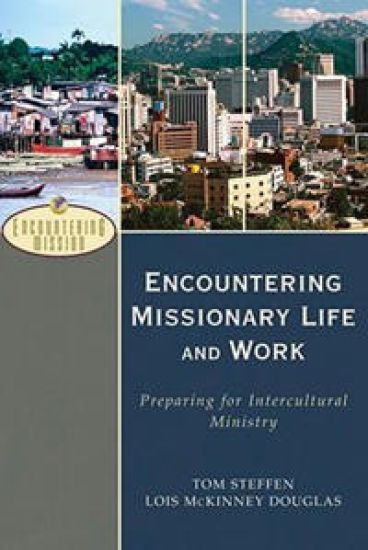
Encountering Missionary Life and Work – Preparing for Intercultural Ministry

Encountering Missionary Life and Work – Preparing for Intercultural Ministry

Tom Steffen; Lois McKinney Douglas

Baker Academic, Div of Baker Publishing Group
2008
nidottu
This new volume in the award-winning Encountering Mission series is for current and future missionaries. It provides practical guidance regarding getting ready for the mission field and the realities of life on the field. The authors are well qualified to write such a manual, each having served as a missionary for more than twenty years and each having taught missions in seminary.The authors begin by examining the contemporary context for missions, including the recognition that the world's mission fields are in constant and often rapid change. They then discuss aspects of preparing oneself for the mission field, beginning with home-front preparations and moving to on-the-field preparations. The final section deals with practical issues and challenges of missionary life.