Kirjojen hintavertailu. Mukana 12 595 353 kirjaa ja 12 kauppaa.

Kirjailija

Tom Williamson

Kirjat ja teokset yhdessä paikassa: 28 kirjaa, julkaisuja vuosilta 1998-2027, suosituimpien joukossa Lost Gardens of Hertfordshire. Vertaile teosten hintoja ja tarkista saatavuus suomalaisista kirjakaupoista.

28 kirjaa

Kirjojen julkaisuhaarukka 1998-2027.

Environment, Society and Landscape in Early Medieval England
The origins of England's regional cultures are here shown to be strongly influenced by the natural environment and geographical features. The Anglo-Saxon period was crucial in the development of England's character: its language, and much of its landscape and culture, were forged in the period between the fifth and the eleventh centuries. Historians and archaeologists have long been fascinated by its regional variations, by the way in which different parts of the country displayed marked differences in social structures, settlement patterns, and field systems. In this controversial and wide-ranging study, the author argues that such differences were largely a consequence of environmental factors: of the influence of climate, soils and hydrology, and of the patterns of contact and communication engendered by natural topography. He also suggests that such environmental influences have been neglected over recent decades by generations of scholars who are embedded in an urban culture and largely divorced from the natural world; and that an appreciation of the fundamental role of physical geography in shaping human affairs can throw much new light on a number of important debates about early medieval society. The book will be essential reading for all those interestedin the character of the Anglo-Saxon and Scandinavian settlements, in early medieval social and territorial organization, and in the origins of the England's medieval landscapes. Tom Williamson is Professor of LandscapeHistory, University of East Anglia; he has written widely on landscape archaeology, agricultural history, and the history of landscape design.
Ancient Trees in the Landscape

Ancient Trees in the Landscape

Gerry Barnes; Tom Williamson

Windgather Press
2011
nidottu
Ancient Trees in the Landscape is the outcome of many years research into the history of trees in Norfolk, and represents the first detailed, published account of the ancient and traditionally managed trees of any English county. Yet it is far more than a regional survey. It is an exploration of how trees can be studied as part of the landscape. It discusses how accurately trees can be dated; explains why old trees are found in certain contexts and not in others; discusses traditional management practices and how these changed over time; and looks at the various ways in which trees have been used in parks and gardens. Above all, it considers how trees were regarded by people in the past, and how this has affected their survival to the present. Ancient Trees in the Landscape is a fascinating and original study which sets out a new agenda in landscape history. It will be essential reading for countryside managers and conservationists, and for all those interested in landscape history, arboriculture, and the history of the English countryside.
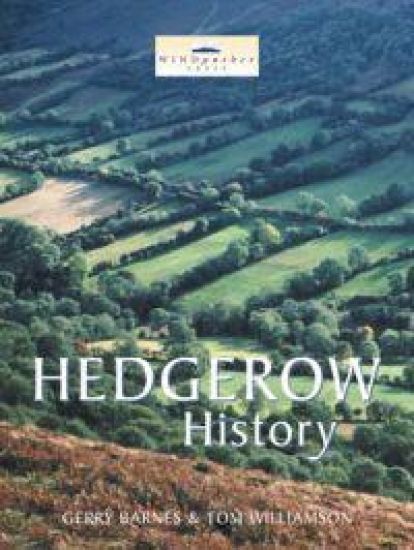
Hedgerow History

Hedgerow History

Barnes Gerry; Tom Williamson

Windgather Press
2008
nidottu
Oxbow says: For many years hedges have been the most common field boundary in rural Britain, providing a stock-proof barrier, a field boundary and a haven for wildlife. Despite this, they are rarely studied in any detail in landscape archaeology. The authors of Hedgerow History rightly argue that hedges, as an essential feature of the landscape, their origins and development, are as worthy of study as any other part of the landscape. Their book focuses on the species content and diversity of hedges, how these came about and how they changed over time. The introduction provides the background to hedges in Britain, the development of field boundaries, changes in fields and farming, especially the impact of enclosure, hedgerow management, and methods of dating hedges. In an attempt to evaluate the pioneering work of Hooper and Pollard in the 1960s and 1970s, and gain insights into the diversity of hedges and the possible human and animal reasons for it, Barnes and Williamson carried out a detailed survey of hedgerows in Norfolk. Finding 61 shrub species among the Norfolk hedgerows, they attempt to tie this data in with evidence on geology, soils, climate, woodland, enclosure, farming practices and historical factors, as an indicator of the processes of continuity and change that have taken place in the wider landscape.
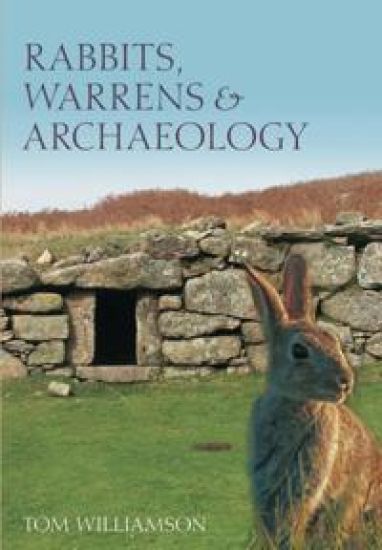
Rabbits, Warrens and Archaeology

Rabbits, Warrens and Archaeology

Tom Williamson

The History Press Ltd
2007
nidottu
Rabbit farming was an important industry in post-medieval times, and has left many traces in the modern landscape, the real significance of which has not always been recognised - leading to much confusion among archaeologists. Written by Britain's leading landscape archaeologists, this book talks about this subject.
The Transformation of Rural England

The Transformation of Rural England

Tom Williamson

University of Exeter Press
2002
sidottu
This is the first book to study in detail the making of the rural English landscape in the eighteenth and nineteenth centuries. For decades historians have debated the nature, timing and even the existence of the 'agricultural revolution'. This book approaches the debate from a new direction: that of landscape archaeology. It argues that there was not one 'agricultural revolution' but many. The enclosure of open fields and the reclamation of heath and downland - spearheaded by aristocratic improvers and large capitalist farmers - mesmerised contemporaries. But most enclosures had little to do with the improvement of arable farming, large landowners played a minor role and the really revolutionary changes took place elsewhere, in parts of England which were not characterised by large estates, and were the work of tenant farmers rather than landowners.
The Transformation of Rural England

The Transformation of Rural England

Tom Williamson

University of Exeter Press
2002
nidottu
Tom Williamson studies in detail the making of the rural English landscape in the 18th and 19th centuries. For decades historians have debated the nature, timing and even the existence of the "agricultural revolution". This book approaches the debate from the direction of landscape archaeology.
Water Management in the English Landscape

Water Management in the English Landscape

Hadrian Cook; Tom Williamson

Keele University Press
1999
nidottu
This book represents a major step towards a truly holistic landscape history. It takes as its theme the management of water in the agricultural landscape and brings together approaches of scientists on the one side and economic historians and archaeologists on the other. In each of the main sections an ecologist, soil scientist or hydrologist begins by setting out the scientific dynamics of each system. The archaeologists and historians then reassess the historical evidence for water management since the Roman period. The result is an important reinterpretation of some of the key questions in British landscape development. Throughout the writers investigate the implications of their findings for current conservation practice and for the management of historic landscapes. * First time such a wide range of perspectives have been brought together in one place: historical, archaeological and scientific * Gives considerations for current conservation practice * Will affect management of historic landscapes