Kirjojen hintavertailu. Mukana 12 595 353 kirjaa ja 12 kauppaa.
Kirjailija
Tom Wolf
Kirjat ja teokset yhdessä paikassa: 19 kirjaa, julkaisuja vuosilta 2001-2026, suosituimpien joukossa Bradley Walker Tomlin. Vertaile teosten hintoja ja tarkista saatavuus suomalaisista kirjakaupoista.
Presents new scholarship, images, and primary sources that explore the art and legacy of a critical yet under-recognized figure in Abstract Expressionism and twentieth-century American art."The gentleman Abstract Expressionist," in the words of poet John Ashbery, Bradley Walker Tomlin was known for his elegance in both painting style and personal comportment. The book includes over forty paintings, works on paper, and printed materials, charting Tomlin's development from art nouveau illustrations of the 1920s to large-scale Abstract Expressionist paintings of the 1950s. The exhibition explores his formative years in Syracuse, early patronage by Condé Nast, and the important role played by the Woodstock art colony. Tomlin is best known as a key figure in the New York School and had close friendships with Adolph Gottlieb, Philip Guston, and Robert Motherwell. Unlike most of his peers, Tomlin focused on the impersonal possibilities of art. His carefully orchestrated paintings resonate with our time's renewed interest in abstraction and design.

Un anfiteatro donde se disecaban animales, una duna escondida en pleno centro de la ciudad, el vestigio m s antiguo del Muro de Berl n olvidado en Pankow, el excepcional interior de una iglesia expresionista, un edificio que es una copia del Palacio Farnesio en Roma, los vestigios de un campo de acogida para los que pasaban del oeste al este, un edificio de hormig n de 12000 toneladas para medir la solidez del suelo, una performance luminosa en la capilla de un cementerio, una obra maestra desconocida de la arquitectura brutalista, la colina artificial desde donde el pionero de la aviaci n Otto Lilienthal hizo sus primeros intentos de vuelo, una calle que cierra de 22 h a 6 h para proteger la actividad de los castores... Lejos de las multitudes y los t picos clich s, Berl n sigue guardando tesoros escondidos que desvela nicamente a los habitantes y viajeros que buscan salirse de los caminos trillados. Una gu a indispensable para los que cre an que conoc an Berl n o para los que deseen descubrir la otra cara de la ciudad.
Let Secret Berlin guide you around the unusual and unfamiliar. Step off the beaten track with this fascinating Berlin guide book and let our local experts show you the well-hidden treasures of this fascinating city. Ideal for local inhabitants, curious visitors and armchair travellers alike. Wander around the hotel lobby where a glass floor reveals excavations of the old medieval town; take a seat in an amphitheatre where animal dissections once took place; let yourself be moved by the sounds of the largest pipe organ, still used today to bring silent films to life; take a break in one of the few well-preserved Baroque vaults housing coffins fitted with windows; climb onto a bunker that contained anti-aircraft guns during the Second World War and accept a Russian soldier's invitation to admire it from within; take a dip in one of the most beautiful bathing spots built during Europe's Art Nouveau movement; enjoy a stroll under the Spree river; go see the very first computer (designed by a Berliner) or the first synthesizer of East Germany; scale the mountain of rubble where a Skiing World Cup race was held; station yourself at the peak of the artificial hill where aviation pioneer Otto Lilienthal made his first attempts at flight; and grab a bite on the island in the Havel river where Werner von Braun launched his first rocket. ?Absent from the usual "must-see" lists despite residing in the heart of the bustling capital, fascinating historical treasures can be found all over Berlin's city centre and its large surrounding neighbourhoods. Take another look and discover the hidden gems eluding those who think they know Berlin inside out.
Japanese-born artist Yasuo Kuniyoshi's career and art evolved from innocence and early success to complexity and disillusionment. Born in Japan in 1889, Kuniyoshi arrived in the United States as a teenager and studied art in New York. He came into prominence during the 1920s through his distinctive modern figural style, original subjects, and humour. His work became more sensuous and worldly after two long stays in Paris, as he painted moody, reflective women and still lifes with unusual objects. Kuniyoshi was thoroughly integrated into American life and the art world-in 1948 the Whitney Museum of American Art held a retrospective of his work, the first retrospective that museum ever devoted to a living artist-but immigration law prevented him from becoming an American citizen. Classified an "enemy alien" after the bombing of Pearl Harbor, he remained steadfastly on the side of his adopted country during the painful war years, working with the Office of War Information to create artworks indicting Japanese atrocities. After the war, Kuniyoshi developed a compelling late style, with bitter subjects and paradoxically bright colours. The Artistic Journey of Yasuo Kuniyoshi is a welcome introduction to this complex artist's entire career, featuring seventy of his best works from public and private collections in America and Japan. More than half a century after his death in 1953, this is a chance for a new generation to assess and enjoy Kuniyoshi's life and art. AUTHOR: Tom Wolf is Professor of Art History, Bard College, NY. An artist, he has had paintings exhibited at Artists Space, New York; Los Angeles Institute of Contemporary Art; Koslow Gallery, Los Angeles and Art Gallery of Western Australia. He is a recipient of Andrew W. Mellon Fellowship, and Winterthur Museum and Library Fellowships. 155 colour illustrations
God created us for a purpose-filled life. How old must a child be before he/she can begin to understand his/her God-given purpose? Most of us can remember playing games as children about being, teachers, doctors, preachers, parents, actors, athletes and so on. Children are imaginative, adventurous, often fearless, and bold about discovering, "What I want to be when I grow up." So often, when children get older, they lose their focus and childlike zeal as the events of life take over the outcomes of life.This book is so important, because it takes the concepts of Identity and Destiny, 7 Steps to a Purpose-Filled Life, and transforms it into an adventure story, complete with all of the assessments and exercises and it becomes a work that is understood by children. It is written to help children identify the skills and gifts that God has placed within them so that they might learn at a young age, and begin to direct their education, hobbies, and relationships in the direction that is most pleasing to God, and most fulfilling to them. Proverb 22:6 says that we are to train a child in the way he/she should go, and when they are older, they will not turn away from it. (paraphrase.) In the original language, it is emphasized that we are to train our children according to their individual inclination, or God-given bent. Parents are uniquely equipped to understand their children's passions, strengths and talents. As children grow, their personalities begin to shine. This book is written to equip parents and children's minister, coaches, and children's counselors; to discover the deep desires and strengths of children. It is best suited to 4th and 5th grade students, but 2nd and 3rd grade students are able to understand and gain insights from it as well.
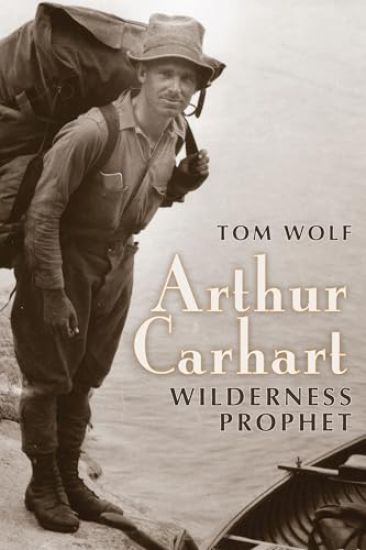
Arthur Carhart (1892 -1978), America's first champion of wilderness, the first Forest Service landscape architect, and the most popular conservation writer of mid-century America, won none of the titan status of his contemporary Aldo Leopold. A political maverick, he refused to side with any major advocacy group and none has made him its saint. Carhart was a grassroots thinker in a top-down era.Arthur Carhart, the first biography of this Republican environmentalist and major American thinker, writer, and activist, reveals the currency of his ideas. Tom Wolf elucidates Carhart 's vision of conservation as "a job for all of us," with citizens, municipal authorities, and national leaders all responsible for the environmental effects of their decisions. Carhart loved the local and decried interest groups - from stockmens' associations to wilderness lobbies - as cliques attempting blanket control. He pressured land management agencies to base decisions on local ecology and local partnerships. A lifelong wilderness advocate who proposed the first wilderness preserve at Trappers Lake, Colorado, in 1919, Carhart chose to oppose the Wilderness Act, heartsick at its compromises with lobbies. Because he shifted his stance and changed his views in response to new information, Carhart is not an easy subject for a biography. Wolf traces Carhart's twists and turns to show a man whose voice was distinctive and contrary, who spoke from a passionate concern for the land and couldn't be counted on for anything else. Readers of American history and outdoor writing will enjoy this portrait of a historic era in conservation politics and the man who so often eschewed politics in favor of the land and people he loved.
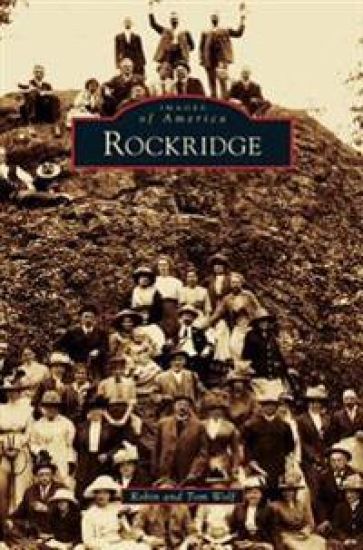
The spirited Oakland neighborhood of Rockridge has been spotlighted in the national media twice in recent years. Hard-hit by a disastrous fire and named a top livable neighborhood by a national magazine, the north Oakland neighborhood has had a diverse and eventful history. Early booms in commerce and population pushed Oakland city boundaries east and north through farmland, toward the university town of Berkeley, and the neighborhood of Rockridge was formed. Shaped by its farms, homes, streetcars, interurban trains, shops, markets, movie houses, a quarry, and Oakland's first reservoir, Rockridge's story is one of hard labor in the quarry and the practice of the fine arts, of ethnic markets and the short-lived grand estates of mining tycoons, of the taming of wild creeks and the subdivision of open spaces. The town witnessed experiments in planned development, the effect of freeways and rapid transit, changes brought by the Depression and World War II, the transformation of College Avenue, and trends in home building that today allow the landscape to reveal Rockridge's history.
Juni/Juli 1746. Endlich Friede! Nach der Sicherung seiner schlesischen Eroberung hat Friedrich II. allen Grund zum Feiern und lädt daher zu zahlreichen höfischen Zerstreuungen. Doch das Vergnügen droht im Keim zu ersticken: James Milton, 23. Earl of Moor, wird im ?König von Portugal? ermordet aufgefunden. Der Polizeichef von Berlin steht vor einem Rätsel. Friedrich II. gibt seinem Zweiten Hofküchenmeister Honor? Langustier neuerliche Gelegenheit, seinen Spürsinn zu beweisen.
Ostern 1750: Bei einem königlichen Bankett im Jagdschloss Grunewald bricht ein Gast mit heftigen Koliken zusammen. Die Adjutanten vermuten einen Anschlag auf den König. Der für die Mahlzeit verantwortliche Zweite Hofküchenmeister Honor? Langustier gerät unter Tatverdacht. Noch während Langustier bemüht ist, seine Unschuld zu beweisen, findet man den kaum wieder genesenen Gast, den Gutsbesitzer Carl Gustav von Randow, tot in einem übel beleumundeten Etablissement in Berlin. Alles deutet nunmehr auf einen gezielten Giftmord hin. Der König erinnert sich der Erfolge seines Koches bei der Aufklärung eines früheren Mordfalles und beauftragt ihn mit den Nachforschungen. Langustiers Ermittlungen zielen offenbar in die richtige Richtung, denn bald trachtet ihm sein unbekannter Gegner nach dem Leben. Doch der Koch hat unerschrockene Helfer.
September 1740: das Jahr des Regierungsantritts Friedrichs II. Der König betraut einen seiner Leibköche, den aus dem Elsaß stammenden Honor? Langustier, mit der heiklen Aufgabe, den Tod eines Adjutanten aufzuklären. Der gewitzte Kochkünstler, der eine ebenso unstillbare Neigung zu verwegenen Gedankenspielen wie auch zu gutem Essen zeigt, beginnt zu ermitteln, wobei ein königliches Permissionsschreiben ihm selbst die geheimsten Kammern des Hofes öffnet. Hofleben, bürgerlicher und gaunerischer Alltag Mitte des 18. Jahrhunderts im preußischen Berlin, aber auch gehobene Küche, Musik, Kunst, Philosophie, Naturwissenschaften und Literatur geraten ins Blickfeld - kein Bereich, den Langustier bei seinen abenteuerlichen Forschungen nicht gründlich sondiert und in anschaulichen Küchengesprächen mit seiner Tochter Marie und dem Polizeipräfekten Jordan erörtert.