
Kirjojen hintavertailu. Mukana 12 595 353 kirjaa ja 12 kauppaa.

Kirjailija

Tomasz Zukowski

Kirjat ja teokset yhdessä paikassa: 3 kirjaa, julkaisuja vuosilta 2021-2026, suosituimpien joukossa Forgetting Polish Violence Against the Jews. Vertaile teosten hintoja ja tarkista saatavuus suomalaisista kirjakaupoista.

3 kirjaa

Kirjojen julkaisuhaarukka 2021-2026.

Forgetting Polish Violence Against the Jews

Forgetting Polish Violence Against the Jews

Tomasz Zukowski

TAYLOR FRANCIS LTD
2026
nidottu
During the Holocaust, Polish bystanders were witnesses not only to Nazi crimes but also to their own collective violence toward Jewish neighbors. This book shows how these memories continue to be distorted and silenced in the Polish culture. Considering the ways in which Polish culture displays symptoms of a suppressed and violent memory while obstinately refusing to see the meaning of such symptoms, the author shows how the narrative of the Holocaust, in threatening the self-image of the community, causes a continuous anxiety and thus compulsive and neurotic reactions. Through analyses of a wide range of literary, journalistic, commemorative, and cinematic texts, Forgetting Polish Violence Against the Jews sheds light on a set of narrative and discursive models connected with social practices, which serve to discipline individuals – especially Polish Jews – while generating pressure to defend both habits of silence and also an idealized selfimage of the Polish Christian majority. This book will appeal to scholars with interests in memory studies, cultural studies, Holocaust studies, and psychoanalytic studies.

Forgetting Polish Violence Against the Jews

Forgetting Polish Violence Against the Jews

Tomasz Zukowski

TAYLOR FRANCIS LTD
2024
sidottu
During the Holocaust, Polish bystanders were witnesses not only to Nazi crimes but also to their own collective violence toward Jewish neighbors. This book shows how these memories continue to be distorted and silenced in the Polish culture.Considering the ways in which Polish culture displays symptoms of a suppressed and violent memory while obstinately refusing to see the meaning of such symptoms, the author shows how the narrative of the Holocaust, in threatening the self-image of the community, causes a continuous anxiety and thus compulsive and neurotic reactions. Through analyses of a wide range of literary, journalistic, commemorative, and cinematic texts, Forgetting Polish Violence Against the Jews sheds light on a set of narrative and discursive models connected with social practices, which serve to discipline individuals – especially Polish Jews – while generating pressure to defend both habits of silence and also an idealized selfimage of the Polish Christian majority.This book will appeal to scholars with interests in memory studies, cultural studies, Holocaust studies, and psychoanalytic studies.
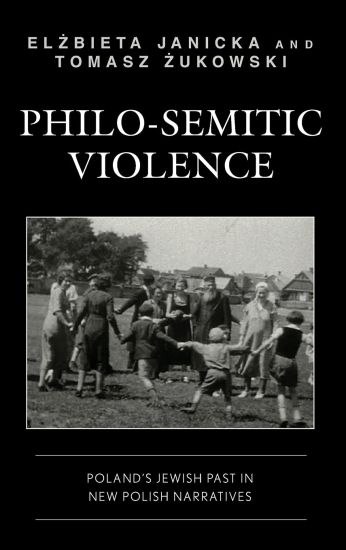
Philo-Semitic Violence

Philo-Semitic Violence

Elzbieta Janicka; Tomasz Zukowski

Lexington Books
2021
sidottu
Philo-Semitic Violence: Poland’s Jewish Past in New Polish Narratives addresses the growing popularity of philo-Semitic violence in Poland between the 2000 revelation of Polish participation in the Holocaust and the 2015 authoritarian turn. Janicka and Zukowski examine phenomena termed a “new opening in Polish-Jewish relations,” which stems from sociocultural change and the posthumous inclusion of those subjected to anti-Semitic violence. The authors investigate the terms and conditions of this inclusion whose object is an imagined collective Jewish figure.Different creators and media, same friendly intentions, same warm reception beyond class and political cleavages, regardless of gender and age. The made-to-measure Jewish figure confirms and legitimizes the majority narrative – especially about Polish stances and behaviors during the Holocaust. Enabled by this, philo-Semitic feelings indulge the dominant group in Baudrillard’s retrospective hallucinations. The consequence: aggression toward anyone who dares to interrupt the narcissistic self-staging.This book exposes the Polish ethnoreligious identity regime that privileges the concern for the collective image over reality. The authors’ inquiry shows how patterns of exclusion and violence are reproduced when anti-Semitism – with its Christian sources and community-building function – is not openly problematized, reassessed, and rejected in light of its consequences and the basic principle of equal rights.