Kirjojen hintavertailu. Mukana 12 390 323 kirjaa ja 12 kauppaa.

Kirjailija

Tongxi Yu

Kirjat ja teokset yhdessä paikassa: 2 kirjaa, julkaisuja vuosilta 1995-2022, suosituimpien joukossa Dynamic Models for Structural Plasticity. Vertaile teosten hintoja ja tarkista saatavuus suomalaisista kirjakaupoista.

2 kirjaa

Kirjojen julkaisuhaarukka 1995-2022.

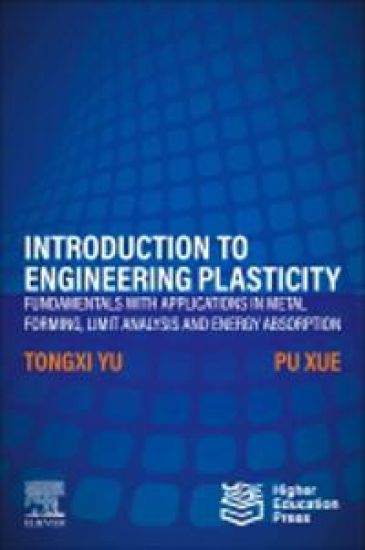
Introduction to Engineering Plasticity

Introduction to Engineering Plasticity

Tongxi Yu; Pu Xue

Elsevier - Health Sciences Division
2022
nidottu
The theory of plasticity is a branch of solid mechanics that investigates the relationship between permanent deformation and load, and the distribution of stress and strains of materials and structures beyond their elastic limit. Engineering plasticity underpins the safety of many modern systems and structures. Realizing the full potential of materials as well as designing precise metal processing and energy absorption structures requires mastery of engineering plasticity. Introduction to Engineering Plasticity: Fundamentals with Applications in Metal Forming, Limit Analysis and Energy Absorption presents both fundamental theory on plasticity and emphasizes the latest engineering applications. The title combines theory and engineering applications of plasticity, elaborating on problem solving in real-world engineering tasks such as in metal forming, limit analysis of structures, and understanding the energy absorption of structures and materials. The five main parts of the book cover: Plastic properties of materials and their characterization; Fundamental theory in plasticity; Elastic-plastic problems and typical solutions; and Rigid-plastic problems under plane-stress conditions. This title provides students and engineers alike with the fundamentals and advanced tools needed in engineering plasticity.

Dynamic Models for Structural Plasticity

Dynamic Models for Structural Plasticity

William J. Stronge; Tongxi Yu

Springer-Verlag Berlin and Heidelberg GmbH Co. K
1995
nidottu
Our topic is irreversible or plastic deformation of structural elements composed of relatively thin ductile materials. These deformations are commonly used in sheet metal forming operations to produce lightweight parts of any particular shape. In another context, this type of plastic deformation is described as impact damage in the case of structural components involved in collision. Here we are concerned with mechanics of both static and dynamic deformation processes. The purpose is to use typical material properties and structural characteristics to calculate the deformation for certain types of load; in particular to find the final deflection and shape of the deformed structure and to illustrate how the development of this final shape depends on the constitutive model used to represent the material behavior. The major issue to be addressed is which structural and constitutive properties are important for calculating response to either static or brief but intense dynamic loads. Furthermore, how do the results of various constitutive models compare with observed behavior.