Kirjojen hintavertailu. Mukana 12 390 323 kirjaa ja 12 kauppaa.
Kirjailija
Tony Abbott
Kirjat ja teokset yhdessä paikassa: 33 kirjaa, julkaisuja vuosilta 1999-2025, suosituimpien joukossa Denis Ever After. Vertaile teosten hintoja ja tarkista saatavuus suomalaisista kirjakaupoista.
Written by award-winning author Tony Abbott and perfect for fans of The Ethan I Was Before and The Thing About Jellyfish, this bittersweet middle grade novel follows the ghost of Denis Egan as he teams up with his living twin brother to solve the mystery of his death. Denis Egan is dead. He’s okay with that. It’s been five years since he died, and the place where souls go is actually pretty nice. Sure, there are some things about his life and how it ended he can’t quite recall, but that’s how it’s supposed to be. Remembering could prevent Denis from moving on to whatever’s next. However, something is standing in his way. His twin brother Matt can’t let go of him, and as long as the living are holding on to his memory, Denis can’t rest in peace.To uncover the truth about what happened that day five years before, Denis returns to his hometown and teams up with Matt. But visiting for too long has painful consequences for Denis, and Matt’s renewed interest in his brother’s passing is driving a wedge between his still-grieving parents.Can the two boys solve the mystery of Denis’s death without breaking apart the family he’s left behind?
Bestselling author Tony Abbott's epic new middle grade series, the Copernicus Legacy, begins with The Forbidden Stone, a thrilling adventure packed with puzzles, intrigue, and action. Fans of Rick Riordan and Ridley Pearson will love this first book in an exciting series that takes the reader all over the globe in a race to find pieces of a mysterious hidden past--before it's too late.Wade, Lily, Darrell, and Becca fly from Texas to Germany for the funeral of an old family friend. But instead of just paying their respects, they wind up on a dangerous, mind-blowing quest to unlock an ancient, guarded secret that could destroy the fate of the world.Supports the Common Core State Standards
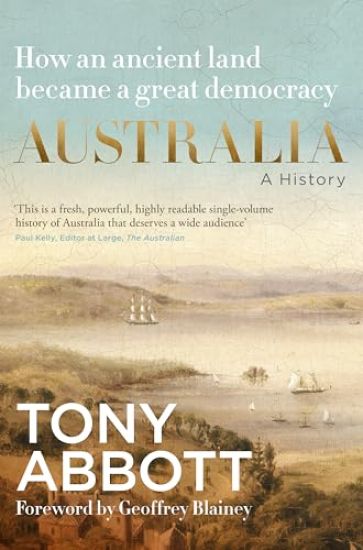
How an ancient land became a great democracy. Longlisted for Best Non Fiction in the Indie Book Awards 2026 'Tony Abbott should be congratulated ... This history of Australia is vivid, readable, provocative' Geoffrey Blainey, historian Australia is one of the world's great success stories: a land long hidden from outsiders, chosen as a convict dumping ground, where - since 1788 - people from many backgrounds have built one of the freest, fairest and most prosperous countries on earth. By the standards of a harsher time, the early governors tried to respect the original inhabitants and to encourage the convict outcasts of the British Isles to make a new start to a better life. This Indigenous heritage, British foundation and immigrant character have shaped the land of the 'fair go' especially for those willing to 'have a go'. It's not perfect, even now, yet mostly we have a history to be proud of. Within a century of settlement, Australia had not only the world's highest standard of living but had become a global pioneer for democratic freedoms such as the secret ballot, the payment of MPs and voting rights for women. A country largely created by settlement and negotiation has evolved from 'White Australia' at the time of federation into one of the world's most colour-blind societies and has managed the transition from an old 'Anglo' identity to a civic patriotism based on an overriding commitment to Australia and its values. This book is intended to give anyone interested - as every Australian should be - an account of our past that's positive, while not oblivious to our mistakes and imperfections as a nation. If to be an Australian is still to have won the lottery of life, the history that's produced us is surely something to savour. Now a major TV documentary available to stream at Sky News Australia. PRAISE 'Tony Abbott's book is inspired by love of country, yet he comes to grip with our flaws. This is a fresh, powerful, highly readable single-volume history of Australia that deserves a wide audience' Paul Kelly, editor-at-large, The Australian 'Scholarly researched, scrupulously fair-minded and very engagingly written, this is big narrative history at its best. It explains why Australia is such a wonderfully unique place, and why history is all the better when written by those who themselves helped make it' - Andrew Roberts, author, Churchill: Walking with Destiny 'Not quite the "white armband" version of history I was expecting in the first half, nor a "Liberal Party highlights package" in the second half. I enjoyed reading it' - Peter FitzSimons, author, Kokoda This is an immensely readable account of how - as I frequently call it - the "Australian Achievement" has been built' - Hon John Howard OM AC, former prime minister of Australia 'Tony Abbott's latest book is a powerful antidote to the poison of little and bad history ... we have much to be thankful for and to build on' Hon John Anderson AC, former deputy prime minister of Australia and leader of the National Party 'The former prime minister has done a good job with Australia: A History' Frank Bongiorno, historian 'if you have a serious interest in Australian history, the book will go on your shelves' Hon Kim Beazley AC, former deputy prime minister of Australia 'Tony Abbott has written with reverence and richness, bringing our nation's past, although both painful and proud, to life with striking clarity' Nova Peris OAM OLY, first Aboriginal-Australian Olympic gold medallist and former Labor senator 'This book is a compelling reminder of our inheritance, which gives us a reason to be proud of who we are and the country we've become' - Jacinta Nampijinpa Price, federal senator for Northern Territory 'Tony Abbott brings history to life in a way that is both enlightening and deeply engaging' Brett Lee, former Australian international cricketer 'This book helps us rediscover our past with honesty and respect, so we can better understand our present and shape a stronger, more inclusive future' Dai Le MP, independent member for Fowler
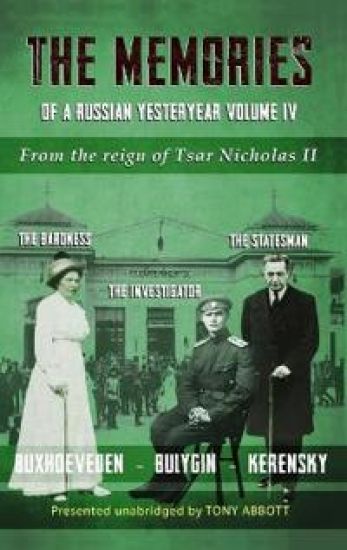
First Edition: Trim 6.14" x 9.21" Paperback, Black & White, Cream paper, Matt cover. 600 pages.Within these covers there are two great Public Domain works: Book 1) Sergei Witte served Alexander III with unquestionable loyalty but he did not hold Nicholas II in the same esteem and his frustration grew as he became more and more disillusioned that the autocracy could survive. He believed in preserving the status quo but that reforms were necessary throughout the administrative and social structures in order for Russia to arrive at the twentieth century as a world power and in order to stop the persecution of the minorities, which for the empire meant anyone who wasn't Russian born with Russian roots. In this sense, he might be considered an opponent of Russification, and indeed he was a staunch pacifist who did what he could to prevent and alleviate the suffering of others.Book 2) Mikhail Rodzianko was no less a nobleman that his contemporaries, but his role was essentially in opposition to the autocracy as Chairman of the State Duma. He made numerous attempts to prevent the demise of the monarchy but he was never listened to by the Imperial couple who treated him with contempt. In the end, Rodzianko would ensure the safe transition of the Tsar's abdication which had immediately followed the February Revolution but was unable to protect him and his family from the Bolsheviks, following the October Revolution. Sir Bernard Pares, an English professor of Russian studies, visited Russia for the first time in 1898, when he also met the prominent politician Alexander Guchkov. He returned to Russia during the political crisis of I905, attending the First Duma at the Tauride Palace in 1906, and receiving introductions to Witte, Rodzianko, Rasputin, and many other notables. Pares gave a first hand account of that remarkable span of wars and revolutions. Witte and Rodzianko represent the Government and Duma, and were instrumental in shaping the course of Russian history. In April 1906 Witte was replaced by Stolypin as Prime Minister. An excited Pares returned to St Petersburg that same year to assess the newly formed First Duma. Guchkov, a stalwalt for democracy, became the head of the Octobrists Party in October. Stolypin told Pares that an assembly representing the majority of the population would never work. Pares witnessed the Tsar's persecution policy towards non-Russians. He saw military and political leaders, like Witte and Rodzianko, ostracised from Government, at the instigation of the Tsarina and Rasputin. Hanging on to the only vestige of democracy, in 1909 Pares arranged for a delegation from the Third Duma to visit Great Britain. He became highly critical of the Tsar and his r gime after that and became convinced by talks with liberal representatives, that a constitutional monarchy was not only viable but imperative. Pares' role for the Foreign Office as an observer kept him well informed and his opinions were forthcoming; he thought it a serious mistake to appoint Boris Sturmer as Prime Minister in 1916 because he viewed him as a "shallow and dishonest creature, without even the merit of courage." Guchkov, on the other hand, was a former Chairman of the Third Duma and Minister of War in the Provisional Government. If ever there was a chance for Government and Duma to see eye-to-eye it was then, with Guchkov and Rodzianko sharing similar political views; liberals and democrats alike. However, having gone out to accepted the Tsar's abdication, he was mobbed by the crowd who threatened to execute him and he resigned following the public unrest that ensued and his concerns after that was to escape Russia. Both Guchkov and Pares were banned by the communist government from returning to Russia.
First Edition: Trim 6.14" x 9.21" Hardback, Black & White, Cream paper, Gloss cover. 600 pages.Within these covers there are two great Public Domain works: Book 1) Sergei Witte served Alexander III with unquestionable loyalty but he did not hold Nicholas II in the same esteem and his frustration grew as he became more and more disillusioned that the autocracy could survive. He believed in preserving the status quo but that reforms were necessary throughout the administrative and social structures in order for Russia to arrive at the twentieth century as a world power and in order to stop the persecution of the minorities, which for the empire meant anyone who wasn't Russian born with Russian roots. In this sense, he might be considered an opponent of Russification, and indeed he was a staunch pacifist who did what he could to prevent and alleviate the suffering of others.Book 2) Mikhail Rodzianko was no less a nobleman that his contemporaries, but his role was essentially in opposition to the autocracy as Chairman of the State Duma. He made numerous attempts to prevent the demise of the monarchy but he was never listened to by the Imperial couple who treated him with contempt. In the end, Rodzianko would ensure the safe transition of the Tsar's abdication which had immediately followed the February Revolution but was unable to protect him and his family from the Bolsheviks, following the October Revolution. Sir Bernard Pares, an English professor of Russian studies, visited Russia for the first time in 1898, when he also met the prominent politician Alexander Guchkov. He returned to Russia during the political crisis of I905, attending the First Duma at the Tauride Palace in 1906, and receiving introductions to Witte, Rodzianko, Rasputin, and many other notables. Pares gave a first hand account of that remarkable span of wars and revolutions. Witte and Rodzianko represent the Government and Duma, and were instrumental in shaping the course of Russian history. In April 1906 Witte was replaced by Stolypin as Prime Minister. An excited Pares returned to St Petersburg that same year to assess the newly formed First Duma. Guchkov, a stalwalt for democracy, became the head of the Octobrists Party in October. Stolypin told Pares that an assembly representing the majority of the population would never work. Pares witnessed the Tsar's persecution policy towards non-Russians. He saw military and political leaders, like Witte and Rodzianko, ostracised from Government, at the instigation of the Tsarina and Rasputin. Hanging on to the only vestige of democracy, in 1909 Pares arranged for a delegation from the Third Duma to visit Great Britain. He became highly critical of the Tsar and his r gime after that and became convinced by talks with liberal representatives, that a constitutional monarchy was not only viable but imperative. Pares' role for the Foreign Office as an observer kept him well informed and his opinions were forthcoming; he thought it a serious mistake to appoint Boris Sturmer as Prime Minister in 1916 because he viewed him as a "shallow and dishonest creature, without even the merit of courage." Guchkov, on the other hand, was a former Chairman of the Third Duma and Minister of War in the Provisional Government. If ever there was a chance for Government and Duma to see eye-to-eye it was then, with Guchkov and Rodzianko sharing similar political views; liberals and democrats alike. However, having gone out to accepted the Tsar's abdication, he was mobbed by the crowd who threatened to execute him and he resigned following the public unrest that ensued and his concerns after that was to escape Russia. Both Guchkov and Pares were banned by the communist government from returning to Russia.
First Edition: Trim 6.14" x 9.21" Hardback, Black & White, Cream paper, Gloss jacket cover. 600 pages.Within these covers there are two great Public Domain works: Book 1) Sergei Witte served Alexander III with unquestionable loyalty but he did not hold Nicholas II in the same esteem and his frustration grew as he became more and more disillusioned that the autocracy could survive. He believed in preserving the status quo but that reforms were necessary throughout the administrative and social structures in order for Russia to arrive at the twentieth century as a world power and in order to stop the persecution of the minorities, which for the empire meant anyone who wasn't Russian born with Russian roots. In this sense, he might be considered an opponent of Russification, and indeed he was a staunch pacifist who did what he could to prevent and alleviate the suffering of others.Book 2) Mikhail Rodzianko was no less a nobleman that his contemporaries, but his role was essentially in opposition to the autocracy as Chairman of the State Duma. He made numerous attempts to prevent the demise of the monarchy but he was never listened to by the Imperial couple who treated him with contempt. In the end, Rodzianko would ensure the safe transition of the Tsar's abdication which had immediately followed the February Revolution but was unable to protect him and his family from the Bolsheviks, following the October Revolution. Sir Bernard Pares, an English professor of Russian studies, visited Russia for the first time in 1898, when he also met the prominent politician Alexander Guchkov. He returned to Russia during the political crisis of I905, attending the First Duma at the Tauride Palace in 1906, and receiving introductions to Witte, Rodzianko, Rasputin, and many other notables. Pares gave a first hand account of that remarkable span of wars and revolutions. Witte and Rodzianko represent the Government and Duma, and were instrumental in shaping the course of Russian history. In April 1906 Witte was replaced by Stolypin as Prime Minister. An excited Pares returned to St Petersburg that same year to assess the newly formed First Duma. Guchkov, a stalwalt for democracy, became the head of the Octobrists Party in October. Stolypin told Pares that an assembly representing the majority of the population would never work. Pares witnessed the Tsar's persecution policy towards non-Russians. He saw military and political leaders, like Witte and Rodzianko, ostracised from Government, at the instigation of the Tsarina and Rasputin. Hanging on to the only vestige of democracy, in 1909 Pares arranged for a delegation from the Third Duma to visit Great Britain. He became highly critical of the Tsar and his r gime after that and became convinced by talks with liberal representatives, that a constitutional monarchy was not only viable but imperative. Pares' role for the Foreign Office as an observer kept him well informed and his opinions were forthcoming; he thought it a serious mistake to appoint Boris Sturmer as Prime Minister in 1916 because he viewed him as a "shallow and dishonest creature, without even the merit of courage." Guchkov, on the other hand, was a former Chairman of the Third Duma and Minister of War in the Provisional Government. If ever there was a chance for Government and Duma to see eye-to-eye it was then, with Guchkov and Rodzianko sharing similar political views; liberals and democrats alike. However, having gone out to accepted the Tsar's abdication, he was mobbed by the crowd who threatened to execute him and he resigned following the public unrest that ensued and his concerns after that was to escape Russia. Both Guchkov and Pares were banned by the communist government from returning to Russia.
First Edition: Trim 6.14" x 9.21" Hardback, Black & White, Cream paper, Gloss cover. 528 pages.Within these covers there are three great Public Domain works: 1) Alexander Mossolov was the head of the Court Chancellery of Tsar Nicholas II. He was the Second in Commend to Count Woldemar Freedericksz the Chief Marshal of the Court and trusted friend to the Imperial Couple. Mossolov gives a detailed account of life at the Court and and the ways of the Imperial Couple.2) Felix Youssoupoff was the heir of the richest aristocratic family in Russia, who went to Oxford for his studies where he first met Oswald Rayner, the future British SIS (i.e. MI6) agent in Russia. Youssoupoff is famed for arranging and performing the murder of Rasputin. This is his account of how he planned and actioned the heinous plot.3) Pavel Bykov was a Russian military official who not only came to appreciate the revolution but became an ardent Bolshevik. His book was banned in Russia but on he continent became the first admission to the killings of the ex-Imperial Family and their aides. Bykov describes the dastardly deed in detail and the disposal of the bodies. Decades later, clues from this book were used to help locate the graves.
First Edition: Trim 6.14" x 9.21" Hardback, Black & White, Cream paper, Gloss cover. 635 pages.Within these covers there are three great Public Domain works: Book 1) Paul Vassili was a pseudonym of Princess Catherine Radziwill, the aristocratic wife of a Prussian officer. She experienced the European courts and wrote extensively about them, whilst secretly maintaining her true identity. Two decades later in 1915 she started to write under her true name and when it was safe to announce herself, she did so in a book released in 1918, the one which is included in this volume. She offers a unique look at the Empress and her account is an invaluable version of an investigative account based not only of her experiences but mostly, more than likely, from her sources at the court and the gossip from the aristocratic families.. Her account ever so slightly varies from the official storyline, and although her talent for telling the story shines through, one cannot forget that she was exposed once for publishing untruths.Book 2) Lili von Dehn was no commoner in Russia, despite having no official position at the Imperial Court. She was raised in the French language and had an English governess. Her Russian side emerged during her upbringing at Revivka, a traditional Ukrainian village where she lived under the guardianship of her grandmother. Her release to the wider aristocracy came when she married an Estonian naval officer of German descent, who was serving on the Imperial Yacht Standart. After the marriage in 1907, the Tsarina befriended her but despite such good fortune, Dehn opposed the influence of Rasputin and remained in favour as the only opposer that was not dismissed by the Empress for her criticism of him. Book 3) Anna Viroubova, originally Anna Taneyeva, was a distant cousin of Lili Dehn but had a more immersive upbringing around the Russian court from her early childhood. It's arguable whom the Empress preferred more and perhaps she viewed them each with the same approbation. Viroubova's family credentials were much the same as Dehn's but her exposure gave her the edge and access to the Empress came from her rise in an official capacity as her Lady in waiting, after she was fortuitously pressed in to service as a replacement. Her new appointment also coincided with the first rumblings of mysticism at court when her usefulness to the Empress came as a conduit to the Montenegrin sisters Milica and Anastasia, the mystics Papus and Philippe, the hiermonk Iliodor, and the starets Rasputin - all being the odd characters that populated the space left behind by Father John of Kronstadt's death in 1909; the Archpriest of the Holy Synod of the Orthodox Church that had bathed the Empress in countless stories of his miraculous healings that she would cling to in the hope of finding a cure for her son, and in whom Rasputin she saw as his successor. So much could have been answered in this work, about the relationship with Rasputin, but Viroubova holds back it seems.
First Edition: Trim 6.14" x 9.21" Hardback, Black & White, Groundwood paper, Grey cloth cover with Gloss dust jacket. 635 pages.Within these covers there are three great Public Domain works: Book 1) Paul Vassili was a pseudonym of Princess Catherine Radziwill, the aristocratic wife of a Prussian officer. She experienced the European courts and wrote extensively about them, whilst secretly maintaining her true identity. Two decades later in 1915 she started to write under her true name and when it was safe to announce herself, she did so in a book released in 1918, the one which is included in this volume. She offers a unique look at the Empress and her account is an invaluable version of an investigative account based not only of her experiences but mostly, more than likely, from her sources at the court and the gossip from the aristocratic families.. Her account ever so slightly varies from the official storyline, and although her talent for telling the story shines through, one cannot forget that she was exposed once for publishing untruths. Book 2) Lili von Dehn was no commoner in Russia, despite having no official position at the Imperial Court. She was raised in the French language and had an English governess. Her Russian side emerged during her upbringing at Revivka, a traditional Ukrainian village where she lived under the guardianship of her grandmother. Her release to the wider aristocracy came when she married an Estonian naval officer of German descent, who was serving on the Imperial Yacht Standart. After the marriage in 1907, the Tsarina befriended her but despite such good fortune, Dehn opposed the influence of Rasputin and remained in favour as the only opposer that was not dismissed by the Empress for her criticism of him. Book 3) Anna Viroubova, originally Anna Taneyeva, was a distant cousin of Lili Dehn but had a more immersive upbringing around the Russian court from her early childhood. It's arguable whom the Empress preferred more and perhaps she viewed them each with the same approbation. Viroubova's family credentials were much the same as Dehn's but her exposure gave her the edge and access to the Empress came from her rise in an official capacity as her Lady in waiting, after she was fortuitously pressed in to service as a replacement. Her new appointment also coincided with the first rumblings of mysticism at court when her usefulness to the Empress came as a conduit to the Montenegrin sisters Milica and Anastasia, the mystics Papus and Philippe, the hiermonk Iliodor, and the starets Rasputin - all being the odd characters that populated the space left behind by Father John of Kronstadt's death in 1909; the Archpriest of the Holy Synod of the Orthodox Church that had bathed the Empress in countless stories of his miraculous healings that she would cling to in the hope of finding a cure for her son, and in whom Rasputin she saw as his successor. So much could have been answered in this work, about the relationship with Rasputin, but Viroubova holds back it seems.
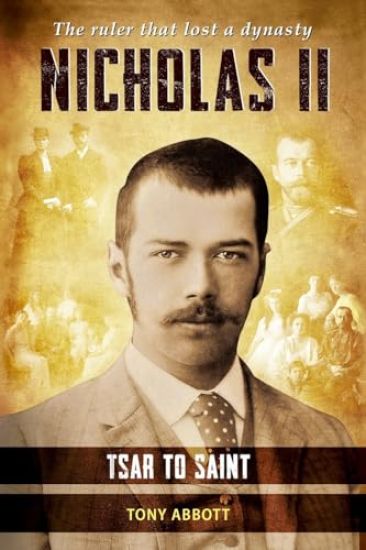
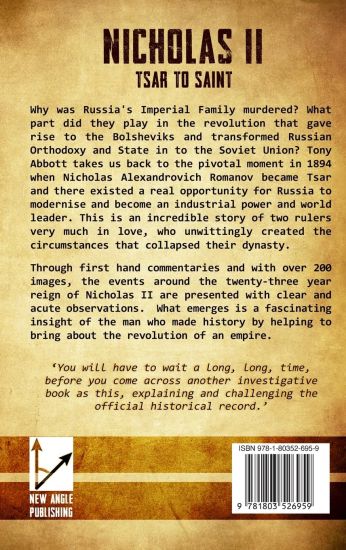
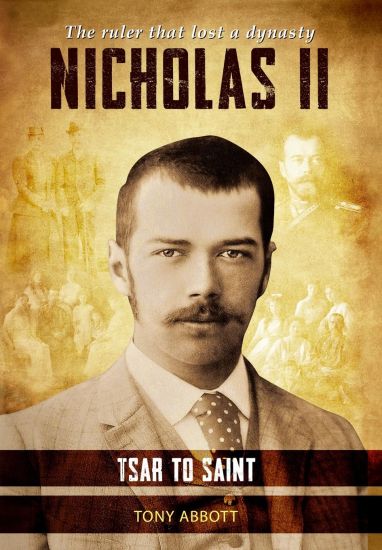
Edition: 6.14" x 9.21" Paperback, Colour, Standard white paper, Gloss cover Published on 17 July 2023, the 105th anniversary of the brutal murder of Russia's ruling family Tony Abbott's mission in writing Nicholas II - Tsar to Saint is not to simply offer another recounting of this terrible period in history. Rather, it is to immerse readers in the other issues that were shaping the world at the time, and to reveal the controversial and alternative theories relating to the fate of some of the Romanov family members. Approaching the turn of the 20th Century the age of exploration was making way for a new era of scientific discovery. During this transition in Russia, the last Romanov Tsar inherited the throne in 1894 and having the opportunity for reforms and to play a leading role on the world stage, he took the country instead through wars and empowered a brutal regime which ultimately led to humiliation during World War I, the end of the monarchy and the demise of the Romanov dynasty. Forensically researched and using existing material gathered from the memoirs of others to substantiate the theories, Nicholas II - Tsar to Saint stands out in the Romanov literary crowd and is also guaranteed to get historians talking and to intrigue and enthral Romanov enthusiasts. This is the harrowing story of the last Russian Imperial Family, modern day saints of the Russian Orthodox Church.
Edition: 6.14" x 9.21" Paperback, Black & White, Groundwood paper, Matt coverPublished on 17 July 2023, the 105th anniversary of the brutal murder of Russia's ruling family. Tony Abbott's mission in writing Nicholas II - Tsar to Saint is not to simply offer another recounting of this terrible period in history. Rather, it is to immerse readers in the other issues that were shaping the world at the time, and to reveal the controversial and alternative theories relating to the fate of some of the Romanov family members. Approaching the turn of the 20th Century the age of exploration was making way for a new era of scientific discovery. During this transition in Russia, the last Romanov Tsar inherited the throne in 1894 and having the opportunity for reforms and to play a leading role on the world stage, he took the country instead through wars and empowered a brutal regime which ultimately led to humiliation during World War I, the end of the monarchy and the demise of the Romanov dynasty. Forensically researched and using existing material gathered from the memoirs of others to substantiate the theories, Nicholas II - Tsar to Saint stands out in the Romanov literary crowd and is also guaranteed to get historians talking and to intrigue and enthral Romanov enthusiasts. This is the harrowing story of the last Russian Imperial Family, modern day saints of the Russian Orthodox Church.
Edition: 6.14" x 9.21" Hardback, Colour, Standard white paper, Gloss cover.Published on 17 July 2023, the 105th anniversary of the brutal murder of Russia's Imperial Family. Tony Abbott's mission in writing Nicholas II - Tsar to Saint is not to simply offer another recounting of this terrible period in history. Rather, it is to immerse readers in the other issues that were shaping the world at the time, and to reveal the controversial and alternative theories relating to the fate of some of the Romanov family members. Approaching the turn of the 20th Century the age of exploration was making way for a new era of scientific discovery. During this transition in Russia, the last Romanov Tsar inherited the throne in 1894 and having the opportunity for reforms and to play a leading role on the world stage, he took the country instead through wars and empowered a brutal regime which ultimately led to humiliation during World War I, the end of the monarchy and the demise of the Romanov dynasty. Forensically researched and using existing material gathered from the memoirs of others to substantiate the theories, Nicholas II - Tsar to Saint stands out in the Romanov literary crowd and is also guaranteed to get historians talking and to intrigue and enthral Romanov enthusiasts. This is the harrowing story of the last Russian Imperial Family, modern day saints of the Russian Orthodox Church.
Edition: 6.14" x 9.21" Hardback, Black & White, Groundwood paper, Dust jacket cover in gloss Published on 17 July 2023, the 105th anniversary of the brutal murder of Russia's ruling family. Tony Abbott's mission in writing Nicholas II - Tsar to Saint is not to simply offer another recounting of this terrible period in history. Rather, it is to immerse readers in the other issues that were shaping the world at the time, and to reveal the controversial and alternative theories relating to the fate of some of the Romanov family members. Approaching the turn of the 20th Century the age of exploration was making way for a new era of scientific discovery. During this transition in Russia, the last Romanov Tsar inherited the throne in 1894 and having the opportunity for reforms and to play a leading role on the world stage, he took the country instead through wars and empowered a brutal regime which ultimately led to humiliation during World War I, the end of the monarchy and the demise of the Romanov dynasty. Forensically researched and using existing material gathered from the memoirs of others to substantiate the theories, Nicholas II - Tsar to Saint stands out in the Romanov literary crowd and is also guaranteed to get historians talking and to intrigue and enthral Romanov enthusiasts. This is the harrowing story of the last Russian Imperial Family, modern day saints of the Russian Orthodox Church.
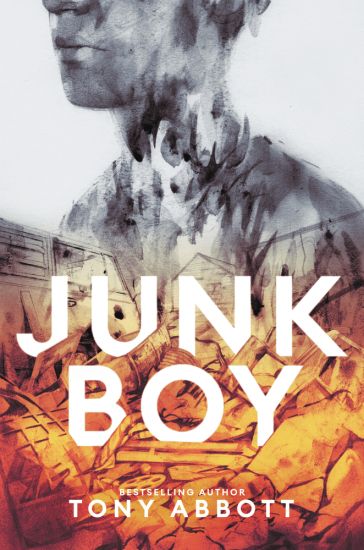
Bestselling author Tony Abbott’s YA novel-in-verse is an unflinching and heartbreaking look at a boy’s junk-filled life, and the ways he finds redemption and hope, perfect for fans of The Crossover and Long Way Down.Junk. That’s what the kids at school call Bobby Lang, mostly because his rundown house looks like a junkyard, but also because they want to put him down. Trying desperately to live under the radar at school—and at the home he shares with his angry, neglectful father—Bobby develops a sort of proud loneliness. The only buffer between him and the uncaring world is his love of the long, wooded trail between school and home.Life grinds along quietly and hopelessly for Bobby until he meets Rachel. Rachel is an artist who sees him in a way no one ever has. Maybe it’s because she has her own kind of junk, and a parent who hates what Rachel is: gay. Together the two embark on journeys to clean up the messes that fill their lives, searching against all odds for hope and redemption.Narrated in Bobby’s unique voice in arresting free verse, this novel will captivate readers right from its opening lines, urging them on page after page, all the way to its explosive conclusion.