

Kirjailija
Tony Ballantyne
Kirjat ja teokset yhdessä paikassa: 11 kirjaa, julkaisuja vuosilta 2006-2017, suosituimpien joukossa Twisted Metal. Vertaile teosten hintoja ja tarkista saatavuus suomalaisista kirjakaupoista.
11 kirjaa
Kirjojen julkaisuhaarukka 2006-2017.
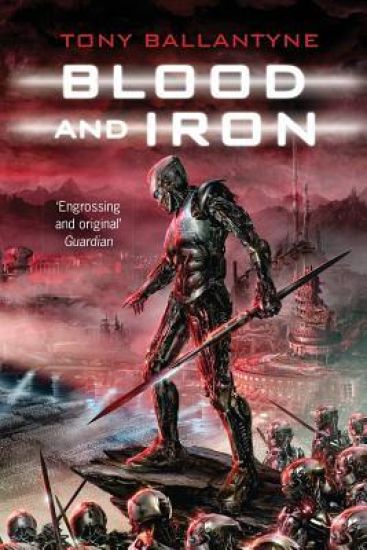
Appointed Commander of the Emperor’s Army of Sangrel, Wa-Ka-Mo-Do of Ko tries to establish relations between the existing robot population and the humans who have recently arrived on Yukawa. On the continent of Shull, Kavan forms the Uncertain Army and is marching to Artemis City. Upon discovery that the city’s generals have made an alliance with the humans, he retreats to Stark where he plans the eventual overthrow of Artemis and the humans. Meanwhile, Karel is heading South, hoping to be reunited with Susan, his wife. As he walks, he hears more of the stories of the robots, and begins to understand something about his place on the world of Penrose. But with limited resources and tensions growing between robot and human it’s only a matter of time before problems arise. And it’s becoming more and more apparent that the humans are a lot more powerful than the robots first expected . . .
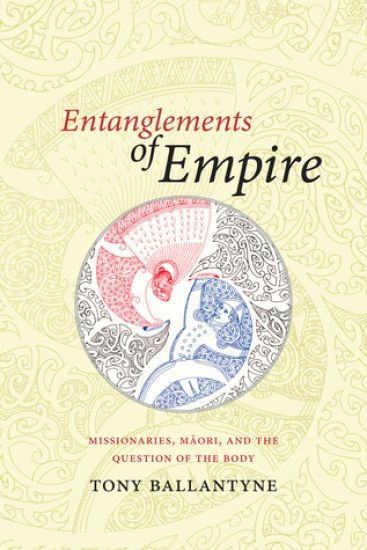
The first Protestant mission was established in New Zealand in 1814, initiating complex political, cultural, and economic entanglements with Maori. Tony Ballantyne shows how interest in missionary Christianity among influential Maori chiefs had far-reaching consequences for both groups. Deftly reconstructing cross-cultural translations and struggles over such concepts and practices as civilization, work, time and space, and gender, he identifies the physical body as the most contentious site of cultural engagement, with Maori and missionaries struggling over hygiene, tattooing, clothing, and sexual morality. Entanglements of Empire is particularly concerned with how, as a result of their encounters in the classroom, chapel, kitchen, and farmyard, Maori and the English mutually influenced each other’s worldviews. Concluding in 1840 with New Zealand’s formal colonization, this book offers an important contribution to debates over religion and empire.
The first Protestant mission was established in New Zealand in 1814, initiating complex political, cultural, and economic entanglements with Maori. Tony Ballantyne shows how interest in missionary Christianity among influential Maori chiefs had far-reaching consequences for both groups. Deftly reconstructing cross-cultural translations and struggles over such concepts and practices as civilization, work, time and space, and gender, he identifies the physical body as the most contentious site of cultural engagement, with Maori and missionaries struggling over hygiene, tattooing, clothing, and sexual morality. Entanglements of Empire is particularly concerned with how, as a result of their encounters in the classroom, chapel, kitchen, and farmyard, Maori and the English mutually influenced each other’s worldviews. Concluding in 1840 with New Zealand’s formal colonization, this book offers an important contribution to debates over religion and empire.
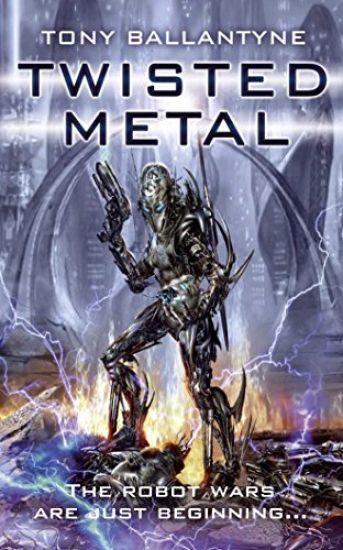
On a world of intelligent robots who seem to have forgotten their own distant past, it is a time of war as the soldiers of Artemis City set out to conquer everything within range on the continent of Shull, killing or converting every robot they capture to their philosophy, while viewing their own wire-based minds as nothing but metal to be used or recycled for the cause.Elsewhere, the more individualistic robots of Turing City believe they are something more than metal, but when the Artemisian robot Kavan sets out on a determined crusade to prove himself, even Turing City can't stand against him. Increasingly tied up with Kavan's destiny is Karel, a Turing robot with elements of Artemis's philosophy already woven into his mind ... as well as Karel's wife Susan, and their recently created child..Following the inevitable violence and destruction, Artemisian ambition focuses elsewhere and a journey begins towards the frozen kingdoms of the north ... and towards the truth about the legendary 'Book of Robots', a text which may finally explain the real history of this strange world ...In a completely alien but brilliantly realized landscape, here is a powerful story of superb action, barbaric cruelty and intense emotional impact.
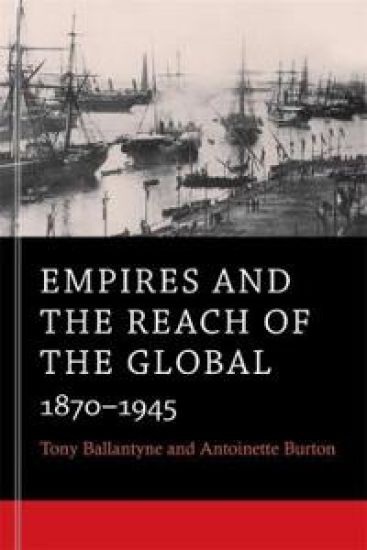
Empires and the Reach of the Global
Tony Ballantyne; Antoinette Burton
The Belknap Press
2014
nidottu
Empires and the Reach of the Global brings the history of empires into sharp focus by showing how imperialism has been a shaping force not just in international politics but in the economies and cultures of today’s world. Focusing on both the strengths and limits of imperial power, Tony Ballantyne and Antoinette Burton describe the creation and disintegration of the reigning world order in the period from 1870 to 1945.Using the British, Japanese, and Ottoman empires as case studies, the authors trace the communication, transportation, and economic networks that were instrumental to empire building. They highlight the role of empires as place-making regimes that organize geographic space as distinct territories. Militaries and missionaries, workplaces and households, all served as key domains of interaction within these territories, as colonial officials sought to manage the customs and lifeways of indigenous populations. Imperial connections contributed to the shrinking of time and space, but colonial encroachments also provoked opposition, which often played out in locations of everyday activity, from fields and factories to schools and prisons. Colonized territories sponsored a variety of forms of organized resistance, with full-fledged nationalist movements erupting onto the global scene in the interwar period.Ballantyne and Burton stress that empire was not something fabricated in European capitals and implemented “out there.” Rather, imperial systems, with their many racial, gendered, and economic forms, affected empires in all of their parts—the metropole as well as the farthest outpost.
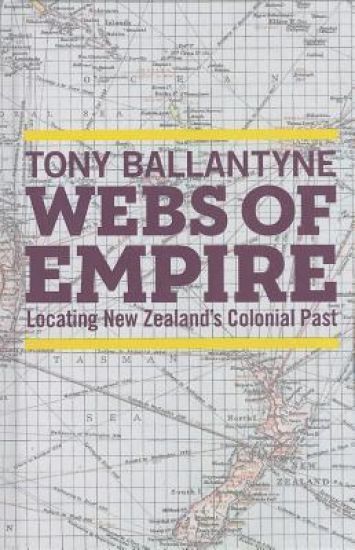
Breaking open colonization to reveal tangled cultural and economic networks, Webs of Empire offers new paths into colonial history. Linking Gore and Chicago, Maori and Asia, India and newspapers, whalers and writing, Ballantyne presents empire building as a spreading web of connected places, people, ideas, and trade. These links question narrow, national stories, while broadening perspectives on the past and the legacies of colonialism that persist today. Bringing together essays from two decades of prolific publishing on international colonial history, Webs of Empire establishes Tony Ballantyne as one of the leading historians of the British Empire.

Captain Jim Wedderburn has looks, style and courage by the bucketful. Heâ??s adored by women, respected by men and feared by his enemies. Heâ??s the man to find out who has twisted London into this strange new world, and he knows it. But in Dream London the city changes a little every night and the people change a little every day.
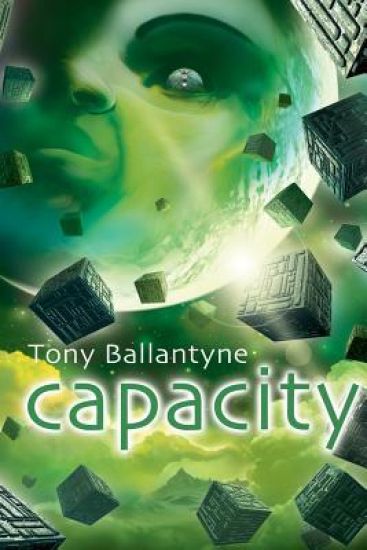
Society in the twenty-third century runs smoothly and peacefully with the aid of Social Care operatives such as Judy 3. Meanwhile benevolent AIs, under the control of the near mythical Watcher, seem to have solved all mankind’s problems, and with their aid humans have begun to explore the surrounding universe. But why does every AI that visits the planet Gateway commit suicide within just hours of arriving there? Justinian Sibelius has now himself arrived on the planet to try and find a reason. Yet how can someone with merely human intelligence solve a puzzle that has defeated minds far greater than his own – even that of the Watcher itself? And what if it should turn out that the Watcher is not so benevolent as people once believed? 'An exceptional first novel. A new British star has arrived to join the likes of Hamilton, Reynolds and Banks' Vector
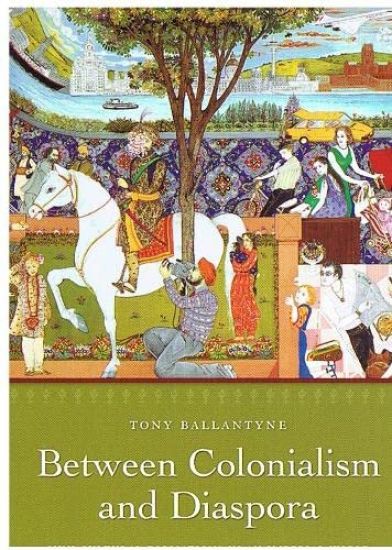
Bringing South Asian and British imperial history together with recent scholarship on transnationalism and postcolonialism, Tony Ballantyne offers a bold reevaluation of constructions of Sikh identity from the late eighteenth century through the early twenty-first. Ballantyne considers Sikh communities and experiences in Punjab, the rest of South Asia, the United Kingdom, and other parts of the world. He charts the shifting, complex, and frequently competing visions of Sikh identity that have been produced in response to the momentous social changes wrought by colonialism and diaspora. In the process, he argues that Sikh studies must expand its scope to take into account not only how Sikhism is figured in religious and political texts but also on the battlefields of Asia and Europe, in the streets of Singapore and Southall, and in the nightclubs of New Delhi and Newcastle.Constructing an expansive historical archive, Ballantyne draws on film, sculpture, fiction, and Web sites, as well as private papers, government records, journalism, and travel narratives. He proceeds from a critique of recent historiography on the development of Sikhism to an analysis of how Sikh identity changed over the course of the long nineteenth century. Ballantyne goes on to offer a reading of the contested interpretations of the life of Dalip Singh, the last Maharaja of Punjab. He concludes with an exploration of bhangra, a traditional form of Punjabi dance that diasporic artists have transformed into a globally popular music style. Much of bhangra’s recent evolution stems from encounters of the Sikh and Afro-Caribbean communities, particularly in the United Kingdom. Ballantyne contends that such cross-cultural encounters are central in defining Sikh identity both in Punjab and the diaspora.
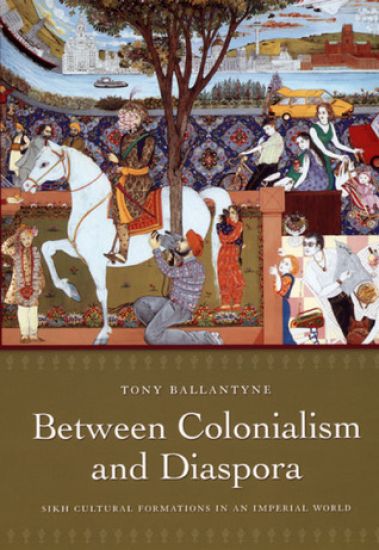
Bringing South Asian and British imperial history together with recent scholarship on transnationalism and postcolonialism, Tony Ballantyne offers a bold reevaluation of constructions of Sikh identity from the late eighteenth century through the early twenty-first. Ballantyne considers Sikh communities and experiences in Punjab, the rest of South Asia, the United Kingdom, and other parts of the world. He charts the shifting, complex, and frequently competing visions of Sikh identity that have been produced in response to the momentous social changes wrought by colonialism and diaspora. In the process, he argues that Sikh studies must expand its scope to take into account not only how Sikhism is figured in religious and political texts but also on the battlefields of Asia and Europe, in the streets of Singapore and Southall, and in the nightclubs of New Delhi and Newcastle.Constructing an expansive historical archive, Ballantyne draws on film, sculpture, fiction, and Web sites, as well as private papers, government records, journalism, and travel narratives. He proceeds from a critique of recent historiography on the development of Sikhism to an analysis of how Sikh identity changed over the course of the long nineteenth century. Ballantyne goes on to offer a reading of the contested interpretations of the life of Dalip Singh, the last Maharaja of Punjab. He concludes with an exploration of bhangra, a traditional form of Punjabi dance that diasporic artists have transformed into a globally popular music style. Much of bhangra’s recent evolution stems from encounters of the Sikh and Afro-Caribbean communities, particularly in the United Kingdom. Ballantyne contends that such cross-cultural encounters are central in defining Sikh identity both in Punjab and the diaspora.